Kirjojen hintavertailu. Mukana 12 377 322 kirjaa ja 12 kauppaa.

Kirjahaku

Etsi kirjoja tekijän nimen, kirjan nimen tai ISBN:n perusteella.

41 kirjaa tekijältä John Keane

Pico-solar Electric Systems

Pico-solar Electric Systems

John Keane

Routledge
2021
nidottu
This book provides a comprehensive overview of the technology behind the pico-solar revolution and offers guidance on how to test and choose quality products. The book also discusses how pioneering companies and initiatives are overcoming challenges to reach scale in the marketplace, from innovative distribution strategies to reach customers in rural India and Tanzania, to product development in Cambodia, product assembly in Mozambique and the introduction of ‘pay as you go’ technology in Kenya.Pico-solar is a new category of solar electric system which has the potential to transform the lives of over 1.6 billion people who live without access to electricity. Pico-solar systems are smaller and more affordable than traditional solar systems and have the power to provide useful amounts of electricity to charge the increasing number of low power consuming appliances from mobile phones, e-readers and parking metres, to LED lights which have the power to light up millions of homes in the same way the mobile phone has connected and empowered communities across the planet.The book explains the important role pico-solar has in reducing reliance on fossil fuels while at the same time tackling world poverty and includes useful recommendations for entrepreneurs, charities and governments who want to participate in developing this exciting and rapidly expanding market.
Pico-solar Electric Systems

Pico-solar Electric Systems

John Keane

Routledge
2014
sidottu
This book provides a comprehensive overview of the technology behind the pico-solar revolution and offers guidance on how to test and choose quality products. The book also discusses how pioneering companies and initiatives are overcoming challenges to reach scale in the marketplace, from innovative distribution strategies to reach customers in rural India and Tanzania, to product development in Cambodia, product assembly in Mozambique and the introduction of ‘pay as you go’ technology in Kenya.Pico-solar is a new category of solar electric system which has the potential to transform the lives of over 1.6 billion people who live without access to electricity. Pico-solar systems are smaller and more affordable than traditional solar systems and have the power to provide useful amounts of electricity to charge the increasing number of low power consuming appliances from mobile phones, e-readers and parking metres, to LED lights which have the power to light up millions of homes in the same way the mobile phone has connected and empowered communities across the planet.The book explains the important role pico-solar has in reducing reliance on fossil fuels while at the same time tackling world poverty and includes useful recommendations for entrepreneurs, charities and governments who want to participate in developing this exciting and rapidly expanding market.
Vaclav Havel

Vaclav Havel

John Keane

Basic Books
2001
nidottu
This authorized biography of Havel, based on unrestricted access to him, his circle, and even his enemies, is not only the first definitive account of one of the modern world's great moral and political leaders but also a vivid panorama of the tumultuous events of his times. Havel's life, like that of his African counterpart Nelson Mandela, has been shaped and determined by the large political shifts of the twentieth century. Readers will taste the moments of joy, irony, farce, and misfortune through which he has lived, and realize that he has taught the world more about the powerful and the powerless, power-grabbing and power-sharing, than virtually anyone else on the world stage.
Violence and Democracy

Violence and Democracy

John Keane

Cambridge University Press
2004
pokkari
In this provocative book, John Keane calls for a fresh understanding of the vexed relationship between democracy and violence. Taking issue with the common sense view that ‘human nature’ is violent, Keane shows why mature democracies do not wage war upon each other, and why they are unusually sensitive to violence. He argues that we need to think more discriminatingly about the origins of violence, its consequences, its uses and remedies. He probes the disputed meanings of the term violence, and asks why violence is the greatest enemy of democracy, and why today’s global ‘triangle of violence’ is tempting politicians to invoke undemocratic emergency powers. Throughout, Keane gives prominence to ethical questions, such as the circumstances in which violence can be justified, and argues that violent behaviour and means of violence can and should be ‘democratised’ - made publicly accountable to others, so encouraging efforts to erase surplus violence from the world.
Global Civil Society?

Global Civil Society?

John Keane

Cambridge University Press
2003
sidottu
John Keane, a leading scholar of political theory, tracks the recent development of a big idea with fresh potency - global civil society. In this timely book, Keane explores the contradictory forces currently nurturing or threatening its growth, and he shows how talk of global civil society implies a political vision of a less violent world, founded on legally sanctioned power-sharing arrangements among different and intermingling forms of socio-economic life. Keane’s reflections are pitted against the widespread feeling that the world is both too complex and too violent to deserve serious reflection. His account borrows from various scholarly disciplines, including political science and international relations, to challenge the silence and confusion within much of contemporary literature on globalisation and global governance. Against fears of terrorism, rising tides of xenophobia, and loose talk of ‘anti-globalisation’, the defence of global civil society mounted here implies the need for new democratic ways of living.
Violence and Democracy

Violence and Democracy

John Keane

Cambridge University Press
2004
sidottu
In this provocative book, John Keane calls for a fresh understanding of the vexed relationship between democracy and violence. Taking issue with the common sense view that 'human nature' is violent, Keane shows why mature democracies do not wage war upon each other, and why they are unusually sensitive to violence. He argues that we need to think more discriminatingly about the origins of violence, its consequences, its uses and remedies. He probes the disputed meanings of the term violence, and asks why violence is the greatest enemy of democracy, and why today's global 'triangle of violence' is tempting politicians to invoke undemocratic emergency powers. Throughout, Keane gives prominence to ethical questions, such as the circumstances in which violence can be justified, and argues that violent behaviour and means of violence can and should be 'democratised' - made publicly accountable to others, so encouraging efforts to erase surplus violence from the world.
Global Civil Society?

Global Civil Society?

John Keane

Cambridge University Press
2003
pokkari
John Keane, a leading scholar of political theory, tracks the recent development of a big idea with fresh potency - global civil society. In this timely book, Keane explores the contradictory forces currently nurturing or threatening its growth, and he shows how talk of global civil society implies a political vision of a less violent world, founded on legally sanctioned power-sharing arrangements among different and intermingling forms of socio-economic life. Keane’s reflections are pitted against the widespread feeling that the world is both too complex and too violent to deserve serious reflection. His account borrows from various scholarly disciplines, including political science and international relations, to challenge the silence and confusion within much of contemporary literature on globalisation and global governance. Against fears of terrorism, rising tides of xenophobia, and loose talk of ‘anti-globalisation’, the defence of global civil society mounted here implies the need for new democratic ways of living.
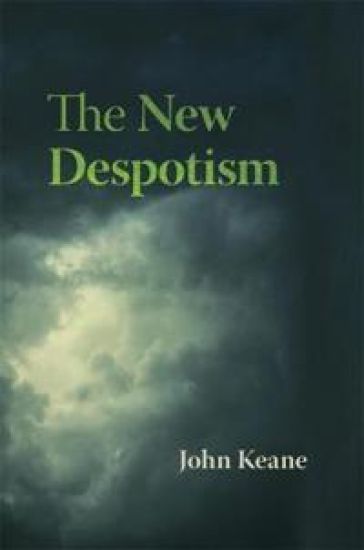
The New Despotism

The New Despotism

John Keane

Harvard University Press
2020
sidottu
An Australian Book Review Best Book of the YearA disturbing in-depth exposé of the antidemocratic practices of despotic governments now sweeping the world.One day they’ll be like us. That was once the West’s complacent and self-regarding assumption about countries emerging from poverty, imperial rule, or communism. But many have hardened into something very different from liberal democracy: what the eminent political thinker John Keane describes as a new form of despotism. And one day, he warns, we may be more like them.Drawing on extensive travels, interviews, and a lifetime of thinking about democracy and its enemies, Keane shows how governments from Russia and China through Central Asia to the Middle East and Europe have mastered a formidable combination of political tools that threaten the established ideals and practices of power-sharing democracy. They mobilize the rhetoric of democracy and win public support for workable forms of government based on patronage, dark money, steady economic growth, sophisticated media controls, strangled judiciaries, dragnet surveillance, and selective violence against their opponents.Casting doubt on such fashionable terms as dictatorship, autocracy, fascism, and authoritarianism, Keane makes a case for retrieving and refurbishing the old term “despotism” to make sense of how these regimes function and endure. He shows how they cooperate regionally and globally and draw strength from each other’s resources while breeding global anxieties and threatening the values and institutions of democracy. Like Montesquieu in the eighteenth century, Keane stresses the willing complicity of comfortable citizens in all these trends. And, like Montesquieu, he worries that the practices of despotism are closer to home than we care to admit.
The Media and Democracy

The Media and Democracy

John Keane

Polity Press
1991
nidottu
In this essay, John Keane rethinks the relationship between the media and democracy. He opens up and explores a cluster of vital questions: where did the modern ideals of republican democracy and 'liberty of the press' originate? Have they been destroyed during the twentieth century by new forms of state censorship, or the emergence of transnational media conglomerates, or the growth of electronic media? Do the new digital technologies, satellite broadcasting and the convergence of broadcasting and telecommunications hinder or help these ideals? Is the free and equal communication of citizens through the media a feasible ideal at the end of the twentieth century? While these questions have long been neglected in social science and in the high-pressured world of print and electronic journalism, Keane restores them to the centre of political analysis and debate. He challenges many conventional assumptions of journalists, academics and policymakers. His essay sets out a radically new account of the importance of the media to democracy and elaborates a new conception of the public service model of communications - a model which would expose invisible power, publicize risks and facilitate 'a genuine commonwealth of forms of life, tastes and opinions'.
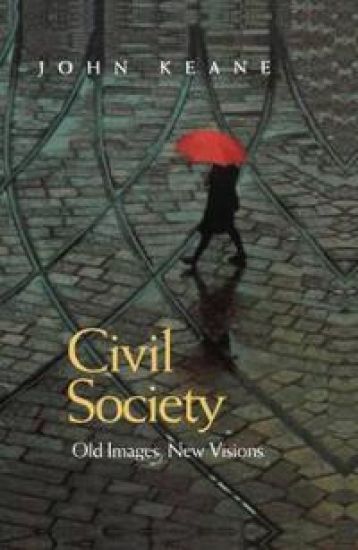
Civil society - old images, new visions

Civil society - old images, new visions

John Keane

Blackwell Publishers
1998
nidottu
Examines the causes of the world-wide re-popularization of the term "civil society". The text traces its reappearance in a wide range of contexts - from China to Tunisia, from South Africa to the emerging European Union - and clarifies the conflicting grammars and vocabularies of its language.
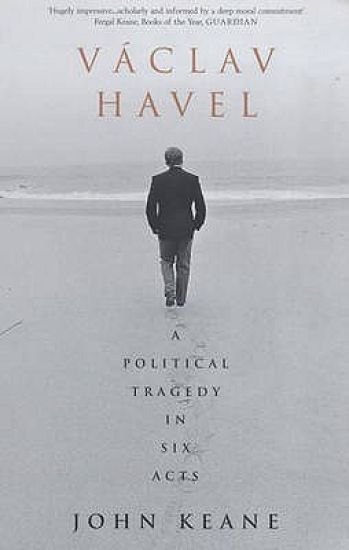
Vaclav Havel

Vaclav Havel

John Keane

Bloomsbury Publishing PLC
2000
pokkari
Vaclav Havel is revered as one of the 20th-century's great playwrights, dissidents, and honest champions of democracy. In this study, John Keane reveals a Havel so far unseen, dramatising the key moments of joy, misery, triumph and tragedy on which his life has turned.
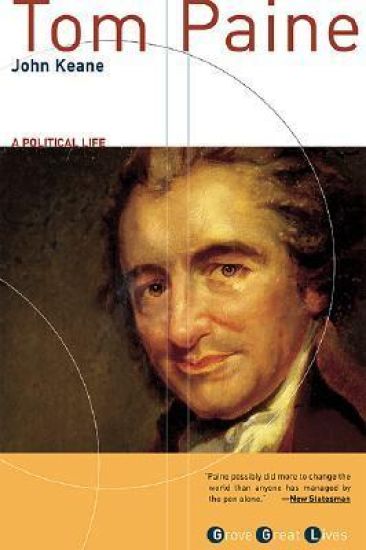
Tom Paine

Tom Paine

John Keane

Black Cat
2003
nidottu
Portrays the life of one of democracy's greatest champions--a soldier, diplomat, and pamphleteer of the American Revolution who helped draft the French Constitution.
Democracy and Media Decadence

Democracy and Media Decadence

John Keane

Cambridge University Press
2013
sidottu
We live in a revolutionary age of communicative abundance in which many media innovations - from satellite broadcasting to smart glasses and electronic books - spawn great fascination mixed with excitement. In the field of politics, hopeful talk of digital democracy, cybercitizens and e-government has been flourishing. This book admits the many thrilling ways that communicative abundance is fundamentally altering the contours of our lives and of our politics, often for the better. But it asks whether too little attention has been paid to the troubling counter-trends, the decadent media developments that encourage public silence and concentrations of unlimited power, so weakening the spirit and substance of democracy. Exploring examples of clever government surveillance, market censorship, spin tactics and back-channel public relations, John Keane seeks to understand and explain these trends, and how best to deal with them. Tackling some tough but big and fateful questions, Keane argues that 'media decadence' is deeply harmful for public life.
Democracy and Media Decadence

Democracy and Media Decadence

John Keane

Cambridge University Press
2013
pokkari
We live in a revolutionary age of communicative abundance in which many media innovations - from satellite broadcasting to smart glasses and electronic books - spawn great fascination mixed with excitement. In the field of politics, hopeful talk of digital democracy, cybercitizens and e-government has been flourishing. This book admits the many thrilling ways that communicative abundance is fundamentally altering the contours of our lives and of our politics, often for the better. But it asks whether too little attention has been paid to the troubling counter-trends, the decadent media developments that encourage public silence and concentrations of unlimited power, so weakening the spirit and substance of democracy. Exploring examples of clever government surveillance, market censorship, spin tactics and back-channel public relations, John Keane seeks to understand and explain these trends, and how best to deal with them. Tackling some tough but big and fateful questions, Keane argues that 'media decadence' is deeply harmful for public life.
Power and Humility

Power and Humility

John Keane

Cambridge University Press
2018
sidottu
Democracy urgently needs re-imagining if it is to address the dangers and opportunities posed by current global realities, argues leading political thinker John Keane. He offers an imaginative, radically new interpretation of the twenty-first-century fate of democracy. The book shows why the current literature on democracy is failing to make sense of many intellectual puzzles and new political trends. It probes a wide range of themes, from the growth of cross-border institutions and capitalist market failures to the greening of democracy, the dignity of children and the anti-democratic effects of everyday fear, violence and bigotry. Keane develops the idea of 'monitory democracy' to show why periodic free and fair elections are losing their democratic centrality; and why the ongoing struggles by citizens and their representatives, in a multiplicity of global settings, to humble the high and mighty and deal with the dangers of arbitrary power, force us to rethink what we mean by democracy and why it remains a universal ideal.