Kirjojen hintavertailu. Mukana 11 244 527 kirjaa ja 12 kauppaa.

Kirjahaku

Etsi kirjoja tekijän nimen, kirjan nimen tai ISBN:n perusteella.

24 kirjaa tekijältä John Kenneth Muir

The Films of John Carpenter

The Films of John Carpenter

John Kenneth Muir

McFarland Co Inc
2005
pokkari
The films of John Carpenter cover a tremendous range and yet all bear his clear personal stamp. From the horrifying (Halloween) to the touching (Starman) to the controversial (The Thing) to the comic (Big Trouble in Little China), his films reflect a unique approach to filmmaking and singular views of humanity and American culture. This analysis of Carpenter's films includes a historical overview of his career, and in-depth entries on each of his films, from 1975's Dark Star to 1998's Vampires. Complete cast and production information is provided for each. The book also covers those films written and produced by Carpenter, such as Halloween II and Black Moon Rising, as well as Carpenter's work for television. Appendices are included on films Carpenter was offered but turned down, the slasher films that followed in the wake of the highly-successful Halloween, the actors and characters who make repeated appearances in Carpenter's films, and ratings for Carpenter's work. Notes, bibliography, and index are included.
Wes Craven

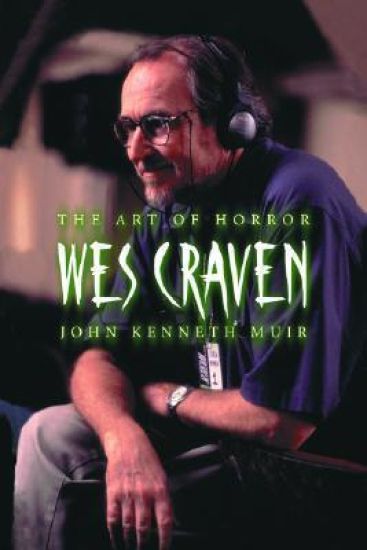
Wes Craven

John Kenneth Muir

McFarland Co Inc
2004
pokkari
Filmmaker Wes Craven has consistently and imaginatively scared movie audiences since the early 1970s. His films encompass a variety of styles, elements and themes, from the nihilistic existentialism of The Last House on the Left to the successful A Nightmare on Elm Street (which sent horror in a bold new direction), to the hallucinatory dreamscapes of The Serpent and the Rainbow. And in the nineties, Craven returned with the Scream films, which were simultaneously funny, clever and scary films that overturned the horror cliches of the eighties. The present work provides a history of Craven's film career since 1972, examining all the themes and techniques the filmmaker explored. For each film, a synopsis, cast and credits, historical context, and critical commentary are provided. Also covered in detail are Craven's forays into television, including movies such as Stranger in the House and work on such series as The New Twilight Zone.
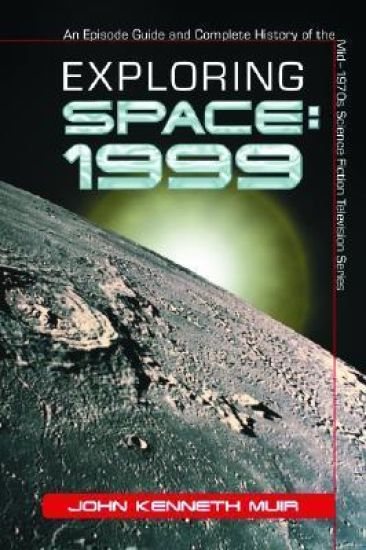
Exploring Space: 1999

Exploring Space: 1999

John Kenneth Muir

McFarland Co Inc
2005
pokkari
Starring internationally renowned actors Martin Landau, Barbara Bain, Barry Morse and Catherine Schell, the British-made Space: 1999 was the only truly original space adventure of the mid-1970s. Sandwiched between the demise of the original Star Trek and the opening of the Stars Wars series on the big screen, Space: 1999 featured a richly-visualized world where space was terrifying and mysterious, where not all problems were solvable by technology and the space travelers were very human. From the science fiction show's conception in 1973 to its cancellation in 1977, this reference work covers each of the 48 episodes in depth, including a full plot synopsis, writer, director, guest star credits, and critical commentary that examines both the episode and other shows that have used similar plotlines. The popularity of Space: 1999 memorabilia and its many fan clubs are fully discussed, along with the possibility of a future movie or reunion show that would tie up the loose ends caused by the show's abrupt cancellation.
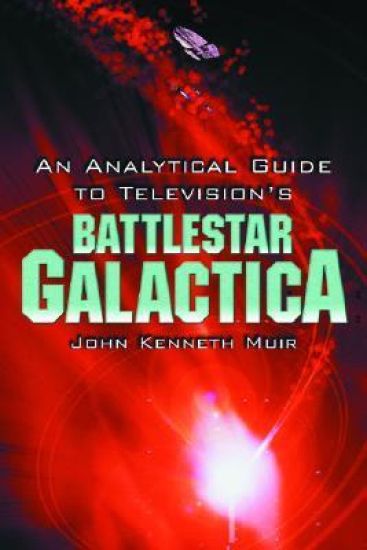
An Analytical Guide to Television's Battlestar Galactica
When the space drama Battlestar Galactica debuted on ABC in 1978, it was expected to be the most popular new program of the year. Instead, it was attacked as a Star Wars rip-off and canceled after a mere 17 stories. The author acknowledges the show was full of dramatic cliches and scientific inaccuracies, but despite these shortcomings, Battlestar Galactica was a dramatically resonant series full of unique and individual characters, such as Commander Adama (Lorne Greene) and ace warrior Captain Apollo (Richard Hatch). The author contends that Battlestar Galactica was a memorable attempt to make science fiction accessible to mainstream television audiences. The brilliant work of artist John Dykstra brought a new world of special effects to network television. Battlestar Galactica also skillfully exploited legends and names from both the Bible and ancient mythology, which added a layer of depth and maturity to the weekly drama.
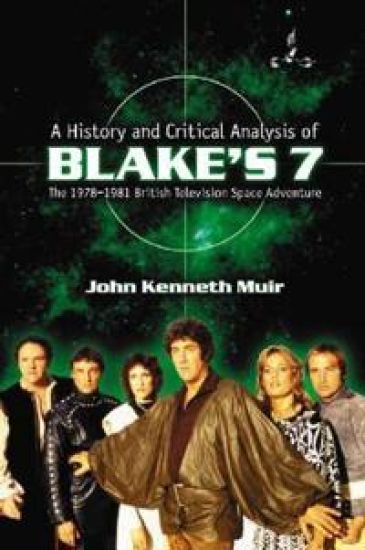
A History and Critical Analysis of Blake's 7, the 1978-1981 British Television Space Adventure
Blake's 7, Terry Nation's science fiction tale of cosmic freedom fighters, became a hit series in Great Britain when it premiered in 1978. Eight years later, the show quickly became a cult program in America. A dramatization of futuristic outlaw heroes who defend the innocent from both alien and human conquering forces, the series might better be said to be equal parts Robin Hood and The Magnificent Seven. The series defied traditional genre elements of science fiction television, and developed the concept of the continual "story arc" years before such shows as Babylon 5 and Deep Space Nine. This book provides a critical history and episode guide for Blake's 7, including commentaries for all 52 episodes. Also included are analytical essays on the show, dealing with such topics as themes, imagery and story arc; a consideration of the series as a futuristic Robin Hood myth; cinematography and visual effects; and an overview of Blake's 7 in books, comics and videos. A detailed appendix lists the genre conventions found in the series. The author also includes information about Blake's 7 fan clubs and Internet sites.
An Analytical Guide to Television's One Step Beyond, 1959-1961
Alcoa Presents: One Step Beyond made its television debut in 1959, nine months before Rod Serling's classic The Twilight Zone, and paved the way for a generation of television programs devoted to paranormal topics such as the occult, ESP, and ghost stories. One Step Beyond was also where some of Hollywood's most famous leading men, including Warren Beatty, William Shatner, and Charles Bronson, got their starts in television. This complete reference work to the 96 half-hour episodes that ran for three seasons on ABC also offers a detailed history, extensive commentary and summaries of the critical reception of One Step Beyond as well as coverage of the sequel series produced in 1978 entitled The Next Step Beyond. Complete credits for both series are provided.
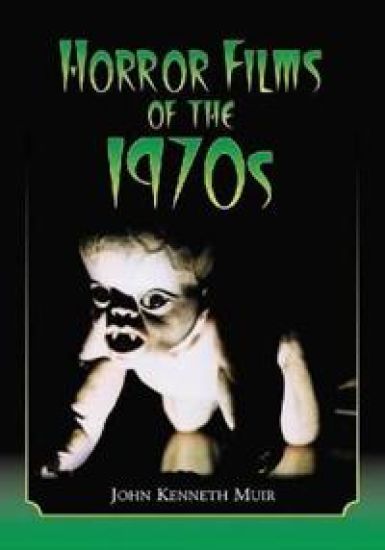
Horror Films of the 1970s

Horror Films of the 1970s

John Kenneth Muir

McFarland Co Inc
2007
pokkari
The seventies were a decade of groundbreaking horror films: The Exorcist, Carrie, and Halloween were three. This detailed filmography covers these and 225 more. Section One provides an introduction and a brief history of the decade. Beginning with 1970 and proceeding chronologically by year of its release in the United States, Section Two offers an entry for each film. Each entry includes several categories of information: Critical Reception (sampling both '70s and later reviews), Cast and Credits, P.O.V., (quoting a person pertinent to that film's production), Synopsis (summarizing the film's story), Commentary (analyzing the film from Muir's perspective), Legacy (noting the rank of especially worthy '70s films in the horror pantheon of decades following). Section Three contains a conclusion and these five appendices: horror film cliches of the 1970s, frequently appearing performers, memorable movie ads, recommended films that illustrate how 1970s horror films continue to impact the industry, and the 15 best genre films of the decade as chosen by Muir.
A Critical History of Doctor Who on Television

A Critical History of Doctor Who on Television

John Kenneth Muir

McFarland Co Inc
2007
pokkari
Since its inception in November 1963, the British science fiction television series Doctor Who has exerted an enormous impact on the world of science fiction (over 1,500 books have been written about the show). The series follows the adventures of a mysterious "Time Lord" from the distant planet Gallifrey who travels through time and space to fight evil and injustice. Along the way, he has visited Rome under the rule of Nero, played backgammon with Kublai Khan, and participated in the mythic gunfight at the O.K. Corral. Predating the Star Trek phenomenon by three years, Doctor Who seriously dealt with continuing characters, adult genre principles and futuristic philosophies. Critical and historical examinations of the ideas, philosophies, conceits and morals put forth in the Doctor Who series, which ran for 26 seasons and 159 episodes, are provided here. Also analyzed are thematic concepts, genre antecedents, the overall cinematography and the special effects of the long-running cult favorite. The various incarnations of Doctor Who, including television, stage, film, radio, and spin-offs are discussed. In addition, the book provides an extensive listing of print, Internet, and fan club resources for Doctor Who.
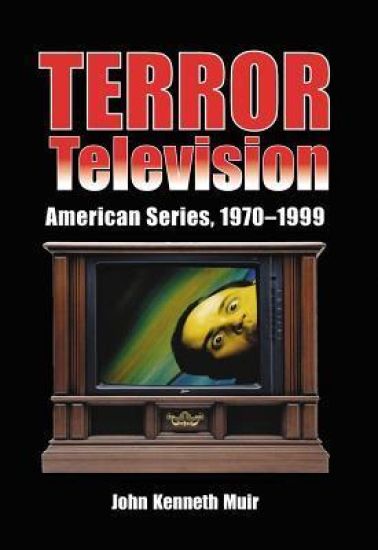
Terror Television

Terror Television

John Kenneth Muir

McFarland Co Inc
2008
pokkari
Although horror shows on television are popular in the 1990s thanks to the success of Chris Carter's The X-Files, such has not always been the case. Creators Rod Serling, Dan Curtis, William Castle, Quinn Martin, John Newland, George Romero, Stephen King, David Lynch, Wes Craven, Sam Raimi, Aaron Spelling and others have toiled to bring the horror genre to American living rooms for years. This large-scale reference book documents an entire genre, from the dawn of modern horror television with the watershed Serling anthology, Night Gallery (1970), a show lensed in color and featuring more graphic makeup and violence than ever before seen on the tube, through more than 30 programs, including those of the 1998-1999 season. Complete histories, critical reception, episode guides, cast, crew and guest star information, as well as series reviews are included, along with footnotes, a lengthy bibliography and an in-depth index. From Kolchak: The Night Stalker to Millennium, from The Evil Touch to Buffy the Vampire Slayer and Twin Peaks, Terror Television is a detailed reference guide to three decades of frightening television programs, both memorable and obscure.
Eaten Alive at a Chainsaw Massacre

Eaten Alive at a Chainsaw Massacre

John Kenneth Muir

McFarland Co Inc
2009
pokkari
The sound of chainsaws revving on "haunted" Halloween trails has evoked untold screams since Tobe Hooper's 1974 The Texas Chainsaw Massacre hit the cinemas. Since that first take-no-prisoners horror movie, Hooper's reputation as a master of horror has been secured by his adaptations of Stephen King (Salem's Lot, 1978, and The Mangler, 1995), his blockbuster breakthrough Poltergeist (1982) and a variety of cult hits, from the underrated Lifeforce (1985) to the remake of Invaders from Mars (1986). This reference work is divided into five parts. Part I provides a history and overview of Tobe Hooper's career. Part II offers entries (with synopses, complete credits, critical reception and commentaries) on every feature film by year of release. Part III provides chronological information on Hooper's television movies and miniseries. Part IV offers entries on his episodes from horror television series. Part V is a critical essay and conclusion which places Hooper in horror film history and compares his work to all-time greats such as Romero, Craven and Carpenter.
Horror Films of the 1980s

Horror Films of the 1980s

John Kenneth Muir

McFarland Co Inc
2012
pokkari
John Kenneth Muir is back! This time, the author of the acclaimed Horror Films of the 1970s turns his attention to 300 films from the 1980s. From horror franchises like Friday the 13th and Hellraiser to obscurities like The Children and The Boogens, Muir is our informative guide. Muir introduces the scope of the decade's horrors, and offers a history that draws parallels between current events and the nightmares unfolding on cinema screens. Each of the 300 films is discussed with detailed credits, a brief synopsis, a critical commentary, and where applicable, notes on the film's legacy beyond the 80s. Also included is the author's ranking of the 15 best horror films of the 80s.
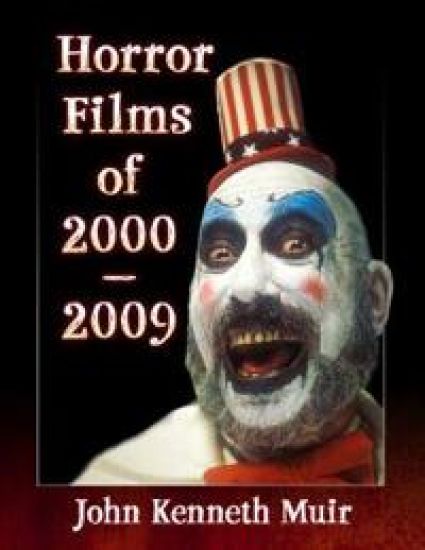
Horror Films of 2000-2009

Horror Films of 2000-2009

John Kenneth Muir

MCFARLAND CO INC
2022
sidottu
Horror films have always reflected their audiences' fears and anxieties. In the United States, the 2000s were a decade full of change in response to the 9/11 terrorist attacks, the contested presidential election of 2000, and the wars in Iraq and Afghanistan. These social and political changes, as well as the influences of Japanese horror and New French extremism, had a profound effect on American horror filmmaking during the 2000s. This filmography covers more than 300 horror films released in America from 2000 through 2009, including such popular forms as found footage, torture porn, and remakes. Each entry covers a single film and includes credits, a synopsis, and a lengthy critical commentary. The appendices include common horror conventions, a performer hall of fame, and memorable ad lines.
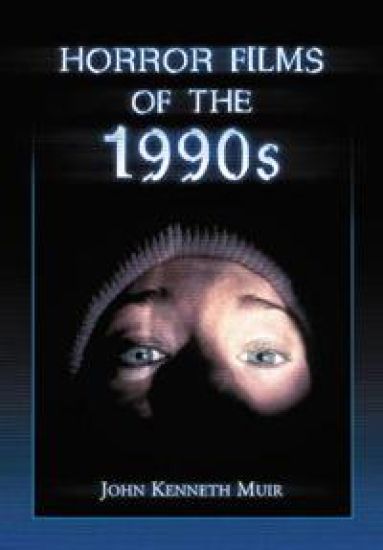
Horror Films of the 1990s

Horror Films of the 1990s

John Kenneth Muir

McFarland Co Inc
2019
pokkari
This filmography covers more than 300 horror films released from 1990 through 1999. The horror genre's trends and cliches are connected to social and cultural phenomena, such as Y2K fears and the Los Angeles riots. Popular films were about serial killers, aliens, conspiracies, and sinister "interlopers," new monsters who shambled their way into havoc. Each of the films is discussed at length with detailed credits and critical commentary. There are six appendices: 1990s cliches and conventions, 1990s hall of fame, memorable ad lines, movie references in Scream, 1990s horrors vs. The X-Files, and the decade's ten best. Fully indexed, 224 photographs.
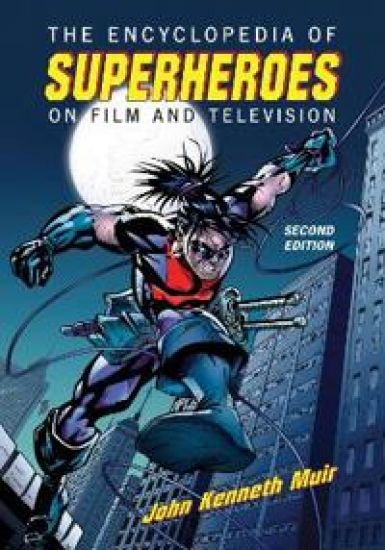
The Encyclopedia of Superheroes on Film and Television, 2d ed.
It's a bird! It's a plane! It's a complete guide to over 50 years of superheroes on screen! This expanded and updated edition of the 2004 award-winning encyclopedia covers important developments in the popular genre; adds new shows such as Heroes and Zoom; includes the latest films featuring icons like Superman, Spiderman and Batman; and covers even more types of superheroes. Each entry includes a detailed history, cast and credits, episode and film descriptions, critical commentaries, and data on arch-villains, gadgets, comic-book origins and super powers, while placing each production into its historical context. Appendices list common superhero conventions and cliches; incarnations; memorable ad lines; and the best, worst, and most influential productions from 1951 to 2008.
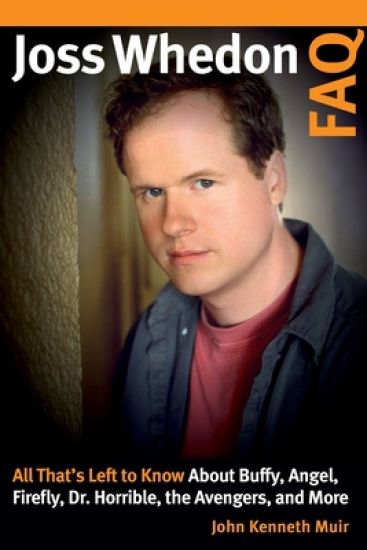
Joss Whedon FAQ

Joss Whedon FAQ

John Kenneth Muir

Applause Theatre Book Publishers
2019
nidottu
Providing a career-spanning view of everyone s favourite geek writer and director, Joss Whedon FAQ offers answers to fans questions about one of the most significant pop culture auteurs of the past twenty-five years. The book gazes at Whedon s early work in Hollywood as a script doctor on films such The Quick and the Dead (1995) and Waterworld (1995), and follows his career as he became the cult-favorite creator of such sensations as Buffy the Vampire Slayer, Angel, Firefly, and Dr. Horrible s Sing-Along Blog. In addition to looking at Whedon s ascent to blockbuster superhero filmmaking with titles such as The Avengers, The Avengers: Age of Ultron, and Justice League, this eminently readable compendium explores Whedon s lesser known but no less fascinating forays into the world of Shakespeare (Much Ado About Nothing) and even big-screen romantic fantasy (In Your Eyes). The book closes with discussions of Whedon s politics and feminism, as well as a catalogue of his (unofficial) repertory company and a list of the most memorable on-screen character deaths in his canon.
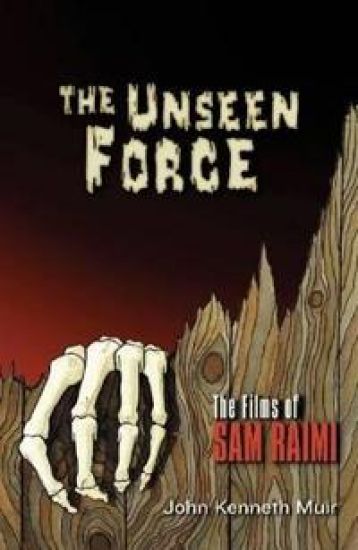
The Unseen Force

The Unseen Force

John Kenneth Muir

Applause Theatre Book Publishers
2004
pokkari
The life and work of legendary cult-film director Sam Raimi Raimi has three film in production/post-production for 2004-5 release Film historian and popular writer JK Muir turns his attention to the life and work of legendary cult-film director Sam Raimi who exploded onto the movie scene in 1982, when he was 23, with the audacious, independently produced horror film The Evil Dead. There were two Evil Dead sequels, the critically acclaimed A Simple Plan starring Billy Bob Thornton (1999), The Gift starring Kate Blanchett (2000), and in 2002 Raimi's Spider-Man had the biggest opening weekend in film history - netting USD114 million at the box office. The Unseen Force also features a sneak peek at the much-anticipated Spider-Man 2. Raimi's influence on other filmmakers continues to be enormous - from the "shaky cam" shots of the Coen brothers to the early oeuvre of Lord of the Rings director Peter Jackson, both of whom have been termed the "direct progeny" of Raimi's works.
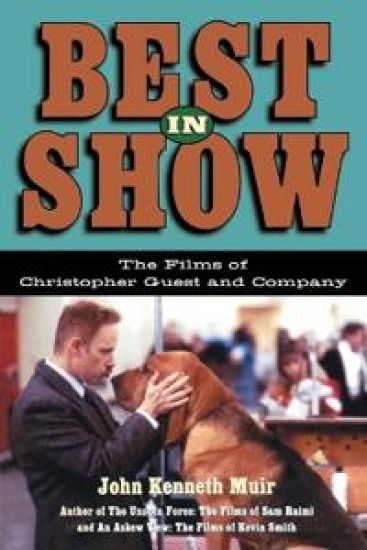
Best in Show

Best in Show

John Kenneth Muir

Applause Theatre Book Publishers
2004
pokkari
EBest in ShowE is the first in-depth look at the method behind film director and actor Christopher Guest's madness a and genius. John Kenneth Muir focuses his attention on the acclaimed Guest-directed trilogy of what some call mockumentaries : EWaiting for GuffmanE EBest in ShowE and EA Mighty WindE. In these films Guest has escorted rapt audiences into the purportedly real worlds of a small-town theatrical company dog show competition and folk music festival. Muir also details the events that lead to Rob Reiner's influential and legendary EThis Is Spinal TapE which ERolling StoneE called the best rock and roll movie of all time and in which Guest played the part of guitarist Nigel Tufnel.THMuch of EBest in ShowE exemplifies the unique process by which Guest directs films. He employs a common repertory company improvises scenes often without any rehearsal and does not use any screenplay with dialogue instead following a detailed outline often co-authored with his ace actor/writer Eugene Levy. Company members that have been interviewed for this book include Fred Willard Harry Shearer Bob Balaban and Michael Hitchcock.THGuest's influences a ESaturday Night LiveE ENational LampoonE a as well as his more conventional comedies such as EThe Big PictureE and EAlmost HeroesE are studied. EBest in ShowE is general enough to bring new fans to the table yet detailed enough to satisfy the most in-the-know Guest fan and film student. A complete filmography with Guest's directing acting and writing credits is included as is the appendix You Know You're in a Christopher Guest Film When ... THGuest once commented I am drawn to people who have dreams that are slightly out of reach. Now thanks to John Kenneth Muir the fascinating world of Christopher Guest and company is substantially more within reach.