Kirjojen hintavertailu. Mukana 11 627 220 kirjaa ja 12 kauppaa.

Kirjahaku

Etsi kirjoja tekijän nimen, kirjan nimen tai ISBN:n perusteella.

17 kirjaa tekijältä John Koethe

Constructor Poems by John Koethe

Constructor Poems by John Koethe

John Koethe

HARPERCOLLINS PUBLISHERS INC
2000
nidottu
"John Koethe's The Constructor is a scrupulous, elegant account of the meditative intellect as an instrument continually registering the passage of time. Exquisitely modulated and brutally honest, these poems would be harrowing were they not so seductively beautiful. No one writing in this country today sees as deeply as Koethe into the tears that lie at the heart of things, and no contemporary investigation of the life of the mind may be called complete that does not accommodate the lush intricacy of his terrifying recognitions."-- George Bradley"I prize John Koethe's intimate expanses and unsettling reveries, his tender contemplations and odd mental landscapes. He is an heir to Wallace Stevens and John Ashbery and, like them, he gives us the sensation of thinking itself, of a certain fleeting, daily, solitary consciousness rescued from oblivion and held aloft."-- Edward Hirsch
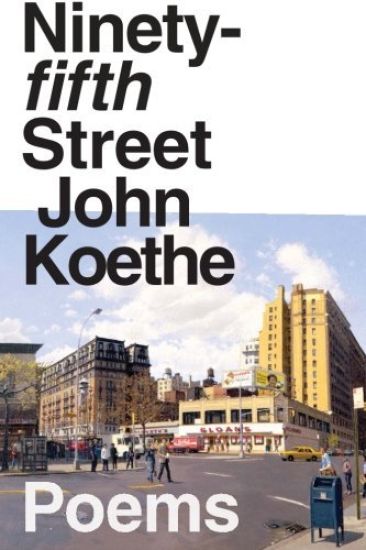
Ninety-fifth Street

Ninety-fifth Street

John Koethe

HARPERCOLLINS PUBLISHERS INC
2009
pokkari
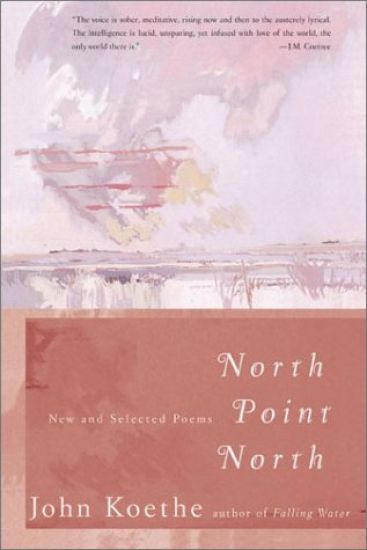
A Harper Perennial paperback original, Ninety-fifth Street is a beautiful new collection of poems by John Koethe, acclaimed by poet Edward Hirsch as an heir to Wallace Stevens. In this, his eighth book of poems, Koethe, the author of North Point North and Falling Water, offers readers the reflections of a poet in mid-life, an "aging child of 62," passionately engaged with the world yet drawn to meditate on memory, time, and the mysteries of human existence.
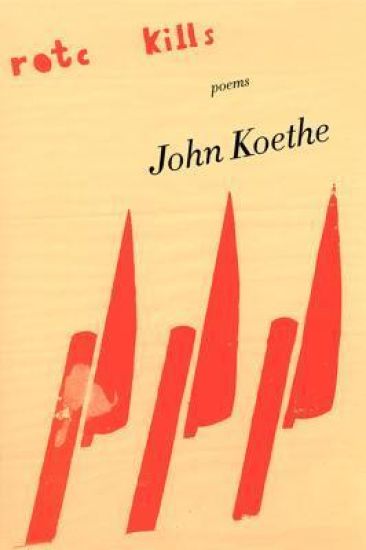
ROTC Kills

ROTC Kills

John Koethe

HARPERCOLLINS PUBLISHERS INC
2012
nidottu
" A] visionary new book of poems and prose meditations."--Susan Stewart, author of Columbarium and Red Rover"John Koethe's poems...are profound meditations on time and the curious hold it has on the human psyche. In them, even the most extreme exertions of consciousness are transformed into the faultless measures of clear and beautiful speech."--American Academy of Arts and LettersROTC Kills is a lyrical and arresting new collection from renowned poet John Koethe, 2011 winner of the Arts and Letters Award and the Lenore Marshall Prize for the year's outstanding work of poetry. As typified by the provocative title piece--a wistful look back at the poet's years at Harvard University in the late sixties--the poetry and prose within evoke the memories and dreams; the literature, popular culture, and philosophy of a generation through the lens of the poet's personal history. In the grand tradition of Wordsworth, Wallace Stevens, and John Ashbery, ROTC Kills is an important work from a major American poet.
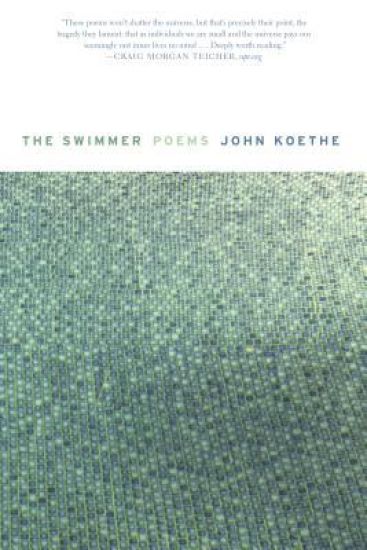
The Swimmer: Poems

The Swimmer: Poems

John Koethe

Farrar, Straus and Giroux
2017
nidottu
A searching new collection from America's philosopher-poet John Koethe, in his tenth volume of poetry, investigates the capricious nature of everyday life, "the late-night jazz, great sex and all / The human shit defining what we are." His poems--always dynamic and in process, never static or complete--luxuriate in the questions that punctuate the most humdrum of routines, rendering a robust portrait of an individual: complicated, quotidian, and resounding with truth. The Swimmer argues that this "energizes everything" life's trivialities, surprises, and disappointments, and the "terrible feeling of being just about to fall."
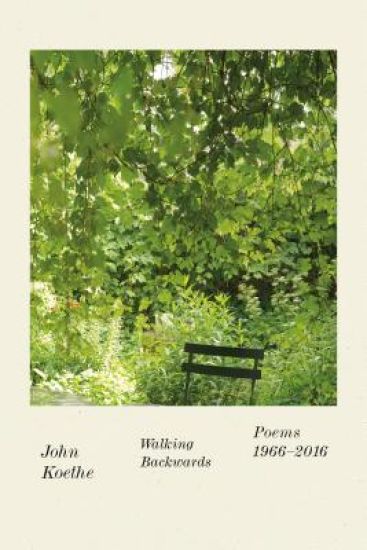
Walking Backwards: Poems 1966-2016

Walking Backwards: Poems 1966-2016

John Koethe

Farrar, Straus and Giroux
2020
nidottu
Collected poems from America's searching and thoughtful philosopher-poet . . . There's somethingComforting about rituals renewed, even adolescents' pipe dreams: They'll find out soon enough, and meanwhile find their placesIn the eternal scenery, less auguries or cautionary tales Than parts of an unchanging whole, as ripe for contemplationAs a planisphere or the clouds: the vexed destinies, the shared life, The sempiternal spectacle of someone preaching to the choirWhile walking backwards in the moment on a warm spring afternoon. John Koethe's poems--always dynamic and in process, never static or complete--luxuriate in the questions that punctuate the most humdrum of routines, rendering a robust portrait of an individual: complicated, quotidian, and resounding with truth. Gathering for the first time his impressive and award-winning body of work, published between 1966 and 2016, Walking Backwards introduces this gifted poet to a new, wider readership.
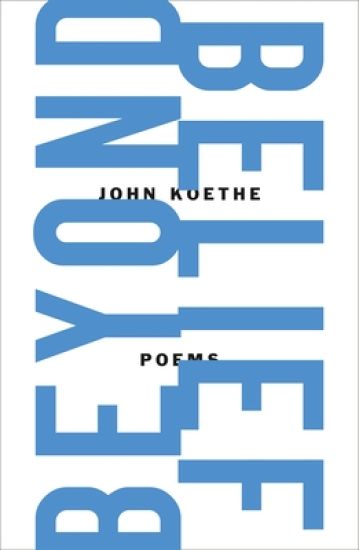
Beyond Belief

Beyond Belief

John Koethe

Farrar, Strauss Giroux-3pl
2023
pokkari
A rich, meditative new collection of poetry from John Koethe, the "necessary and great poet" (Hyperallergic). It's presumptuous, but if you're reading this youProbably know my usual obsessions and preoccupations: The "world"--both the word and what it stands for--and time, Which is or isn't real, depending on my mood. I've alwaysHated poems about philosophy, and I hope I still do, But since I don't know what that means anymore, here I am, Musing on my ends and my beginnings one more time . . . In Beyond Belief, John Koethe poses eternal and essential questions about the rhythms of time, language and literature, and "the space between attention and belief." The eleventh book of poetry from America's philosopher-poet is an intimate, searching collection that gives life to the mundane and lends words to our most interior and abstract musings. What makes a life real? Words on a page, the accumulation of moments and memories, or nothing at all? And what is a life worth? Locked inside, have we lost our future and its promises or are we merely pressed to inhabit our present and ourselves? The award-winning poet invites us into his consideration of our world, as "An ordinary person sitting on his balcony on a summer afternoon, / Waiting patiently for someone to explain it to and meanwhile / Living quietly in his imagination, imagining the afterlife."
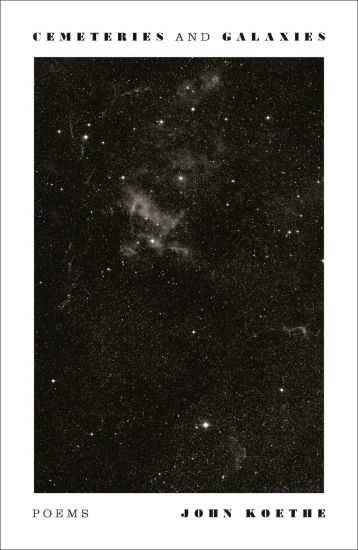
Cemeteries and Galaxies: Poems

Cemeteries and Galaxies: Poems

John Koethe

Farrar, Straus and Giroux
2025
nidottu
John Koethe unravels timeless questions of death, math, meaning, and much more in this mesmerizing collection. John Koethe, one of our most philosophically sophisticated poets, has written a book of pithy, contentious, witty poems about our perennial, never-satisfied search for meaning. The silent mysteries of the stars and the mute beauty of human graves have deep similarities that Koethe probes in these poems with a wondering, wandering gimlet eye that will delight the reader when they don't terrify them. Cemeteries and Galaxies is an extraordinarily provocative and, perhaps surprisingly, consoling book.
Poetry at One Remove

Poetry at One Remove

John Koethe

The University of Michigan Press
2000
nidottu
Poetry at One Remove collects the essays of contemporary American poet John Koethe. Uniquely, Koethe is also a philosopher fascinated by the relationship between poetry and philosophy. His essays address the work of particular poets, the notions of the self poetry embodies, the relationship between poetry and theory, the roles of thought, experience, and emotion in poetry, the relationship between romanticism and philosophical realism, and the connection between one's own conception of one's identity and the poetry one writes.Though the individual essays are self-contained, the conception of poetry that emerges from them is a coherent one: a neo-romantic perspective that sees poetry as an enactment or affirmation of the claims of subjectivity, set against an inert, objective world that threatens to annihilate it. This conception of romanticism is a highly abstract and generalized one and is related to the experience of what Kant called the dynamical sublime, another theme that runs through several of the essays. It is also a conception that informs Koethe's own poetry.The book will appeal to general readers interested in poetry of a meditative nature; those in literary studies interested in the relation of theory to literature, in Romanticism, and in contemporary poetry; and philosophers interested in the relationship between philosophy and literature.John Koethe is author of Falling Water and The Constructor. He has received a fellowship from the National Endowment of the Arts and a Guggenheim Fellowship, the Kingsley Tufts Poetry Award, and numerous other prizes. He is is Professor of Philosophy, University of Wisconsin at Milwaukee.
Poetry at One Remove

Poetry at One Remove

John Koethe

The University of Michigan Press
2000
sidottu
Poetry at One Remove collects the essays of contemporary American poet John Koethe. Uniquely, Koethe is also a philosopher fascinated by the relationship between poetry and philosophy. His essays address the work of particular poets, the notions of the self poetry embodies, the relationship between poetry and theory, the roles of thought, experience, and emotion in poetry, the relationship between romanticism and philosophical realism, and the connection between one's own conception of one's identity and the poetry one writes.Though the individual essays are self-contained, the conception of poetry that emerges from them is a coherent one: a neo-romantic perspective that sees poetry as an enactment or affirmation of the claims of subjectivity, set against an inert, objective world that threatens to annihilate it. This conception of romanticism is a highly abstract and generalized one and is related to the experience of what Kant called the dynamical sublime, another theme that runs through several of the essays. It is also a conception that informs Koethe's own poetry.The book will appeal to general readers interested in poetry of a meditative nature; those in literary studies interested in the relation of theory to literature, in Romanticism, and in contemporary poetry; and philosophers interested in the relationship between philosophy and literature.John Koethe is author of Falling Water and The Constructor. He has received a fellowship from the National Endowment of the Arts and a Guggenheim Fellowship, the Kingsley Tufts Poetry Award, and numerous other prizes. He is is Professor of Philosophy, University of Wisconsin at Milwaukee.
The Late Wisconsin Spring

The Late Wisconsin Spring

John Koethe

Princeton University Press
2014
pokkari
"[Koethe's] new collection is that rarity, a book of poems with a genuine philosophical dimension and an elegant but conversational poise."--The New York Times Book Review "Solemn and playful, John Koethe's poems lock themselves gradually but firmly into one's memory. His new collection offers in his own words, 'happiness, for myself and strangers.'"--John Ashbery Originally published in 1984. The Princeton Legacy Library uses the latest print-on-demand technology to again make available previously out-of-print books from the distinguished backlist of Princeton University Press. These editions preserve the original texts of these important books while presenting them in durable paperback and hardcover editions. The goal of the Princeton Legacy Library is to vastly increase access to the rich scholarly heritage found in the thousands of books published by Princeton University Press since its founding in 1905.
The Late Wisconsin Spring

The Late Wisconsin Spring

John Koethe

Princeton University Press
2016
sidottu
"[Koethe's] new collection is that rarity, a book of poems with a genuine philosophical dimension and an elegant but conversational poise."--The New York Times Book Review "Solemn and playful, John Koethe's poems lock themselves gradually but firmly into one's memory. His new collection offers in his own words, 'happiness, for myself and strangers.'"--John Ashbery Originally published in 1984. The Princeton Legacy Library uses the latest print-on-demand technology to again make available previously out-of-print books from the distinguished backlist of Princeton University Press. These editions preserve the original texts of these important books while presenting them in durable paperback and hardcover editions. The goal of the Princeton Legacy Library is to vastly increase access to the rich scholarly heritage found in the thousands of books published by Princeton University Press since its founding in 1905.
The Continuity of Wittgenstein's Thought

The Continuity of Wittgenstein's Thought

John Koethe

Cornell University Press
1996
sidottu
Ludwig Wittgenstein's philosophical work is informed throughout by a particular broad theme: that the semantic and mentalistic attributes of language and human life are shown by verbal and nonverbal conduct, but that they resist incorporation into the domain of the straightforwardly factual. So argues John Koethe, in contrast to the standard view that Wittgenstein's earlier and later philosophical positions are sharply opposed.According to the received view, Wittgenstein's thinking underwent a radical transformation after the Tractatus, leading him to abandon classical realism and to develop an alternative semantics based on the notion of warranted assertability. Koethe maintains that the thesis that semantic claims are not made true by any facts whatsoever, which was a central part of Wittgenstein's early theory of elementary propositions, was one he continued to develop in his later writings, and that it is perfectly compatible with classical realism. In making his case for the essential continuity of Wittgenstein's thought, Koethe ranges over the entire corpus of the philosopher's writing, and concludes by pointing out connections between Wittgenstein's views and those of several contemporary philosophers, including Nagel, Dennett, Davidson, and Dummett.
Scepticism, Knowledge, and Forms of Reasoning

Scepticism, Knowledge, and Forms of Reasoning

John Koethe

Cornell University Press
2005
sidottu
"The problem of philosophical scepticism is not so much what to say about the view itself (there being a consensus that it should be rejected), but rather what to say about the arguments that purport to yield it. And since these arguments involve claims and principles concerning notions like knowledge and possibility, it is difficult to see how to explore the arguments without exploring these notions too."—from the Introduction How do we address philosophical arguments whose conclusions contradict our commonsense knowledge? For example: a logically impeccable argument that concludes that you cannot know that you are at this very moment reading a description of a book of philosophy. That is the problem of philosophical scepticism. Scepticism, Knowledge, and Forms of Reasoning is an attempt to resolve how best to respond to such vexing arguments, a matter on which there is no consensus among contemporary philosophers. Rather than denying the premises of such arguments or simply declaring them invalid, John Koethe delves into what such arguments reveal about the nature of reasoning itself. He suggests that there is nothing straightforwardly wrong with sceptical arguments, and that in recognizing this while at the same time honoring our commonsense convictions about knowledge, we confront profound questions about the very nature of reasoning.
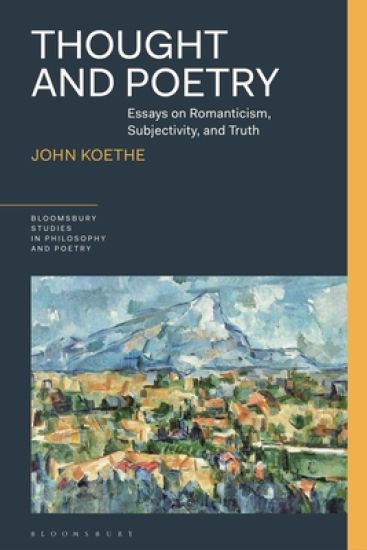
Thought and Poetry

Thought and Poetry

John Koethe

BLOOMSBURY PUBLISHING PLC
2022
sidottu
Addressing objective and subjective views of the self and the world in philosophy and poetry, this collection brings together a chronology of John Koethe’s thoughts on the connections between the two forms and makes a significant contribution to unsettling the oppositions that separate them. The essays traverse the philosophical conception of the self in modern poetry and locate connections between poets including William Wordsworth, Wallace Stevens, and John Ashbery alongside philosophers including Kant, Schopenhauer, and Wittgenstein. Koethe pays special attention to romantic poetry and notions of the sublime, which he maps onto subjective individual experience and the objective perspective on the natural world. Koethe further explores this theme in a new essay on romanticism and the sublime in relation to the mind-body problem. Using an associative and impressionistic style to write philosophically about poetry, Koethe defends his own approach that such writing cannot and should not aim for the rigor of philosophical argumentation.
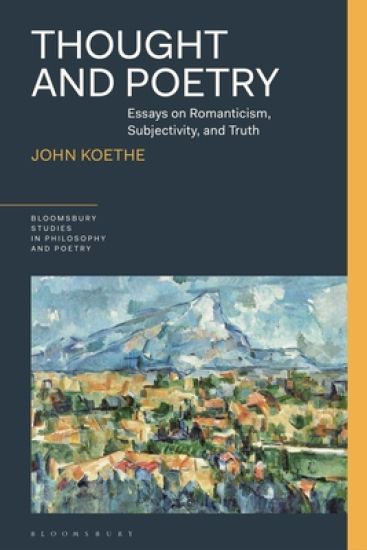
Thought and Poetry

Thought and Poetry

John Koethe

BLOOMSBURY PUBLISHING PLC
2023
nidottu
Addressing objective and subjective views of the self and the world in philosophy and poetry, this collection brings together a chronology of John Koethe’s thoughts on the connections between the two forms and makes a significant contribution to unsettling the oppositions that separate them. The essays traverse the philosophical conception of the self in modern poetry and locate connections between poets including William Wordsworth, Wallace Stevens, and John Ashbery alongside philosophers including Kant, Schopenhauer, and Wittgenstein. Koethe pays special attention to romantic poetry and notions of the sublime, which he maps onto subjective individual experience and the objective perspective on the natural world. Koethe further explores this theme in a new essay on romanticism and the sublime in relation to the mind-body problem. Using an associative and impressionistic style to write philosophically about poetry, Koethe defends his own approach that such writing cannot and should not aim for the rigor of philosophical argumentation.