Kirjojen hintavertailu. Mukana 11 627 220 kirjaa ja 12 kauppaa.

Kirjahaku

Etsi kirjoja tekijän nimen, kirjan nimen tai ISBN:n perusteella.

4 kirjaa tekijältä John L. Stanley

The Sociology of Virtue

The Sociology of Virtue

John L. Stanley

University of California Press
2018
pokkari
Georges Sorel's reputation as a proponent of violence has helped to link his ideas to fascist and totalitarian thought. Much of the literature on Sorel as developed this theme, at the expense of what Sorel himself stated as his primary purpose, "the discovery of the historical genesis of morals." How, Sorel asked, in the light of the development of modern industry and the vast powers of the modern state the individual can possess a sense of self-worth and at the same time help to sustain a cultural vitality similar to the great societies of antiquity? How is it possible to avoid the utter resignation and nihilistic relativism of modern existence? In his writings Sorel outlined a sociology of virtue that combined the importance of family love as the basis of community feelings with acceptance of the basis of individual vitality as constant industrial struggle against nature. Sorel's solution is different from Marx's: in place of the ida of transcended alienation, Sorel envisions an agonal striving against nature's unceasing resistance to our efforts. The Feuerbachian unity of nature that, for Marx, had been alienated under capitalism, Sorel regarded as being inherently fragmented by scientific procedures themselves, as well as by the industrial processes that correspond to those scientific procedures. For Sorel, the struggle against nature is the struggle that enables man to overcome himself, to strive against his own inclination to passivity, sloth, and licentiousness. The Marxist concept of totality so necessary to the vision of a communist society is rejected, in favor of a pragmatic, pluralist view of nature that parallels the social pluralism of a regime of workers' syndicates. The primary function of Sorel's famous "myth of the general strike" is to link the workers' constant struggles against capitalist employers to the never-ending struggle against nature. The feelings engendered by such a strubble constitute the true core of socialism; without such feelings, socialism is doomed to the same decay that Sorel and Marx foresaw for capitalist civilization. This title is part of UC Press's Voices Revived program, which commemorates University of California Press’s mission to seek out and cultivate the brightest minds and give them voice, reach, and impact. Drawing on a backlist dating to 1893, Voices Revived makes high-quality, peer-reviewed scholarship accessible once again using print-on-demand technology. This title was originally published in 1981.
The Sociology of Virtue

The Sociology of Virtue

John L. Stanley

University of California Press
2024
sidottu
Georges Sorel's reputation as a proponent of violence has helped to link his ideas to fascist and totalitarian thought. Much of the literature on Sorel as developed this theme, at the expense of what Sorel himself stated as his primary purpose, "the discovery of the historical genesis of morals." How, Sorel asked, in the light of the development of modern industry and the vast powers of the modern state the individual can possess a sense of self-worth and at the same time help to sustain a cultural vitality similar to the great societies of antiquity? How is it possible to avoid the utter resignation and nihilistic relativism of modern existence? In his writings Sorel outlined a sociology of virtue that combined the importance of family love as the basis of community feelings with acceptance of the basis of individual vitality as constant industrial struggle against nature. Sorel's solution is different from Marx's: in place of the ida of transcended alienation, Sorel envisions an agonal striving against nature's unceasing resistance to our efforts. The Feuerbachian unity of nature that, for Marx, had been alienated under capitalism, Sorel regarded as being inherently fragmented by scientific procedures themselves, as well as by the industrial processes that correspond to those scientific procedures. For Sorel, the struggle against nature is the struggle that enables man to overcome himself, to strive against his own inclination to passivity, sloth, and licentiousness. The Marxist concept of totality so necessary to the vision of a communist society is rejected, in favor of a pragmatic, pluralist view of nature that parallels the social pluralism of a regime of workers' syndicates. The primary function of Sorel's famous "myth of the general strike" is to link the workers' constant struggles against capitalist employers to the never-ending struggle against nature. The feelings engendered by such a strubble constitute the true core of socialism; without such feelings, socialism is doomed to the same decay that Sorel and Marx foresaw for capitalist civilization. This title is part of UC Press's Voices Revived program, which commemorates University of California Press’s mission to seek out and cultivate the brightest minds and give them voice, reach, and impact. Drawing on a backlist dating to 1893, Voices Revived makes high-quality, peer-reviewed scholarship accessible once again using print-on-demand technology. This title was originally published in 1981.
Mainlining Marx

Mainlining Marx

John L. Stanley

Transaction Publishers
2001
sidottu
In recent years a host of Western Marxists have tried to emancipate Marx from responsibility for various unsavory doctrines. Political theorists have argued that Marx can avoid the weight of Stalinism and also the various theories, such as positivism, naturalism, Darwinism, technological determinism and the dialectics of nature that support Marxism. In the course of building up their defense of Marx, these modern critics have developed an elaborate but often confusing rationale whose premise consists of attributing many of the nefarious tendencies of Marxism to Engels, particularly the latter's philosophy of nature. In Mainlining Marx, John L. Stanley sets Marx's view of nature back in its proper perspective.Stanley challenges the "new orthodoxy" of prominent Marxist scholars who see a fundamental dichotomy between Marx and Engels with the latter believing in cosmic superlaws and the former adhering to historically grounded ones. Stanley argues both Marx and Engels used historical and transhistorical laws at various times. He is highly critical of those who abstract theoretical principles out of texts Marx wrote with specific and historical political goals in mind. He takes issue, as well, with critics who posit a Marxian belief in communist as against natural needs, and further challenges the new orthodoxy in his analysis of Marx's dissertation, showing that from the beginning Marx's thought was grounded in materialist determinism.Supplementing the chapters on Marx and his critics, the volume concludes with an essay on Georges Sorel's approach to textual analysis and interpretation, showing how Sorel, far in advance of his time realized the impossibility of completely objective analysis and the inevitable distortion of the subject under study.Throughout this volume, Stanley's critical approach utilizes Sorel's illuminating insights to point out the distortions in modern Marxian analysis. Challenging and original, Mainlining Marx is a major contribution to the study of Marxism. It will be read by economists, political scientists, and intellectual historians.
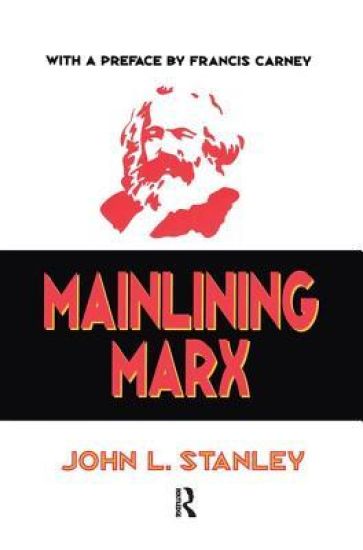
Mainlining Marx

Mainlining Marx

John L. Stanley

Routledge
2018
nidottu
In recent years a host of Western Marxists have tried to emancipate Marx from responsibility for various unsavory doctrines. Political theorists have argued that Marx can avoid the weight of Stalinism and also the various theories, such as positivism, naturalism, Darwinism, technological determinism and the dialectics of nature that support Marxism. In the course of building up their defense of Marx, these modern critics have developed an elaborate but often confusing rationale whose premise consists of attributing many of the nefarious tendencies of Marxism to Engels, particularly the latter's philosophy of nature. In Mainlining Marx, John L. Stanley sets Marx's view of nature back in its proper perspective.Stanley challenges the "new orthodoxy" of prominent Marxist scholars who see a fundamental dichotomy between Marx and Engels with the latter believing in cosmic superlaws and the former adhering to historically grounded ones. Stanley argues both Marx and Engels used historical and transhistorical laws at various times. He is highly critical of those who abstract theoretical principles out of texts Marx wrote with specific and historical political goals in mind. He takes issue, as well, with critics who posit a Marxian belief in communist as against natural needs, and further challenges the new orthodoxy in his analysis of Marx's dissertation, showing that from the beginning Marx's thought was grounded in materialist determinism.Supplementing the chapters on Marx and his critics, the volume concludes with an essay on Georges Sorel's approach to textual analysis and interpretation, showing how Sorel, far in advance of his time realized the impossibility of completely objective analysis and the inevitable distortion of the subject under study.Throughout this volume, Stanley's critical approach utilizes Sorel's illuminating insights to point out the distortions in modern Marxian analysis. Challenging and original, Mainlining Marx is a major contribution to the study of Marxism. It will be read by economists, political scientists, and intellectual historians.