Kirjojen hintavertailu. Mukana 11 342 296 kirjaa ja 12 kauppaa.

Kirjahaku

Etsi kirjoja tekijän nimen, kirjan nimen tai ISBN:n perusteella.

4 kirjaa tekijältä John Langdon

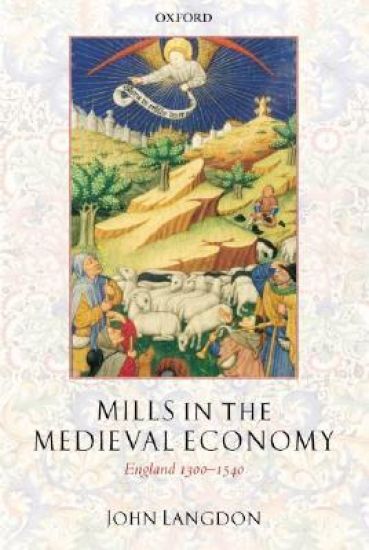
Mills in the Medieval Economy

Mills in the Medieval Economy

John Langdon

Oxford University Press
2004
sidottu
The late medieval English milling industry epitomizes one of the most important technical achievements of early societies: the exploitation of wind, water and muscle power for augmenting human endeavours. Through a computerized analysis of the number and variety of mills in England from 1300 to 1540, as well as the technology, practices and personnel sustaining them, Langdon reveals the structural evolution of the milling industry, highlighting both its accomplishments and its limitations. Although it focuses on England during the later middle ages, the book's innovative methodologies and original findings will furnish useful comparative material for all scholars investigating pre-industrial societies. It also offers a challenging new perspective on the later middle ages as a time of change, in addition to providing enthusiasts of old technologies generally with a wealth of detail about one of the most recognizable and enduring features of medieval society.
Horses, Oxen and Technological Innovation

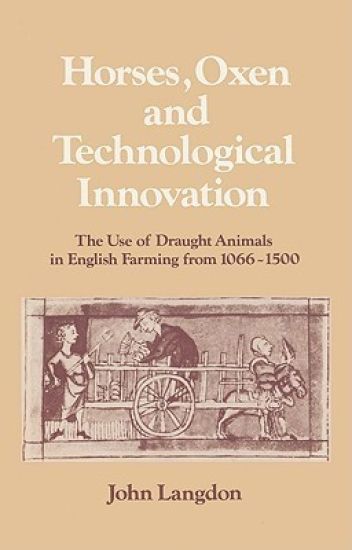
Horses, Oxen and Technological Innovation

John Langdon

Cambridge University Press
2002
pokkari
The introduction of the horse brought many advantages to medieval English farming, particularly as an improvement to ploughing and hauling. But the replacement of oxen by horses was by no means inevitable, as the situation often depended upon a number of factors not immediately obvious to modern eyes. These factors, which included such environmental aspects as soil types and terrain, are evaluated to see how they affected the decision to use horses and oxen. The introduction of the horse is furthermore examined in relation to farm production, the improvement in marketing, and the development of regionalism; and various theories regarding technological innovation are assessed to see whether this or that innovation acted in a predictable way. Most importantly, the study affords a glimpse into the working of the minds of medieval farmers as they approached the problems of livelihood and survival.