Kirjojen hintavertailu. Mukana 11 244 527 kirjaa ja 12 kauppaa.

Kirjahaku

Etsi kirjoja tekijän nimen, kirjan nimen tai ISBN:n perusteella.

15 kirjaa tekijältä John Lechte

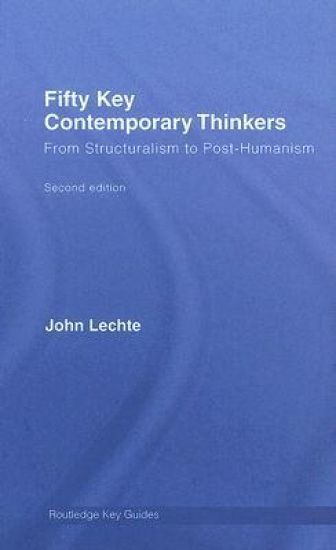
Fifty Key Contemporary Thinkers

Fifty Key Contemporary Thinkers

John Lechte

Routledge
2007
sidottu
This revised second edition from our bestselling Key Guides includes brand new entries on some of the most influential thinkers of the twentieth- and twenty-first century: Zizek, Bergson, Husserl, Heidegger, Butler and Haraway.With a new introduction by the author, sections on phenomenology and the post-human, full cross-referencing and up-to-date guides to major primary and secondary texts, this is an essential resource to contemporary critical thought for undergraduates and the interested reader.
Fifty Key Contemporary Thinkers

Fifty Key Contemporary Thinkers

John Lechte

Routledge
2007
nidottu
This revised second edition from our bestselling Key Guides includes brand new entries on some of the most influential thinkers of the twentieth- and twenty-first century: Zizek, Bergson, Husserl, Heidegger, Butler and Haraway.With a new introduction by the author, sections on phenomenology and the post-human, full cross-referencing and up-to-date guides to major primary and secondary texts, this is an essential resource to contemporary critical thought for undergraduates and the interested reader.
Julia Kristeva (RLE Feminist Theory)
A leading literary critic and psychoanalyst, Julia Kristeva is one of the most significant French thinkers writing today. In this up-to-date survey of her work, John Lechte outlines fully and systematically her intellectual development. He traces it from her work on Bakhtin and the logic of poetic language in the 1960s, through her influential theories of the ‘symbolic’ and the ‘semiotic’ in the 1970s, to her analyses of horror, love, melancholy and cosmopolitanism in the 1980s. He provides an insight into the intellectual and historical context which gave rise to Kristeva’s thought, showing how thinkers such as Roland Barthes, Emile Benviste and Georges Bataille have been important in stimulating her own reflections. He concludes with an overall assessment of Kristeva’s work, looking in particular at her importance for feminism and postmodern thought in general.Essential reading for all those who wish to extend their understanding of this important thinker, this first full-length study of Kristeva’s work will be of interest to students of literature, sociology, critical theory, feminist theory, French studies and psychoanalysis.
Julia Kristeva (RLE Feminist Theory)
A leading literary critic and psychoanalyst, Julia Kristeva is one of the most significant French thinkers writing today. In this up-to-date survey of her work, John Lechte outlines fully and systematically her intellectual development. He traces it from her work on Bakhtin and the logic of poetic language in the 1960s, through her influential theories of the ‘symbolic’ and the ‘semiotic’ in the 1970s, to her analyses of horror, love, melancholy and cosmopolitanism in the 1980s. He provides an insight into the intellectual and historical context which gave rise to Kristeva’s thought, showing how thinkers such as Roland Barthes, Emile Benviste and Georges Bataille have been important in stimulating her own reflections. He concludes with an overall assessment of Kristeva’s work, looking in particular at her importance for feminism and postmodern thought in general.Essential reading for all those who wish to extend their understanding of this important thinker, this first full-length study of Kristeva’s work will be of interest to students of literature, sociology, critical theory, feminist theory, French studies and psychoanalysis.
Genealogy and Ontology of the Western Image and its Digital Future
With the emerging dominance of digital technology, the time is ripe to reconsider the nature of the image. Some say that there is no longer a phenomenal image, only disembodied information (0-1) waiting to be configured. For photography, this implies that a faith in the principle of an "evidential force" – of the impossibility of doubting that the subject was before the lens – is no longer plausible. Technologically speaking, we have arrived at a point where the manipulation of the image is an ever-present possibility, when once it was difficult, if not impossible.What are the key moments in the genealogy of the Western image which might illuminate the present status of the image? And what exactly is the situation to which we have arrived as far as the image is concerned? These are the questions guiding the reflections in this book. In it we move, in Part 1, from a study of the Greek to the Byzantine image, from the Renaissance image and the image in the Enlightenment to the image as it emerges in the Industrial Revolution.Part 2 examines key aspects of the image today, such as the digital and the cinema image, as well as the work of philosophers of the image, including: Roland Barthes, Walter Benjamin, Gilles Deleuze, Jean-Paul Sartre and Bernard Stiegler.
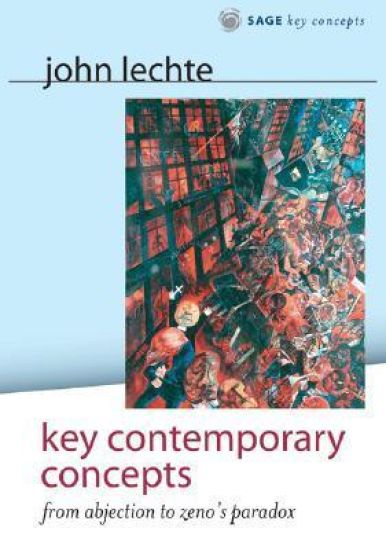
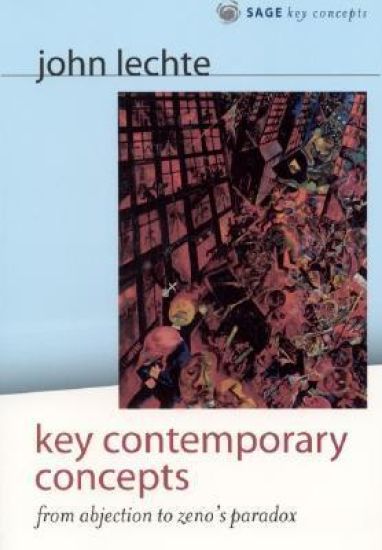
Key Contemporary Concepts

Key Contemporary Concepts

John Lechte

SAGE Publications Inc
2002
sidottu
An essential roadmap to the key concepts which frame our understanding of society and culture. From cybernetics to quantum theory, from ideology to power, from aesthetics to mimesis, this book spans a range of disciplines to provide an insight into the current scientific and intellectual state of society.
Key Contemporary Concepts

Key Contemporary Concepts

John Lechte

SAGE Publications Inc
2002
nidottu
An essential roadmap to the key concepts which frame our understanding of society and culture. From cybernetics to quantum theory, from ideology to power, from aesthetics to mimesis, this book spans a range of disciplines to provide an insight into the current scientific and intellectual state of society.
Law and Transcendence

Law and Transcendence

John Lechte

TAYLOR FRANCIS LTD
2026
sidottu
Inspired by the philosophy of Emmanuel Levinas, this book shows that for justice to be realised law must be understood to originate in transcendence, rather than in violence, conflict and the sacred – prevalent themes in philosophies of law and the political. To this end, the book takes up the case of ‘scapegoating’: evident in Carl Schmitt’s influential theory of the ‘friend-enemy’ dichotomy as the essence of the political, and here considered as a paradigm of injustice. After considering positivist approaches to the law, as well as a case study that considers the question of what it would mean for Aboriginal peoples to be treated justly, the book shows that pragmatic, positivist and immanent approaches to the law and the scapegoat cannot deal with ‘bad’ law, and cannot provide an insight into the nature of justice as ‘good’ law. The book then draws further on Levinas to demonstrate the necessity of law’s foundation, not in immanence, as is widely presupposed, but rather in transcendence. Law and Transcendence will appeal to scholars in law, philosophy, and political theory, and especially to those with interests in sovereignty and power.
Genealogy and Ontology of the Western Image and its Digital Future
With the emerging dominance of digital technology, the time is ripe to reconsider the nature of the image. Some say that there is no longer a phenomenal image, only disembodied information (0-1) waiting to be configured. For photography, this implies that a faith in the principle of an "evidential force" – of the impossibility of doubting that the subject was before the lens – is no longer plausible. Technologically speaking, we have arrived at a point where the manipulation of the image is an ever-present possibility, when once it was difficult, if not impossible.What are the key moments in the genealogy of the Western image which might illuminate the present status of the image? And what exactly is the situation to which we have arrived as far as the image is concerned? These are the questions guiding the reflections in this book. In it we move, in Part 1, from a study of the Greek to the Byzantine image, from the Renaissance image and the image in the Enlightenment to the image as it emerges in the Industrial Revolution.Part 2 examines key aspects of the image today, such as the digital and the cinema image, as well as the work of philosophers of the image, including: Roland Barthes, Walter Benjamin, Gilles Deleuze, Jean-Paul Sartre and Bernard Stiegler.
The Human

The Human

John Lechte

Bloomsbury Academic
2018
sidottu
Why is it important to consider the human today? Exploring this question John Lechte takes inspiration from the interplay of two of Giorgio Agamben’s concepts: ‘ways of life’ and ‘bare life’.Stateless people, those who do not have a political community, such as asylum seekers and refugees, are no less human. However the European tradition, represented most clearly in Hannah Arendt’s thinking of the opposition between the oikos, as the satisfaction of basic needs, and the polis, as the realm of freedom and glory, proposes the opposite of this. Arendt’s famous phrase, ‘the right to have rights’, means that freedom and full human potential can only be realised in the context of civil society; in short, that only citizens can be fully human. Because Arendt’s view is so influential, yet often not acknowledged, it is necessary to undertake a full investigation of the nature and meaning of the human to establish that it is not reducible to the citizen, but is always characterised by a ‘way of life’ – life mediated by language. The human is never reducible to ‘bare life’ – a life with no other significance than physical survival. The implications of ‘bare life’ are investigated through important themes in relation to the human, such as: freedom and necessity, the animal, animality as nature, inclusion and exclusion in politics, the sacred, death and dying, technics and nature, the Same and the Other, the everyday as extraordinary. Journeying through Agamben, Arendt, Bataille, Derrida, Hegel, Heidegger, Husserl, Levinas, Schelling, Simondon, and Stiegler, this is a profound search to reveal the truly human.
The Human

The Human

John Lechte

Bloomsbury Academic
2019
nidottu
Why is it important to consider the human today? Exploring this question John Lechte takes inspiration from the interplay of two of Giorgio Agamben’s concepts: ‘ways of life’ and ‘bare life’.Stateless people, those who do not have a political community, such as asylum seekers and refugees, are no less human. However the European tradition, represented most clearly in Hannah Arendt’s thinking of the opposition between the oikos, as the satisfaction of basic needs, and the polis, as the realm of freedom and glory, proposes the opposite of this. Arendt’s famous phrase, ‘the right to have rights’, means that freedom and full human potential can only be realised in the context of civil society; in short, that only citizens can be fully human. Because Arendt’s view is so influential, yet often not acknowledged, it is necessary to undertake a full investigation of the nature and meaning of the human to establish that it is not reducible to the citizen, but is always characterised by a ‘way of life’ – life mediated by language. The human is never reducible to ‘bare life’ – a life with no other significance than physical survival. The implications of ‘bare life’ are investigated through important themes in relation to the human, such as: freedom and necessity, the animal, animality as nature, inclusion and exclusion in politics, the sacred, death and dying, technics and nature, the Same and the Other, the everyday as extraordinary. Journeying through Agamben, Arendt, Bataille, Derrida, Hegel, Heidegger, Husserl, Levinas, Schelling, Simondon, and Stiegler, this is a profound search to reveal the truly human.
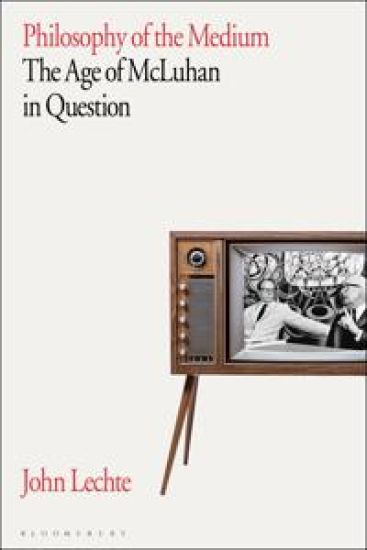
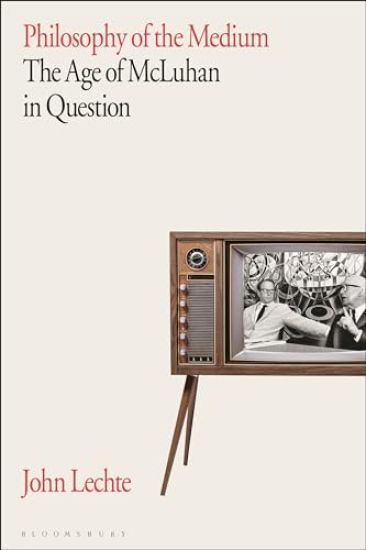
Philosophy of the Medium

Philosophy of the Medium

John Lechte

BLOOMSBURY PUBLISHING PLC
2023
sidottu
Taking the principle of the ‘disappearance of the medium’ into new territory, this book questions the pervasive influence of the principle that the ‘medium is the message’. Bold and expansive, this book argues that we have for too long focused on the technical specificities of media, when we should have been focusing on what it is that mediums do, that is, on their ‘content’ rather than their formal and technical qualities.With a re-reading of McLuhan, this volume offers a study of the conflicting views of technics as a medium in Bernard Stiegler’s work as well as an investigation into the extent to which Michel Serres’ work on communication sheds light on the nature of medium. Engaging also with the concept of Object-Oriented Ontology (OOO), and the notion of probabilistic objects in quantum physics and climate change, he explores the way in which measurement is perceived to ‘create’ reality. Concluding with a fascinating study of the implications of consciousness as a medium, this book ultimately reconsiders and offers a deeper understanding of what we mean by the term ‘media’: it is that which comes ‘between’ and which facilitates the transmission of content, essentially a creator of possibilities, yet never present as such in the light of its success as a vehicle for meaning.
Philosophy of the Medium

Philosophy of the Medium

John Lechte

BLOOMSBURY PUBLISHING PLC
2025
nidottu
Taking the principle of the ‘disappearance of the medium’ into new territory, this book questions the pervasive influence of the principle that the ‘medium is the message’. Bold and expansive, this book argues that we have for too long focused on the technical specificities of media, when we should have been focusing on what it is that mediums do, that is, on their ‘content’ rather than their formal and technical qualities.With a re-reading of McLuhan, this volume offers a study of the conflicting views of technics as a medium in Bernard Stiegler’s work as well as an investigation into the extent to which Michel Serres’ work on communication sheds light on the nature of medium. Engaging also with the concept of Object-Oriented Ontology (OOO), and the notion of probabilistic objects in quantum physics and climate change, he explores the way in which measurement is perceived to ‘create’ reality. Concluding with a fascinating study of the implications of consciousness as a medium, this book ultimately reconsiders and offers a deeper understanding of what we mean by the term ‘media’: it is that which comes ‘between’ and which facilitates the transmission of content, essentially a creator of possibilities, yet never present as such in the light of its success as a vehicle for meaning.
Violence, Image and Victim in Bataille, Agamben and Girard
What is violence what is an image? How does violence relate to the image, and how do violence and the image implicate and define the victim? Explores the link between violence and the image for the first time Clarifies the role of violence and the image in the work of Georges Bataille, Giorgio Agamben and Ren Girard Shows the implications of Christ being equated with the image Provides new insights into what violence is and what the image is, which makes this a book for out time Bataille, Agamben and Girard are thinkers of the moment in as much as they each aim to explain the basis of society and culture in the context of power and the sacred. To study power and the sacred, the book shows, is to reveal the connection between violence and the image, a connection that shows what it means to be a victim. Separate chapters are devoted to the study of violence and the image as these appear in the work of Bataille, Agamben and Girard. The book concludes that no study of violence and the image can avoid engaging with the issue of the injustice of being a victim.
Violence, Image and Victim in Bataille, Agamben and Girard
What is violence what is an image? How does violence relate to the image, and how do violence and the image implicate and define the victim? These questions underpin the thinking ofBataille, Agamben and Girard thinkers of the moment in as much as they each aim to explain the basis of society and culture in the context of power and the sacred. To study power and the sacred, the book shows, is to reveal the connection between violence and the image, a connection that shows what it means to be a victim.Separate chapters are devoted to the study of violence and the image as these appear in the work of Bataille, Agamben and Girard.The book concludes that no study of violence and the image can avoid engaging with the issue of the injustice of being a victim.