Kirjojen hintavertailu. Mukana 11 699 587 kirjaa ja 12 kauppaa.

Kirjahaku

Etsi kirjoja tekijän nimen, kirjan nimen tai ISBN:n perusteella.

12 kirjaa tekijältä John Lie

Zainichi (Koreans in Japan)

Zainichi (Koreans in Japan)

John Lie

University of California Press
2008
pokkari
This book traces the origins and transformations of a people-the Zainichi, or Koreans 'residing in Japan'. Using a wide range of arguments and evidence - historical and comparative, political and social, literary and pop-cultural - John Lie reveals the social and historical conditions that gave rise to Zainichi identity, while exploring its vicissitudes and complexity. In the process he sheds light on the vexing topics of diaspora, migration, identity, and group formation.
K-Pop

K-Pop

John Lie

University of California Press
2014
sidottu
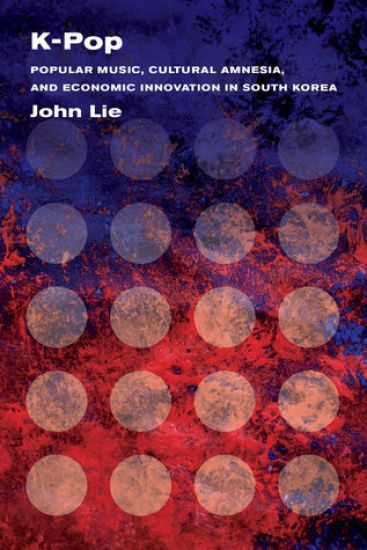
K-Pop: Popular Music, Cultural Amnesia, and Economic Innovation in South Korea seeks at once to describe and explain the emergence of export-oriented South Korean popular music and to make sense of larger South Korean economic and cultural transformations. John Lie provides not only a history of South Korean popular music the premodern background, Japanese colonial influence, post-Liberation American impact, and recent globalization but also a description of K-pop as a system of economic innovation and cultural production. In doing so, he delves into the broader background of South Korea in this wonderfully informed history and analysis of a pop culture phenomenon sweeping the globe.
K-Pop

K-Pop

John Lie

University of California Press
2014
pokkari
K-Pop: Popular Music, Cultural Amnesia, and Economic Innovation in South Korea seeks at once to describe and explain the emergence of export-oriented South Korean popular music and to make sense of larger South Korean economic and cultural transformations. John Lie provides not only a history of South Korean popular music the premodern background, Japanese colonial influence, post-Liberation American impact, and recent globalization but also a description of K-pop as a system of economic innovation and cultural production. In doing so, he delves into the broader background of South Korea in this wonderfully informed history and analysis of a pop culture phenomenon sweeping the globe.
Modern Peoplehood

Modern Peoplehood

John Lie

University of California Press
2011
pokkari
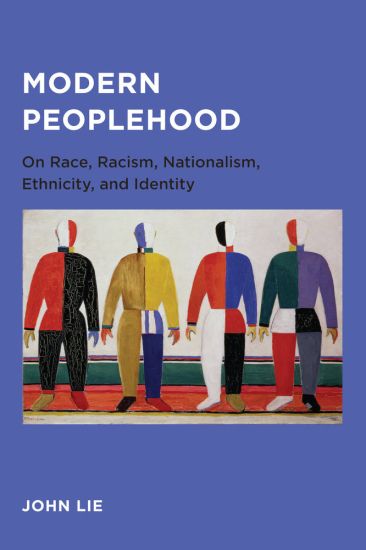
In modern states, John Lie argues, ideas of race, ethnicity, and nationality can be subsumed under the rubric of "peoplehood." He argues indeed, that the modern state has created the idea of peoplehood. That is, the seemingly primitive, atavistic feelings of belonging associated with ethnic, racial, and national identity are largely formed by the state. Not only is the state responsible for the development and nurturing of these feelings, it is also responsible for racial and ethnic conflict, even genocide. When citizens think of themselves in terms of their peoplehood identity, they will naturally locate the cause of all troubles--from neighborhood squabbles to wars - in racial, ethnic, or national attitudes and conflicts. Far from being transhistorical and transcultural phenomena, race, ethnicity, and nation, Lie argues, are modern notions - modernity here associated with the rise of the modern state, the industrial economy, and Enlightenment ideas.
Japan, the Sustainable Society

Japan, the Sustainable Society

John Lie

University of California Press
2021
sidottu
By the late twentieth century, Japan had gained worldwide attention as an economic powerhouse. Having miraculously risen from the ashes of World War II, it was seen by many as a country to be admired if not emulated. But by the early 1990s, that bubble burst in spectacular fashion. The Japanese economic miracle was over. In this book, John Lie argues that in many ways the Japan of today has the potential to be even more significant than it was four decades ago. As countries face the prospect of a world with decreasing economic growth and increasing environmental dangers, Japan offers a unique glimpse into what a viable future might look like—one in which people acknowledge the limits of the economy and environment while championing meaningful and sustainable ways of working and living. Beneath and beyond the rhetoric of growth, some Japanese are leading sustainable lives and creating a sustainable society. Though he does not prescribe a one-size-fits-all cure for the world, Lie makes the compelling case that contemporary Japanese society offers a possibility for how other nations might begin to valorize everyday life and cultivate ordinary virtues.
Japan, the Sustainable Society

Japan, the Sustainable Society

John Lie

University of California Press
2021
pokkari
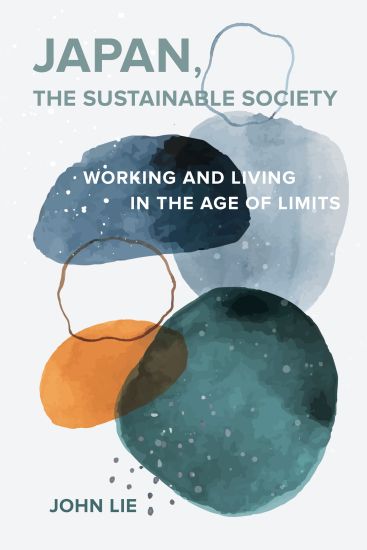
By the late twentieth century, Japan had gained worldwide attention as an economic powerhouse. Having miraculously risen from the ashes of World War II, it was seen by many as a country to be admired if not emulated. But by the early 1990s, that bubble burst in spectacular fashion. The Japanese economic miracle was over. In this book, John Lie argues that in many ways the Japan of today has the potential to be even more significant than it was four decades ago. As countries face the prospect of a world with decreasing economic growth and increasing environmental dangers, Japan offers a unique glimpse into what a viable future might look like—one in which people acknowledge the limits of the economy and environment while championing meaningful and sustainable ways of working and living. Beneath and beyond the rhetoric of growth, some Japanese are leading sustainable lives and creating a sustainable society. Though he does not prescribe a one-size-fits-all cure for the world, Lie makes the compelling case that contemporary Japanese society offers a possibility for how other nations might begin to valorize everyday life and cultivate ordinary virtues.
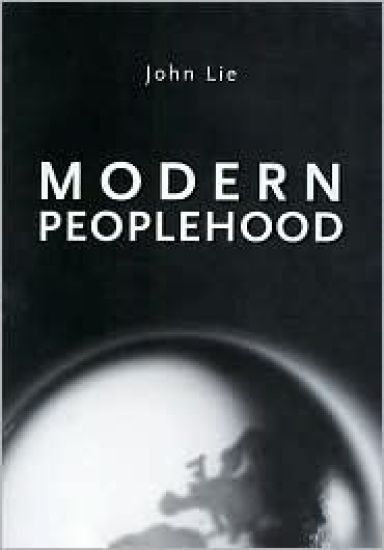
Modern Peoplehood

Modern Peoplehood

John Lie

Harvard University Press
2004
sidottu
In modern states, John Lie argues, ideas of race, ethnicity, and nationality can be subsumed under the rubric of "peoplehood." He argues indeed, that the modern state has created the idea of peoplehood. That is, the seemingly primitive, atavistic feelings of belonging associated with ethnic, racial, and national identity are largely formed by the state. Not only is the state responsible for the development and nurturing of these feelings, it is also responsible for racial and ethnic conflict, even genocide. When citizens think of themselves in terms of their peoplehood identity, they will naturally locate the cause of all troubles--from neighborhood squabbles to wars--in racial, ethnic, or national attitudes and conflicts.Far from being transhistorical and transcultural phenomena, race, ethnicity, and nation, Lie argues, are modern notions--modernity here associated with the rise of the modern state, the industrial economy, and Enlightenment ideas.
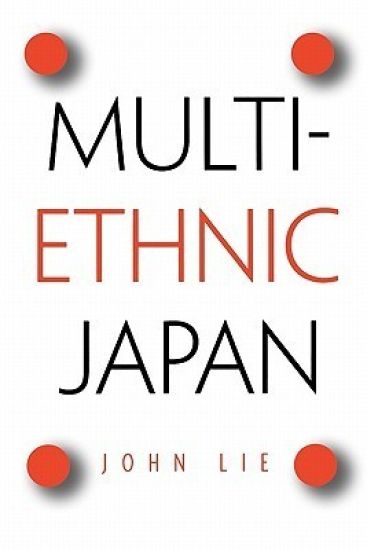
Multiethnic Japan

Multiethnic Japan

John Lie

Harvard University Press
2004
nidottu
Multiethnic Japan challenges the received view of Japanese society as ethnically homogeneous. Employing a wide array of arguments and evidence--historical and comparative, interviews and observations, high literature and popular culture--John Lie recasts modern Japan as a thoroughly multiethnic society.Lie casts light on a wide range of minority groups in modern Japanese society, including the Ainu, Burakumin (descendants of premodern outcasts), Chinese, Koreans, and Okinawans. In so doing, he depicts the trajectory of modern Japanese identity.Surprisingly, Lie argues that the belief in a monoethnic Japan is a post–World War II phenomenon, and he explores the formation of the monoethnic ideology. He also makes a general argument about the nature of national identity, delving into the mechanisms of social classification, signification, and identification.
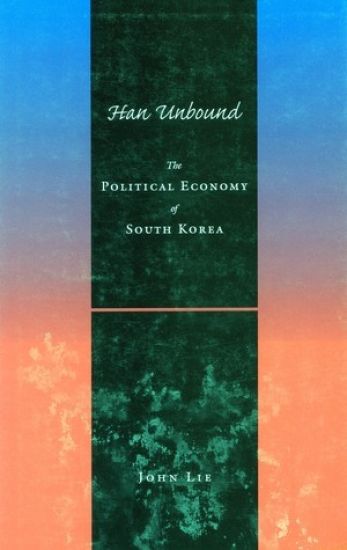
Han Unbound

Han Unbound

John Lie

Stanford University Press
1998
sidottu
This book reveals how South Korea was transformed from one of the poorest and most agrarian countries in the world in the 1950's to one of the richest and most industrialized states by the late 1980's. The author argues that South Korea's economic, cultural, and political development was the product of a unique set of historical circumstances that cannot be replicated elsewhere, and that only by ignoring the costs and negative consequences of development can South Korea's transformation be described as an unqualified success. The historical circumstances include a thoroughgoing land reform that forced children of former landlords to move to the cities to make their fortunes, a very low-paid labor force, and the threat from North Korea and the consequent American presence. The costs of development included the exploitation of labor (as late as 1986, South Korean factory workers had the longest hours in the world and earned less than their counterparts in Mexico and Brazil), undemocratic politics, and despoliation of the environment. The title of the book suggests the ambivalence of South Korean development: "Han" refers both to South Korea (Han'guk) and to the cultural expression of resentment or dissatisfaction (han). Because the author sees South Korean development as contingent on a variety of particular circumstances, he ranges widely to include not only the information typically gathered by sociologists and political economists, but also insights gained from examining popular tastes and values, poetry, fiction, and ethnography, showing how all of these aspects of South Korean life help elucidate his main themes. The result is the most comprehensive and informative account available of the extraordinary changes that brought South Korea to the forefront among major industrialized nations at the end of the twentieth century.
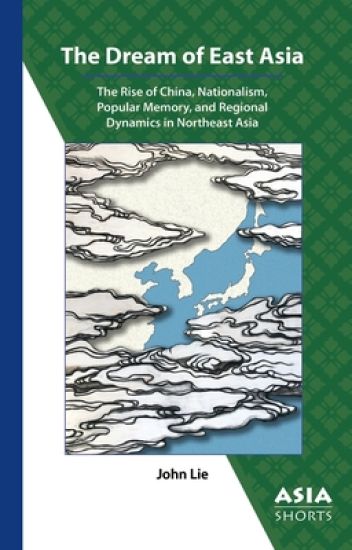
The Dream of East Asia – The Rise of China, Nationalism, Popular Memory, and Regional Dynamics in Northeast Asia
What do we talk about when we talk about East Asia? We are worried about China's emergence as an economic giant and military power that may upset the regional and, indeed, the global status quo. Much more mercurial, however, and therefore more frightening, is that riddle wrapped in a mystery inside an enigma known as North Korea, with its alternate launching of rhetorical fusillades and long-range missiles. And what has happened to Japan, that once mighty economic engine now reduced to a source of bleak news about stagnation and malaise? Then there is South Korea, manufacturer of such technologically advanced products as smartphones, and lately a generator of transnational fads ranging from snail cream to K-pop. Going beyond these standard scripts, The Dream of East Asia presents a framework for understanding contemporary Northeast Asia, focusing on the countries that comprise our conventional understanding of what we call East Asia--namely, China, Taiwan, Japan, and the two Koreas. In so doing, John Lie illuminates regional economic, political, and cultural dynamics.
The Global Environmental Crisis

The Global Environmental Crisis

John Lie

TAYLOR FRANCIS LTD
2024
nidottu
The Global Environmental Crisis presents a new perspective on our inattention and inaction in the face of a major crisis. We cannot proceed without scientific knowledge, but we cannot exclusively rely on it. What we need, in addition to scientific knowledge, is utopian imagination to make us understand the nature of the crisis and to suggest an alternative vision of a viable future. This book is an essential resource for students and instructors across the social sciences, especially sociology and environmental studies. It will also be a crucial and accessible text for general readers interested in climate change and how to imagine a better world for themselves and future generations.
The Global Environmental Crisis

The Global Environmental Crisis

John Lie

TAYLOR FRANCIS LTD
2024
sidottu
The Global Environmental Crisis presents a new perspective on our inattention and inaction in the face of a major crisis. We cannot proceed without scientific knowledge, but we cannot exclusively rely on it. What we need, in addition to scientific knowledge, is utopian imagination to make us understand the nature of the crisis and to suggest an alternative vision of a viable future. This book is an essential resource for students and instructors across the social sciences, especially sociology and environmental studies. It will also be a crucial and accessible text for general readers interested in climate change and how to imagine a better world for themselves and future generations.