Kirjojen hintavertailu. Mukana 11 244 527 kirjaa ja 12 kauppaa.

Kirjahaku

Etsi kirjoja tekijän nimen, kirjan nimen tai ISBN:n perusteella.

8 kirjaa tekijältä John M. Doris

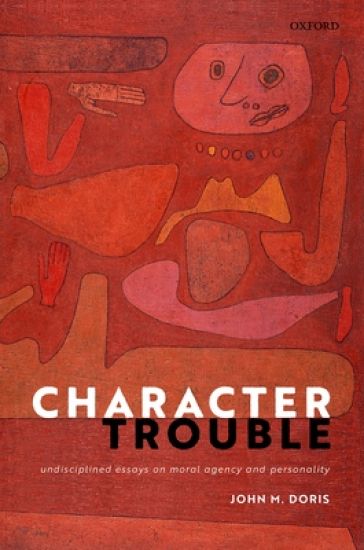
Character Trouble

Character Trouble

John M. Doris

Oxford University Press
2021
sidottu
John M. Doris has been a leading proponent of interdisciplinary approaches to moral psychology since their rise to prominence in the 1990's. His work has helped foster a methodological reorientation in the field, and has had a transformative effect on the way philosophers approach questions of character, virtue, and agency. This volume collects a selection of Doris' work spanning 20 years, focusing on the ways in which human personality orders (and fails to order) moral cognition and behaviour. It also presents two new chapters, which together form an in-depth assessment of recent developments in the moral psychology of character, as well as a closing commentary outlining methodological recommendations for those aspiring to do empirically responsible moral psychology. Together, these works present a distinctive vision of moral psychology which will engage both philosophers and psychologists.
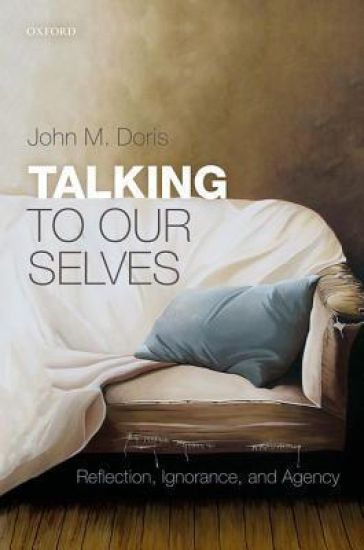
Talking to Our Selves

Talking to Our Selves

John M. Doris

Oxford University Press
2017
nidottu
John M. Doris presents a new account of agency and responsibility, which reconciles our understanding of ourselves as moral agents with psychological research on the unconscious mind. Much philosophical theorizing maintains that the exercise of morally responsible agency consists in judgment and behavior ordered by accurate reflection. On such theories, when human beings are able to direct their lives in the manner philosophers have dignified with the honorific 'agency', it's because they know what they're doing, and why they're doing it. This understanding is compromised by quantities of psychological research on unconscious processing, which suggests that accurate reflection is distressingly uncommon; very often behavior is ordered by surprisingly inaccurate self-awareness. Thus, if agency requires accurate reflection, people seldom exercise agency, and skepticism about agency threatens. To counter the skeptical threat, John M. Doris proposes an alternative theory that requires neither reflection nor accurate self-awareness: he identifies a dialogic form of agency where self-direction is facilitated by exchange of the rationalizations with which people explain and justify themselves to one another. The result is a stoutly interdisciplinary theory sensitive to both what human beings are like—creatures with opaque and unruly psychologies-and what they need: an account of agency sufficient to support a practice of moral responsibility.
Talking to Our Selves

Talking to Our Selves

John M. Doris

Oxford University Press
2015
sidottu
The unconscious, according to contemporary psychology, determines much of our lives: very often, we don't know why we do what we do, or even exactly what we are doing. This realization undermines the philosophical-- and common sense--picture of human beings as rational, responsible, agents whose behavior is ordered by their deliberations and decisions. Drawing on the latest scientific psychology and philosophical ethics, Talking to Our Selves develops a philosophically viable theory of agency and moral responsibility that fully accounts for the unsettling challenges posed by the sciences of mind.
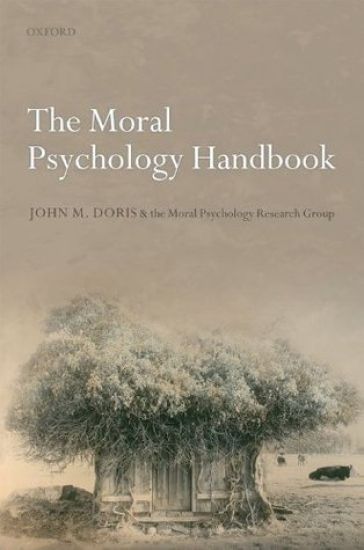
The Moral Psychology Handbook

The Moral Psychology Handbook

John M. Doris

Oxford University Press
2010
sidottu
The Moral Psychology Handbook offers a survey of contemporary moral psychology, integrating evidence and argument from philosophy and the human sciences. The chapters cover major issues in moral psychology, including moral reasoning, character, moral emotion, positive psychology, moral rules, the neural correlates of ethical judgment, and the attribution of moral responsibility. Each chapter is a collaborative effort, written jointly by leading researchers in the field.
The Moral Psychology Handbook

The Moral Psychology Handbook

John M. Doris

Oxford University Press
2012
nidottu
The Moral Psychology Handbook offers a survey of contemporary moral psychology, integrating evidence and argument from philosophy and the human sciences. The chapters cover major issues in moral psychology, including moral reasoning, character, moral emotion, positive psychology, moral rules, the neural correlates of ethical judgment, and the attribution of moral responsibility. Each chapter is a collaborative effort, written jointly by leading researchers in the field.
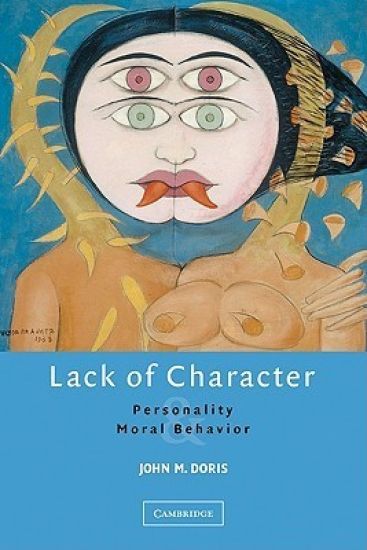
Lack of Character

Lack of Character

John M. Doris

Cambridge University Press
2005
pokkari
This book is a provocative contribution to contemporary ethical theory challenging foundational conceptions of character that date back to Aristotle. John Doris draws on behavioral science, especially social psychology, to argue that we misattribute the causes of behavior to personality traits and other fixed aspects of character rather than to the situational context. More often than not it is the situation not the nature of the personality that really counts. The author elaborates the philosophical consequences of this research for a whole array of ethical theories and shows that, once rid of the misleading conception of motivation, moral psychology can support more robust ethical theories and more humane ethical practices.
Lack of Character

Lack of Character

John M. Doris

Cambridge University Press
2002
sidottu
This book is a provocative contribution to contemporary ethical theory challenging foundational conceptions of character that date back to Aristotle. John Doris draws on behavioral science, especially social psychology, to argue that we misattribute the causes of behavior to personality traits and other fixed aspects of character rather than to the situational context. More often than not it is the situation not the nature of the personality that really counts. The author elaborates the philosophical consequences of this research for a whole array of ethical theories and shows that, once rid of the misleading conception of motivation, moral psychology can support more robust ethical theories and more humane ethical practices.
Serial Killers - Philosophy for Everyone

Serial Killers - Philosophy for Everyone

John M. Doris

Wiley-Blackwell (an imprint of John Wiley Sons Ltd)
2010
nidottu
Serial Killers - Philosophy for Everyone investigates our profound intrigue with mass-murderers. Exploring existential, ethical and political questions through an examination of real and fictional serial killers, philosophy comes alive via an exploration of grisly death. Presents new philosophical theories about serial killing, and relates new research in cognitive science to the minds of serial killersIncludes a philosophical look at real serial killers such as Ian Brady, Ted Bundy, John Wayne Gacy, Jeffrey Dahmer and the Zodiac killer, as well as fictional serial killers such as Dexter and Hannibal LecterOffers a new phenomenological examination of the writings of the Zodiac KillerContains an account of the disappearance of one of Ted Bundy's victims submitted by the organization Families and Friends of Missing Persons and Violent Crime VictimsIntegrates the insights of philosophers, academics, crime writers and police officers