Kirjojen hintavertailu. Mukana 11 699 587 kirjaa ja 12 kauppaa.

Kirjahaku

Etsi kirjoja tekijän nimen, kirjan nimen tai ISBN:n perusteella.

13 kirjaa tekijältä John Manning

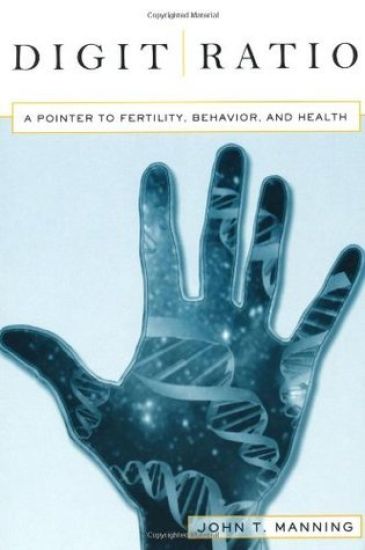
Digit Ratio

Digit Ratio

John Manning

Rutgers University Press
2002
nidottu
Could the length of your fingers indicate a predisposition to breast cancer? Or musical genius? Or homosexuality? In Digit Ratio, John T. Manning posits that relative lengths of the second and fourth digits in humans (2D:4D ratio) does provide such a window into hormone- and sex-related traits.It has been known for more than a century that men and women tend to differ in the relative lengths of their index (2D) and ring (4D) fingers, which upon casual observation seem fairly symmetrical. Men on average have fourth digits longer than their second digits, while women typically have the opposite. Digit ratios are unique in that they are fixed before birth, while other sexually dimorphic variables are fixed after puberty, and the same genes that control for finger length also control the development of the sex organs. The 2D:4D ratio is the only prenatal sexually dimorphic trait that measurably explains conditions linking testosterone, estrogen, and human development; the study of the ratio broadens our view of human ability, talent, behavior, disposition, health, and fertility. In this book, Manning presents evidence for how 2D:4D correlates with traits ranging from sperm counts, family size, musical genius, and sporting prowess, to autism, depression, homosexuality, heart attacks, and breast cancer, traits that are all linked with early exposure to sex hormones.
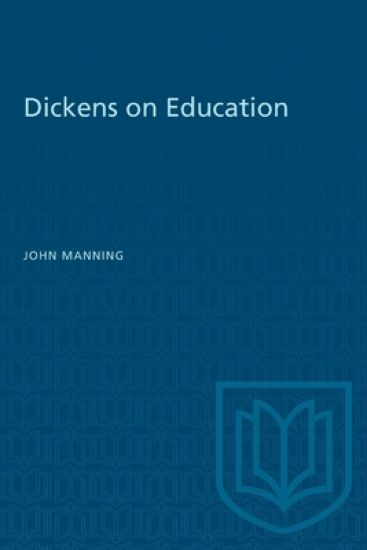
Dickens on Education

Dickens on Education

John Manning

UNIVERSITY OF TORONTO PRESS
1959
pokkari
Many books have been published on Charles Dickens; there are, however, surprisingly few that have made more than passing comment on Dickens's treatment of schools and education. This is the more striking in view of the significance education had for Dickens, the forcefulness of the criticisms he made, and the influence of his opinions on the public. This account of Dickens's interest in education covers his life and times, and his fiction, speeches, articles, and letters, Since our knowledge of Dickens's own schooling in not very extensive, and minor errors are to be found even in Forster's account of his early years, the author has made a careful analysis of Dickens's formal schooling and other experiences that informed his mind. In the novels and short stories, Dickens discussed some fifty schools and more than that number of teachers. These portrayals of teachers, schools, and school life have been group by Professor Manning under various heads: education through church and charity, education through private enterprise, education of girls, and educational theory and practice. Dickens's views as stated in his articles, speeches, and letters, have been dealt with separately from the fiction, since these utterances must be appraised on a different basis. In order to provide the background against which Dickens was writing, Professor Manning refers frequently to government documents and the reports of various commissions. He presents evidence from these sources, and from inspectors' reports, biographical and autobiographical works, and private diaries, to show the actual conditions that existed in the various types of schools. This book should prove valuable to students of English literature, to educationists, and to historians. The general reader will also find in it much of interest, for schooling is within most people's experience, education is everybody's business, and Dickens's admirers are legion.
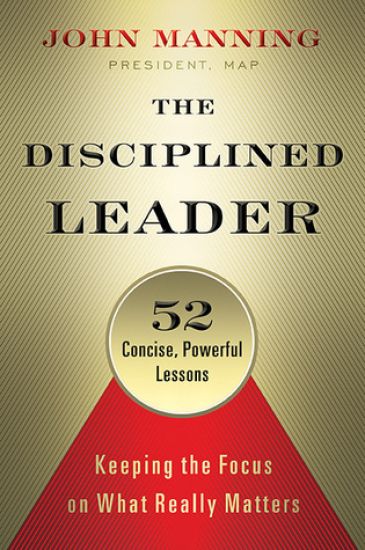
The Disciplined Leader: Keeping the Focus on What Really Matters
What do the best leaders have in common? As president of MAP, John Manning should know. MAP has helped tens of thousands of top executives accelerate their leadership and management performance. Manning says the answer is one word: discipline. But for Manning, discipline has a very specific meaning. All leaders have scores of things they could do. But a disciplined leader is one who identifies and focuses on the Vital Few: the 20 percent of activities that will drive 80 percent of the results. And the results that are most important are those tied to the organization's most precious asset: its people.The Disciplined Leader offers fifty-two succinct lessons to help you home in on your own Vital Few in three critical areas: leading yourself, leading your team, and leading your organization. Each lesson comes with recommended tactics and practical "Take Action!" tips for implementing it, so there are literally hundreds of pieces of must-know, time-tested advice here. The chapters are self-contained, so you can read them in any order and come back to the ones that resonate with you - your own Vital Few! This is a hands-on, nuts-and-bolts guide to leadership practice that's built to inspire action, drive change, and achieve results.
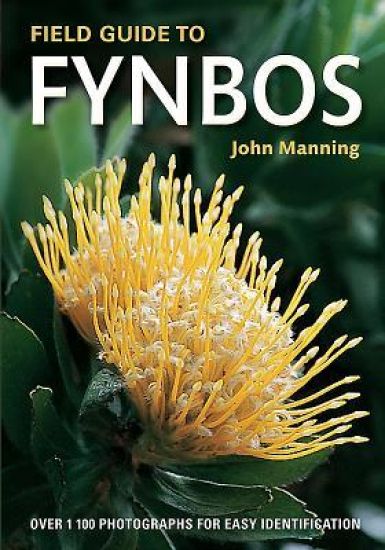
Field Guide to Fynbos

Field Guide to Fynbos

John Manning

Struik Nature
2018
nidottu
Field Guide to Fynbos features over 1,000 species from the Cape Floristic Region – home to one of the world’s richest floras. This fully updated edition focuses on the most common and ‘showy’ plants. An introduction unpacks the world of fynbos – including origins, diversity, climate and adaptations – and is followed by a photographic key and descriptions of the fynbos families. Species descriptions are accompanied by photographs, distribution maps, comparisons with similar species, and notes on traditional uses. For botanists and amateurs alike, this will remain an indispensable guide to South Africa’s most renowned flora. Sales points: written by an expert in the field, fully revised and updated, will enable identification of a vast array of fynbos species, glorious full-colour photographs of all featured species, key to plant families for easy ID.
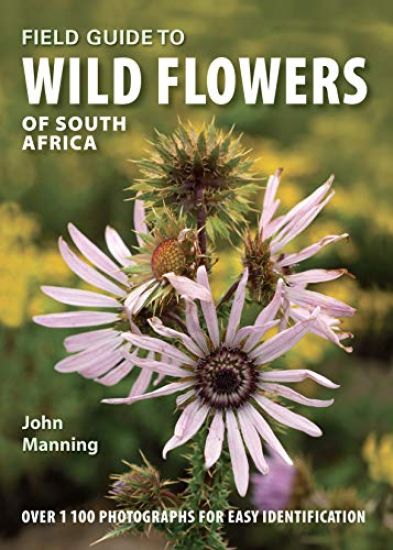
Field Guide to Wild Flowers of South Africa
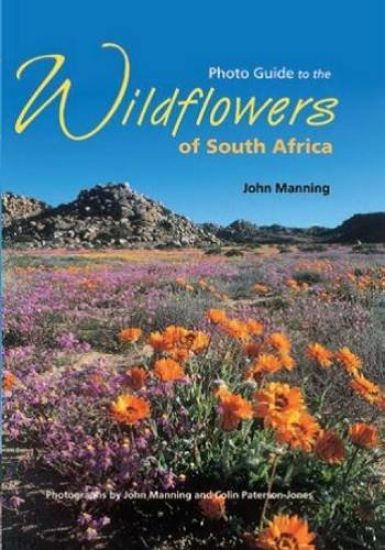
This fully updated edition of Field Guide to Wild Flowers of South Africa covers more than 1,100 species of flora, focusing on the most common, conspicuous and ‘showy’ plants around the region. An informative introduction discusses plant diversity, vegetation types, and includes a key to identifying plant groups. The species descriptions follow and each is accompanied by: a vivid photograph; a distribution map showing range, and an indication of the plant’s flowering season. This invaluable, up-to-date guide provides the tools and information needed to identify flowering plants across South Africa. Written by an expert in the field; fully updated edition; facilitates identification of wild flowers around South Africa; glorious full-colour photographs of each species; key to plant families for easy ID.
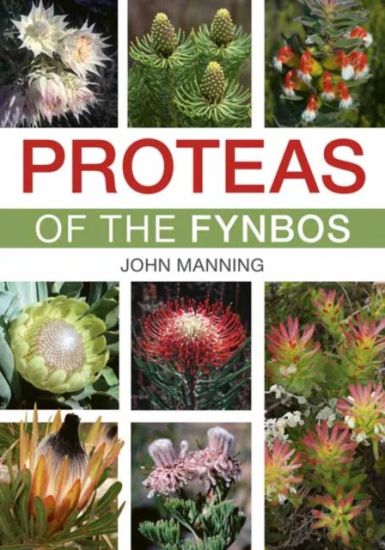
Proteas of the Fynbos

Proteas of the Fynbos

John Manning

Penguin Random House South Africa
2025
nidottu
Proteas are South Africa’s wildflower celebrities: the King Protea is emblazoned on the National Coat of Arms and gives its name to the country’s cricket team. A total of 330 protea species are found in the fynbos of the Cape Floristic Region – the botanical treasure house at the southern tip of Africa. Proteas of the Fynbosfeatures 165 of the region’s more common or showy species, with pointers to many more. Each species account details diagnostic features, flowering times, habitats and distribution, while colour photographs showcase the beauty and diversity of this charismatic plant group. An informative introduction explores the biology, pollination, origin and conservation status of fynbos proteas, and highlights features to aid identification. Arranged in groups and subgroups for easy identification, this innovative guide enables flower enthusiasts to confidently identify over half of all fynbos protea species. Sales points: Accessible and user-friendly design. Full-colour photographs of each species. Key ID features highlighted for quick reference.
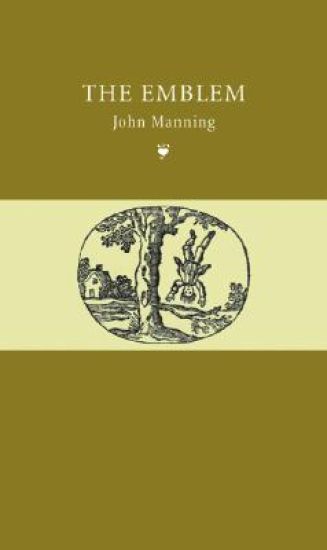
The Emblem

The Emblem

John Manning

REAKTION BOOKS
2004
nidottu
The emblem, an image accompanied by a motto and a verse or short prose passage, is both art and literature: in the emblem tradition, the image presents a story often with pictorial symbols and the verse below it drives home the picture-story's moral instruction. It is one of the most fascinating, and enduring, art forms in Western culture. John Manning's book charts the rise and evolution of the emblem from its earliest manifestations to its emergence as a genre in its own right in the sixteenth century, and then through its various reinventions to the present day. The seventeenth century saw the development of new emblematic forms and sub-genres, and the sharpening of the form for the purpose of social satire. When the Jesuits appropriated the emblem, producing enormous quantities of material, a further dimension of moral seriousness was introduced, alongside a concentration of emblematic 'wit'. The emblem later came to be directed increasingly at young people and children; in particular, William Blake adopted a fresh attitude towards ideas of the child and childishness. Since then, reprints of seventeenth century emblem books have been produced with new plates, and writers and artists from Robert Louis Stevenson to Ian Hamilton Finlay have used emblems in new and subversive ways.