Kirjojen hintavertailu. Mukana 11 590 110 kirjaa ja 12 kauppaa.

Kirjahaku

Etsi kirjoja tekijän nimen, kirjan nimen tai ISBN:n perusteella.

8 kirjaa tekijältä John Maxwell Hamilton

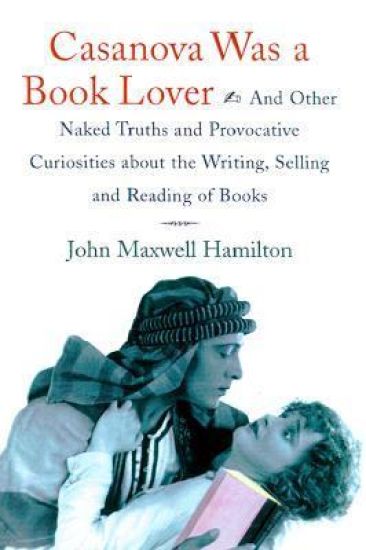
Casanova Was A Book Lover

Casanova Was A Book Lover

John Maxwell Hamilton

Louisiana State University Press
2000
sidottu
Everyone knows which books people buy; they can just look at the best-seller lists. But who knows which books people steal? Who, for that matter, knows that authors ruin the book market by writing too much? Or why book critics are not critical? Or why librarians need to throw out more books? Who, indeed, knows the answer to that all-important question in our democracy: should presidents and presidential candidates write books? (The answer is no.)In this irreverent analysis of the book industry, John Maxwell Hamilton -- a longtime journalist and public radio commentator -- answers these questions and many more, proving that the best way to study books is not to take them too seriously. He provides a rich history of the book -- from the days when monks laboriously hand-copied texts to the tidal wave of Titanic tie-ins -- and gives a succinct overview of the state of the industry today, including writing, marketing, promoting, reviewing, ghostwriting, and collecting.Throughout, Hamilton peppers his prose with spicy tidbits of information that will fascinate bibliophiles everywhere. For instance, did you know that Walt Whitman was fired from a government job because his boss found Leaves of Grass, and its author, immoral? Or that the most stolen book in the United States is the Bible, followed by The Joy of Sex? How about that Dan Quayle's 1989 Christmas card read, ""May our nation continue to be a beakon of hope to the world""? Or that Casanova was an ardent lover of books as well as women?Hamilton offers an inside look at the history and business of book reviewing, explaining why, more often than not, reviewers resemble ""counselors at a self-esteem camp"" and examining the enormous impact of the ""Oprah effect"" on the market. As the self-appointed Emily Post of the book world, he advises publishers, authors, and readers on proper etiquette for everything from book parties (""Feel free to build a party around a theme in a book, no matter how tacky"") and jacket photos (""You should not show off your new baby unless [your] book [is] about raising kids""), to book signings (""Just because an author has given you an autograph does not mean they want to become your pen pal"") and promotion by friends and relatives (""They should carry the book at all times on public transportation with the cover showing"").Both edifying and enjoyable, Casanova Was a Book Lover fills a Grand Canyon--sized void in the literature on literature. It is indispensable for book enthusiasts who want to know the naked truth about reading, writing, and publishing.
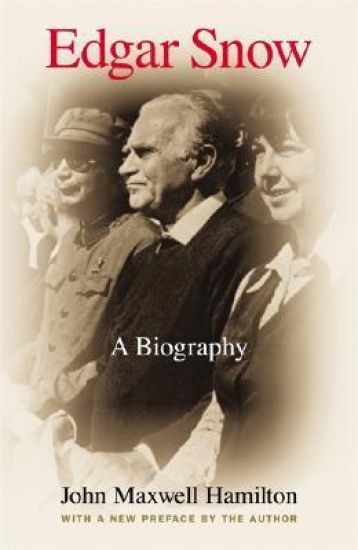
Edgar Snow

Edgar Snow

John Maxwell Hamilton

Louisiana State University Press
2003
nidottu
Edgar Snow (1905--1972) was one of the most notable Western journalists to report on China in both the revolutionary and postrevolutionary periods. He first became famous in the mid-1930s when he broke through a Nationalist blockade and reached the Communists in northwest China. For nearly a decade, no foreign reporter had seen the Communists, who were widely regarded as a ragtag bandit army. Snow took them seriously as a national movement. His reporting in the now-famous book Red Star over China was major news, even to the Chinese, thousands of whom joined the Communists after reading it. It has remained a seminal reference on the early Chinese Communist movement. In this award-winning biography, journalist John Maxwell Hamilton follows Snow from his birth in Kansas City to his rise as a celebrated foreign correspondent for the Saturday Evening Post, his ostracism during the cold war, and his role as a singular journalistic bridge between Communist China and the United States. With a new preface by the author, this revealing portrait of the widely misunderstood Snow firmly establishes him as a model for the kind of committed reporting that is crucial to understanding our interdependent world.
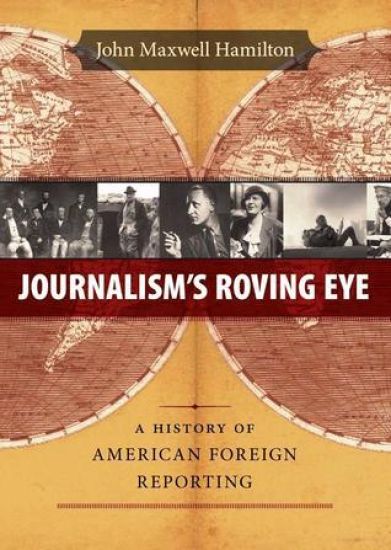
Journalism's Roving Eye

Journalism's Roving Eye

John Maxwell Hamilton

Louisiana State University Press
2009
sidottu
In all of journalism, nowhere are the stakes higher than in foreign news-gathering. For media owners, it is the most difficult type of reporting to finance; for editors, the hardest to oversee. Correspondents, roaming large swaths of the planet, must acquire expertise that home-based reporters take for granted- facility with the local language, for instance, or an understanding of local cultures. Adding further to the challenges, they must put news of the world in context for an audience with little experience and often limited interest in foreign affairs- a task made all the more daunting because of the consequence to national security.In Journalism's Roving Eye, John Maxwell Hamilton- a historian and former foreign correspondent- provides a sweeping and definitive history of American foreign news reporting from its inception to the present day and chronicles the economic and technological advances that have influenced overseas coverage, as well as the cavalcade of colorful personalities who shaped readers' perceptions of the world across two centuries.From the colonial era- when newspaper printers hustled down to wharfs to collect mail and periodicals from incoming ships- to the ongoing multimedia press coverage of the Iraq War, Hamilton explores journalism's constant- and not always successful- efforts at ""dishing the foreign news,"" as James Gordon Bennett put it in the mid-nineteenth century to describe his approach in the New York Herald. He details the highly partisan coverage of the French Revolution, the early emergence of ""special correspondents"" and the challenges of organizing their efforts, the profound impact of the non-yellow press in the run-up to the Spanish-American War, the increasingly sophisticated machinery of propaganda and censorship that surfaced during World War I, and the ""golden age"" of foreign correspondence during the interwar period, when outlets for foreign news swelled and a large number of experienced, independent journalists circled the globe. From the Nazis' intimidation of reporters to the ways in which American popular opinion shaped coverage of Communist revolution and the Vietnam War, Hamilton covers every aspect of delivering foreign news to American doorsteps.Along the way, Hamilton singles out a fascinating cast of characters, among them Victor Lawson, the overlooked proprietor of the Chicago Daily News, who pioneered the concept of a foreign news service geared to American interests; Henry Morton Stanley, one of the first reporters to generate news on his own with his 1871 expedition to East Africa to ""find Livingstone""; and Jack Belden, a forgotten brooding figure who exemplified the best in combat reporting. Hamilton details the experiences of correspondents, editors, owners, publishers, and network executives, as well as the political leaders who made the news and the technicians who invented ways to transmit it. Their stories bring the narrative to life in arresting detail and make this an indispensable book for anyone wanting to understand the evolution of foreign news-gathering.Amid the steep drop in the number of correspondents stationed abroad and the recent decline of the newspaper industry, many fear that foreign reporting will soon no longer exist. But as Hamilton shows in this magisterial work, traditional correspondence survives alongside a new type of reporting. Journalism's Roving Eye offers a keen understanding of the vicissitudes in foreign news, an understanding imperative to better seeing what lies ahead.
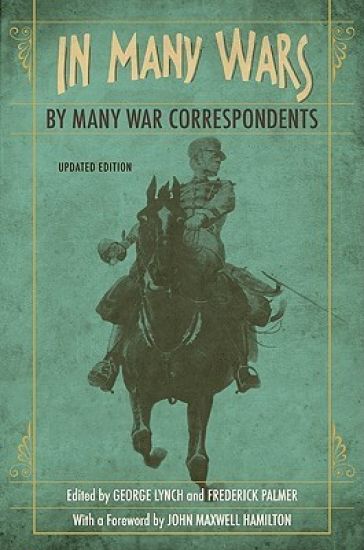
In Many Wars, by Many War Correspondents

In Many Wars, by Many War Correspondents

John Maxwell Hamilton

Louisiana State University Press
2010
nidottu
There are few people in the world who have more opportunity for getting close to the hot interesting things of one's time than the special correspondent of a great paper,"" George Lynch, a veteran British correspondent, wrote in Impressions of a War Correspondent, published in 1903. He made it all sound glorious, just the way war correspondents like to recount their experiences on the battlefield. But in a few months he had less to exult about. Lynch and a distinguished throng of foreign correspondents with high hopes of a good story assembled in Tokyo to cover the Russo-Japanese War -- a monumental conflict that would mark the first modern defeat of a Western force by an Asian one -- only to discover that the authorities would not let them ""close to the hot interesting things."" Corralled in the Imperial Hotel, the journalists had nothing much to do except tell stories in the bar and write about local flora. A few of them, including Jack London and Richard Harding Davis, decided to contribute short autobiographical stories recounting their most exciting journalistic experiences for a book to be edited by Lynch and his American colleague, Frederick Palmer. The correspondents told their tales in different ways -- prose, poems, sketches, and even a short play. Their stories recounted their routines, failures, and triumphs, including durviving battles and waiting to see action. One contributor imagines bewhiskered correspondents in 1950 still awaiting permission from Japan to go to the front -- only to learn the war had been over for thirty-nine years. Printed locally by a Japanese printer and largely forgotten until now, In Many Wars, by Many War Correspondents offers colourful stories and insights about the lives and personalities of some of history's most celebrated war correspondents. With a foreword by John Maxwell Hamilton that chronicles the circumstances under which the contributors compiled the book, this new edition opens a window into the fascinating world of foreign newsgathering at the turn of the twentieth century.
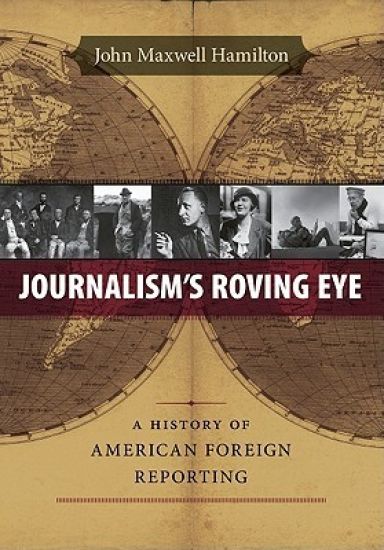
Journalism's Roving Eye

Journalism's Roving Eye

John Maxwell Hamilton

Louisiana State University Press
2011
nidottu
Winner of the Goldsmith Prize, the Tankard Book Award, and the American Journalism Historians Association's Book of the Year, John Maxwell Hamilton's Journalism's Roving Eye has quickly become the definitive history of American foreign reporting. This edition includes a new preface and updated text that reflects the most current developments in foreign reporting. Beginning with the colonial era, the book focuses on underlying factors- such as technology and public opinion- as well as a cavalcade of personalities who bring the narrative to life in arresting detail, making this an indispensable resource for anyone eager to understand the evolution of foreign newsgathering.
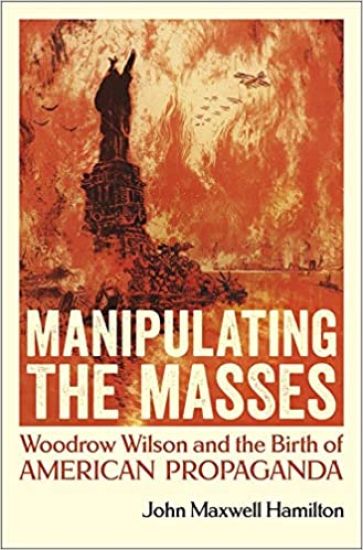
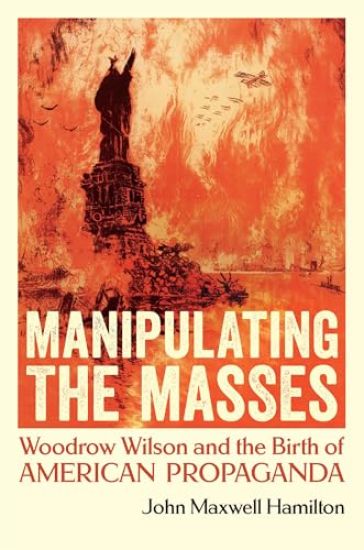
Manipulating the Masses

Manipulating the Masses

John Maxwell Hamilton

Louisiana State University Press
2020
sidottu
Manipulating the Masses tells the story of the enduring threat to American democracy that arose out of World War I: the establishment of pervasive, systematic propaganda as an instrument of the state. During the Great War, the federal government exercised unprecedented power to shape the views and attitudes of American citizens. Its agent for this was the Committee on Public Information (CPI), established by President Woodrow Wilson one week after the United States entered the war in April 1917.Driven by its fiery chief, George Creel, the CPI reached every crevice of the nation, every day, and extended widely abroad. It established the first national newspaper, made prepackaged news a quotidian aspect of governing, and pioneered the concept of public diplomacy. It spread the Wilson administration's messages through articles, cartoons, books, and advertisements in newspapers and magazines; through feature films and volunteer Four Minute Men who spoke during intermission; through posters plastered on buildings and along highways; and through pamphlets distributed by the millions. It enlisted the nation's leading progressive journalists, advertising executives, and artists. It harnessed American universities and their professors to create propaganda and add legitimacy to its mission.Even as Creel insisted that the CPI was a conduit for reliable, fact-based information, the office regularly sanitized news, distorted facts, and played on emotions. Creel extolled transparency but established front organizations. Overseas, the CPI secretly subsidized news organs and bribed journalists. At home, it challenged the loyalty of those who occasionally questioned its tactics. Working closely with federal intelligence agencies eager to sniff out subversives and stifle dissent, the CPI was an accomplice to the Wilson administration's trampling of civil liberties.Until now, the full story of the CPI has never been told. John Maxwell Hamilton consulted over 150 archival collections in the United States and Europe to write this revealing history, which shows the shortcuts to open, honest debate that even well-meaning propagandists take to bend others to their views. Every element of contemporary government propaganda has antecedents in the CPI. It is the ideal vehicle for understanding the rise of propaganda, its methods of operation, and the threat it poses to democracy.
Manipulating the Masses

Manipulating the Masses

John Maxwell Hamilton

LOUISIANA STATE UNIVERSITY PRESS
2024
pokkari
Winner of the Goldsmith Book Prize by the Harvard Shorenstein Center on Media, Politics and Public PolicyManipulating the Masses tells the story of the enduring threat to American democracy that arose out of World War I: the establishment of pervasive, systematic propaganda as an instrument of the state. During the Great War, the federal government exercised unprecedented power to shape the views and attitudes of American citizens. Its agent for this was the Committee on Public Information (CPI), established by President Woodrow Wilson one week after the United States entered the war in April 1917.Driven by its fiery chief, George Creel, the CPI reached every crevice of the nation, every day, and extended widely abroad. It established the first national newspaper, made prepackaged news a quotidian aspect of governing, and pioneered the concept of public diplomacy. It spread the Wilson administration's messages through articles, cartoons, books, and advertisements in newspapers and magazines; through feature films and volunteer Four Minute Men who spoke during intermission; through posters plastered on buildings and along highways; and through pamphlets distributed by the millions. It enlisted the nation's leading progressive journalists, advertising executives, and artists. It harnessed American universities and their professors to create propaganda and add legitimacy to its mission.Even as Creel insisted that the CPI was a conduit for reliable, fact-based information, the office regularly sanitized news, distorted facts, and played on emotions. Creel extolled transparency but established front organizations. Overseas, the CPI secretly subsidized news organs and bribed journalists. At home, it challenged the loyalty of those who occasionally questioned its tactics. Working closely with federal intelligence agencies eager to sniff out subversives and stifle dissent, the CPI was an accomplice to the Wilson administration's trampling of civil liberties.Until now, the full story of the CPI has never been told. John Maxwell Hamilton consulted over 150 archival collections in the United States and Europe to write this revealing history, which shows the shortcuts to open, honest debate that even well-meaning propagandists take to bend others to their views. Every element of contemporary government propaganda has antecedents in the CPI. It is the ideal vehicle for understanding the rise of propaganda, its methods of operation, and the threat it poses to democracy.
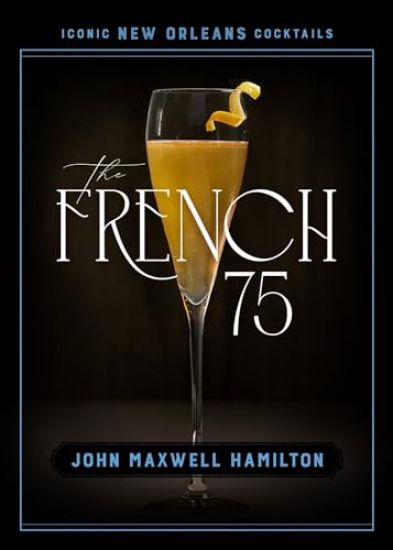
The French 75

The French 75

John Maxwell Hamilton

LOUISIANA STATE UNIVERSITY PRESS
2024
sidottu
In The French 75, John Maxwell Hamilton tracks down the many lives of this protean cocktail. The drink, named by French propagandists during World War I, was said to pack a punch as powerful as that nation's celebrated 75 mm cannon. At the end of the century, the French 75 surfaced at Arnaud's Restaurant and became as entrenched in New Orleans as the famed second line. Hamilton explores the kaleidoscopic variety of the French 75 over the years and across continents.