Kirjojen hintavertailu. Mukana 11 342 296 kirjaa ja 12 kauppaa.

Kirjahaku

Etsi kirjoja tekijän nimen, kirjan nimen tai ISBN:n perusteella.

47 kirjaa tekijältä John McCormick

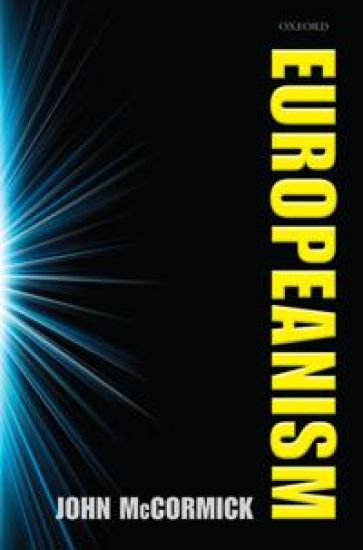
Europeanism

Europeanism

John McCormick

Oxford University Press
2010
sidottu
In Europeanism the author attempts to identify and outline the political, economic, and social norms and values associated with Europe and Europeans. He argues that regardless of the doubts associated with the exercise of European integration and the work of the European Union, and regardless of residual identities with states and nations, Europeans have much in common. Opening chapters deal with the historical development of European ideas, and are followed by chapters addressing European attitudes toward the state (including a rejection of state-based nationalism, new ideas about patriotism and citizenship, and the importance of cosmopolitanism), the characteristics of politics and government in Europe (with an emphasis on communitarianism and the effects of the parliamentary system of government), European economic models (including the importance of welfarism and sustainable development), European social models, European attitudes towards values such as multiculturalism and secularism, and Europeanist views in regard to international relations (emphasizing civilian power and multiculturalism).
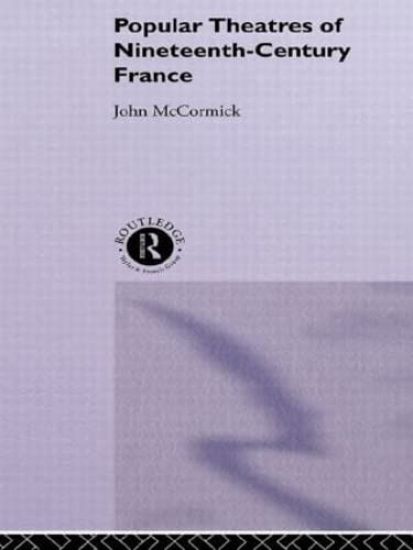
Popular Theatres of Nineteenth Century France
This is the only book to provide an account of how popular theatre developed from the fairground booths of the eighteenth century to become a vehicle of mass entertainment in the following century. Whereas other studies offer a traditional approach to the theatres of high culture, John McCormick takes the role of impartial historian, uncovering the popular theatres of the boulevards, suburbs and fairgrounds. He focuses on the social and economic context in which vaudevilles, pantomimes and melodramas were performed, and explores the audiences who enjoyed them.
Popular Theatres of Nineteenth Century France
This is the only book to provide an account of how popular theatre developed from the fairground booths of the eighteenth century to become a vehicle of mass entertainment in the following century. Whereas other studies offer a traditional approach to the theatres of high culture, John McCormick takes the role of impartial historian, uncovering the popular theatres of the boulevards, suburbs and fairgrounds. He focuses on the social and economic context in which vaudevilles, pantomimes and melodramas were performed, and explores the audiences who enjoyed them.
Acid Earth

Acid Earth

John McCormick

Routledge
2013
nidottu
Acid rain was one of the major environmental issues of the 1980s. But while industrialized countries have taken measures to reduce the emissions that lead to acidification, the problems have not gone away. Trees are still dying, lakes are still being made uninhabitable; buildings are still corroding; and human health is still suffering. The most worrying trend is the repetition in the industrializing countries of Asia and Latin America of the problems that have long afflicted Europe and North America. More than 10 years after it was first published, the highly acclaimed Acid Earth still provides the only global view of acidification, and remains the standard text on the subject. Chapters on the causes, effects and growing scientific understanding of acid pollution, and the possible solutions, are followed by detailed studies of the political struggles involved in responding to acid damage in western and eastern Europe, the US and the newly industrializing countries. Written in non-technical language for people interested in the problems of the environment, Acid Earth calls for a renewed sense of public and political will to bring the problems of acid pollution under control. The book also makes valuable reading for specialists and students. Originally published in 1992
British Politics and the Environment
Britain has an immense range of environmental law and the reputation for largely ignoring it. John McCormick describes the fascinating story of the political growth of that law, and the pressures, the compromises, the parliamentary and civil service opportunism that allowed the edifice to grow over the greater part of a century. He tells the story of the absolute change in political climate over the last ten years and deciphers the nature of Thatcher's ''conversion'' to greenery. He explains why everyone who cared about the environment became embattled and, above all, how the old methods of sensible compromise were banished, probably for ever, not least because of the government's obsession with secrecy. What, then, are the new political means of compelling change on a reluctant parliament? Everything is at stake from welfare to water, from forests to fishing. Where are we now? What are the likely pressures, both internal and from Europe and the rest of the world, to make Britain pass more environmentally sound laws and, perhaps more importantly, to observe them? McCormick provides a gripping picture of the central issues, of the system and of the battleground. Originally published in 1991
Crawl

Crawl

John McCormick

New Generation Publishing
2010
pokkari
The Christmas Eve pub-crawl had always been an enjoyable distraction; a chance to relax in familiar company and, for a while, to forget about the chaos of Belfast in the 1980s.One year, however, as love rears its ugly head, the day and the pub-crawl start to unravel and, as everyone will soon discover, nothing will ever be the same again.
Fiction as Knowledge

Fiction as Knowledge

John McCormick

Transaction Publishers
1998
nidottu
Critics of fiction have long been aware that the romantic movement in Europe and America gave a powerful impulse to the art of fiction. The exact nature of that impulse has resisted analysis like so much associated with romanticism. In Fiction as Knowledge John McCormick reaches for precision, proposing that much of the vitality of modern fiction derives from romantic conceptions of history which made available to fiction not merely historical subject matter, but new perceptions of reality, present and past, that pervade the work of many of the greatest writers of the post-romantic period.Beginning with Herder and Hegel, McCormick describes those qualities in historical thought that were revolutionary in the early nineteenth century and rich in meaning for the future. Most prominent of these was the emergence of the idea of individuality, not only in society but also in history. The author demonstrates the vitality of the romantic impulse in the work of seven major novelists of the twentieth century. Marcel Proust's apprehensions of nature in his great novel are seen as Wordsworthian, while as the novel unfolds, history in the form of event and system of organization comes to dominate and to offer a paradigm of the workings of the post-romantic historical imagination. William Faulkner and Andr Malraux are shown to confront history directly, although they do not write "historical" fiction. Herman Broch, Robert Musil, and Henri de Montherlant, uncomfortable with traditional romantic attitudes, still make fullest use of Romantic historical insight to extend the range of fiction as knowledge. Ernest Hemingway, by contrast, is seen as intuitive, a pure product of his novelist's intelligence as opposed to his latter-day romantic anti-intellectualism.Fiction as Knowledge supplies critical insight into the form of the novel as well as into the seven novelists under discussion. Not least, the book is a warning against contemporary anti-historical bias and an appeal to the cultivation of historical consciousness. John McCormick is Professor Emeritus of Comparative Literature at Rutgers University, and Honorary Fellow of English and Literature at the University of York. He is the author of George Santayana: A Biography, Catastrophe and Imagination, and The Middle Distance, by Transaction.
George Santayana

George Santayana

John McCormick

Transaction Publishers
2003
nidottu
From the late nineteenth century to the middle of the twentieth, George Santayana was a highly esteemed and widely read writer of philosophy, poetry, essays, memoirs, and even a best-selling novel, The Last Puritan. After a period of relative neglect, interest in his work has revived. A complete edited edition of his works is in progress and he has become the object of renewed scholarly activity. Contributing significantly to the renewal was John McCormick's 1987 biography, the first full-scale volume to treat an elusive figure's life and thought in the detail they deserve.Santayana's life was rich in its interior and outer associations. There was his birth and early childhood in Spain followed by a move to Boston, where he came under the influence of William James at Harvard. This led to his career at Harvard as a professor, where Wallace Stevens, Robert Frost, Conrad Aiken, Franklin D. Roosevelt, and Walter Lippmann were among his devoted students. We see Santayana in correspondence and conversation with Bertrand Russell, G.E. Moore, Ezra Pound, and Robert Lowell.Predominant in Santayana's life was his philosophical work. Hostile to the dominant empiricism of Anglo-American philosophy, he left the academy and remained detached from both the political and ideological movements of early decades of the twentieth century. McCormick relates his skepticism and materialism to a form of idealism deriving from his classical education in Plato and Aristotle, together with his readings in Descartes and Spinoza. He presents Santayana as a supreme stylist in English, who lived a long life always consistent with his stoic epicureanism.
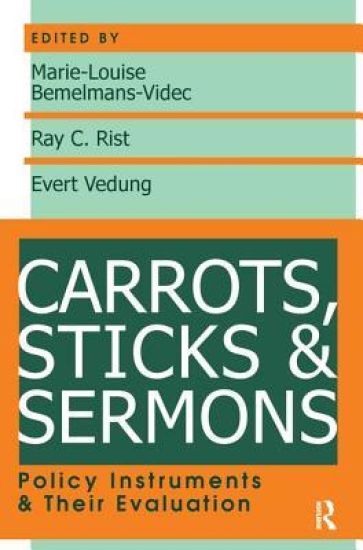
Carrots, Sticks and Sermons

Carrots, Sticks and Sermons

John McCormick

Transaction Publishers
2003
nidottu
The literature on policy strategies, instruments, and styles is impressive. Still, a complex variety of theoretical and conceptual approaches and analytical tools hamper a good overview. Carrots, Sticks, and Sermons proposes such a framework for the field and clearly shows how public policy instruments are classified, packaged, and chosen, while highlighting the role evaluation plays in the instruments-choice process.Carrots, Sticks, and Sermons offers a comprehensive analysis of categories and typologies of policy instruments. It classifies sticks, carrots, and sermons - or, more specifically, regulation, economic means, and information. Readers are offered a comparative perspective of evaluation practice in foreign contexts. Special attention is paid to the examples of Sweden, the Netherlands, Belgium, England, Canada, the United States, and the Republic of Korea. As such, this volume crosses language barriers that stand in the way of dispersing research results among the international community of theoreticians and practitioners. As nations become increasingly interdependent, problems of implementation and evaluation of policy choices will become issues of increasing gravity.Carrots, Sticks, and Sermons provides insights into the traditional and current practice of policy and program evaluation in various contexts. The book's theory of comparative public policy will produce understanding and guidance in designing better policies. It will be of wide interest to those in the fields of public policy, particularly policy design, policy implementation, policy evaluation, comparative politics, and economics.
American and European Literary Imagination

American and European Literary Imagination

John McCormick

Transaction Publishers
2000
nidottu
Western culture is composed of a subtle and complex mixture of influences: religious, philosophical, linguistic, political, social, and sociological. American culture is a particular strain, but unless European antecedents and contemporary leanings are duly noted, any resulting history is predestined to provincialism and distortion. In his account of American literature during the period 1919 to 1932, McCormick deals with the extraordinary work of artists who wrested imaginative order from a world in which the abyss was never out of sight.McCormick's volume is intended as a critical, rather than encyclopedic history of literature on both sides of the Atlantic between the end of World War I and the political and social crises that arose in the 1930s. Although he emphasizes American writers, the emergence of a vital and distinctly modern American literature is located in the cultural encounter with Europe and the rejection of national bias by the major figures of the period.McCormick deals with Gertrude Stein and the mythology of the "lost generation," the tensions and ambivalences of traditionalism and modernity in the work of Sherwood Anderson and F. Scott Fitzgerald, the effect and qualities of Hemingway's style as compared to that of Henry de Montherlant, and the provincial iconoclasm of Sinclair Lewis juxtaposed with the more telling satire of Italo Svevo. The formal innovations in the work of John Dos Passos, E.E. Cummings, and William Faulkner, the poetic revolution against cultural parochialism and genteel romanticism is given extensive consideration with regard to the work of T.S. Eliot, Ezra Pound, Wallace Stevens, William Carlos Williams, and Marianne Moore are also discussed. The concluding chapters discuss literary and social criticism and assess the influence of psychoanalysis, philosophical pragmatism, and radical historiography on the intellectual climate of the period.Teachers and students in English and American Literature, American History, and Comparative Literature, and the general reader interested in the writing of the period, may gain new insights from these valuations, devaluations, and re-evaluations.
Bullfighting

Bullfighting

John McCormick

Transaction Publishers
1999
nidottu
Ernest Hemingway, best-known to layman and aficionado alike, in his fiction described bullfighting, or toreo, as a cross between romantic risk and a drunken party, or as an elaborate substitute for war, ending in wounds or death. Although his descriptions of the "beauty"in toreo are lyrical, they are short on imaginative creation of how such beauty, through techniques and discipline, comes about. Hemingway may have sculpted a personal mystique of toreo but, in the opinion of some, he ignored or slighted the full, unique nature of the subject.In Bullfighting: Art, Technique, and Spanish Society John McCormick sorts through the complexities of toreo, to suggest the aesthetic, social, and moral dimensions of an art that is geographically limited, but universal when seen in round. While having felt the attraction of Hemingway's approach, McCormick knew that he was being seduced by elements that had little to do with toreo. To try to right Hemingway's distortions, he named the first edition of this book The Complete Aficionado, but then realized that the volume was directed at more than just the spectator: BullFighting is written from the point of view of the torerro, as opposed to the usual spectator's impressions and enthusiasm. With the help of a retired matador de toros, Mario Sevilla Mascarenas, who taught McCormick the rudiments of toreo as well as the emotions and discipline essential to survival, the authors rescue 'toreo from romantic cliches. They probe the anatomy of the matador's training and technique, provide a past-and-present survey of the traditions of the corrida, and furnish dramatic portraits of such famous figures as Manolete, Joselito, Belmonte, and Ordonez.Here then is an informed analysis and critique of the origins and myths of toreo and a survey of the novels it has inspired. Defending the faith in a lively as well as clear and discerning manner, this volume provides a committed and vivid approach to the rich history, ritual, and symbolism of the bullfight as it currently exists.
Why Europe Matters

Why Europe Matters

John McCormick

Red Globe Press
2013
nidottu
Critics like to depict the European Union as undemocratic and unpopular, but their arguments are too often based on myths and misunderstandings. This does us all a disservice, and in this period of uncertainty about the future of Europe it is more important than ever that we have a firm grasp of the issues at stake. This powerful new book debunks the misconceptions surrounding the EU and makes a compelling and comprehensive case for the benefits of European integration. It shows how the EU has improved the lives of Europeans in countless ways, and how it has given Europe a powerful presence on the international stage. Guaranteed to illuminate as well as spark debate, this book will appeal to anyone who seeks to better understand what Europe means and why it matters.
Why Europe Matters

Why Europe Matters

John McCormick

Red Globe Press
2013
sidottu
Critics like to depict the European Union as undemocratic and unpopular, but their arguments are too often based on myths and misunderstandings. This does us all a disservice, and in this period of uncertainty about the future of Europe it is more important than ever that we have a firm grasp of the issues at stake.This powerful new book debunks the misconceptions surrounding the EU and makes a compelling and comprehensive case for the benefits of European integration. It shows how the EU has improved the lives of Europeans in countless ways, and how it has given Europe a powerful presence on the international stage. Guaranteed to illuminate as well as spark debate, this book will appeal to anyone who seeks to better understand what Europe means and why it matters.
Why Europe Matters for Britain

Why Europe Matters for Britain

John McCormick

Red Globe Press
2016
nidottu
As Britain prepares to vote on its continued membership of the EU, this insightful and engaging book sets on the arguments in favour of Britain's continued place in the EU and shows how the EU, in spite of its problems, has made Europe a better, more peaceful, and more prosperous place.
Environmental Politics and Policy

Environmental Politics and Policy

John McCormick

Red Globe Press
2017
nidottu
This book provides systematic coverage of the key concepts in the study of environmental politics; the evolution of environmental thinking; the national and international actors involved in environmental policy; and a selection of specific environmental problems including their causes, the challenges and results of addressing them to date.
Environmental Politics and Policy

Environmental Politics and Policy

John McCormick

Red Globe Press
2017
sidottu
This book provides systematic coverage of the key concepts in the study of environmental politics; the evolution of environmental thinking; the national and international actors involved in environmental policy; and a selection of specific environmental problems including their causes, the challenges and results of addressing them to date.
Bullfighting

Bullfighting

John McCormick

Routledge
2017
sidottu
Ernest Hemingway, best-known to layman and aficionado alike, in his fiction described bullfighting, or toreo, as a cross between romantic risk and a drunken party, or as an elaborate substitute for war, ending in wounds or death. Although his descriptions of the "beauty"in toreo are lyrical, they are short on imaginative creation of how such beauty, through techniques and discipline, comes about. Hemingway may have sculpted a personal mystique of toreo but, in the opinion of some, he ignored or slighted the full, unique nature of the subject.In Bullfighting: Art, Technique, and Spanish Society John McCormick sorts through the complexities of toreo, to suggest the aesthetic, social, and moral dimensions of an art that is geographically limited, but universal when seen in round. While having felt the attraction of Hemingway's approach, McCormick knew that he was being seduced by elements that had little to do with toreo. To try to right Hemingway's distortions, he named the first edition of this book The Complete Aficionado, but then realized that the volume was directed at more than just the spectator: BullFighting is written from the point of view of the torerro, as opposed to the usual spectator's impressions and enthusiasm. With the help of a retired matador de toros, Mario Sevilla Mascarenas, who taught McCormick the rudiments of toreo as well as the emotions and discipline essential to survival, the authors rescue 'toreo from romantic cliches. They probe the anatomy of the matador's training and technique, provide a past-and-present survey of the traditions of the corrida, and furnish dramatic portraits of such famous figures as Manolete, Joselito, Belmonte, and Ordonez.Here then is an informed analysis and critique of the origins and myths of toreo and a survey of the novels it has inspired. Defending the faith in a lively as well as clear and discerning manner, this volume provides a committed and vivid approach to the rich history, ritual, and symbolism of the bullfight as it currently exists.
Carrots, Sticks and Sermons

Carrots, Sticks and Sermons

John McCormick

Routledge
2017
sidottu
The literature on policy strategies, instruments, and styles is impressive. Still, a complex variety of theoretical and conceptual approaches and analytical tools hamper a good overview. Carrots, Sticks, and Sermons proposes such a framework for the field and clearly shows how public policy instruments are classified, packaged, and chosen, while highlighting the role evaluation plays in the instruments-choice process.Carrots, Sticks, and Sermons offers a comprehensive analysis of categories and typologies of policy instruments. It classifies sticks, carrots, and sermons - or, more specifically, regulation, economic means, and information. Readers are offered a comparative perspective of evaluation practice in foreign contexts. Special attention is paid to the examples of Sweden, the Netherlands, Belgium, England, Canada, the United States, and the Republic of Korea. As such, this volume crosses language barriers that stand in the way of dispersing research results among the international community of theoreticians and practitioners. As nations become increasingly interdependent, problems of implementation and evaluation of policy choices will become issues of increasing gravity.Carrots, Sticks, and Sermons provides insights into the traditional and current practice of policy and program evaluation in various contexts. The book's theory of comparative public policy will produce understanding and guidance in designing better policies. It will be of wide interest to those in the fields of public policy, particularly policy design, policy implementation, policy evaluation, comparative politics, and economics.
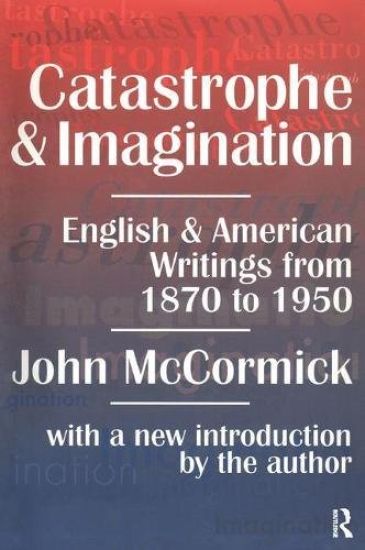
Catastrophe and Imagination

Catastrophe and Imagination

John McCormick

Routledge
2018
sidottu
This book is a direct product of World War II, of the long years at sea that gave the author the feeling that the past was no more than an illusion. He compares past with present, one nation with another, to clarify the conviction that the nature of imaginative fiction had been altered by our wars.