Kirjojen hintavertailu. Mukana 12 461 620 kirjaa ja 12 kauppaa.

Kirjahaku

Etsi kirjoja tekijän nimen, kirjan nimen tai ISBN:n perusteella.

56 kirjaa tekijältä John McLeod

An Introduction to Counselling and Psychotherapy: Theory, Research and Practice
John McLeod’s bestseller provides a comprehensive, research-informed overview of the theory and practice of counselling and psychotherapy. This new edition has been expanded to cover emerging aspects of contemporary practice, such as debates around neuroscience and integration; third-wave cognitive–behavioural therapies such as ACT, mindfulness and FAP; the experience of being a client; motivational interviewing; interpersonal psychotherapy; social dimensions of therapy; leaving therapy; gender and sexuality; spirituality; and key counselling and therapeutic skills and techniques. This sixth edition has been fully updated and revised throughout and is separated into a four-part structure for easy navigation. Each chapter also enhances learning with the following resources:• Case studies• Landmark and contemporary research studies• Topics for reflection and discussion• Suggested further readingAn Introduction to Counselling and Psychotherapy has been the book of choice for students and tutors on introductory courses for over 25 years.“Professor John McLeod’s Introduction to Counselling and Psychotherapy is a classic text. In providing a comprehensive perspective on the field, it goes well beyond being a mere ‘introduction’. Not only does it deliver an encyclopaedic amount of information, but it also presents this information in an incredibly captivating manner. There is simply no other book on the topic to match it. This new edition, truly faithful to its predecessors, maps new innovations in the context of previous generations’ viewpoints. This is ‘the’ book on counselling and psychotherapy.”Ladislav Timulak, PhD, Course Director, Doctorate in Counselling Psychology, Trinity College Dublin“John McLeod has a talent for bringing readers into intimate contact with the experience of another person's experience. Through his evocative descriptions, accessible language, and plentiful examples you will find yourself looking through the eyes of both clients and therapists and developing a depth of understanding about important processes in psychotherapy. His position at the vanguard of psychotherapy research allows him to bring to life the practice of psychotherapy while posing research questions and stimulating curiosity about findings. His valuing of varied approaches to psychotherapy invites the reader to connect with diverse perspectives and consider their own beliefs.”Heidi M. Levitt, PhD, University of Massachusetts Boston, USA
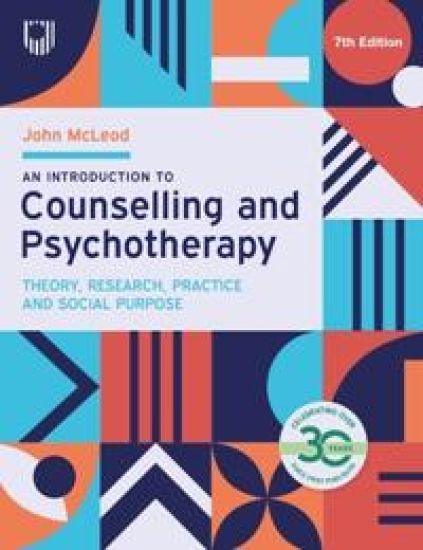
An Introduction to Counselling and Psychotherapy: Theory, Research, Practice and Social Purpose
“I urge you to buy this book… One of the best overviews of the philosophy, principles, theories, research and practices of therapy that I have ever read... This book should be read by both beginning and fully qualified therapists – and importantly, by all those involved in designing and delivering training programmes for counsellors and psychotherapists.”Professor Charlotte Sills, Ashridge Business School, Metanoia Institute, UK“If you have been searching for a contemporary book that offers a comprehensive overview of counselling and psychotherapy in straightforward manner whilst also engaging with underlying debates and research evidence, then you have just found it! I highly recommend this book for every counselling and psychotherapy trainee and for seasoned practitioners alike.”Dr Divine Charura, Professor of Counselling Psychology, York St John University, UK“The brilliance of a book such as this one, a uniqueness which sits alongside its longevity and numerous editions, is that McLeod’s work recognises that counselling and psychotherapy, that the work we do with the wide range of clients we meet, is a constantly growing field…A brilliantly worthy addition to this ever-expanding universe which is our profession.”Dr Dwight Turner, Course Leader, Humanistic Counselling and Psychotherapy, University of Brighton, UKJohn McLeod’s accessible bestseller provides a comprehensive, research-informed overview of the theory and practice of counselling and psychotherapy. Now in its seventh edition, this leading introduction to the discipline has been expanded to include a renewed focus on social justice, the use of technology in therapy, non-Western traditions, socio-political and decolonising perspectives, and working with clients who are considering taking their own lives.The book retains its comprehensive coverage of both mainstream and emerging approaches to therapy, and professional issues such as supervision, training, therapist development, ethical standards, and research-informed practice. New to this edition is wider coverage of issues such as racism, the climate crisis, gender, and sexuality; debates around neuroscience, spirituality and integrative approaches to therapy; and third-wave transdiagnostic cognitive behavioural therapies such as ACT, mindfulness, and FAP.Fully revised and updated throughout, the seventh edition also contains:Access to complementary online resourcesCase studiesLandmark and contemporary research studiesCritical analysis of the cultural, historical, and social context of therapeutic approachesReflection and discussion topicsSuggestions for further readingThis book equips readers with the confidence to navigate and apply a range of therapeutic models. Building on the author’s significant research and professional experience, the 7th edition of An Introduction to Counselling and Psychotherapy remains the definitive guide for students and practitioners.John McLeod has extensive experience as a counsellor, psychotherapist, supervisor, educator and researcher. He is currently Professor of Counselling at the Institute for Integrative Counselling and Psychotherapy in Dublin, Ireland, and has held similar roles at universities in England, Scotland, Italy, New Zealand, and Norway. His publications include the following books with Open University Press: Counselling Skills: Theory, Research and Practice, Embedded Counselling in the Helping Professions: A Practical Guide and Personal and Professional Development for Counsellors, Psychotherapists and Mental Health Practitioners.
Postcolonial London

Postcolonial London

John McLeod

Routledge
2004
sidottu
London's histories of migration and settlement and the resulting diverse, hybrid communities have engendered new forms of social and cultural activity reflected in a wealth of novels, poems, films and songs. Postcolonial London explores the imaginative transformation of the city by African, Asian, Caribbean and South Pacific writers since the 1950s. John McLeod engages freshly with the work of both well-known and emergent writers, including Sam Selvon, Doris Lessing, V. S. Naipaul, Salman Rushdie, Hanif Kureishi, Colin MacInnes, Bernardine Evaristo, Linton Kwesi Johnson and Fred D'Aguiar. In reading a select body of writing in its social contexts and exploring contrasting attitudes to London's diasporic transformation, he traces an exciting history of resistance to the prejudice and racism that have at least in part characterised the postcolonial city. Rewritings of London, he argues, bear witness to the determination, imagination and creativity of the city's migrants and their descendants. This is a superb study of the ways in which 'imperial centre' might be rewritten as postcolonial metropolis. It represents essential reading for those interested in British or postcolonial literature, or in theorisations of the city and metropolitan culture.
Postcolonial London

Postcolonial London

John McLeod

Routledge
2004
nidottu
London's histories of migration and settlement and the resulting diverse, hybrid communities have engendered new forms of social and cultural activity reflected in a wealth of novels, poems, films and songs. Postcolonial London explores the imaginative transformation of the city by African, Asian, Caribbean and South Pacific writers since the 1950s. John McLeod engages freshly with the work of both well-known and emergent writers, including Sam Selvon, Doris Lessing, V. S. Naipaul, Salman Rushdie, Hanif Kureishi, Colin MacInnes, Bernardine Evaristo, Linton Kwesi Johnson and Fred D'Aguiar. In reading a select body of writing in its social contexts and exploring contrasting attitudes to London's diasporic transformation, he traces an exciting history of resistance to the prejudice and racism that have at least in part characterised the postcolonial city. Rewritings of London, he argues, bear witness to the determination, imagination and creativity of the city's migrants and their descendants. This is a superb study of the ways in which 'imperial centre' might be rewritten as postcolonial metropolis. It represents essential reading for those interested in British or postcolonial literature, or in theorisations of the city and metropolitan culture.
Beginning Postcolonialism

Beginning Postcolonialism

John McLeod

Manchester University Press
2010
nidottu
Postcolonialism has become one of the most exciting, popular and stimulating fields of literary and cultural studies in recent years. Yet the variety of approaches, the range of debate and the critical vocabularies often used may make it challenging for new students to establish a firm foothold in this area.Beginning Postcolonialism is a vital resource for those taking undergraduate courses in postcolonial studies for the first time and has become an established international best-seller in the field. In this fully revised and updated second edition, John McLeod introduces the major areas of concern in a clear, accessible and organised fashion. He provides an overview of the emergence of postcolonialism as a discipline and closely examines its many established critical approaches while also exploring important recent initiatives in the field. In particular, Beginning Postcolonialism demonstrates how many key postcolonial ideas and concepts can be effectively applied when reading texts and enables students to develop their own independent thinking about the possibilities and pitfalls of postcolonial critique.
J.G. Farrell

J.G. Farrell

John McLeod

Northcote House Publishers Ltd
2007
nidottu
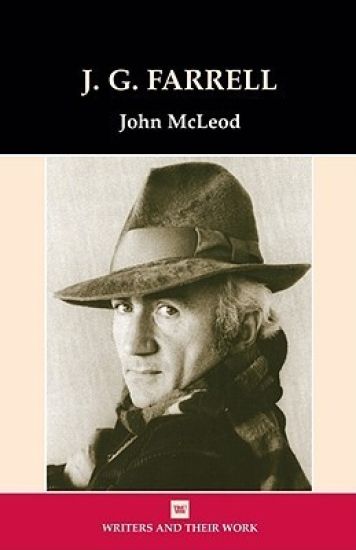
J.G. Farrell’s Empire Trilogy (1970-78) was one of the major achievements of post-war fiction and inspired new generation of writers keen to explore the legacy of the Empire and the emerging postcolonial spaces created in its wake. This new, invigorating and accessible study excitingly explores the substance and significance of the Empire Trilogy and assesses its damning and influential critique of British colonial rule. Rather than positioning him at the end of a tradition of nostalgic Empire writing, John McLeod shows how Farrell’s novels attempt to satirise the perspectives of those who served the Empire and were caught up in its decline. McLeod also explores Farrell’s intriguing early fiction, as well as his unfinished posthumously-published novel, and accounts for his changing critical legacy since his premature death in 1980, aged 44. This insightful study will stimulate both new and established readers of a much beloved and missed novelist.
Narrative and Psychotherapy

Narrative and Psychotherapy

John McLeod

SAGE Publications Ltd
1997
nidottu
`A densely packed book with interesting and valuable research gleaned from a wide variety of therapy approaches, Narrative and Psychotherapy furnishes the reader with a cogent historical appraisal of the way psychotherapy, culture and storytelling fit together.... A good reference book for counsellors and students.... The authors' students, and clients, must be very happy that he has the interest and the capacity to tune in to others in such a fresh manner' - Counselling, The Journal of the British Association for Counselling The core of psychotherapy can be seen as a process in which the client comes to tell, and then re-author, an individual life-story or personal narrative. The author of this book argues that all therapies are, therefore, narrative therapies, and that the counselling experience can be understood in terms of telling and retelling stories. If the story is not heard, then the therapist and the client are deprived of the most effective and mutually involving mode of discourse open to them. Taking a narrative approach also requires thinking about the nature of truth, the concept of the person, the relationship between therapist and client, and the knowledge base of psychotherapy. John McLeod examines the role and significance of stories in psychotherapy from within a broad-based cultural and theoretical framework.
Pluralistic Therapy

Pluralistic Therapy

John McLeod

Routledge
2017
sidottu
Pluralistic Therapy: Distinctive Features offers an introduction to what is distinctive about this increasingly popular method. Written by one of the co-founders of pluralistic therapy, and a leading UK figure in counselling and psychotherapy, this book describes 15 theoretical features and 15 practical techniques for practitioners. Pluralistic therapy is a flexible, integrative approach to counselling and psychotherapy, which has also found applications in fields such as mental health, life coaching and careers guidance. Pluralistic Therapy: Distinctive Features will provide an essential guide to students and practitioners of psychotherapy, or an allied area of practice, who are open to learning about new ideas and techniques from current interdisciplinary research.
Pluralistic Therapy

Pluralistic Therapy

John McLeod

Routledge
2017
nidottu
Pluralistic Therapy: Distinctive Features offers an introduction to what is distinctive about this increasingly popular method. Written by one of the co-founders of pluralistic therapy, and a leading UK figure in counselling and psychotherapy, this book describes 15 theoretical features and 15 practical techniques for practitioners. Pluralistic therapy is a flexible, integrative approach to counselling and psychotherapy, which has also found applications in fields such as mental health, life coaching and careers guidance. Pluralistic Therapy: Distinctive Features will provide an essential guide to students and practitioners of psychotherapy, or an allied area of practice, who are open to learning about new ideas and techniques from current interdisciplinary research.
Life Lines: Writing Transcultural Adoption

Life Lines: Writing Transcultural Adoption

John McLeod

Bloomsbury Academic
2017
nidottu
Adoptions that cross the lines of culture, race and nation are a major consequence of conflicts around the globe, yet their histories and representations have rarely been considered. Life Lines: Writing Transcultural Adoption is the first critical study to explore narratives of transcultural adoption from contemporary Britain, Ireland and America: fictions, films and memoirs made by those within the adoption 'triad' or those concerned with the pain and possibilities of transcultural adoption. While acknowledging the sobering inequalities which engender transcultural adoptions and the lasting upset of sundered relations, at the same time John McLeod considers the transfigurative and creative propensity of imagining transcultural adoption as radically calling into question ideas of biogenetic attachment, racial genealogy, cultural identity and normative family-making. How might the predicament of ‘being adopted’ transculturally enable the transformative agency of ‘adoptive being’ for all? Exploring works by Andrea Levy, Barbara Kingsolver, Toni Morrison, Sebastian Barry, Caryl Phillips, Jackie Kay and several others, Life Lines makes a groundbreaking intervention in such fields as transcultural studies, postcolonial thought, and adoption theory and practice.
Using Research in Counselling and Psychotherapy

Using Research in Counselling and Psychotherapy

John McLeod

SAGE Publications Inc
2016
sidottu
In this book bestselling author John McLeod examines the multiple ways in which research can be used to inform and enhance counselling practice. The author discusses how research impacts on policy and practice, covering research knowledge, values, research awareness and skills. Further chapters cover: Using research to understand the therapy process and outcomes Using research to make sense of other lives Using client feedback to enhance practice Using research to build professional networks and effective organisations. The book can be used throughout training on counselling, psychotherapy and counselling psychology courses, to support the development of professional competencies and personal development. It will also be valuable reading for both practitioners and researchers.
Using Research in Counselling and Psychotherapy

Using Research in Counselling and Psychotherapy

John McLeod

SAGE Publications Inc
2016
nidottu
In this book bestselling author John McLeod examines the multiple ways in which research can be used to inform and enhance counselling practice. The author discusses how research impacts on policy and practice, covering research knowledge, values, research awareness and skills. Further chapters cover: Using research to understand the therapy process and outcomes Using research to make sense of other lives Using client feedback to enhance practice Using research to build professional networks and effective organisations. The book can be used throughout training on counselling, psychotherapy and counselling psychology courses, to support the development of professional competencies and personal development. It will also be valuable reading for both practitioners and researchers.
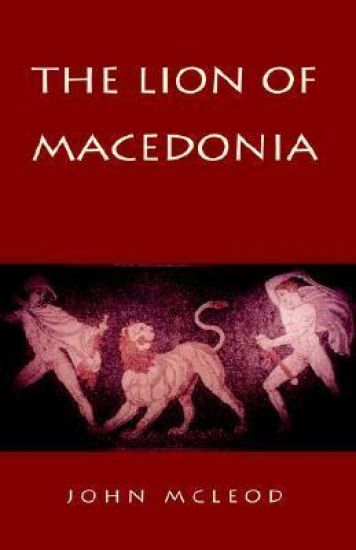
The Lion of Macedonia

The Lion of Macedonia

John McLeod

Xlibris
2005
pokkari
Alexander the Great is a household name, yet the majority of people know little more than the odd anecdote about him. The Lion of Macedonia addresses the least known part of his life, his childhood and adolescence. By combining the few known facts and legends with aspects of daily life in the ancient world, the author portrays a believable account of Alexander's upbringing. Although fictional, it is thoroughly researched and shows how the development of Alexander's character was influenced by the people and events around him. It reflects the morals and values of those times without being unduly graphic, and includes religious rituals and pitched battles, political intrigue, Alexander's sexuality, his relationship with his parents, and encounters with such equally famous figures as Aristotle and Isocrates. It could have happened this way.