Kirjojen hintavertailu. Mukana 11 978 889 kirjaa ja 12 kauppaa.

Kirjahaku

Etsi kirjoja tekijän nimen, kirjan nimen tai ISBN:n perusteella.

6 kirjaa tekijältä John Miles Foley

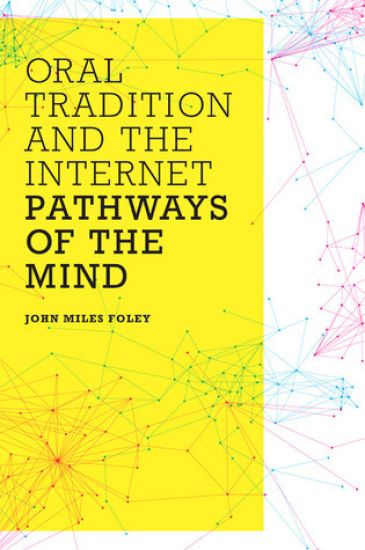
Oral Tradition and the Internet

Oral Tradition and the Internet

John Miles Foley

University of Illinois Press
2012
sidottu
The major purpose of this book is to illustrate and explain the fundamental similarities and correspondences between humankind's oldest and newest thought-technologies: oral tradition and the Internet. Despite superficial differences, both technologies are radically alike in depending not on static products but rather on continuous processes, not on "What?" but on "How do I get there?" In contrast to the fixed spatial organization of the page and book, the technologies of oral tradition and the Internet mime the way we think by processing along pathways within a network. In both media it's pathways--not things--that matter. To illustrate these ideas, this volume is designed as a "morphing book," a collection of linked nodes that can be read in innumerable different ways. Doing nothing less fundamental than challenging the default medium of the linear book and page and all that they entail, Oral Tradition and the Internet shows readers that there are large, complex, wholly viable, alternative worlds of media-technology out there--if only they are willing to explore, to think outside the usual, culturally constructed categories. This "brick-and-mortar" book exists as an extension of The Pathways Project (http://pathwaysproject.org), an open-access online suite of chapter-nodes, linked websites, and multimedia all dedicated to exploring and demonstrating the dynamic relationship between oral tradition and Internet technology
How to Read an Oral Poem

How to Read an Oral Poem

John Miles Foley

University of Illinois Press
2002
nidottu
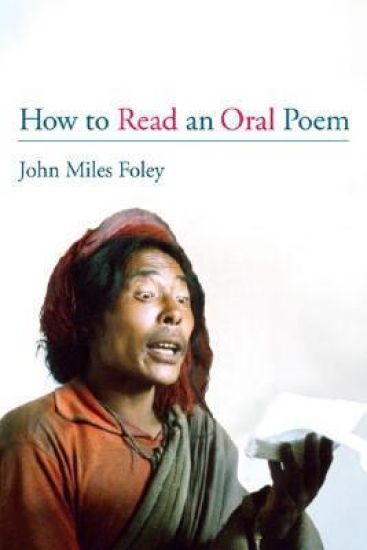
Though they appear diverse, Homer's Odyssey and slam poetry from contemporary urban America both draw from the well of oral tradition. This unique, practical, and user-friendly guide explores the cultural contexts of verbal art to provide more-than-textual methods for understanding the structure, principles, and social applications of oral poetry. Using dozens of examples, including a North American slam poet, a Tibetan paper-singer, a South African praise-poet, and an ancient Greek bard, John Miles Foley shows that although oral poetry long predates the invention of writing, it continues to be a vital culture-making and communications tool in societies all over the world. Based on fieldwork and archival research on epics, folktales, lyrics, laments, charms, and other oral traditions, How to Read an Oral Poem answers the questions, What is oral poetry? How does it work? What is reading, literally and figuratively? This accessible and engaging work is enhanced by audio and video examples of oral poetry, which are available at http://www.oraltradition.org. The book can also be used as companion volume to Foley's Teaching Oral Traditions.
Oral Tradition and the Internet

Oral Tradition and the Internet

John Miles Foley

University of Illinois Press
2012
nidottu
The major purpose of this book is to illustrate and explain the fundamental similarities and correspondences between humankind's oldest and newest thought-technologies: oral tradition and the Internet. Despite superficial differences, both technologies are radically alike in depending not on static products but rather on continuous processes, not on "What?" but on "How do I get there?" In contrast to the fixed spatial organization of the page and book, the technologies of oral tradition and the Internet mime the way we think by processing along pathways within a network. In both media it's pathways--not things--that matter. To illustrate these ideas, this volume is designed as a "morphing book," a collection of linked nodes that can be read in innumerable different ways. Doing nothing less fundamental than challenging the default medium of the linear book and page and all that they entail, Oral Tradition and the Internet shows readers that there are large, complex, wholly viable, alternative worlds of media-technology out there--if only they are willing to explore, to think outside the usual, culturally constructed categories. This "brick-and-mortar" book exists as an extension of The Pathways Project (http://pathwaysproject.org), an open-access online suite of chapter-nodes, linked websites, and multimedia all dedicated to exploring and demonstrating the dynamic relationship between oral tradition and Internet technology
Homer’s Traditional Art

Homer’s Traditional Art

John Miles Foley

Pennsylvania State University Press
1999
pokkari
In recent decades, the evidence for an oral epic tradition in ancient Greece has grown enormously along with our ever-increasing awareness of worldwide oral traditions. John Foley here examines the artistic implications that oral tradition holds for the understanding of the Iliad and Odyssey in order to establish a context for their original performance and modern-day reception.In Homer's Traditional Art, Foley addresses three crucially interlocking areas that lead us to a fuller appreciation of the Homeric poems. He first explores the reality of Homer as their actual author, examining historical and comparative evidence to propose that "Homer" is a legendary and anthropomorphic figure rather than a real-life author. He next presents the poetic tradition as a specialized and highly resonant language bristling with idiomatic implication. Finally, he looks at Homer's overall artistic achievement, showing that it is best evaluated via a poetics aimed specifically at works that emerge from oral tradition.Along the way, Foley offers new perspectives on such topics as characterization and personal interaction in the epics, the nature of Penelope's heroism, the implications of feasting and lament, and the problematic ending of the Odyssey. His comparative references to the South Slavic oral epic open up new vistas on Homer's language, narrative patterning, and identity.Homer's Traditional Art represents a disentangling of the interwoven strands of orality, textuality, and verbal art. It shows how we can learn to appreciate how Homer's art succeeds not in spite of the oral tradition in which it was composed but rather through its unique agency.
Traditional Oral Epic

Traditional Oral Epic

John Miles Foley

University of California Press
1993
pokkari
John Miles Foley offers an innovative and straightforward approach to the structural analysis of oral and oral-derived traditional texts. Professor Foley argues that to give the vast and complex body of oral "literature" its due, we must first come to terms with the endemic heterogeneity of traditional oral epics, with their individual histories, genres, and documents, as well as both the synchronic and diachronic aspects of their poetics. Until now, the emphasis in studies of oral traditional works has been placed on addressing the correspondences among traditions--shared structures of "formula," "theme," and "story-pattern." Traditional Oral Epic explores the incongruencies among traditions and focuses on the qualities specific to certain oral and oral-derived works. It is certain to inspire further research in this field.