

Kirjahaku
Etsi kirjoja tekijän nimen, kirjan nimen tai ISBN:n perusteella.
169 kirjaa tekijältä John Miller

The Country Gentleman's Architect, in a Great Variety of New Designs, for Cottages, Farm Houses, Country-Houses, Villas, Lodges ... and Ornamental Wooden Gates; ... Engraved on Thirty-Two Plates, from Designs Drawn by J. Miller, ...
John Miller
Gale Ecco, Print Editions
2010
pokkari
Miller's Modern Acting Drama: Consisting Of The Most Popular Pieces Produced At The London Theatres (1834)
John Miller
KESSINGER PUBLISHING, LLC
2008
nidottu
Miller's Modern Acting Drama: Consisting Of The Most Popular Pieces Produced At The London Theatres (1834)
John Miller
KESSINGER PUBLISHING, LLC
2008
sidottu


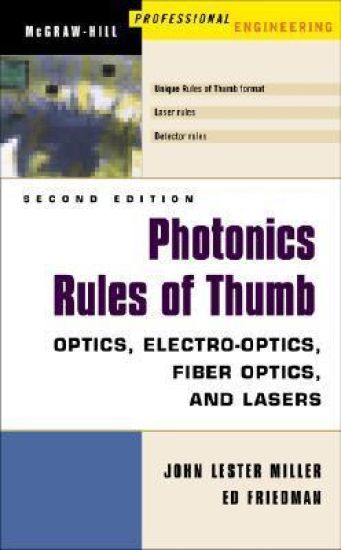
Quickly and easily estimate the impact of change with 300 proven photonics calculations! This book is updated with 100 completely new and improved rules and organized into 18 chapters that include lasers, detectors, optics of the atmosphere, and many more! Here is a handy compilation of 300 cost-saving, think-on-your-feet photonics rules of thumb designed to save you hours of design time and a world of frustration. Within seconds you can accurately gauge the impact of a suggested design change on your project. It is the premiere collection of these valuable rules in a single, quick look-up reference.These simple-to-implement calculations allow you to rapidly pinpoint trouble spots, ask the right questions at meetings, and are perfect for quick sanity checks of last-minute specifications or performance feature additions. Offering a convenient alphabetical arrangement according to specialty, this unique reference spans the entire spectrum of photonics, including: eighteen chapters covering optics, electro-optics, optics of the atmosphere, radiometry, technologies related to security and surveillance systems, lasers, and many others.If you want to develop a sense of what will work and what won't and want the calculations to keep things real, "Photonics Rules of Thumb" belongs on your desk or in your pocket.
Please note this title is suitable for any student studying: Exam Board: OCR Level: A Level Subject: Physics First teaching: September 2015 First exams: June 2017 New and updated resources tailored to the 2015 Advancing Physics specification, from OCR's resource partner. With new accessible format and features throughout, these resources retain the ethos of Advancing Physics while providing full support for the new linear qualification. Accompanied by a bank of support and online resources on Kerboodle.
Please note this title is suitable for any student studying: Exam Board: OCR Level: A Level Subject: Physics First teaching: September 2015 First exams: June 2017 New and updated resources tailored to the 2015 Advancing Physics specification, from OCR's resource partner. With new accessible format and features throughout, these resources retain the ethos of Advancing Physics while providing full support for the new linear qualification.This Student Book contains two year's worth of content and covers the full A Level qualification.
Please note this title is suitable for any student studying: Exam Board: OCR Level: A Level Subject: Physics First teaching: September 2015 First exams: June 2017 New and updated resources tailored to the 2015 Advancing Physics specification, written by curriculum experts and developed in partnership with OCR. With new accessible format and features throughout, these resources retain the ethos of Advancing Physics while providing full support for the new linear qualification. This Student Book covers the second year of content required for the new Advancing Physics A Level qualification. It develops true subject knowledge while also developing essential exam skills.

The religious and political history of late seventeenth- and early eighteenth-century England is typically written in terms of conflict and division. This was the period when party conflict - exacerbated by religious enmities - became a normal part of English life. Rather than denying the importance of partisan divisions, this book reveals how civic celebration, designed as an expression of unity and amity, was often used for partisan purposes, reaching a peak in the 1710s. The animosities were most marked in elections, which were often corrupt and drunken, and sometimes very violent. But division and conflict were not universal. Many towns avoided electoral contests, not because they were in the pocket of a great aristocrat, but as a matter of deliberate policy. Despite occasional disorder, urban government rarely broke down, and even violent elections ended with bruises rather than fatalities. Professor Miller suggests an explanation for this in the nature of urban governance. While the formal structures of town government were profoundly undemocratic - vacancies on corporations were most often filled by co-option - there was much participation, consultation, and negotiation in the lower levels of government. In addition, corporation members lived in close proximity to, and did business with, their fellow townspeople, and needed to meet their expectations. These expectations might have been modest - they wanted streets to be reasonably clean and kept in adequate repair, sewage and rubbish to be removed, law and order maintained, and the deserving poor relieved. But they were the things that made daily life tolerable, and for many they mattered more than politics.

James II (1633–1701) lacked the charisma of his father, Charles I, but shared his tendency to dismiss the views of others when they differed from his own. Failing to understand his subjects, James was also misunderstood by them. In this highly-regarded biography, John Miller reassesses James II and his reign, drawing on a wide array of primary sources from France, Italy, and Ireland as well as England. Miller argues that the king had many laudable attributes--he was brave, loyal, honorable, and hard-working, and he was at least as benevolent toward his people as his father had been. Yet James’s conversion to Catholicism fueled the distrust of his Protestant subjects who placed the worst possible construction on his actions and statements. Although James came to see the securing of religious freedom for Catholics in the wider context of freedom for all religious minorities, his people naturally doubted the sincerity of his commitment to toleration.The book explores James’s relations with the state and society, focusing on the political, diplomatic, and religious issues that shaped his reign. Miller discusses the human failings, the gulf of understanding between the king and his subjects, and the sheer bad luck that led to James’s downfall. He also considers the reasons for James’s lack of interest in recovering his kingdom after his flight to France in 1688. This revised edition of the book includes a substantial new foreword assessing recent work on the reign.“This is a first-class essay in historical biography. . . . It must displace all previous lives of James II.”—J. P. Kenyon, Observer
The Wakefields were a family of adventurers with a vision of empire which was to color the thinking of the Victorian age. This study describes in detail their attempt to impose an early Victorian pattern on one corner of Polynesia and the tensions that resulted therefrom. It shows the early Victorian mind adapting itself to the shocks of a new and varied environment and the response of the Polynesians to the challenge of an unexpected invasion, including that of European diseases which threatened to destroy them.
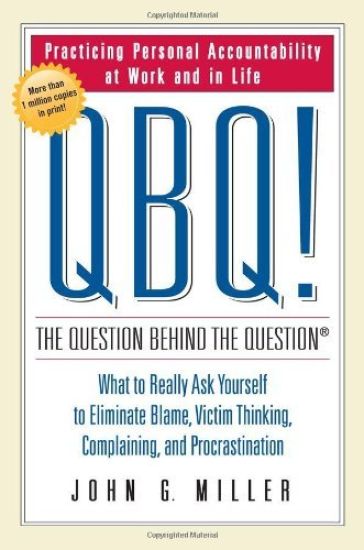
Now, more than ever, the absence of personal accountability in our culture is a problem that has led to a proliferation of shunning responsibility, blaming others, and playing the victim. In times of political and social upheaval around the world, it appears that few are immune, as they look to explain-and complain-about the state of our affairs. This remarkable and timeless book gives a practical and inspiring message for putting personal accountability into daily action, with astonishing results.
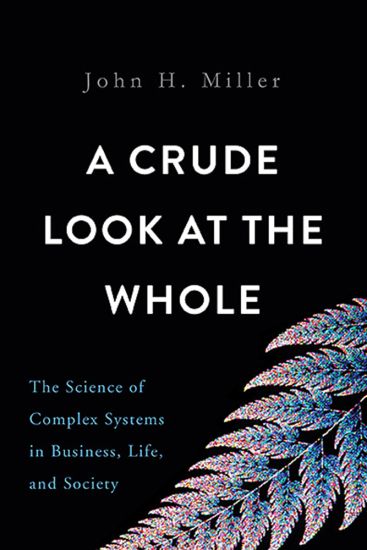
Imagine trying to understand a stained glass window by breaking it into pieces and examining it one shard at a time. While you could probably learn a lot about each piece, you would have no idea about what the entire picture looks like. This is reductionism,the idea that to understand the world we only need to study its pieces,and it is how most social scientists approach their work.In A Crude Look at the Whole , social scientist and economist John H. Miller shows why we need to start looking at whole pictures. For one thing, whether we are talking about stock markets, computer networks, or biological organisms, individual parts only make sense when we remember that they are part of larger wholes. And perhaps more importantly, those wholes can take on behaviours that are strikingly different from that of their pieces.Miller, a leading expert in the computational study of complex adaptive systems, reveals astounding global patterns linking the organization of otherwise radically different structures: It might seem crude, but a beehive's temperature control system can help predict market fluctuations and a mammal's heartbeat can help us understand the heartbeat" of a city and adapt urban planning accordingly. From enduring racial segregation to sudden stock market disasters, once we start drawing links between complex systems, we can start solving what otherwise might be totally intractable problems.Thanks to this revolutionary perspective, we can finally transcend the limits of reductionism and discover crucial new ideas. Scientifically founded and beautifully written, A Crude Look at the Whole is a powerful exploration of the challenges that we face as a society. As it reveals, taking the crude look might be the only way to truly see.
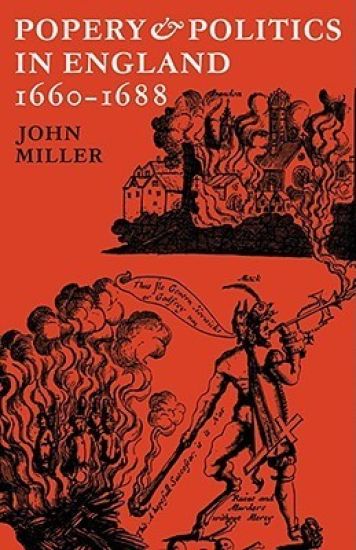
In the reign of Charles II, over a century after the Protestant Reformation, England was faced with the prospect of a Catholic king when the King's brother, the future James II became a Catholic. The reaction to his conversion, the fears it aroused and their background form the main theme of this book.

Poems On Several Occasions: To Which Are Added Dramatic Epistles From The Principal Characters In Some Of Our Most Approved English Tragedies (1754)
John Miller
KESSINGER PUBLISHING, LLC
2008
sidottu