Kirjahaku
Etsi kirjoja tekijän nimen, kirjan nimen tai ISBN:n perusteella.
15 kirjaa tekijältä John Moran

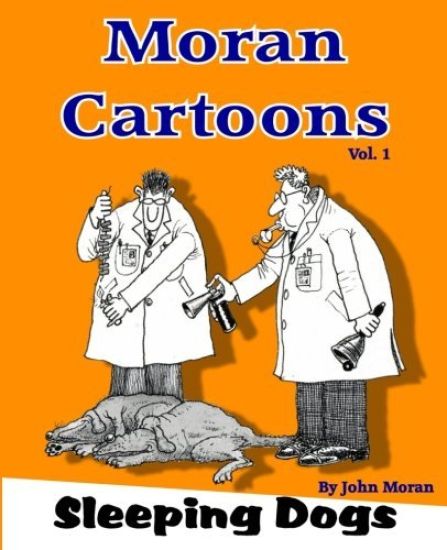
Moran Cartoons are back with their second installment from the comic strip series Moran Cartoons, A Twisted View Volume 2. With coronavirus covid 19 causing so much stress and misery, Moran Cartoons have released the 'Stress Reliever' to accompany Volume 1, the 'Stress Buster' to help put a smile back on peoples faces. This hilarious compilation of quirky, offbeat black and white funny cartoons cleverly twists small observations into some gloriously absurd and humorous scenarios. A truly versatile and zany comic. The one-strip panel drawings are engaging even for the most reluctant of readers, which means than you can sit back, put your feet up, and laugh at leisure. It's series of short, sharp and varied anecdotes maintains plenty of variety. Whether its funny animal cartoons or comic doctors, this book guarantees to keep you entertained.Moran has a rare ability to deliver inoffensive American humor (or if you're the other side of the pond, British humour), without any unpleasant agendas. His humorous jokes are openly silly yet still manages to poke fun at relevant topics, in fact their deliberately obvious nature is what makes his cartoons so special. He has a somewhat oddball approach to life which he paints with his largely surrealist and insightful comic drawings and witty jokes to match. This is humour at its most refreshing. A satire of modern times for all ages, from the kids to their Grandparents, that will make you simultaneously cringe and explode with laugher in equal measure.One thing's for sure; this is a comic book collection of beautifully drawn funny cartoon moments which at times are touchingly true to life. This compilation is an exceedingly good read. It is a book you will not regret owning.

Why has the military not intervened in the post-communist political arena since the advent of democracy in Russia? Do lowered levels of professionalism actually lead to higher levels of intervention? Through a systematic exploration of professionalism within the Russian military, this study addresses these important questions. Moran suggests that by examining the notion of subjective fragmentation, both Gorbachev and Yeltsin utilized a highly effective, yet potentially troublesome, form of civil-military control. Findings that overall levels of praetorian behavior on the part of the Russian military have declined in this period, in spite of declining levels of military professionalism, challenge one of the most basic theoretical assumptions of civil-military relations. Since 1991, post-communist Russia has exhibited all of the classic indicators of a society ripe for a military takeover. Not only have institutional interests of the Russian officer corps been gravely threatened, but surveys conducted within it have found a general lack of sympathy for democratic values. Furthermore, Russia's weak civil society is accompanied by high levels of corruption, rampant crime, secessionist movements, a significant terrorist threat, and a general disrespect for the rule of law. Even further augmenting the chances of a military coup d'^D'etat, public opinion polls of civilians have found that the military is one of the most trusted institutions in the country—so trusted, in fact, that many Russian citizens have expressed support for a military takeover. Moran explains why the military has not capitalized on these factors.


The Resurrection Mantra: Build hope and resilience into your life
John Moran
Preferential Publications Pty Ltd
2019
nidottu
Our lives involve managing and getting through regular irritations, setbacks and, at times, catastrophes - "death" experiences.The Resurrection Mantra describes a simple, practical spiritual or meditation exercise based on the fundamental rhythm of (and truth about) life: The constant flow of these "death" events - setbacks, tragedies, losses - that side-track or disrupt our lives and whether they lead us to a living hell (despair) or resurrection (new life).This simple personally developed and tested exercise works. It can change your out-look on and approach to life, no matter what setbacks you experience.So, start integrating your life into the life-death-new life rhythm of life so that you keep setbacks, trauma and tragedy in perspective and live a hopeful, resilient life.It focuses on the life truth and the outcome options, summarised so clearly in the powerful story of Easter - the death and resurrection of Jesus Christ - which is the supreme example from history of life's life-death-new life pattern. Whether you are Christian or not this is the great example of life's life-death-new life rhythm.The challenge is to internalise this truth, not just accept it theoretically. This simple mantra exercise - The Resurrection Mantra - will embed this essential life-death-new life truth into your consciousness and train your thinking and temperament for when trials and tribulations come along.

Jack Bushman's Short Stories: Queensland Literary History: 2nd edition - Including updated Introduction and newly discovered story
John Moran
Preferential Publications Pty Ltd
2019
nidottu

In wonder and gratitude, prize-winning photographer John Moran travels the Sunshine State with his cameras, seeking his vision of natural Florida as it must have appeared to Ponce de Leon and other early strangers in paradise. This remarkable collection of images and essays celebrates the magic of a landscape born of water, he writes, and ""blessed with beauty beyond measure."" The book caps Moran's 20-year odyssey to discover the soul of one of the most photographed states in the country. Still, he says, for a photographer who works on the road, he doesn't get around very much. The outer limits of his travels ordinarily are defined by places close to home, with names like Live Oak, Cedar Key, and Micanopy. Working mostly in north and central Florida, Moran says his pictures consecrate a region ""steeped in black-water swamps and rivers, populated by egrets and alligators."" Keenly aware that much of the state's wilderness has all but vanished, his pictures sometimes only suggest the illusion of unspoiled nature. ""I can't tell you how often I've had to recompose my pictures to eliminate a beer can or a bed mattress or worse in the woods,"" he writes. At times, he's made his best pictures literally within sight of his car, ""aware of my own impact on the land, mindful of the myth of untainted nature that I promote with my camera."" He's also worked in unconventional situations, lying inside a home-made PVC pipe-and-burlap blind to photograph dancing sandhill cranes and perching inside a bucket truck 50 feet aboveground to photograph nesting ospreys. The companion essays reflect Moran's philosophy about both nature and photography, and they weave together personal narrative, natural history, and photo-technical instruction. They include commentary about the actual moment he snapped each picture, factual information about the place, and sometimes a historical perspective on the setting by such well-known writers and naturalists as William Bartram and Archie Carr. Moran emphasizes ""making"" pictures as opposed to casually taking them, and writes that his job can't be done without a plan and a specific set of tools and materials. But, he says, his job ""isn't always about the picture, it's about the experience of just being there, chasing the light; alive and awake and aware."" And he recalls some of the best advice he ever received: before you focus your camera, first focus yourself.

For nearly thirty years, John Moran has sought to capture the very soul of one of the most photographed states in the country. As anyone who has seen his work can attest, he seemingly does just that every time he opens his shutter. These postcards were hand-selected by Moran as some of his favourite images. But be forewarned: you might have such a difficult time deciding which to mail and which to keep you'll wish you had bought a copy for yourself


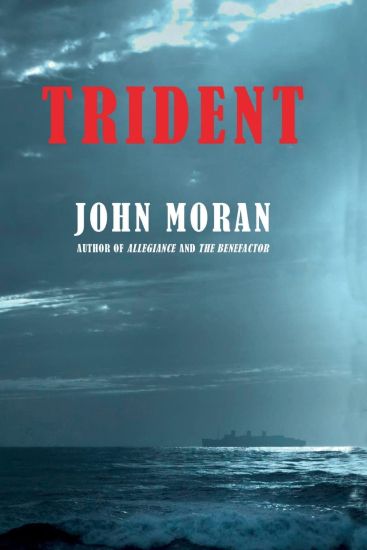
In the tradition-bound culture of the FBI, Karla Davis is considered a "female" agent first and "special" agent second. When she uncovers evidence of a Mafia infiltrator at the highest levels of the New York headquarters, she is rebuffed by male supervisors. Undeterred, she launches an unauthorized investigation, confiding in her mentor and her lover, both experienced agents. Opposed by a quarry always one step ahead of her, an elite team of assassins determined to protect the infiltrator, and a monolithic institution disdainful of individuality, Karla enters a labyrinth of deceit, murder, and personal betrayal.
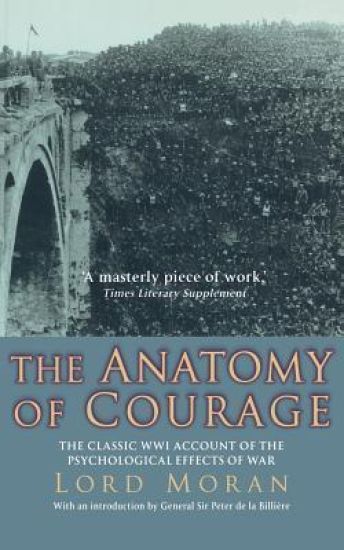
'I set out to find how courage is born and how it is sustained in a modern army of a free people. The soldier is alone in his war with terror and we have to recognise the first signs of his defeat, that we may come in time to his rescue.' Lord Moran First published in 1945 this early, groundbreaking account of the psychological effects of war, recounted by means of vivid first-hand observation and anecdote, came at a time when shell-shock was equated with lack of moral fibre. In 1940, Moran became Churchill's doctor and his position as a one of history's most important war physicians was secured. His humane, considered observations, scientific analysis and proposed solutions constitute one of the great First World War sources. However, they are perhaps just as relevant to our own conflict-ridden times. Charles McMoran Wilson was awarded the MC during the Battle of the Somme and the Italian Silver Medal for Military Valour. He was the Dean of St Mary's Hospital Medical School, became Winston Churchill's doctor in 1940 and was President of the Royal College of Physicians. He is also the author of Churchill: The Struggle for Survival and Churchill at War. PRAISE FOR THE ANATOMY OF COURAGE 'A remarkably human book ...arresting, and sometimes even unforgettable.' Desmond McCarthy, Sunday Times 'A fascinating book ...It is not easy to do justice to Lord Moran's discursive brilliancy ...a masterly piece of work.' Times Literary Supplement