Kirjojen hintavertailu. Mukana 12 365 683 kirjaa ja 12 kauppaa.

Kirjahaku

Etsi kirjoja tekijän nimen, kirjan nimen tai ISBN:n perusteella.

10 kirjaa tekijältä John Moriarty

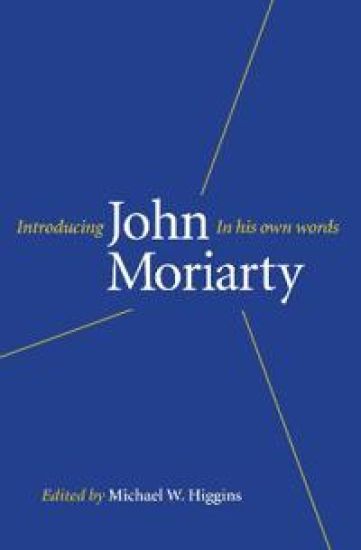
Introducing Moriarty

Introducing Moriarty

John Moriarty

The Lilliput Press Ltd
2019
nidottu
In Introducing Moriarty Canadian theologian and academic Michael W. Higgins compiles the essential writings of Irish philosopher and mystic, John Moriarty. This distillation of Moriarty’s texts on ecology, mysticism and spirituality is a perfect introduction to the work of this complex and, at times, esoteric philosopher. Higgins’ commentary provides an excellent guide to one of the country’s most enigmatic modern thinkers and is an essential addition to the library of anyone interested in Irish philosophy and spirituality.
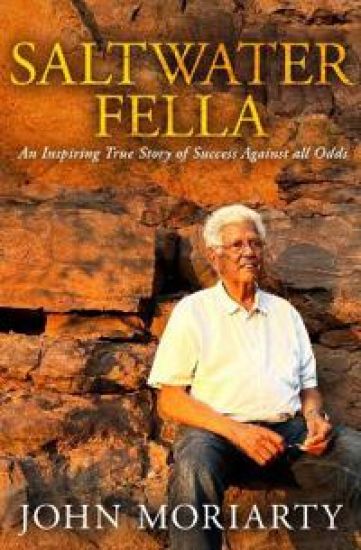
Saltwater Fella

Saltwater Fella

John Moriarty

MELBOURNE UNIVERSITY PRESS
2025
sidottu
Years later, when I found my mother, I asked, 'Why did you let me go?' My mother told me, in a very soft voice, 'My son, you were going to school. I took you to school every day ... then I went to pick you up this day and you were gone.' John Moriarty was born to his Yanyuwa mother Kathleen Murrmayibinya and Irish father John Moriarty in Borroloola in the Gulf of Carpentaria, Northern Territory. At the age of four, as part of assimilationist policies, he was stolen from his family and placed in a children's home. Saltwater Fella is Moriarty's story of a childhood surviving harsh routines and poverty, hunger and racism in church institutions. It is about finding out who he is through his soccer skills and the start of a long career in advocacy for Aboriginal rights and self-determination. Moriarty's search for his place in the world takes him from his saltwater people to co-founding an internationally acclaimed Aboriginal design company that would put the stirringly beautiful Wunala Dreaming Qantas jet in the sky. Fired by the injustices around him, Moriarty made it his life's mission to advocate for the rights of Aboriginal people, from the successful 1967 referendum for voting rights and citizenship, through to education and decent jobs. Through his tireless work in aiding others to find their voice, he discovered his own. Saltwater Fella tells that story.
Invoking Ireland

Invoking Ireland

John Moriarty

The Lilliput Press Ltd
2005
pokkari
Here Moriarty proposes not a Republic but anEnflaith, reinstituting a Birdreign in which all things live ecumenically with all things, uniting man with nature, magic and the divine. Standing shamanically and mystically with the heroes of political thinkers, among them Plato, St Augustine and Rousseau.
Serious Sounds

Serious Sounds

John Moriarty

The Lilliput Press Ltd
2007
nidottu
A wonderful walk through the story of Moriarty’s childhood growing up on a small farm in north Kerry, and his lifelong engagement with traditional Catholic sacraments, taking as his point of departure Philip Larkin’s poem ‘Church Going’ – a richly meditative essay of extraordinary resonance that begins with a visit to the island of Inis Fallen on Loch Leine: ‘People say we live in a time of ritual deprivation. Not so people of my age born into Christian Ireland. From three days’ of age I was inducted onto the Christian sacramental road, and that journey I rehearse in this book.’
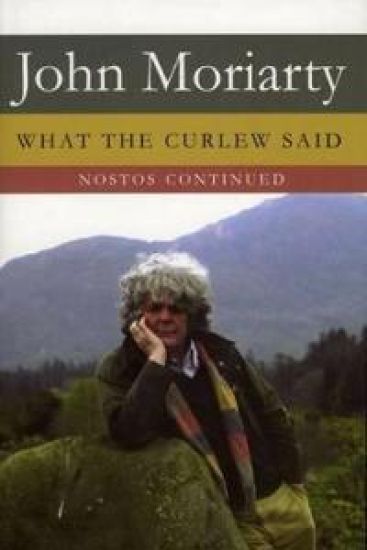
What The Curlew Said

What The Curlew Said

John Moriarty

The Lilliput Press Ltd
2014
nidottu
This autobiography, a sequel to Nostos, concludes the story of John Moriarty’s life in Connemara during the 1980s and subsequent return to his native Kerry. He writes with compelling detail about his time at Roundstone and environs, restoring gardens at Leitirdyfe House and Lisnabrucka, and building his own house at Toombeola. He reflects on his Kerry childhood and the death of his father; he describes his adopted family, a sortie to Dublin for Christmas, the writer Tim Robinson, and his neighbourhood and community; he celebrates the returned pine martens and the fauna and flora of a historic landscape; he undertakes a lecture tour in Canada organized by his former students; and throughout he engages with the immensities of the natural and spiritual worlds that form his habitat. In this posthumously published work, completed just weeks before his death, John Moriarty calls to account the literatures and legacies of European thought made manifest in the western extremities of Ireland. They bore witness to his own inner and outer journey, now documented in this compelling, writerly masterwork.
A Hut at the Edge of the Village

A Hut at the Edge of the Village

John Moriarty

THE LILLIPUT PRESS LTD
2025
nidottu
The new collection from John Moriarty, edited by Martin Shaw. There is a radical agency in John Moriarty’s work not always acknowledged. As our heads spin with mythological cross-referencing, poetical leaps and the philosophical bent, it is clear that there is nothing domestic, nothing tame, about John Moriarty. The power of Moriarty is that he has found a thousand beautiful ways to say something very disturbing: we have to change our lives. In this small book of big thoughts, award-winning author, mythologist and storyteller Martin Shaw situates Moriarty’s work with respect to our eco-conscious era and a readership seeking spiritual and philosophical guidance. Moriarty asks of us only one thing – that we move our gaze from seeing to beholding. And there the trouble begins, when we realize there is a world beyond us far bigger than our temporary ambitions. A Hut at the Edge of the Village presents a collection of Moriarty’s writings ordered thematically, with sections ranging from place, love and wildness through to voyaging, ceremony and the legitimacy of sorrow. These carefully chosen extracts are supported by an introduction by Martin Shaw and foreword by Tommy Tiernan, a long-time admirer of Moriarty’s work. According to Shaw, ‘These are not pastoral times we are living in, but prophetic. We are at a moment when the world as we understand it has been turned upside down. The challenge is that there are fewer and fewer people who can interpret such happenings in a deep, soulful way. Moriarty can do that. When culture is in woeful crisis, the insights never come from parliament, senate, or committee; they come from the hut at the edge of the village. Let’s go there. There is tremendous, unexpected hope waiting.’
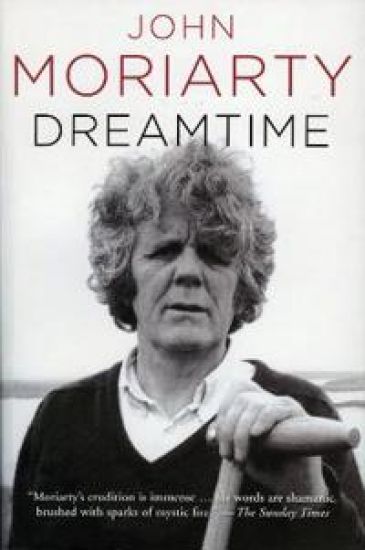
Dreamtime

Dreamtime

John Moriarty

The Lilliput Press Ltd
2009
nidottu
This is a revised and enlarged edition of John Moriarty’s first published work, which has been out of print since 1994. A Book of Revelations mediated by stories and personal excursions in literature, philosophy and sacred writings, Moriarty articulates the wisdom of humanity, drawing on cultural landscapes in India, China, Egypt, Australia, the Americas and Europe. Now recognized as a classic of spiritual writing, it enlarges our capacity for symbolic understanding in an age of millennial anxiety.
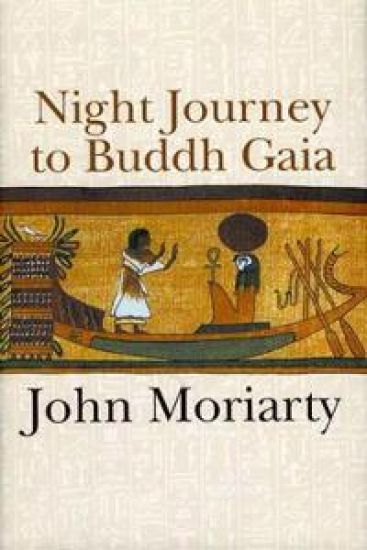
Night Journey To Buddh Gaia

Night Journey To Buddh Gaia

John Moriarty

The Lilliput Press Ltd
2006
sidottu
In a letter to his friend Charles Ford, Jonathan Swift wrote: ‘I have finished my travells and I am now transcribing them: they are admirable things and will wonderfully mend the world.’ In Night Journey to Buddh Gaia, John Moriarty, like Gulliver, is a traveller to exotic places: ancient Egypt, Sumeria, Babylonia, Canaan, Judaea, ancient Greece, ancient Rome, medieval, Renaissance, Enlightenment and modern Europe, ending in the Waste Land of our own making. Calling them psychles (rather than cycles) of Western history, and seeking to mend them as he does so, Moriarty takes the reader on an exodus. Emerging, he concludes that our cultural pasts still sponsor ‘ecological havoc’, and calls for a Naissance not a Renaissance. He believes that we must be radically original, and refound city and psyche, the one a sacramental simulacrum of the other. As the ancient Egyptians enacted a night journey through their Underworld to Sunrise, the scarab beetle pushing its ball of clay before it, this book charts a night journey through the darkness of nature and culture to Earthrise. Seeing our planet coming up over a lunar horizon, Moriarty names it Buddh Gaia (from the Sanskrit and Greek), suggesting enlightenment – future, present and back through the geological ages. Here is a book in profound dialogue with the mystics and master spirits of civilization: Sophocles, Malory, Montaigne, Shakespeare, Milton and Racine are enlisted, with Buddha, Eckhart, Traherne and Browne; Blake, Hoderlin, Wordsworth, Coleridge, Shelley and Melville; Pascal, Newton, Kant, Nietzsche and Heidegger; Rilke, Conrad and Yeats; Stevens, Lawrence and Muir; Picasso, Dylan Thomas, Geoffrey Hill and Robert Lowell. It follows its Bright Angel Trail down a Karmic Canyon to the depths of mind, engaging with the roots of language, mythology and archetype, with the nature of belief and un-belief, forging tools with which to think and perceive. Whether rehearsing a personal Passion Narrative, orchestrating songs of origins, or in his inspired readings, Moriarty bequeaths to us a wisdom literature. As Europeans seek to re-imagine themselves, Night Journey to Buddh Gaia might also be seen as a possible prelude to a European constitution.
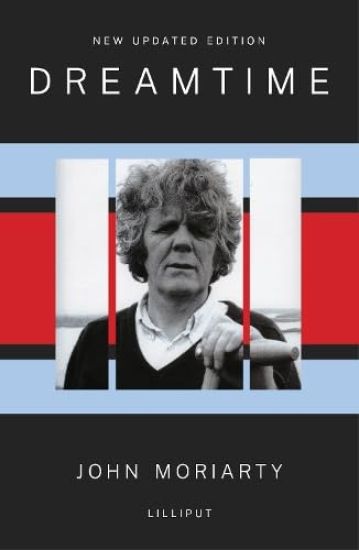
Dreamtime

Dreamtime

John Moriarty

THE LILLIPUT PRESS LTD
2025
nidottu
Dreamtime is a visionary work of myth, memory, and spiritual excavation by one of Ireland’s most original thinkers. In this profound journey of the soul, John Moriarty draws from global mythologies, literature, and personal experience to uncover the shared stories that shape human consciousness and the natural world. Woven through with richly poetic language and startling philosophical insight, Moriarty reconnects Western culture with the sacred imagination it has long forsaken. From Aboriginal Dreamtime to Homer, from Celtic folklore to Christian mysticism, Moriarty travels widely and fearlessly through the symbolic landscapes that have animated human life for millennia. The task of the poet-philosopher, Moriarty suggests, is to enlarge our capacity for symbolic understanding, while keeping the path to Connla’s Well open and inviting us to inhabit a shared Dreamtime Dreamtime is not just a book—it is a re-enchantment, a call to awaken the mythic soul and to live in harmony with the Earth and its ancient wisdoms. A Book of Revelations grounded in sense as in spirit, Dreamtime refuses known categories, invites fresh modes of understanding and contains multitudes, introducing the reader to ‘the splendour and terror and danger and wonder of a world everywhere and in everything eruptively Divine’. This is a powerful work of literature by a masterspirit of modern times.
The Ballad of Baby Doe

The Ballad of Baby Doe

Duane A. Smith; John Moriarty

University Press of Colorado
2002
nidottu
First produced at the Central City Opera House in 1956, "The Ballad of Baby Doe" is now widely considered a classic and is the second most produced American opera. In The Ballad of Baby Doe, Duane A. Smith tells the tale of the complicated birth of this most American of operas. Inspired in 1953 by composer Douglas Moore's interest in Horace Tabor's story and funded by the Central City Opera House Association, the opera came together through a unique combination of hard work and serendipity. Smith relates how key people - including investors and historians in addition to creative talent - turned Moore's idea into a reality and brought the story of the Tabors to millions of opera fans worldwide. In addition, Smith compares the opera's libretto with historical reality, and the book even includes a chapter on the production written by John Moriarty, who conducted the opera in 1981, 1988, and 1996. For anyone interested in opera history or this Colorado story in particular - the emblematic tale of silver millionaire Horace Tabor and the two women he married - The Ballad of Baby Doe will be the definitive history for years to come.