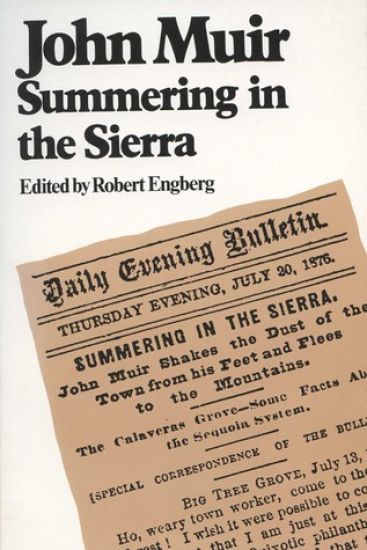
This is a collection of articles written by the pioneering naturalist for the San Francisco Evening Bulletin in 1874 and 1875. . . . In the course of his wanderings we hear Muir grow from a student of the wilderness to its professor and protector."--Sierra Magazine
John Muir's beloved adventure in the Sierra reissued to entertain, encourage, and inspire contemporary naturalists. Considered one of the patron saints of twentieth-century environmental activity, John Muir's appeal to modern readers is that he not only explored the American West but also fought for its preservation. My First Summer in the Sierra is Muir's account of his adventures and observations while working as a shepherd in the Yosemite Valley, which later became Yosemite National Park as a direct result of Muir's writings and activism. Muir's heartfelt and often humorous descriptions of his first summer spent in the Sierra will captivate and inspire long-time fans and novice naturalists alike. John Muir was a Scottish-born American naturalist, author, early advocate of preservation of wilderness in the United States, and founder of The Sierra Club. His letters, essays, and books of his adventures in nature have been read by millions.
John Muir (1838-1914) was a Scottish-born American naturalist, author and advocate of preservation of the U.S. wilderness. There are 4 books in this collection by John Muir: The Story of my Boyhood and Youth; The Mountains of California; Stickeen; The Grand Ca on of the Colorado. Review The richness of his writing roots deeper into the terrain than any other wilderness writer known to me. -- David Craig, Los Angeles Times Book Review
In the late 1800s, John Muir made several trips to the pristine, relatively unexplored territory of Alaska, irresistibly drawn to its awe-inspiring glaciers and its wild menagerie of bears, bald eagles, wolves, and whales. Half-poet and half-geologist, he recorded his experiences and reflections in Travels in Alaska, a work he was in the process of completing at the time of his death in 1914. As Edward Hoagland writes in his Introduction, "A century and a quarter later, we are reading account because there in the glorious fiords . . . he is at our elbow, nudging us along, prompting us to understand that heaven is on earth-is the Earth-and rapture is the sensible response wherever a clear line of sight remains." John Muir ( April 21, 1838 - December 24, 1914) also known as "John of the Mountains", was a Scottish-American naturalist, author, environmental philosopher and early advocate of preservation of wilderness in the United States. His letters, essays, and books telling of his adventures in nature, especially in the Sierra Nevada of California, have been read by millions. His activism helped to preserve the Yosemite Valley, Sequoia National Park and other wilderness areas. The Sierra Club, which he founded, is a prominent American conservation organization. The 211-mile (340 km) John Muir Trail, a hiking trail in the Sierra Nevada, was named in his honor.Other such places include Muir Woods National Monument, Muir Beach, John Muir College, Mount Muir, Camp Muir and Muir Glacier. In Scotland, the John Muir Way, a 130-mile-long route, was named in honor of him. In his later life, Muir devoted most of his time to the preservation of the Western forests. He petitioned the U.S. Congress for the National Park bill that was passed in 1890, establishing Yosemite National Park. The spiritual quality and enthusiasm toward nature expressed in his writings inspired readers, including presidents and congressmen, to take action to help preserve large nature areas.He is today referred to as the "Father of the National Parks"and the National Park Service has produced a short documentary about his life. Muir has been considered "an inspiration to both Scots and Americans".Muir's biographer, Steven J. Holmes, believes that Muir has become "one of the patron saints of twentieth-century American environmental activity," both political and recreational. As a result, his writings are commonly discussed in books and journals, and he is often quoted by nature photographers such as Ansel Adams."Muir has profoundly shaped the very categories through which Americans understand and envision their relationships with the natural world," writes Holmes.Muir was noted for being an ecological thinker, political spokesman, and religious prophet, whose writings became a personal guide into nature for countless individuals, making his name "almost ubiquitous" in the modern environmental consciousness. According to author William Anderson, Muir exemplified "the archetype of our oneness with the earth", 9] while biographer Donald Worster says he believed his mission was "...saving the American soul from total surrender to materialism." 10]:403 On April 21, 2013, the first ever John Muir Day was celebrated in Scotland, which marked the 175th anniversary of his birth, paying homage to the conservationist..........
John Muir ( April 21, 1838 - December 24, 1914) also known as "John of the Mountains", was a Scottish-American naturalist, author, environmental philosopher and early advocate of preservation of wilderness in the United States. His letters, essays, and books telling of his adventures in nature, especially in the Sierra Nevada of California, have been read by millions. His activism helped to preserve the Yosemite Valley, Sequoia National Park and other wilderness areas. The Sierra Club, which he founded, is a prominent American conservation organization. The 211-mile (340 km) John Muir Trail, a hiking trail in the Sierra Nevada, was named in his honor.Other such places include Muir Woods National Monument, Muir Beach, John Muir College, Mount Muir, Camp Muir and Muir Glacier. In Scotland, the John Muir Way, a 130-mile-long route, was named in honor of him. In his later life, Muir devoted most of his time to the preservation of the Western forests. He petitioned the U.S. Congress for the National Park bill that was passed in 1890, establishing Yosemite National Park. The spiritual quality and enthusiasm toward nature expressed in his writings inspired readers, including presidents and congressmen, to take action to help preserve large nature areas.He is today referred to as the "Father of the National Parks"and the National Park Service has produced a short documentary about his life. Muir has been considered "an inspiration to both Scots and Americans".Muir's biographer, Steven J. Holmes, believes that Muir has become "one of the patron saints of twentieth-century American environmental activity," both political and recreational. As a result, his writings are commonly discussed in books and journals, and he is often quoted by nature photographers such as Ansel Adams."Muir has profoundly shaped the very categories through which Americans understand and envision their relationships with the natural world," writes Holmes.Muir was noted for being an ecological thinker, political spokesman, and religious prophet, whose writings became a personal guide into nature for countless individuals, making his name "almost ubiquitous" in the modern environmental consciousness. According to author William Anderson, Muir exemplified "the archetype of our oneness with the earth", 9] while biographer Donald Worster says he believed his mission was "...saving the American soul from total surrender to materialism." 10]:403 On April 21, 2013, the first ever John Muir Day was celebrated in Scotland, which marked the 175th anniversary of his birth, paying homage to the conservationist...........
John Muir ( April 21, 1838 - December 24, 1914) also known as "John of the Mountains", was a Scottish-American naturalist, author, environmental philosopher and early advocate of preservation of wilderness in the United States. His letters, essays, and books telling of his adventures in nature, especially in the Sierra Nevada of California, have been read by millions. His activism helped to preserve the Yosemite Valley, Sequoia National Park and other wilderness areas. The Sierra Club, which he founded, is a prominent American conservation organization. The 211-mile (340 km) John Muir Trail, a hiking trail in the Sierra Nevada, was named in his honor.Other such places include Muir Woods National Monument, Muir Beach, John Muir College, Mount Muir, Camp Muir and Muir Glacier. In Scotland, the John Muir Way, a 130-mile-long route, was named in honor of him. In his later life, Muir devoted most of his time to the preservation of the Western forests. He petitioned the U.S. Congress for the National Park bill that was passed in 1890, establishing Yosemite National Park. The spiritual quality and enthusiasm toward nature expressed in his writings inspired readers, including presidents and congressmen, to take action to help preserve large nature areas.He is today referred to as the "Father of the National Parks"and the National Park Service has produced a short documentary about his life. Muir has been considered "an inspiration to both Scots and Americans".Muir's biographer, Steven J. Holmes, believes that Muir has become "one of the patron saints of twentieth-century American environmental activity," both political and recreational. As a result, his writings are commonly discussed in books and journals, and he is often quoted by nature photographers such as Ansel Adams."Muir has profoundly shaped the very categories through which Americans understand and envision their relationships with the natural world," writes Holmes.Muir was noted for being an ecological thinker, political spokesman, and religious prophet, whose writings became a personal guide into nature for countless individuals, making his name "almost ubiquitous" in the modern environmental consciousness. According to author William Anderson, Muir exemplified "the archetype of our oneness with the earth", 9] while biographer Donald Worster says he believed his mission was "...saving the American soul from total surrender to materialism." 10]:403 On April 21, 2013, the first ever John Muir Day was celebrated in Scotland, which marked the 175th anniversary of his birth, paying homage to the conservationist..........
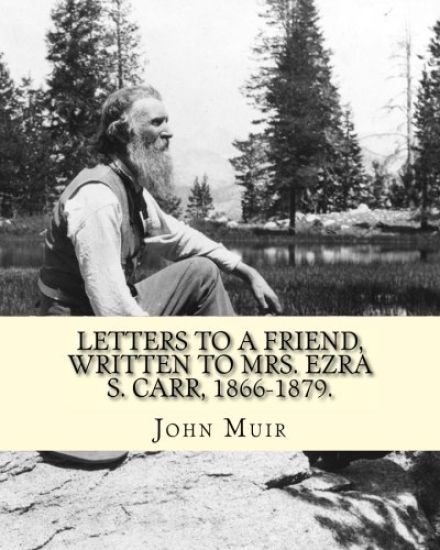
Ezra Slocum Carr was a professor at the University of Wisconsin (where he was also briefly a member of the Board of Regents) and at the University of California - Berkeley. He was originally trained as a medical doctor but taught in several scientific fields. He was a one time California Superintendent of Public Instruction. Carr and his wife Jeanne were close friends of John Muir and were extremely influential in Muir's life at several key junctures... John Muir (April 21, 1838 - December 24, 1914)also known as "John of the Mountains", was a Scottish-American naturalist, author, environmental philosopher and early advocate of preservation of wilderness in the United States. His letters, essays, and books telling of his adventures in nature, especially in the Sierra Nevada of California, have been read by millions. His activism helped to preserve the Yosemite Valley, Sequoia National Park and other wilderness areas. The Sierra Club, which he founded, is a prominent American conservation organization. The 211-mile (340 km) John Muir Trail, a hiking trail in the Sierra Nevada, was named in his honor.Other such places include Muir Woods National Monument, Muir Beach, John Muir College, Mount Muir, Camp Muir and Muir Glacier. In Scotland, the John Muir Way, a 130-mile-long route, was named in honor of him. In his later life, Muir devoted most of his time to the preservation of the Western forests. He petitioned the U.S. Congress for the National Park bill that was passed in 1890, establishing Yosemite National Park. The spiritual quality and enthusiasm toward nature expressed in his writings inspired readers, including presidents and congressmen, to take action to help preserve large nature areas.He is today referred to as the "Father of the National Parks"and the National Park Service has produced a short documentary about his life. John Muir has been considered "an inspiration to both Scots and Americans".Muir's biographer, Steven J. Holmes, believes that Muir has become "one of the patron saints of twentieth-century American environmental activity," both political and recreational. As a result, his writings are commonly discussed in books and journals, and he is often quoted by nature photographers such as Ansel Adams. "Muir has profoundly shaped the very categories through which Americans understand and envision their relationships with the natural world," writes Holmes. Muir was noted for being an ecological thinker, political spokesman, and religious prophet, whose writings became a personal guide into nature for countless individuals, making his name "almost ubiquitous" in the modern environmental consciousness. According to author William Anderson, Muir exemplified "the archetype of our oneness with the earth", while biographer Donald Worster says he believed his mission was "...saving the American soul from total surrender to materialism.":403 On April 21, 2013, the first ever John Muir Day was celebrated in Scotland, which marked the 175th anniversary of his birth, paying homage to the conservationist...
In the late 1800s, John Muir made several trips to the pristine, relatively unexplored territory of Alaska, irresistibly drawn to its awe-inspiring glaciers and its wild menagerie of bears, bald eagles, wolves, and whales. Half-poet and half-geologist, he recorded his experiences and reflections in Travels in Alaska, a work he was in the process of completing at the time of his death in 1914. As Edward Hoagland writes in his Introduction, "A century and a quarter later, we are reading Muir's] account because there in the glorious fiords . . . he is at our elbow, nudging us along, prompting us to understand that heaven is on earth-is the Earth-and rapture is the sensible response wherever a clear line of sight remains." John Muir ( April 21, 1838 - December 24, 1914) also known as "John of the Mountains", was a Scottish-American naturalist, author, environmental philosopher, glaciologist and early advocate of preservation of wilderness in the United States. His letters, essays, and books of his adventures in nature, especially in the Sierra Nevada of California and Nevada, have been read by millions. His activism helped to preserve the Yosemite Valley, Sequoia National Park and other wilderness areas. The Sierra Club, which he founded, is a prominent American conservation organization. The 211-mile (340 km) John Muir Trail, a hiking trail in the Sierra Nevada, was named in his honor. Other such places include Muir Woods National Monument, Muir Beach, John Muir College, Mount Muir, Camp Muir and Muir Glacier. In Scotland, the John Muir Way, a 130-mile-long route, was named in honor of him. In his later life, Muir devoted most of his time to the preservation of the Western forests. He petitioned the U.S. Congress for the National Park bill that was passed in 1890, establishing Yosemite National Park. The spiritual quality and enthusiasm toward nature expressed in his writings inspired readers, including presidents and congressmen, to take action to help preserve large nature areas.He is today referred to as the "Father of the National Parks" 4] and the National Park Service has produced a short documentary about his life. John Muir has been considered "an inspiration to both Scots and Americans".Muir's biographer, Steven J. Holmes, believes that Muir has become "one of the patron saints of twentieth-century American environmental activity," both political and recreational. As a result, his writings are commonly discussed in books and journals, and he is often quoted by nature photographers such as Ansel Adams. "Muir has profoundly shaped the very categories through which Americans understand and envision their relationships with the natural world," writes Holmes. Muir was noted for being an ecological thinker, political spokesman, and religious prophet, whose writings became a personal guide into nature for countless individuals, making his name "almost ubiquitous" in the modern environmental consciousness. According to author William Anderson, Muir exemplified "the archetype of our oneness with the earth", while biographer Donald Worster says he believed his mission was "...saving the American soul from total surrender to materialism."On April 21, 2013, the first ever John Muir Day was celebrated in Scotland, which marked the 175th anniversary of his birth, paying homage to the conservationist.
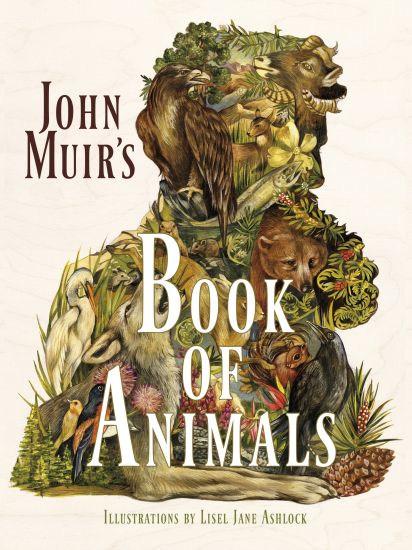
Many of John Muir's most vivid and memorable stories celebrate his encounters with animals. Whether breakfasting with deer, attempting to scare off a black bear, or musing upon the ferocity of ants, Muir looks upon the animal world with amazement and affection, and the power of his words, the freshness of his thinking, the keenness of his perceptions, and the depth of his passion continue to inspire the same in readers today. Drawing from longtime favorites such as Stickeen as well as from less familiar books, letters, articles, and journals, John Muir's Book of Animals presents us with twenty-seven of Muir's most compelling stories and vibrant descriptions. Sumptuous illustrations by Lisel Jane Ashlock add to our amazement and delight.
John Muir (1838- 1914) was a Scottish-born American naturalist, author, and the modern day "patron saint of ecology". His writings on his adventures in the various wildernesses of America have been enjoyed by millions. His ecological activism helped to preserve many of the national parks, enabling others to enjoy nature. He founded the Sierra Club, which is one of the most important conservation organizations in the United States. Although his upbringing put him off religion for life he was an immensely spiritual man, and this quality and enthusiasm pervades all his writings, inspiring his readers, including politicians to preserve the natural landscapes. For this reason he is known as the "Father of the National Parks". Author William Anderson, said that Muir exemplified "the archetype of our oneness with the earth", and biographer Donald Worster said he believed his mission was "...saving the American soul from total surrender to materialism." The Mountains of California (1894) draws on his many, decades of exploration, describing with poetic beauty and awe the lakes, mountains, plants and animals. Stickeen (1909) is Muir's most popular book, describing his adventures in Alaska with a dog. My First Summer in the Sierra (1911) is Muir's description of his spiritual awakening when he first encountered the mountains and valleys of central California. The Story of My Boyhood and Youth (1913) is Muir's autobiography, detailing his strict upbringing in Scotland, his emigration with his family to America, aged eleven, and of his first delight with the natural world. Travels in Alaska (1915), In the late 1800s, Muir made several trips to the pristine, unspoilt territory of Alaska, drawn to its beauty and purity, its glaciers and its wild animals - bears, bald eagles, wolves, and whales. The Cruise of the Corwin (1917), In 1881, the steamship Thomas Corwin voyaged into the treacherous Arctic seas to search for the lost ship Jeannette, which had been lost. The ship was not found, but Muir's account of this expedition is poetic and magical, describing the glaciers, vegetation and seas of this mysterious land. Steep Trails(1919), This book was derived from letters, articles and local publications written by John Muir, arranged in roughly chronological sequence. The chapters describing Nevada, San Gabriel and Utah were written in the field, and have great immediacy, describing Muir's first impressions. The Yosemite(1920), In this book Muir recounts his adventures during the years he lived in the Yosemite Valley's spectacular scenery. Muir captures the breath-taking beauty of the area alongside his most ambitious adventures; looking over the brink of Yosemite Falls, climbing a hundred feet up into a high, hollow ice-cone, and climbing to the top of Half Dome, covered with a fresh blanket of snow.
John Muir (1838- 1914) was a Scottish-born American naturalist, author, and the modern day ""patron saint of ecology"". His writings on his adventures in the various wildernesses of America have been enjoyed by millions. His ecological activism helped to preserve many of the national parks, enabling others to enjoy nature. He founded the Sierra Club, which is one of the most important conservation organizations in the United States. Although his upbringing put him off religion for life he was an immensely spiritual man, and this quality and enthusiasm pervades all his writings, inspiring his readers, including politicians to preserve the natural landscapes. For this reason he is known as the ""Father of the National Parks"". Author William Anderson, said that Muir exemplified ""the archetype of our oneness with the earth"", and biographer Donald Worster said he believed his mission was ""...saving the American soul from total surrender to materialism."" The Mountains of California (1894) draws on his many, decades of exploration, describing with poetic beauty and awe the lakes, mountains, plants and animals. Stickeen (1909) is Muir's most popular book, describing his adventures in Alaska with a dog. My First Summer in the Sierra (1911) is Muir's description of his spiritual awakening when he first encountered the mountains and valleys of central California. The Story of My Boyhood and Youth (1913) is Muir's autobiography, detailing his strict upbringing in Scotland, his emigration with his family to America, aged eleven, and of his first delight with the natural world. Travels in Alaska (1915), In the late 1800s, Muir made several trips to the pristine, unspoilt territory of Alaska, drawn to its beauty and purity, its glaciers and its wild animals - bears, bald eagles, wolves, and whales. The Cruise of the Corwin (1917), In 1881, the steamship Thomas Corwin voyaged into the treacherous Arctic seas to search for the lost ship Jeannette, which had been lost. The ship was not found, but Muir's account of this expedition is poetic and magical, describing the glaciers, vegetation and seas of this mysterious land. Steep Trails(1919), This book was derived from letters, articles and local publications written by John Muir, arranged in roughly chronological sequence. The chapters describing Nevada, San Gabriel and Utah were written in the field, and have great immediacy, describing Muir's first impressions. The Yosemite(1920), In this book Muir recounts his adventures during the years he lived in the Yosemite Valley's spectacular scenery. Muir captures the breath-taking beauty of the area alongside his most ambitious adventures; looking over the brink of Yosemite Falls, climbing a hundred feet up into a high, hollow ice-cone, and climbing to the top of Half Dome, covered with a fresh blanket of snow.
"The tendency nowadays to wander in wilderness is delightful to see. Thousands of tired, nerve-shaken, over-civilized people are beginning to find out that going to the mountains is going home; that wildness is a necessity; and that mountain parks and reservations are useful not only as fountains of timber and irrigating rivers, but as fountains of life." The words could have been written yesterday, in any part of the world where people feel trapped by the excesses of modern life. John Muir's stature as a visionary leader was already on the rise on New Year's Day, 1898, when the above passage first appeared in print. Muir was president of the Sierra Club, which he had cofounded in San Francisco six years earlier. Harvard University and the University of Wisconsin had recently awarded him honorary degrees. Influential editors were encouraging him to share his ideas with a wider audience. Muir's reverence for nature and uncompromising integrity would ultimately play a vital role in awakening the American public to the need to rein in rampant industrial development before it was too late. Scots born John Muir was happiest heading off into the wild with a loaf of bread, a bag of tea, a journal and sketchbook, and a head full of dreams. He was a modern-day Merlin, a real-world Gandalf who showed how much one determined, hard-working individual with a song in their heart can accomplish. John Muir: A Miscellany is a gathering together of a rich and hugely entertaining collection of Muir's writings. His writing is as relevant now - possibly even more relevant - than when it was first published over 100 years ago.