Kirjojen hintavertailu. Mukana 11 699 587 kirjaa ja 12 kauppaa.

Kirjahaku

Etsi kirjoja tekijän nimen, kirjan nimen tai ISBN:n perusteella.

3 kirjaa tekijältä John O'Brian

John Scott

John Scott

John O'Brian

Figure 1 Publishing
2025
sidottu
Raw, personal and political, John Scott: Firestorm presents an artist's searing critique of modernity’s capacity for industrial warfare and the machines that enable it.John Scott (1949–2022) produced paintings, drawings, and sculptures of what he called "engines of history," the hyper-masculine military and civilian weapons of the past half-century. Surveillance aircraft, B-52 and stealth bombers, tanks, cruise missiles and rockets, as well as handguns, muscle cars, and motorcycles forcefully imprint themselves upon the viewer through Scott's fierce mark-making and large, rough sculptural gestures. Humanoid rabbits—often surrounded by numbers that fail to add up—represent those threatened by such technologies. The dichotomy between the death-dealing weaponry of the nuclear era and the vulnerability of human beings lies at the core of Scott's work.Scott deployed an idiosyncratic graphic language to represent apocalyptic machines and power imbalances, working in the tradition of Francisco Goya, Käthe Kollwitz, Nancy Spero, and others. Scott grew up in Windsor, Ontario, across the river from Detroit, Michigan. Like many Canadian artists, writers, and intellectuals of his time, Scott was a close watcher of America, with a front-row seat on a sometimes rogue nation. Stylistically, his work is close to that of his contemporaries Jean-Michel Basquiat and William Kentridge, showing a kindred ferocity of mark-making and dark urgency.John Scott: Firestorm accompanies the exhibition of the same name organized by the McMichael Canadian Art Collection, curated by Canadian art scholar John O'Brian. It is the first major exhibition of Scott's work to focus on his imagery of machines and modernity's capacity for industrial war—a body of work as meaningful today as it was when it first appeared in the 1970s. This publication features over 100 of Scott's works, a detailed biography, and new critical writings on the artist.
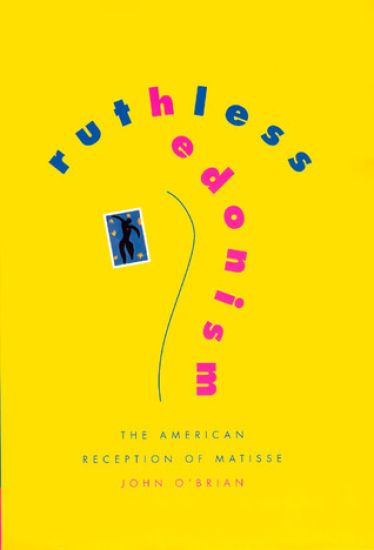
Ruthless Hedonism

Ruthless Hedonism

John O'Brian

University of Chicago Press
1999
sidottu
In this study, John O'Brian argues that Henri Matisse's sober presentations of himself were calculated to fit with the social constraints and ideological demands of the times. Matisse's strategy included co-operating with museums, cultivating private collectors, playing off dealers one against another, and reassuring the media that, whatever his reputation as an avant-gardist, the conduct of his life was solidly bourgeois. Moving from the late 1920s, when Matisse's output was shedding its outlaw reputation, to the early 1950s, when his work was canonized, O'Brian shows how the way Matisse's work was viewed changed as attention shifted away from the seductiveness of his subject matter to the seductiveness of his paint. The art's resolute rejection of political concerns, its deployment of decorative design for visual satisfaction, and its representations of pleasure encouraged American audiences, who in the 1930s deemed the art disreputable, to celebrate its gratifications by the early years of the Cold War.
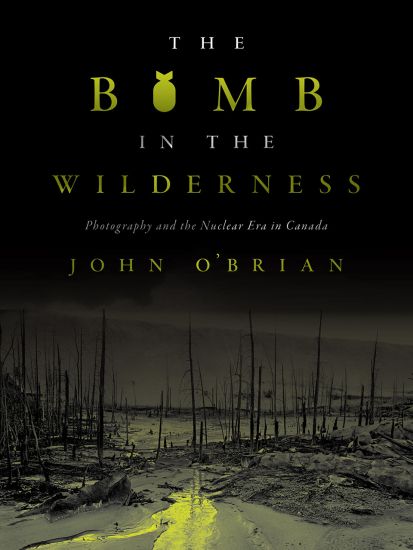
The Bomb in the Wilderness

The Bomb in the Wilderness

John O'Brian

University of British Columbia Press
2020
pokkari
Photographs link the nuclear past and nuclear present, shaping the public's perception of events. What can they reveal about Canada's nuclear footprint?The Bomb in the Wilderness contends that photography is central to how we have represented, interpreted, and remembered nuclear activities since 1945. During the Second World War, Canada was a member of the Manhattan Project, the consortium that developed the atomic bombs dropped on Hiroshima and Nagasaki in 1945. The impact and global reach of Canada's nuclear programs has been felt ever since. But do photographs alert viewers to nuclear threat, numb them to its dangers, or by some strange calculus accomplish both?John O'Brian's wide-ranging and personal account of the nuclear era presents and discusses more than a hundred photographs, ranging from military images to the atomic ephemera of consumer culture. We need this fascinating analysis, to ensure that we do not look away.