Kirjojen hintavertailu. Mukana 11 342 296 kirjaa ja 12 kauppaa.

Kirjahaku

Etsi kirjoja tekijän nimen, kirjan nimen tai ISBN:n perusteella.

9 kirjaa tekijältä John Oakes

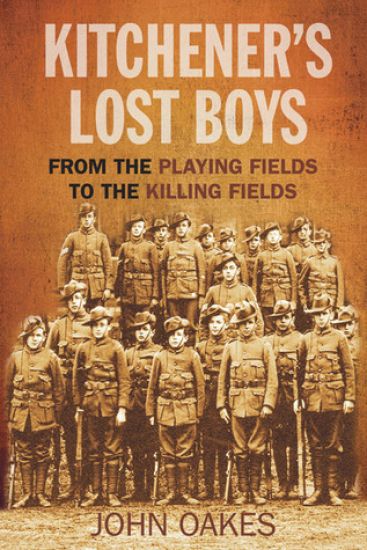
Kitchener's Lost Boys

Kitchener's Lost Boys

John Oakes

The History Press Ltd
2009
sidottu
In the early days of the First World War, Lord Kitchener made his famous appeal for volunteers to join the New Army. Men flocked to recruiting offices to enlist, and on some days tens of thousands of potential soldiers responded to his call. Men had to be at least eighteen years old to join up, and nineteen to serve overseas, but in the flurry of activity many younger boys came to enlist: some were only thirteen or fourteen. Many were turned away, but a lot were illegally conscripted, and as many as 250,000 underage boys found themselves fighting for King and Country in the First World War. Over half would never return home. In this groundbreaking new book, John Oakes - whose own father-in-law walked out of the Welsh valleys to join the Royal Navy at the age of fourteen - delves into the complex history of Britain's youngest Great War recruits. Focusing on the recruitment crisis of 1914, he reveals why boys joined up, what their experiences were and how they survived to endure a lifetime of memories. For those who didn't, an unknown grave awaited, and in some cases their mothers never knew what had become of their children.
Libya

Libya

John Oakes

The History Press Ltd
2012
nidottu
For more than four decades, Libya has been something of an enigma to outsiders. Ruled by the despotic and unstable Muammar Gaddafi since he led a military coup in 1969, it has vast oil wealth and one of the highest standards of living in Africa. Yet it has also been one of the most prolific state sponsors of terrorism (supplying arms and explosives to the IRA, perpetrating the Lockerbie bombing) and dissent has, until recently, been crushed ruthlessly. In early 2011 a popular uprising against Gaddafi, a dictator nicknamed 'Mad Dog' by Ronald Reagan, finally looks as if he might be toppled from power, as the wind of change blows through North Africa and the Middle East. John Oakes, who lived and worked in Libya for eight years before the revolution, provides an essential guide to the country and its history, including what led Gaddafi to make Libya an international pariah and the events of the 2011 revolt.
Daniel Prophet to the Nations

Daniel Prophet to the Nations

John Oakes

Illumination Publishers Intl.
2023
pokkari
Bible readers have always loved the book of Daniel, inspired by heroes like Daniel, Shadrach, Meshach and Abednego, who faced persecutions and strove to remain committed to God while held captive in a secular society. But when reading the Book's prophetic and apocalyptic sections, many people feel mystified and confused.In Daniel: Prophet to the Nations, John M. Oakes presents a balanced and objective attempt to unlock the prophetic message of Daniel, while placing the Book in its proper historical context. For the twenty-first century reader who is able to look back in time and see how countless specific prophecies have been realized, the validity of the message of Daniel is proven in a very convincing manner. The faith and deep convictions that can be gained from understanding the book of Daniel will help Christians apply the practical examples of righteous living (even in a godless culture) to their own individual lives.
War Lord

War Lord

John Oakes

Amberley Publishing
2021
sidottu
Field Marshal Khalifa Haftar leads an army that controls most of Libya, stands at the gates of Tripoli and is threatening to overthrow the Government of National Accord. Backed by the powerful Libyan tribes, Khalifa Haftar has also won the backing of several international governments who see him as Libya’s last hope of a democratic solution. Others portray him as a dangerous rogue commander with terrorist tendencies. But who is Khalifa Haftar, and how has he become the most powerful leader in Libya? How has this unknown commander raised an army from scratch, controlled the powerful Libyan tribes and gained the support of powerful international players? Is he good for Libya, or a terrorist threat? This book explores the life of Khalifa Haftar against a backdrop of Libyan oppression and war. A charismatic and controversial figure, Haftar provides a lens through which to view decades of Libyan unrest and explore the future of this volatile region.
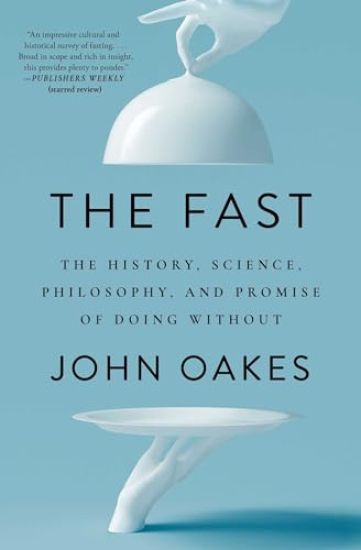
The Fast: The History, Science, Philosophy, and Promise of Doing Without
With fasting at an all-time high in popularity, here is an enlightening exploration into the history, science, and philosophy behind the practice--essential to many religions and wellness routines. Whether for philosophical, political, or health-related reasons, fasting marks a departure from daily routine. Based on extensive historical, scientific, and cultural research and reporting, The Fast illuminates the numerous facets of this act of self-deprivation. John Oakes interviews doctors, spiritual leaders, activists, and others who guide him through this practice--and embarks on fasts of his own--to deliver a book that supplies anyone curious about fasting with profound new understanding, appreciation, and inspiration. In recent years, fasting has become increasingly popular for a variety of reasons--from weight loss to detoxing, to the faithful who fast in prayer, to seekers pursuing mindfulness, to activists using hunger strikes as protest. Notable fasters include Moses, Buddha, Jesus, Muhammad, Gandhi, George Washington, Abraham Lincoln, Emily Dickinson, Mark Twain, Cesar Chavez, and a long list of others who have drawn on its power over the ages and across borders and cultures. The Fast looks at the complex science behind the jaw-dropping biological changes that occur inside the body when we fast. Metabolic switching can prompt repair and renewal down to the molecular level, providing benefits for those suffering from obesity and diabetes, cancer, epilepsy, cardiovascular disease, neurodegenerative disorders, and more. Longer fasts can both reinvigorate the immune system and protect it against damage. Beyond the physical experience, fasting can be a great collective unifier, and it has been adopted by religions and political movements all over the world for millennia. Fasting is central to holy seasons and days such as Lent (Christianity), Ramadan (Islam), Yom Kippur (Judaism), Uposatha (Buddhism), and Ekadashi (Hinduism). On an individual level, devout ascetics who master self-deprivation to an extreme are believed to be closer to the divine, ascending to enlightenment or even sainthood. Fasting reminds us of the virtues of holding back, of not consuming all that we can. "Broad in scope and rich in insight" (Publishers Weekly, starred review), this book shows us that fasting is about much more than food: it is about taking control of your life in new and empowering ways and reconsidering your place in the world.
The Fast: The History, Science, Philosophy, and Promise of Doing Without
With fasting at an all-time high in popularity, here is an enlightening exploration into the history, science, and philosophy behind the practice--essential to many religions and wellness routines. Whether for philosophical, political, or health-related reasons, fasting marks a departure from daily routine. Based on extensive historical, scientific, and cultural research and reporting, The Fast illuminates the numerous facets of this act of self-deprivation. John Oakes interviews doctors, spiritual leaders, activists, and others who guide him through this practice--and embarks on fasts of his own--to deliver a book that supplies anyone curious about fasting with profound new understanding, appreciation, and inspiration. In recent years, fasting has become increasingly popular for a variety of reasons--from weight loss to detoxing, to the faithful who fast in prayer, to seekers pursuing mindfulness, to activists using hunger strikes as protest. Notable fasters include Moses, Buddha, Jesus, Muhammad, Gandhi, George Washington, Abraham Lincoln, Emily Dickinson, Mark Twain, Cesar Chavez, and a long list of others who have drawn on its power over the ages and across borders and cultures. The Fast looks at the complex science behind the jaw-dropping biological changes that occur inside the body when we fast. Metabolic switching can prompt repair and renewal down to the molecular level, providing benefits for those suffering from obesity and diabetes, cancer, epilepsy, cardiovascular disease, neurodegenerative disorders, and more. Longer fasts can both reinvigorate the immune system and protect it against damage. Beyond the physical experience, fasting can be a great collective unifier, and it has been adopted by religions and political movements all over the world for millennia. Fasting is central to holy seasons and days such as Lent (Christianity), Ramadan (Islam), Yom Kippur (Judaism), Uposatha (Buddhism), and Ekadashi (Hinduism). On an individual level, devout ascetics who master self-deprivation to an extreme are believed to be closer to the divine, ascending to enlightenment or even sainthood. Fasting reminds us of the virtues of holding back, of not consuming all that we can. "Broad in scope and rich in insight" (Publishers Weekly, starred review), this book shows us that fasting is about much more than food: it is about taking control of your life in new and empowering ways and reconsidering your place in the world.
The Fast

The Fast

John Oakes

MURDOCH BOOKS
2024
nidottu
'Caloric restriction is one of the scientifically best-established ways to enhance longevity. A fascinating deep dive into the science and history of fasting.' - Steven M. Lipkin, MD, PhD; director, Adult and Cancer Genetics Clinic, Weill Cornell Medicine'John Oakes takes us on an elegant and irresistible journey, all the while engaging us with personal experiences, scientific enlightenment, and the historical context of fasting. Beautifully written and meticulously researched, The Fast will stay with you long after you've read every word.' - Gilbert King, author of the Pulitzer Prize-winning Devil in the GroveWe fast all the time, even when we're not conscious of doing so. A fast manifests the idea of holding back, resisting the primal impulse to charge ahead. Its flip side is similarly everywhere: call it splurging, self-indulgence or a variant of 'self-care'. Based on extensive historical, scientific and cultural research and reporting, The Fast illuminates the many facets of this act of self-deprivation. John Oakes interviews doctors, spiritual leaders, activists and others who guide him through this practice - and embarks on fasts of his own - to provide readers curious about fasting with profound new understanding, appreciation and inspiration.Fasting has become increasingly popular for a variety of reasons - from health advocates who see fasting as a method to lose weight or to detox, to the faithful who fast in prayer, to seekers pursuing mindfulness, to activists using hunger strikes as an effective means of peaceful protest. Whether for philosophical, political or health-related reasons, fasting marks a departure from daily routine and offers a chance to look at things anew.Fasting involves doing less but doing less in a radical way, reminding us that a slower, more intentional contemplative life can be more fulfilling. Ultimately, this book shows us that fasting is about much more than food: it is about reconsidering our place in the world.
El Ayuno: Una Visión Histórica, Científica Y Espiritual
Tradicionalmente, muchas religiones han considerado que los ascetas que extremaban su ayuno se encontraban m s cerca de la santidad o la iluminaci n. Adem s, el ayuno ha sido usado tambi n como un recurso pol tico para hacer o r la propia voz, y entre los abstinentes m s famosos a lo largo de la historia encontramos a personajes tan dispares como Gandhi, Abraham Lincoln, Emily Dickinson, Mark Twain, Franz Kafka, Leon Trostsky o C sar Ch vez. Y m s recientemente, esta pr ctica se ha popularizado en extremo, pues la ciencia nos habla de que impulsa cambios metab licos tales como una asombrosa renovaci n a nivel molecular o el fortalecimiento del sistema inmunitario. Sin descuidar ninguna de estas ricas facetas, John Oakes comparte con nosotros su ampl sima investigaci n sobre este tema, a la par que nos narra la experiencia personal de su propio ayuno. Y es que con el ayuno est en juego algo m s que la comida: es un acto de privaci n que se ala, en definitiva, nuestra capacidad para tomar las riendas de la existencia, distanciarnos de nuestras rutinas y replantearnos nuestras formas de vida y consumo. "El ayuno va m s all del tema que lo ocupa y se convierte en un tratado sobre lo Traditionally, many religions have considered that ascetics who pushed fasting to the extreme were closer to holiness or enlightenment. Furthermore, fasting has also been used as a political tool to make one's voice heard, and among the most famous abstainers throughout history we find figures as diverse as Gandhi, Abraham Lincoln, Emily Dickinson, Mark Twain, Franz Kafka, Leon Trotsky, and C sar Ch vez. More recently, this practice has become extremely popular, as science now tells us that it triggers metabolic changes such as astonishing molecular renewal and the strengthening of the immune system. Without neglecting any of these rich facets, John Oakes shares with us his extensive research on this topic, while also narrating his personal experience with fasting. Indeed, with fasting, more than just food is at stake: it is an act of deprivation that ultimately highlights our capacity to take control of our existence, step back from our routines, and rethink our ways of living and consuming. "fasting goes beyond the subject itself and becomes a treaties on..."