Kirjahaku
Etsi kirjoja tekijän nimen, kirjan nimen tai ISBN:n perusteella.
17 kirjaa tekijältä John Oliver
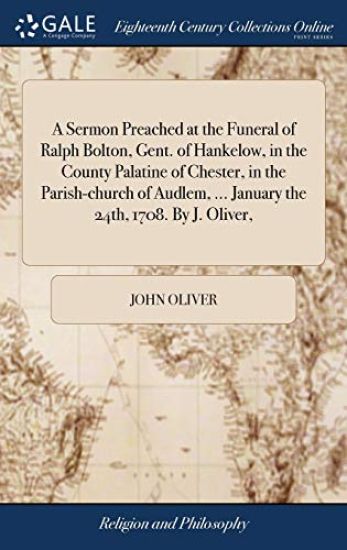
A Sermon Preached at the Funeral of Ralph Bolton, Gent. of Hankelow, in the County Palatine of Chester, in the Parish-church of Audlem, ... January the 24th, 1708. By J. Oliver,
John Oliver
Gale Ecco, Print Editions
2018
sidottu
The 18th century was a wealth of knowledge, exploration and rapidly growing technology and expanding record-keeping made possible by advances in the printing press. In its determination to preserve the century of revolution, Gale initiated a revolution of its own: digitization of epic proportions to preserve these invaluable works in the largest archive of its kind. Now for the first time these high-quality digital copies of original 18th century manuscripts are available in print, making them highly accessible to libraries, undergraduate students, and independent scholars.The Age of Enlightenment profoundly enriched religious and philosophical understanding and continues to influence present-day thinking. Works collected here include masterpieces by David Hume, Immanuel Kant, and Jean-Jacques Rousseau, as well as religious sermons and moral debates on the issues of the day, such as the slave trade. The Age of Reason saw conflict between Protestantism and Catholicism transformed into one between faith and logic -- a debate that continues in the twenty-first century.++++The below data was compiled from various identification fields in the bibliographic record of this title. This data is provided as an additional tool in helping to insure edition identification: ++++British LibraryT066470London: printed for S. John Barker, 1709. 2],24p.; 4

How to Build a Skateboard Ramp...You might need a crane. This book is a father and son memoir of building skateboard ramps and skateparks in Hawaii and California. My 15 year old son and I attended the Santa Barbara, California premiere of a skateboarding movie, The Search for Animal Chin, May 5, 1987. We saw the movie and moved right into it, joining the professional skateboarding world of Powell-Peralta. The book chronicles the evolution of our ramp-building, culminating in the construction of Powell's SkateZone skatepark at the company factory in 1990, and the fabulous SkateStreet skatepark in Ventura, 1997.This book's not about the stars of the skateboard world but they're in it; it's more about the behind-the-scenes players like myself and Johnny and all the characters we worked and played with over the years, building skateboard ramps and skateparks. I've got thousands of photographs from those years and I'm in the process of creating a free website as a companion to the book. It will take me months to complete it, but in the meantime, the partially completed site is up and running. www.antigravitydevicecompany.com


Cheese And Butter Making - An Elementary Course Of Instruction For Technical Classes
John Oliver
Read Books
2009
pokkari


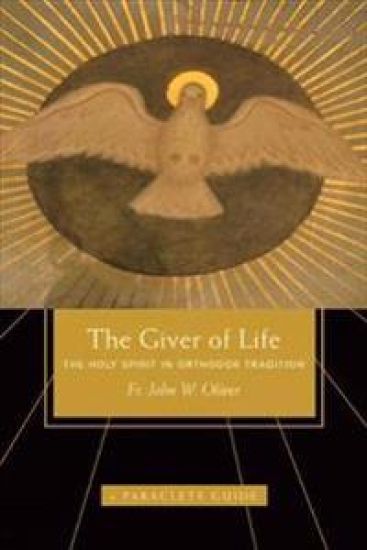
Presents the Orthodox perspective on who the Holy Spirit is, where the mystery of God comes alive. Delving deep and subtly into Orthodox tradition and theology, Giver of Life articulates the identity of the Holy Spirit as the third Person of the Trinity as well as the role of the Holy Spirit in the salvation of the world. Written with a poetic sensibility, Fr. Oliver begins with Pentecost, an event uniquely celebrated in Orthodoxy as a time when greenery of all kinds is brought into churches. “The splash of green foliage calls to mind not just life, but a special kind of life. It is the life that transcends biological existence and flows from the very Godhead Itself; it is life that’s a state of being—immortal, everlasting, changeless. Ferns and flowers fade and die, but souls filled with this ‘life from above’ flourish forever.”Reflecting on the relationship of the Holy Spirit to the Church, to the world, and to the human person, Giver of Life looks to the impressive biblical and liturgical tradition of Orthodox Christianity. This is a book weighty in content but accessible in tone, not an academic study of the mind, but a lived experience of the heart.


Autobiographical sketches by Reverend John Oliver, 1865 - 1943, and Dora Lulu Tovrea Oliver 1875 - 1957. Their meeting in Jerome, Arizona 1899, and a 1904 journey from Williams, Arizona to The Grand Canyon by horse and buggy and mule drawn carriage. Finally the text of Reverend O's lecture The Human Mind circa 1935.
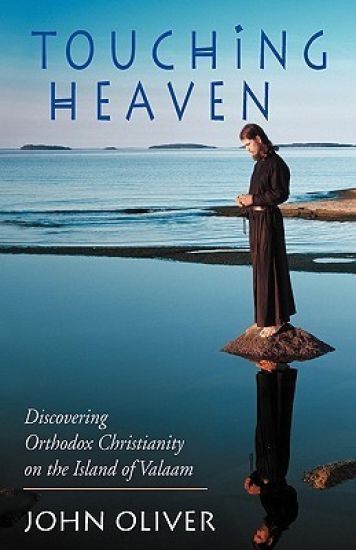
Touching Heaven, Discovering Orthodox Christianity on the Island of Valaam
John Oliver
Conciliar Press
2008
nidottu
A gripping account of what drew the author into the deep waters of Christianity through a life-changing pilgrimage to ancient Valaam monastery.
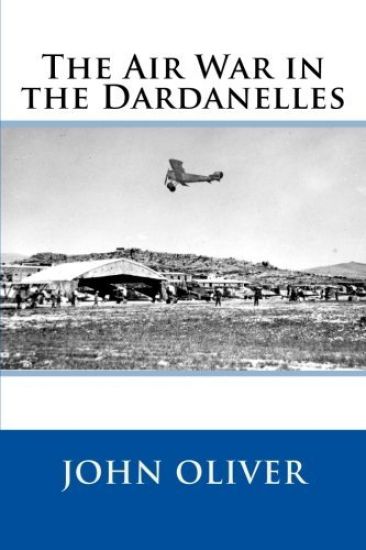
If you thought the Dardanelles and Gallipoli campaign was fought just on the land and sea, think again When the Royal Navy went to war in the Dardanelles in 1915, they took elements of their own air force with them. First to go was the new seaplane carrier 'Ark Royal', closely followed by the famous No 3 Squadron RNAS, led by the charismatic Commander Charles Rumney Samson, DSO, still carrying a price on their heads from their activities against the Germans in France and Belgium.3 Squadron RNAS had got the hang of aerial warfare. Spotting for the guns? Simple, with reports going back to the guns by W/T. Reconnaissance? No problem They could produce aerial maps, not just photos of particular targets. Bombing? Here was the squadron that had pioneered the art and never sent an aircraft into the air without a bomb to drop on anything military that caught their eye. Air combat? Of course. It was expected of all two-seaters and any single-seater with a gun fitted.Here is the story of these intrepid men and their colleagues on 'Ark Royal' and a second carrier, 'Ben-my-Chree', with its torpedo-carrying seaplanes. Plus Major Eugene Gerrard, RMLI, and his experienced No 2 Squadron RNAS, fresh from France. And the Navy's newly-invented balloon ships, spotting for both the Army and the Navy. Meet HMS 'Manica' and HMS 'Hector', the curse of the Turkish Army - from drawing board to sailing in six short weeks Not to mention the SS airships, which had their first taste of action in the Dardanelles.The dash and spirit of Nelson and Drake is here in the air as well as on the sea

John Oliver uses original German and British documents largely ignored as sources by previous writers to tell the complete story of the V1 flying bomb, in memory of the men and women who died during World War II collecting information about it, or manufacturing it, or attacking its launching sites, and for those who lived under the fear of it. It is also the story of the personnel of Flakregiment 155 (W), the only unit to fire the flying bomb, mainly conscripts who ended up by chance in a very hazardous posting. The V1 was so dangerous to fire and so unpredictable in its early trajectory that it was banned from being launched on German soil and the regiment suffered continual casualties - many of them fatal - simply in the line of daily duty. Leading it was a man who deserves to be recognised: Oberst Max Wachtel, an intelligent and able man, proud of his men and what they achieved, rising above all the hardships that came with working with a top secret and brand new weapon. And as it all comes to an end, the revelation of perhaps the most incredible love story of World War II.

Sara believed she was just like everybody else until she began having recurring nightmares of a man attempting to murder her. As Sara begins to uncover the truth about herself, she realizes she has little time to figure out how to stop the man that is coming after her and figure out what happened the night she was put into a coma.

All too often organizations appoint a new CEO to turnaround their fortunes, only to see a familiar pattern of failure repeated with each new strategy. Is this simply a case of poor leadership, or are there more complex issues at play? John Oliver’s ground-breaking book introduces the provocative concept of ‘Corporate Trauma’, arguing that conventional turnaround playbooks often miss a critical element…the lingering impact of a past corporate crisis. Drawing inspiration from the biological field of Epigenetics, where an inherited generational trauma results from an environmental stress event, Corporate Trauma posits that a significant organizational shock can result in adaptive and embedded dysfunctional patterns deep within an organization’s cultural DNA. Through original case studies, this book offers a vital new diagnostic lens for leaders and consultants to understand why companies get trapped in a downward spiral of decline, identifying the entrenched negative attitudes and behaviors that act as a hidden killer of corporate turnarounds. By moving beyond the classic turnaround playbook to identify the ‘root cause’ of persistent corporate failure, Corporate Trauma offers an invaluable path to success that will drive strategic renewal and inject ‘vitality’ back into any struggling organization.