Kirjojen hintavertailu. Mukana 12 390 323 kirjaa ja 12 kauppaa.

Kirjahaku

Etsi kirjoja tekijän nimen, kirjan nimen tai ISBN:n perusteella.

32 kirjaa tekijältä John Osborne

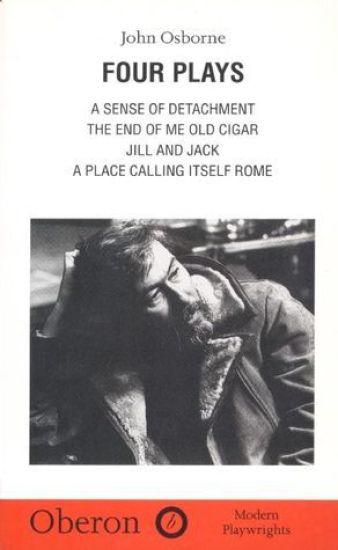
John Osborne: Four Plays

John Osborne: Four Plays

John Osborne; Helen Osborne

Oberon Books Ltd
2000
nidottu
Includes the plays A Sense of Detachment, The End of Me Old Cigar, Jill and Jack and A Place Calling Itself Rome Osborne here delivers his trademark eloquence, rage and devastating wit. A Sense of Detachment satirises our heartless, profiteering society, while defending timeless human values. The End of Me Old Cigar examines the decadent lives of a collection of leading media figures. The television play Jill and Jack is a comic gem that satirises the conventions of its own genre while also being a close study of sexual warfare. A Place Calling Itself Rome is a powerful reworking of Shakespeare's Coriolanus.
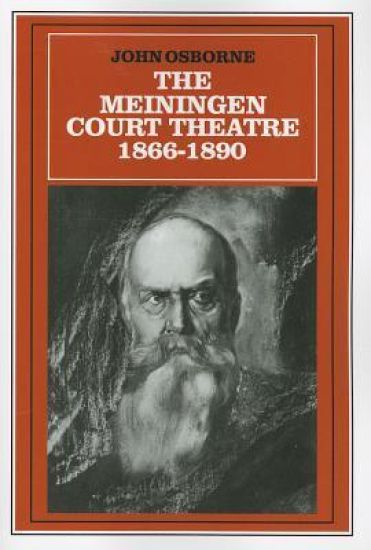
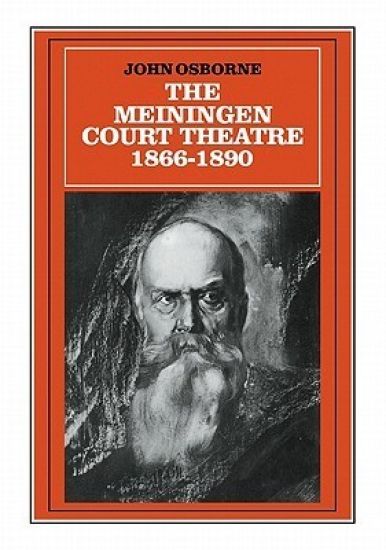
The Meiningen Court Theatre 1866–1890

The Meiningen Court Theatre 1866–1890

John Osborne

Cambridge University Press
2007
pokkari
During the late nineteenth century a remarkable combination of circumstances and individual talents permitted the Court theatre of a small German state to become the theatrical sensation of its age. The Meiningen Court Theatre developed into an international touring company under the leadership of Duke Georg II of Saxe-Meiningen. This book is based on a wide range of published and unpublished contemporary documents, photographs and sketches (many of which are reproduced here). In this 1988 volume, Professor Osborne provides a broad cultural-historical context for the emergence of the Meiningen Company and describes in detail the style and staging of productions, as well as the personality and directorial method of the Duke himself. Two famous items in the Company's repertoire, Julius Caesar and Prinz Friedrich von Homburg, are selected for particular attention. The Meiningen Company became famous throughout Europe, and became a source of inspiration to future directors of the modern theatre such as Antoine, Brahm and Stanislavsky.
The Meiningen Court Theatre 1866–1890

The Meiningen Court Theatre 1866–1890

John Osborne

Cambridge University Press
1988
sidottu
During the late nineteenth century a remarkable combination of circumstances and individual talents permitted the Court theatre of a small German state to become the theatrical sensation of its age. The Meiningen Court Theatre developed into an international touring company under the leadership of Duke Georg II of Saxe-Meiningen. This book is based on a wide range of published and unpublished contemporary documents, photographs and sketches (many of which are reproduced here). In this 1988 volume, Professor Osborne provides a broad cultural-historical context for the emergence of the Meiningen Company and describes in detail the style and staging of productions, as well as the personality and directorial method of the Duke himself. Two famous items in the Company's repertoire, Julius Caesar and Prinz Friedrich von Homburg, are selected for particular attention. The Meiningen Company became famous throughout Europe, and became a source of inspiration to future directors of the modern theatre such as Antoine, Brahm and Stanislavsky.
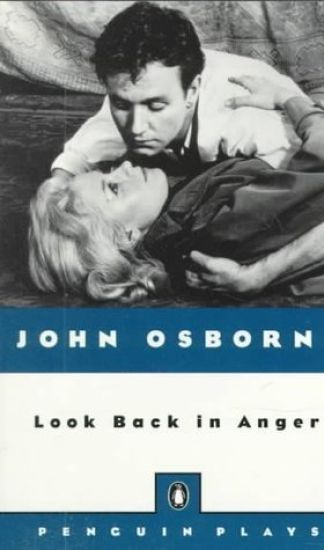
Look Back in Anger

Look Back in Anger

John Osborne

Faber Faber
1978
pokkari
Anyone who's never watched someone die is suffering from a pretty bad case of virginity. Look Back in Anger premiered at the Royal Court Theatre, London, in 1956. 'John Osborne didn't contribute to British theatre: he set off a landmine called Look Back in Anger and blew most of it up.' Alan Sillitoe 'A story of youthful insecurity inflamed by lack of opportunity and the terrifying, destabilizing force of love . . . Jimmy Porter could fill an opera house with his bellowing hunger for a bigger, better life and a loyal love to share it with.' New York Times 'Look Back in Anger presents post-war youth as it really is. To have done this at all would be a signal achievement; to have done it in a first play is a minor miracle. All the qualities are there, qualities one had despaired of ever seeing on the stage - the drift towards anarchy, the instinctive leftishness, the automatic rejection of "official" attitudes, the surrealist sense of humour, the casual promiscuity, the sense of lacking a crusade worth fighting for and, underlying all these, the determination that no one who dies shall go unmourned . . . I doubt if I could love anyone who did not wish to see Look Back in Anger. It is the best young play of its decade.' Kenneth Tynan, Observer 'How bracing, and, yes, even shocking, its white-hot fury remains.' The Times This edition includes an introduction by Michael Billington and an afterword by David Hare.
The Entertainer

The Entertainer

John Osborne

Faber Faber
2016
pokkari
Set against the backdrop of post-war Britain, John Osborne's The Entertainer conjures the seedy glamour of the old music halls for an explosive examination of public masks and private torment.First staged at the Royal Court Theatre, London, only eleven months after the opening of Look Back in Anger, the play has become a classic of twentieth-century drama.
The Entertainer

The Entertainer

John Osborne

Samuel French Ltd
1998
nidottu
Archie Rice is a failure as a comedian. News of his son's death while on military service arrives as the family is anticipating his return with a party. Archie tries to stage a comeback for his befuddled, has-been father who, mercifully, dies in the attempt. A prosperous brother offers to send the family to Canada but Archie cannot leave the decaying world of the music hall, where he is at home.-3 women, 5 men
Look Back in Anger

Look Back in Anger

John Osborne

Samuel French Ltd
1984
pokkari
Jimmy Porter, frustrated and bitter in his drab flat, lives with middle-class wife Alison. Also sharing the flat is Cliff who keeps things tenuously together. Alison's friend Helen arrives and persuades her to leave Jimmy only to fall for him herself. When Alison becomes pregnant Helen leaves them together. This play originally opened at the Royal Court Theatre in 1956 and has since proved to be a milestone in the history of theatre.
Rome in the Ninth Century

Rome in the Ninth Century

John Osborne

Cambridge University Press
2023
sidottu
Intended as a sequel to Rome in the Eighth Century (Cambridge, 2020), this survey of the material culture of the city of Rome spans the period from the imperial coronation of Charlemagne in 800 to the nadir of the fortunes of the Roman Church a century later. The evidence of standing buildings, objects, historical documents, and archaeology is brought together to create an integrated picture of the political, economic, and cultural situation in the city over this period, one characterized initially by substantial wealth resulting in enormous patronage of art and architecture, but then followed by almost total impoverishment and collapse. John Osborne also attempts to correct the widespread notion that the Franco-papal alliance of the late eighth century led to a political and cultural break between Rome and the broader cultural world of the Christian eastern Mediterranean. Beautifully illustrated, this book is essential for everyone interested in medieval Rome.
Rome in the Tenth Century

Rome in the Tenth Century

John Osborne

Cambridge University Press
2025
sidottu
This is the third and final volume in a series examining the history of Rome in the early Middle Ages (700–1000 CE) through the primary lens of the city's material culture. The previous volumes examined the eighth and the ninth centuries respectively. John Osborne uses buildings (both religious and domestic), their decorations, other works of painting and sculpture, inscriptions, manuscripts, ceramics, metalwork, and coins as 'documents' to supplement what can be gleaned from more traditional written sources such as the Liber pontificalis. The overall approach is particularly appropriate for tenth-century Rome, which has traditionally been considered a 'dark age', given recent research on standing monuments and the large amount of new material brought to light in archaeological excavations undertaken over the last four decades. This magnificent and beautifully illustrated volume provides a triumphant conclusion to a series which will be indispensable for all those interested in early medieval Rome.
Rome in the Eighth Century

Rome in the Eighth Century

John Osborne

Cambridge University Press
2020
sidottu
This book addresses a critical era in the history of the city of Rome, the eighth century CE. This was the moment when the bishops of Rome assumed political and administrative responsibility for the city's infrastructure and the physical welfare of its inhabitants, in the process creating the papal state that still survives today. John Osborne approaches this using the primary lens of 'material culture' (buildings and their decorations, both surviving and known from documents and/or archaeology), while at the same time incorporating extensive information drawn from written sources. Whereas written texts are comparatively few in number, recent decades have witnessed an explosion in new archaeological discoveries and excavations, and these provide a much fuller picture of cultural life in the city. This methodological approach of using buildings and objects as historical documents is embodied in the phrase 'history in art'.
A Subject of Scandal and Concern

A Subject of Scandal and Concern

John Osborne

Oberon Books Ltd
2016
nidottu
“I have injured no man’s reputation, taken no man’s property, attacked no man’s person, violated no oath, taught no immorality. I was asked a question and answered it openly.”Cheltenham, 1842. George Jacob Holyoake is a poor young teacher, making his way from Birmingham to Bristol to visit a friend who has been imprisoned for publishing a journal that criticises the establishment. When he makes a stop in Cheltenham to address a lecture, his words and his overwhelming commitment to speaking the truth will change his life forever. Arrested and tried for blasphemy, and separated from his starving wife and child, Holyoake is faced with the choice of conforming or staying true to his beliefs in a time of injustice and intolerance.Based on the true story of the last man to stand trial for blasphemy in England, A Subject Of Scandal And Concern was originally written for television in 1960 starring Richard Burton and Rachel Roberts, and directed by Tony Richardson, and was first seen onstage in Nottingham in the early 1960s. This production marks the first theatrical staging of the play in over 40 years and its long overdue London premiere.This volume also contains the short play Almost a Vision.
Plays for England

Plays for England

John Osborne

Oberon Books Ltd
1999
nidottu
John Osborne (1929-1994) was the leading playwright of the post-war British theatre revival: a rennaissance that is said to have started when his Look Back in Anger was first performed at the Royal Court Theatre. It led to the coining of the phrase 'angry young man', which applied not only to Osborne but also to many new writers who criticised the system. But Osborne was not a conventional revolutionary; his attack on the present was in fact a mourning for the loss of past values, a stance that became clearer in his later plays. The Blood of the Bambergs, the first of the two companion "Plays for England" (1963), is a satirical account of a royal wedding. The second play, Under Plain Cover depicts a marriage in crisis that becomes a tabloid 'human interest' story. Watch it Come Down (1975) is the story of a man waiting for death, while his friends trash and scar each other around him.
Before Anger: Two Early Plays

Before Anger: Two Early Plays

John Osborne

Oberon Books Ltd
2009
nidottu
Two never-before-published works. The Devil Inside Him, written in 1950, is a melodrama with a poetic edge about a Welsh boarding house, lorded over by a self-righteous, religious bigot of a father. Personal Enemy, written with Anthony Creighton, is set in America at the height of the McCarthy communist witch-hunts.
My Car Plays Tapes

My Car Plays Tapes

John Osborne

Broken Sleep Books
2022
nidottu
My Car Plays Tapes is a tale of captivating storytelling, focusing on John Osborne's life as a support worker and a nostalgic look at what happens when you listen to old tapes from the 1990s. Getting older, jobs, cars that don't really work, and how to make big decisions with your life are all thematically linked in the rearview mirror of Osborne's life, as told through this prose pamphlet.
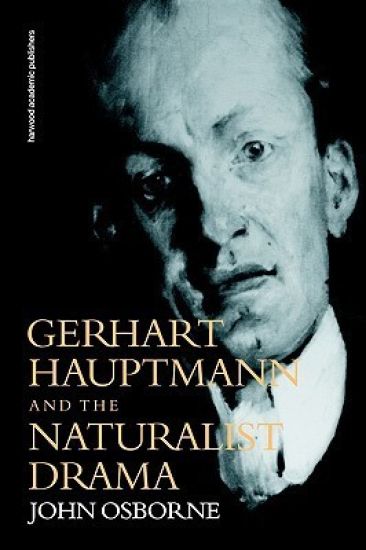
Gerhard Hauptmann and the Naturalist Drama
What was German Naturalism? What were its achievements? How does it compare with its counterparts in other European countries? These are some of the difficult questions addressed by John Osborne in Gerhart Hauptmann and the Naturalist Drama, a revised and updated version of his The Naturalist Drama in Germany, now widely acknowledged as the standard introduction to the subject. The debates to which he contributed, and in some cases initiated, on Naturalism in the German theatre, Naturalist theory in Germany, and the development of the Naturalist movement to the contemporary Social Democrat movement, have remained central issues. This revised edition preserves the structure and approach of the original, including its emphasis on the early dramas of Hauptmann, while taking full account of subsequent scholarship which provides the context in which this Naturalist playwright's work can be placed.