Kirjojen hintavertailu. Mukana 11 244 527 kirjaa ja 12 kauppaa.

Kirjahaku

Etsi kirjoja tekijän nimen, kirjan nimen tai ISBN:n perusteella.

8 kirjaa tekijältä John P. McCormick

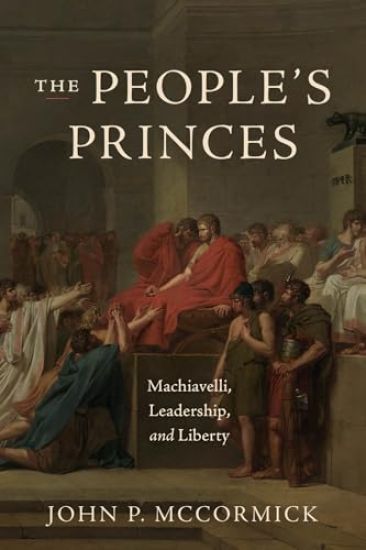
The People's Princes

The People's Princes

John P. McCormick

THE UNIVERSITY OF CHICAGO PRESS
2025
sidottu
A new window into Machiavelli’s idea of virtuous leadership and the appropriate relationship among leaders, common citizens, and elites. For more than a decade, John P. McCormick has been at the forefront of a new wave of scholarship that reveals the anti-elitist and democratic commitments at the center of Niccolo Machiavelli’s political thought. In The People’s Princes, McCormick turns his attention to Machiavelli’s conception of virtuous leadership and Machiavelli’s views on the appropriate relationships among individual leaders, common citizens, and elites. While most people think of Machiavelli as a cynical advisor of tyrants—a man who counseled leaders to aggrandize themselves, by any means necessary, at the expense of their subjects and citizens—The People’s Princes fundamentally challenges this understanding. Drawing from Machiavelli’s major political works a normative standard for leadership that emphasizes the mutually reinforcing relationship of civic leadership and popular government, McCormick delineates Machiavelli’s method of “political exemplarity” by analyzing in detail the Florentine’s case studies of leaders and their interactions with populaces throughout ancient and modern history. McCormick argues that Machiavelli suggests that civic leaders should enhance their reputations by providing for their own eventual obsolescence; specifically, they should establish institutional means through which common citizens rule themselves more directly and substantively. The People’s Princes invites readers to consider Machiavelli anew, and also reflect on insights that remain relevant in the twenty-first century amidst growing concerns that political leaders are not accountable or responsive to popular majorities.
The People's Princes

The People's Princes

John P. McCormick

THE UNIVERSITY OF CHICAGO PRESS
2025
nidottu
A new window into Machiavelli’s idea of virtuous leadership and the appropriate relationship among leaders, common citizens, and elites. For more than a decade, John P. McCormick has been at the forefront of a new wave of scholarship that reveals the anti-elitist and democratic commitments at the center of Niccolo Machiavelli’s political thought. In The People’s Princes, McCormick turns his attention to Machiavelli’s conception of virtuous leadership and Machiavelli’s views on the appropriate relationships among individual leaders, common citizens, and elites. While most people think of Machiavelli as a cynical advisor of tyrants—a man who counseled leaders to aggrandize themselves, by any means necessary, at the expense of their subjects and citizens—The People’s Princes fundamentally challenges this understanding. Drawing from Machiavelli’s major political works a normative standard for leadership that emphasizes the mutually reinforcing relationship of civic leadership and popular government, McCormick delineates Machiavelli’s method of “political exemplarity” by analyzing in detail the Florentine’s case studies of leaders and their interactions with populaces throughout ancient and modern history. McCormick argues that Machiavelli suggests that civic leaders should enhance their reputations by providing for their own eventual obsolescence; specifically, they should establish institutional means through which common citizens rule themselves more directly and substantively. The People’s Princes invites readers to consider Machiavelli anew, and also reflect on insights that remain relevant in the twenty-first century amidst growing concerns that political leaders are not accountable or responsive to popular majorities.
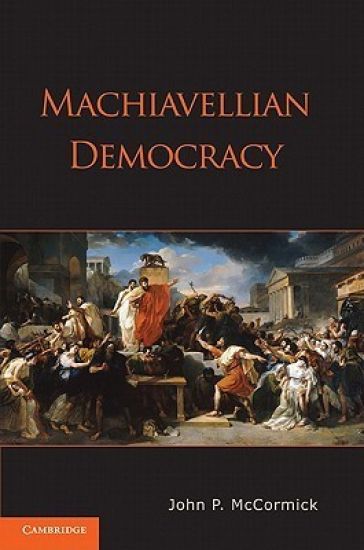
Machiavellian Democracy

Machiavellian Democracy

John P. McCormick

Cambridge University Press
2011
pokkari
Intensifying economic and political inequality poses a dangerous threat to the liberty of democratic citizens. Mounting evidence suggests that economic power, not popular will, determines public policy, and that elections consistently fail to keep public officials accountable to the people. McCormick confronts this dire situation through a dramatic reinterpretation of Niccolò Machiavelli's political thought. Highlighting previously neglected democratic strains in Machiavelli's major writings, McCormick excavates institutions through which the common people of ancient, medieval and Renaissance republics constrained the power of wealthy citizens and public magistrates, and he imagines how such institutions might be revived today. It reassesses one of the central figures in the Western political canon and decisively intervenes into current debates over institutional design and democratic reform. McCormick proposes a citizen body that excludes socioeconomic and political elites and grants randomly selected common people significant veto, legislative and censure authority within government and over public officials.
Weber, Habermas and Transformations of the European State

Weber, Habermas and Transformations of the European State

John P. McCormick

Cambridge University Press
2009
pokkari
This book critically engages Jürgen Habermas's comprehensive vision of constitutional democracy in the European Union. John P. McCormick draws on the writings of Max Weber (and Habermas's own critique of them) to confront the difficulty of theorizing progressive politics during moments of radical state transformation. Both theorists employ normative and empirical categories, drawn from earlier historical epochs, to analyze contemporary structural transformations: Weber evaluated the emergence of the Sozialstaat with antedated categories derived from nineteenth-century and premodern historical examples; while Habermas understands the EU almost exclusively in terms of the liberal (Rechtsstaat) and welfare state (Sozialstaat) paradigms. Largely forsaking the focus on structural transformation that characterized his early work, Habermas conceptualizes the EU as a territorially expanded nation-state. McCormick demonstrates the deficiencies of such an approach and outlines a more appropriate normative-empirical model, the supranational Sektoralstaat, for evaluating prospects for constitutional and social democracy in the EU.
Weber, Habermas and Transformations of the European State

Weber, Habermas and Transformations of the European State

John P. McCormick

Cambridge University Press
2007
sidottu
This book critically engages Jürgen Habermas's comprehensive vision of constitutional democracy in the European Union. John P. McCormick draws on the writings of Max Weber (and Habermas's own critique of them) to confront the difficulty of theorizing progressive politics during moments of radical state transformation. Both theorists employ normative and empirical categories, drawn from earlier historical epochs, to analyze contemporary structural transformations: Weber evaluated the emergence of the Sozialstaat with antedated categories derived from nineteenth-century and premodern historical examples; while Habermas understands the EU almost exclusively in terms of the liberal (Rechtsstaat) and welfare state (Sozialstaat) paradigms. Largely forsaking the focus on structural transformation that characterized his early work, Habermas conceptualizes the EU as a territorially expanded nation-state. McCormick demonstrates the deficiencies of such an approach and outlines a more appropriate normative-empirical model, the supranational Sektoralstaat, for evaluating prospects for constitutional and social democracy in the EU.
Machiavellian Democracy

Machiavellian Democracy

John P. McCormick

Cambridge University Press
2011
sidottu
Intensifying economic and political inequality poses a dangerous threat to the liberty of democratic citizens. Mounting evidence suggests that economic power, not popular will, determines public policy, and that elections consistently fail to keep public officials accountable to the people. McCormick confronts this dire situation through a dramatic reinterpretation of Niccolò Machiavelli's political thought. Highlighting previously neglected democratic strains in Machiavelli's major writings, McCormick excavates institutions through which the common people of ancient, medieval and Renaissance republics constrained the power of wealthy citizens and public magistrates, and he imagines how such institutions might be revived today. It reassesses one of the central figures in the Western political canon and decisively intervenes into current debates over institutional design and democratic reform. McCormick proposes a citizen body that excludes socioeconomic and political elites and grants randomly selected common people significant veto, legislative and censure authority within government and over public officials.
Reading Machiavelli

Reading Machiavelli

John P. McCormick

Princeton University Press
2018
sidottu
To what extent was Machiavelli a “Machiavellian”? Was he an amoral adviser of tyranny or a stalwart partisan of liberty? A neutral technician of power politics or a devout Italian patriot? A reviver of pagan virtue or initiator of modern nihilism? Reading Machiavelli answers these questions through original interpretations of Niccolò Machiavelli’s three major political works—The Prince, Discourses, and Florentine Histories—and demonstrates that a radically democratic populism seeded the Florentine’s scandalous writings. John McCormick challenges the misguided understandings of Machiavelli set forth by prominent thinkers, including Jean-Jacques Rousseau and representatives of the Straussian and Cambridge schools.McCormick emphasizes the fundamental, often unacknowledged elements of a vibrant Machiavellian politics: the utility of vigorous class conflict between elites and common citizens for virtuous democratic republics, the necessity of political and economic equality for genuine civic liberty, and the indispensability of religious tropes for the exercise of effective popular judgment. Interrogating the established reception of Machiavelli’s work by such readers as Rousseau, Leo Strauss, Quentin Skinner, and J.G.A. Pocock, McCormick exposes what was effectively an elite conspiracy to suppress the Florentine’s contentious, egalitarian politics. In recovering the too-long-concealed quality of Machiavelli’s populism, this book acts as a Machiavellian critique of Machiavelli scholarship.Advancing fresh renderings of works by Machiavelli while demonstrating how they have been misread previously, Reading Machiavelli presents a new outlook for how politics should be conceptualized and practiced.
Reading Machiavelli

Reading Machiavelli

John P. McCormick

Princeton University Press
2020
pokkari
A new reading of Machiavelli’s major works that demonstrates how he has been previously misreadTo what extent was Niccolò Machiavelli a “Machiavellian”? Was he an amoral adviser of tyranny or a stalwart partisan of liberty? A neutral technician of power politics or a devout Italian patriot? A reviver of pagan virtue or initiator of modern nihilism? Reading Machiavelli answers these questions through original interpretations of Machiavelli’s three major political works—The Prince, Discourses, and Florentine Histories—and demonstrates that a radically democratic populism seeded the Florentine’s scandalous writings. John McCormick challenges the misguided understandings of Machiavelli set forth by prominent thinkers, including Jean-Jacques Rousseau and representatives of the Straussian and Cambridge schools, and he emphasizes the fundamental, often unacknowledged elements of a vibrant Machiavellian politics. Advancing fresh readings of Machiavelli’s work, this book presents a new outlook on how politics should be conceptualized and practiced.