Kirjojen hintavertailu. Mukana 12 512 097 kirjaa ja 12 kauppaa.

Kirjahaku

Etsi kirjoja tekijän nimen, kirjan nimen tai ISBN:n perusteella.

9 kirjaa tekijältä John Painter

Mark's Gospel

Mark's Gospel

John Painter

Routledge
1997
sidottu
Mark's 'biography' of Jesus is the earliest of the four gospels, and influenced them all. The distinctive feature of this biography is the quality of 'good news', which presupposes a world dominated by the forces of evil. John Painter shows how the rhetorical and dramatic shaping of the book emphasises the conflict of good and evil at many levels - between Jesus and the Jewish authorities, Jesus and the Roman authorities, and the conflict of values within the disciples themselves. These matters of content are integral to this original approach to Mark's theodicy, while the stylistic issue raises the question of Mark's intended readership. John Painter's succinct yet thorough treatment of Mark's gospel opens up not only these rhetorical issues, but the social context of the gospel, which Painter argues to be that of the Pauline mission to the nations.
Mark's Gospel

Mark's Gospel

John Painter

Routledge
1997
nidottu
Mark's 'biography' of Jesus is the earliest of the four gospels, and influenced them all. The distinctive feature of this biography is the quality of 'good news', which presupposes a world dominated by the forces of evil. John Painter shows how the rhetorical and dramatic shaping of the book emphasises the conflict of good and evil at many levels - between Jesus and the Jewish authorities, Jesus and the Roman authorities, and the conflict of values within the disciples themselves. These matters of content are integral to this original approach to Mark's theodicy, while the stylistic issue raises the question of Mark's intended readership. John Painter's succinct yet thorough treatment of Mark's gospel opens up not only these rhetorical issues, but the social context of the gospel, which Painter argues to be that of the Pauline mission to the nations.
Just James

Just James

John Painter

Continuum International Publishing Group Ltd.
2005
nidottu
'This is a book for which we have been waiting. James was obviously such an important figure in the beginnings of Christianity, and yet for the most part he remains in the shadows, playing at best an ambiguous role in comparison with Peter and Paul. Painter brings him out of these shadows, scrutinizing with great care each pieve of information and building up a picture which is much more positive than most have recognized. Thanks to Painter our appreciation of the tensions behind and within the New Testament will be much better informed. We are in his debt.' James D. G. Dunn, University of Durham 'John Painter has brought to bear his considerable skills as historian, literary critic, and interpreter of ancient Christian documents to draw out of the mists a crucial figure from the beginnings of Christianity. Painter's ability to approach biblical, Christian, Gnostic, and other sectarian documents in a fresh, and sometimes surprising, fashion has produced a significant contribution to the understanding of Christianity's earliest days, and the ways in which early traditions interpreted the Christian church's foundations. A stimulating and important book.' Francis J. Moloney, S.D.B, Catholic University of America
Sacra Pagina

Sacra Pagina

John Painter

Liturgical Press
2008
pokkari
The Johannine Epistles are today read as an important part of the Johannine literature. Yet the meaning of the text is often unclear. Part of the problem arises because, although 1 John is called an Epistle, it lacks the formal marks of an Epistle. In 1, 2, and 3 John, John Painter illuminates the relationship 1, 2, and 3 John have to each other and to the Gospel.Painter explains the historical context of the Johannine Epistles using a socio-rhetorical approach. The writings are shown to reflect a situation of conflict and schism within the Johannine community; they seek to persuade the readers of the truth of the writer's message. In this truth, the readers are encouraged to abide if they would have the assurance of eternal life.Painter also examines the inseparable connection between belief and ethical life in active love for one another. Through the socio-rhetorical approach Painter brings to light the continuing relevance of these writings.1, 2, and 3 John is divided into two parts. Chapters under 1 John are "Introduction to the Exegesis of 1 John," "Outline of 1 John," "First Presentation of the Two Tests (1:6-2:27)," "Excursus: Sin and Sinlessness," "Excursus: Love of the Brother/Sister: of One Another," "Excursus: The Antichrist," "Second Presentation of the Two Tests (2:28-4:6)," "Third Presentation of the Two Tests (4:7-5:12)," "Conclusion (5:13-21), and " Excursus: 'A Sin Unto Death.'"Chapters under 2 and 3 John are "2 John," "Introduction to the Exegesis of 2 John," "Outline of 2 John," "Prescripti 2 John 1-3," "Body of the Letter (4-11)," "Notice of Intention to Visit (12)," and "Final Greetings (13)," "3 John," "Introduction to the Exegesis of 3 John," "Outline of 3 John," "Prescript: 3 John 1-2," "Body of Letter (3-12)," and "Final Greetings (13-15)."John Painter is the Foundation Professor of Theology at Charles Sturt University in Canberra, Australia.
Theology as Hermeneutics

Theology as Hermeneutics

John Painter

Bloomsbury Academic
2015
sidottu
Rudolf Bultmann was the most significant New Testament scholar we have known in the twentieth century. This study approaches his work arguing that his theology can only be understood correctly as an interpretation of the New Testament. Naturally it is a twentieth-century interpretation involving complex hermeneutical questions. But it is the New Testament which provides the subject matter to be interpreted. Bultmann's theology, stemming from the conviction that the New Testament addresses the present age, offers important solutions to many problems for Christian theology in our materialistic, relativist, pluralistic age. The book introduces the reader to: Bultmann's theology; the problem of contemporary New Testament hermeneutics; the problems of New Testament theology; the question of the relation of New Testament theology to theology as such. It makes a necessary critique of simplistic modes of interpreting Bultmann, and shows a masterly hand in assessing his continuing significance.
James and Jude

James and Jude

John Painter; David A. deSilva; Mikeal Parsons; Charles Talbert

Baker Academic, Div of Baker Publishing Group
2012
nidottu
In this addition to the well-received Paideia series, two respected New Testament scholars offer a practical commentary on James and Jude that is conversant with contemporary scholarship, draws on ancient backgrounds, and attends to the theological nature of the texts.This commentary, like each in the projected eighteen-volume series, proceeds by sense units rather than word-by-word or verse-by-verse. Paideia commentaries explore how New Testament texts form Christian readers by• attending to the ancient narrative and rhetorical strategies the text employs• showing how the text shapes theological convictions and moral habits• commenting on the final, canonical form of each New Testament book• focusing on the cultural, literary, and theological settings of the text• making judicious use of maps, photos, and sidebars in a reader-friendly formatStudents, pastors, and other readers will appreciate the historical, literary, and theological insight that John Painter and David deSilva offer in interpreting James and Jude.
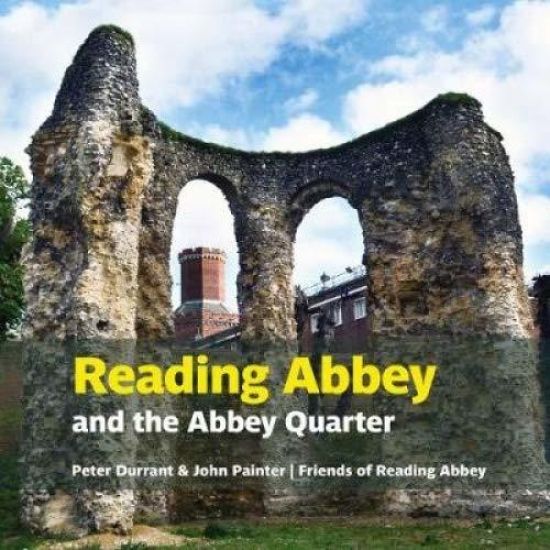
Reading Abbey and the Abbey Quarter

Reading Abbey and the Abbey Quarter

Peter Durrant; John Painter

Two Rivers Press
2018
nidottu
Reading's Abbey, founded in 1121 by King Henry I of England, was huge, wealthy and important until Henry VIII's dissolution in 1539, after which it declined over the years into the picturesque ruins that grace the north bank of the Kennet today. This history of the Abbey and the Abbey Quarter relates the motive behind its foundation, the relics that made it a famous destination for pilgrims from all over Europe, the part it played in royal and parliamentary life, the story of its downfall and its continuing influence on the geography and buildings of our town. With detailed descriptions of the Abbey buildings and their layout alongside features on monastic life and the Abbots, the book brings to life the role of the Abbey in the town both before and after its dissolution. A walking tour (with map) of the Abbey Quarter provides readers with an opportunity to discover the clues history has left behind; it indicates where some of the Abbey stone has ended up, and allows readers to connect directly with the past and understand the legacy we are left with today.