Kirjojen hintavertailu. Mukana 11 342 296 kirjaa ja 12 kauppaa.

Kirjahaku

Etsi kirjoja tekijän nimen, kirjan nimen tai ISBN:n perusteella.

30 kirjaa tekijältä John Paterson

David Harvey's Geography (RLE Social & Cultural Geography)
The emphasis of this book is to explore two major philosophical influences in contemporary human geography, namely logical positivism and Marxism, and to explore the relationships between philosophy, methodology and geographical research. Rather than being a biography of David Harvey, the book contributes to the understanding of one of the most innovative and iconoclastic scholars in contemporary Anglo-American human geography.
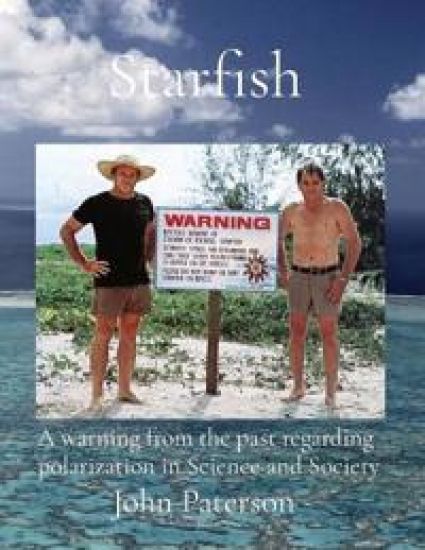
Starfish

Starfish

John Paterson

Charonia Research
2023
pokkari
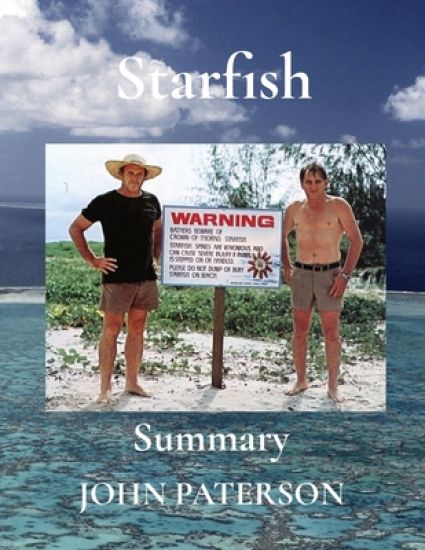
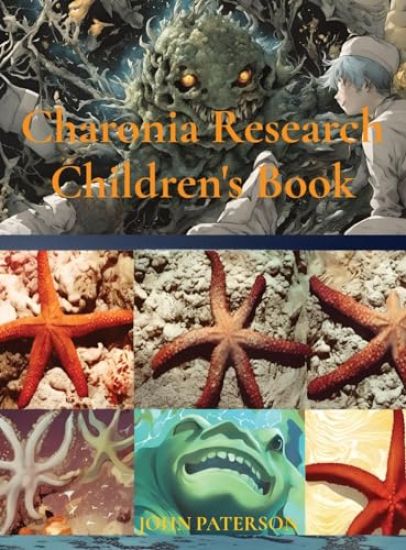
SUMMARY OF RESEARCHSea-urchins and starfish both belong to Phylum Echinodermata and while early research on the fertilization reaction was conducted by Rothschild and Swann (1949) on sea-urchins, the conclusions regarding egg fertilization and proximity of spawning individuals were just as applicable to starfish.Human collection of the Giant Triton and other predators was suggested by Endean (1969) as a causative factor in starfish outbreaks, but this Predator Control Hypothesis was generally disregarded due to the enormous potential numbers of starfish. Recent research demonstrating the strong avoidance reaction of the starfish to the triton together with an understanding of the importance of starfish aggregation to reproductive success may be slowly changing this opinion.PREFACEIt's 1957 and Japanese scientists travel to the island of Miyake-Jima to study a strange disease affecting a coral reef. The island's people have noticed a strange increase in the number of the large, venomous crown-of-thorns starfish. Over the following years they kill large numbers of the starfish attempting to protect the living coral upon which the starfish is feeding. The Japanese scientists noted that they had observed giant triton shells feeding on the crown-of-thorns starfish, in research published only in Japanese.5 years laterThis same species of starfish is noticed in increasing numbers at Green Island, off Cairns here in Australia. Over the next five years, the starfish outbreak will consume much of the living coral at Green Island and other reefs in the vicinity.The giant triton is again observed feeding on crown-of-thorns starfish and research in Queensland is commenced on the feeding rate and prey preference of the giant triton. Tests are done with three species of starfish; multiple specimens of each species are placed in cages with giant tritons.The results showed that while each giant triton ate one crown-of-thorns starfish per week on average, it ate less crown-of-thorns starfish than another relatively common species of starfish. The research concluded that the crown-of-thorns starfish was not the preferred prey of the giant triton.This conclusion was further supported by similar research done overseas, despite the observation that giant tritons were often located on the Great Barrier Reef, and elsewhere, were eating crown-of-thorns starfish.30 years laterIt becomes apparent that such a conclusion about prey preference of the giant triton is simply not justified, given the crown-of-thorns starfish often escapes complete predation because of its relatively high mobility. It is apparent that there is much confusion between prey capture and prey preference of the giant triton. It is suggested this distinction is relevant to control of prey.40 years laterAustralia is unsuccessful in its attempt to list the giant triton in Appendix 2 of the Convention in Trade in Endangered Species (CITES) because Japan objects on the grounds of 'no evidence' for the alleged endangered status of giant triton.
Starfish

Starfish

John Paterson

Charonia Research
2023
sidottu
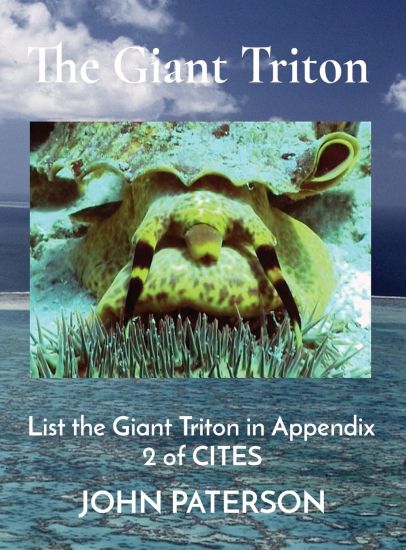
Outbreaks of the crown-of-thorns starfish (Acanthaster planci) have been studied for many years throughout the Indo-West Pacific region and although many explanatory hypotheses have been proposed we do not understand why outbreaks of this starfish occur on some reefs while, on other nearby reefs, this starfish maintains a stable, low population density. On the Great Barrier Reef and elsewhere, most starfish research has centered on establishing the scale of Acanthaster outbreaks and the effect of Acanthaster predation on the coral reef community.The giant triton (Charonia tritonis) and other members of the genus Charonia are known predators of many species of starfish but there are few examples of other species predominantly preying on starfish apart from other starfish. Dr Robert Endean proposed that predation on starfish plays an important role in starfish population stability and discussed the possible causes of Acanthaster outbreaks with particular emphasis on the removal by humans of the predators of adult and juvenile starfish.While it is recognized that predation can determine the spatial patterns of natural communities and can represent powerful selective pressure in the evolution of prey adaptation, the role of natural predators in maintaining high prey diversity, and the possible survival strategy of rarity in the coral reef community is unclear with respect to either starfish, their predators, or their prey.The giant triton is an extremely beautiful shell and in many parts of the third world, it is still being collected in large numbers and sold to tourists as ornaments. As you admire the beautiful shell, spare a thought for the hungry mollusk that died. And don't forget, they live on starfish. At present, little is known of any aspect of the triton's ecology despite its obvious importance in controlling starfish numbers. It is very important to protect this shell by listing on Appendix 2 of the Convention in Trade of Endangered Species (CITES) Treaty.
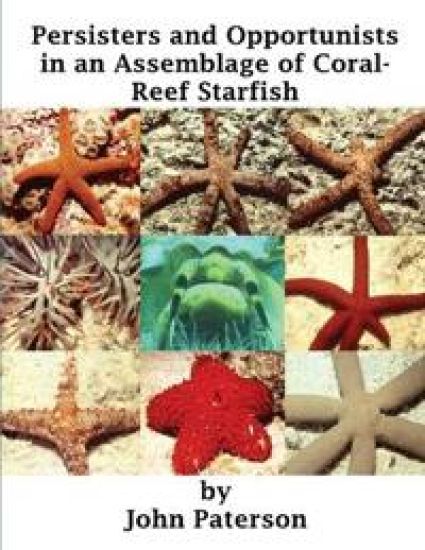
Persisters and Opportunists in an Assemblage of Coral-Reef Starfish
A thesis submitted according to the requirements for the degree of Doctor of Philosophy in the University of Queensland.December, 1994.Coral reefs seem to defy many of the paradigms which characterize less complex biological communities. While there is general agreement that the biota of coral reefs exhibit high species diversity, some authors have characterized coral reef assemblages by selecting species with high population densities (Sale, 1974; 1976; 1977; 1984; Sale and Dybdahl, 1975; Connell, 1978). Other authors have included rarer species (Kohn, 1959; 1968; Den Boer, 1971; Grassle, 1973) and Endean and Cameron (1990 a) have emphasized the importance of the role of these rarer species and stated that rarity is virtually ignored in most ecological models of the coral reef ecosystem. They suggest that our understanding of coral-reef ecology is influenced strongly by the constraints of many of the analytical tools being used in reef studies. As a result they believe that most analyses have dealt primarily with species that are sufficiently numerous to provide statistically satisfactory numbers of records and that most studies have excluded rare species which, in fact comprise the majority of coral-reef species.The complexity of coral reef ecosystems is not surprising given the great length of time that these ecosystems have been in existence. While the shallow water distribution of coral reefs has varied with the alternation of glacial and interglacial periods (Hays, Imbrie and Shackleton, 1976), in their broad biological form, coral reefs have existed since the Precambrian and reefs similar to present reefs have existed for around 50 million years (Newell, 1972). While stating that there is no general rule for coral-reef organisms, Endean and Cameron (1990 a) have suggested that the attribute of persistence possessed by most of the rarer species characterizes the majority of coral-reef species and is responsible for both structuring and perpetuating this ecosystem. They regard the coral reef ecosystem as being an ordered and predictable system. However, other authors (Sale, 1977; 1991; Connell, 1978) have different views.
Persisters and Opportunists in an Assemblage of Coral-Reef Starfish
Coral reefs seem to defy many of the paradigms which characterise less complex biological communities. While there is general agreement that the biota of coral reefs exhibit high species diversity, some authors have characterised coral reef assemblages by selecting species with high population densities (Sale, 1974; 1976; 1977; 1984; Sale and Dybdahl, 1975; Connell, 1978). Other authors have included rarer species (Kohn, 1959; 1968; Den Boer, 1971; Grassle, 1973) and Endean and Cameron (1990 a) have emphasised the importance of the role of these rarer species and stated that rarity is virtually ignored in most ecological models of the coral reef ecosystem. They suggest that our understanding of coral-reef ecology is influenced strongly by the constraints of many of the analytical tools being used in reef studies. As a result they believe that most analyses have dealt primarily with species that are sufficiently numerous to provide statistically satisfactory numbers of records and that most studies have excluded rare species which, in fact comprise the majority of coral-reef species.The complexity of coral reef ecosystems is not surprising given the great length of time that these ecosystems have been in existence. While the shallow water distribution of coral reefs has varied with the alternation of glacial and interglacial periods (Hays, Imbrie and Shackleton, 1976), in their broad biological form, coral reefs have existed since the Precambrian and reefs similar to present reefs have existed for around 50 million years (Newell, 1972). While stating that there is no general rule for coral-reef organisms, Endean and Cameron (1990 a) have suggested that the attribute of persistence possessed by most of the rarer species characterises the majority of coral-reef species and is responsible for both structuring and perpetuating this ecosystem. They regard the coral reef ecosystem as being an ordered and predictable system. However, other authors (Sale, 1977; 1991; Connell, 1978) have different views.Sale (1991) regards reef fish communities as open non-equilibrial systems with living space determined in a random manner. Connell (1978) regards intermediate levels of disturbance as essential to the maintenance of diversity in this and other highly diverse and complex ecosystems. There has been much discussion of the meaning of stability (MacArthur, 1955; Dunbar, 1960; Leigh, 1965; May, 1972; Jacobs, 1974; Margalef, 1974; Goodman, 1975; Peters, 1976; Pimm, 1984).Endean and Cameron (1990 a) have put forward the hypothesis that complex, high diversity assemblages of coral-reef animals are characterised by a preponderance of rare but long-lived species that they have termed persisters. These persistent species exhibit low recruitment, low adult mortality and relative constancy of adult population numbers and population structure. They occur in association with opportunist species that have high recruitment, a high adult mortality and varying adult population numbers and population structure. While individuals belonging to opportunist species are more abundantly represented than those belonging to persistent species, Endean and Cameron believe that the majority of species in the coral reef ecosystem are persistent species. This hypothesis has not been tested in the field.As no general consensus relating to the organisation of coral reefs has been reached in the literature, the persister / opportunist distinction is examined in this thesis, rather than a deep analysis of the opposing views relating to stability. Events that are stochastic and unpredictable at one spatial or temporal scale may be predictable at another. In addition, the stability or otherwise of any system may be determined, amongst other things, by the particular set of species that is chosen to characterise the system.
Chatting with ChatGPT - The Collection 1

Chatting with ChatGPT - The Collection 1

John Paterson

Charonia Research
2023
pokkari
This is a series of brief conversations with ChatGPT on a number of controversial subjects. The results are unedited and represent a range of answers, but ChatGPT is not allowed to express opinions and does not access recent news. All in all, it provides an interesting insight into this new technology called "Artificial intelligence" or AI but it is far from perfect at the time of writing in March 2023. I have no doubt that in future it will guide all our discussions.Subjects: Nuclear, Brandis, Ukraine, War, Virginia Class Subs, ALP Nuclear Policy, AUKUS, Politics, Somerton Man, Starfish, Tritons, COVID-19 and Copyright
Chatting with ChatGPT - The Collection 1

Chatting with ChatGPT - The Collection 1

John Paterson

Charonia Research
2023
sidottu
This is a series of brief conversations with ChatGPT on a number of controversial subjects. The results are unedited and represent a range of answers, but ChatGPT is not allowed to express opinions and does not access recent news. All in all, it provides an interesting insight into this new technology called "Artificial intelligence" or AI but it is far from perfect at the time of writing in March 2023. I have no doubt that in future it will guide all our discussions.Subjects: Nuclear, Brandis, Ukraine, War, Virginia Class Subs, ALP Nuclear Policy, AUKUS, Politics, Somerton Man, Starfish, Tritons, COVID-19 and Copyright
The Great Barrier Reef

The Great Barrier Reef

John Paterson

Charonia Research
2023
pokkari
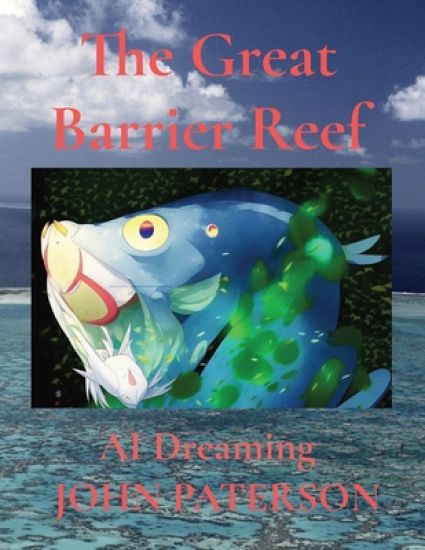
The complexity of coral reef ecosystems is not surprising given the great length of time that these ecosystems have been in existence. While the shallow water distribution of coral reefs has varied with the alternation of glacial and interglacial periods, in their broad biological form, coral reefs have existed since the Precambrian and reefs similar to present reefs have existed for around 50 million years.Since the late 1950's, coral reefs of the Indo-West Pacific region have experienced population outbreaks of the corallivorous crown-of-thorns starfish. The resultant loss of hard coral cover on some reefs of the Great Barrier Reef was studied during the period of outbreak, and subsequently, so that both the short- and long-term effects of this predator would be known.The role of this predator in the elevation or lowering of coral species diversity on the Great Barrier Reef has not been studied adequately. It is apparent that some reefs become reinfested with starfish about 15 years following the initial infestation. It would appear, that when the quantity (not necessarily diversity) of a reef's hard coral cover has regrown, the starfish can recruit again in high numbers.In addition to starfish outbreaks, the Great Barrier Reef is suffering from recurring coral bleaching events due to global warming and increased nutrient runoff from the adjacent mainland. It will require a sustained effort to understand the impact of these events and how best to mitigate them. In the end, the future of the Reef is up to us to decide.The following Artificial Intelligence (AI) images are derived from the previous pictures using Dream Studio and show the enormous future potential of the Great Barrier Reef's beauty, whether it be related to conservation, ecotourism, or art.
Starfish

Starfish

John Paterson

Charonia Research
2023
pokkari
The giant triton (Charonia tritonis) is a beautiful shell and a well-known predator of the crown-of-thorns starfish (Acanthaster planci). In many parts of the third world, it is still being collected in large numbers and sold to tourists as ornaments. Many species of starfish are known to have outbreaks in different parts of the world. Prior to human collection, the giant triton might have controlled starfish numbers not by eating the many, but by preventing the aggregation that precedes the outbreak. At present, little is known of any aspect of the triton's ecology despite its obvious importance in controlling starfish numbers. A PDF file of the complete book "Starfish: A warning from the past" can be downloaded from either Trove or the Internet Archive. Both hard and soft cover printed books are available through links at the Charonia Research blog.
Don't Blame Me

Don't Blame Me

John Paterson

Charonia Research
2023
sidottu
"Don't blame me," said the little boy. "The problem with our oceans is that they're huge.""That's what I've been telling them for 60 years," said Paddy the Starfish."I'm just a baby, so don't blame me" said Junior to Bubbles the slug. "The problem is up there"."Something must have changed, but what was it?" said Angel Fish. "I suspect lots of things"."I know that you're talking about me," said Thorny passing by quickly for good reason."I know that you're here somewhere, Thorny" said Dan the diver. "You can't outrun me"."You won't get away next time Thorny," said Triton. "Your days are numbered"."That's all right for you to say Triton," said Nudibranch. "You have a shell and lots of food"."And the more often Thorny gets away, the hungrier they are for me," said another starfish."I might only be a shrimp, but I can look after myself when it comes to Thorny,""I don't mind a Thorny or two," said the Wrasse. "It's really a question of what we like to eat.""What do you mean by that Wrasse?" said the diver. "It depends on what we like to eat "."I would have thought that it was obvious," said Wrasse. "I'm not just a pretty face"."It's not just what we eat," said baby starfish. "As I keep saying the problem is up there"."We're so pretty and up there they think that the ocean is so huge," said baby Fish."Thank-you Wrasse and Baby Starfish, the problem certainly starts up there, not down here"."President, Dan the Diver tells me that we have a problem. The ocean needs these shells"."All of us creatures play a role, even if we are just slugs, shrimp or starfish," they all said."So, at the end of the day it depends on us all, even humans. We can't just blame Thorny"
Dan the Diver and SCUBA

Dan the Diver and SCUBA

John Paterson

Charonia Research
2023
sidottu
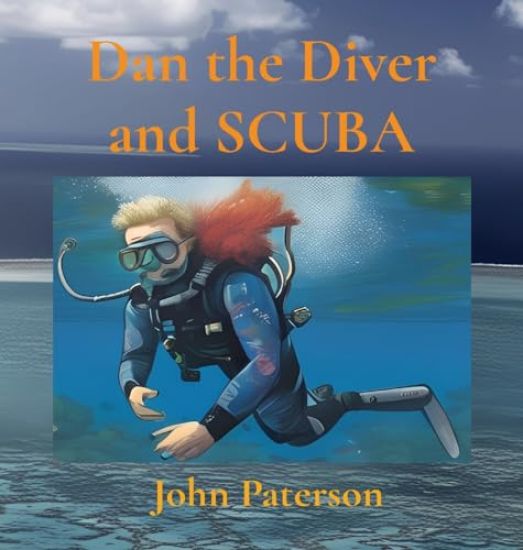
The Great Barrier Reef is amazing but we must always remember that we are in another world when we are underwater on SCUBA. We need to breathe air. Unlike the fish and corals, we carry our air with us in a tank on our back."What's happening with my air," said Dan the Diver. "There are bubbles everywhere. I need to surface but not in a hurry." Dan knew that air expands as it rises in the water and his lungs would do the same. He should be OK."My gear got caught in a cave and my air hose was broken. Luckily, it was shallow as I couldn't breathe at all." Dan knew that if he had been much deeper, then he would need to decompress slowly which was impossible.Divers try to come up no faster than their bubbles but if Dan runs out of air, he has no choice unless he can buddy breathe. If he comes up too quickly from depth, he can get decompression sickness from nitrogen bubbles in his blood.Dan tells how shallow water blackout occurs when snorkelers hyperventilate by repeated deep breathing followed by breath holding. This had happened to him when he was young and luckily a friend was there to help. "It was a close call.""You always need to have a dive buddy," said Bobby. "You never know what could happen and it is so different down there." Annabel agreed completely. "Even if you're only snorkeling, it is much safer with a dive buddy," she said.Dan tells a story he heard from old Arthur who lived on a creek way up north of Cairns. These two kids told Arthur that they had rowed in from the Reef. He could hardly believe them but Dan knew that they had both been very lucky.Dan remembers on one dive they found a shipwreck. It was only in shallow water but as the wind picked up Dan's boat dragged its anchor. Luckily, there was another boat to bring it back or Dan would have had a big swim for it.And there was another, that had washed up into the shallows and been abandoned. It was surrounded by venomous stonefish. Dan had collected venomous marine creatures when he was young so he ventured carefully."When it comes to the sea, anything that can go wrong will go wrong," said Dan. "You better check all your gear properly or you're going to wish that you had." Dan knew this from bitter experience and wasn't trying to scare them."It doesn't take a meteorite shower to sink a boat or drive it aground," was one of Dan's favorite quotes. He wouldn't say where he had heard it but it was probably old Arthur by the creek up north. He'd seen everything for sure."Make sure that your outboard is securely attached or be prepared to do a lot of rowing," Dan said as he remembered why it should have a safety chain when an outboard is not bolted to the transom of a boat. "Outboards don't float.""Make sure that you have all your boating safety gear, water, plenty of fuel and don't overload," he said. "Remember that the weather can change quickly and always check your anchor first when snorkeling or SCUBA diving."Grandad was quick to point out that our mask should fit perfectly and be comfortable on our face and not leak. Always check this before entering the water with SCUBA and always remember to turn on your tank."Fire can be a big problem as well," Dan said. "Petrol is more flammable than diesel and gas is heavier than air and accumulates in the bilge and may ignite." He reminded them that gas fridges have a pilot flame burning continuously.Uncle Albert is much older now but he still remembers the Lorraine when it burnt. Luckily, the trochus lugger hadn't picked up its crew in Innisfail when it caught fire. He was on the Northern Star searching for survivors at High Island.
Behind the Mask

Behind the Mask

John Paterson

Routledge
2019
nidottu
This title was first published n 2000: The most recent developments in occupational health and safety regulation in the UK’s offshore oil industry represent a departure from traditional legal forms. But how should they best be understood and what advantages do they offer over the previous regulatory approaches? Informed by autopoiesis theory, this study takes seriously the notion of an empirical field constituted by diverse communicative systems and thus traces the development of the industry along a series of dimensions including those of management and engineering as well as of politics and regulation. Adapting cognitive mapping, the book offers graphic demonstrations of the resultant constructive misunderstandings of regulatory and scientific signals and accordingly an alternative perspective on the nature of risk. The latest regulatory developments are shown to possess the potential to address these issues but only insofar as they are understood as distinct from previous legal forms and in particular as an example of reflexive law.
Behind the Mask

Behind the Mask

John Paterson

Routledge
2017
sidottu
This title was first published n 2000: The most recent developments in occupational health and safety regulation in the UK’s offshore oil industry represent a departure from traditional legal forms. But how should they best be understood and what advantages do they offer over the previous regulatory approaches? Informed by autopoiesis theory, this study takes seriously the notion of an empirical field constituted by diverse communicative systems and thus traces the development of the industry along a series of dimensions including those of management and engineering as well as of politics and regulation. Adapting cognitive mapping, the book offers graphic demonstrations of the resultant constructive misunderstandings of regulatory and scientific signals and accordingly an alternative perspective on the nature of risk. The latest regulatory developments are shown to possess the potential to address these issues but only insofar as they are understood as distinct from previous legal forms and in particular as an example of reflexive law.