Kirjojen hintavertailu. Mukana 11 244 527 kirjaa ja 12 kauppaa.

Kirjahaku

Etsi kirjoja tekijän nimen, kirjan nimen tai ISBN:n perusteella.

13 kirjaa tekijältä John Patrick Diggins

John Adams: The American Presidents Series: The 2nd President, 1797-1801
Profiles John Adams as an ideal successor to Washington, citing the qualities of his character and Federalist policies that enabled him to address the challenges that took place during his presidency, and crediting him with such achievements as the creation of the Department of the Navy and the establishment of a solvent treasury. 25,000 first printing.
Why Niebuhr Now?

Why Niebuhr Now?

John Patrick Diggins

University of Chicago Press
2012
nidottu
Barack Obama has called him "one of my favorite philosophers." John McCain wrote that he is "a paragon of clarity about the costs of a good war." Andrew Sullivan has said, "We need Niebuhr now more than ever." For a theologian who died in 1971, Reinhold Niebuhr is maintaining a remarkably high profile in the twenty-first century. In "Why Niebuhr Now?" acclaimed historian John Patrick Diggins tackles the complicated question of why, at a time of great uncertainty about America's proper role in the world, leading politicians and thinkers are turning to Niebuhr for answers. Diggins begins by clearly and carefully working through Niebuhr's theology, which focuses less on God's presence than his absence - and the ways that absence abets the all-too-human sin of pride. He then shows how that theology informed Niebuhr's worldview, leading him to be at the same time a strong opponent of fascism and communism and a leading advocate for humility and caution in foreign policy. Turning to the present, Diggins highlights what he argues is a misuse of Niebuhr's legacy on both the right and the left: while neoconservatives distort Niebuhr's arguments to support their call for an endless war on terror in the name of stopping evil, many liberal interventionists conveniently ignore Niebuhr's fundamental doubts about power. Ultimately, Niebuhr's greatest lesson is that, while it is our duty to struggle for good, we must be wary of hubris and acknowledge the limits of our understanding. The final work from a distinguished writer who spent his entire career reflecting on America's history and promise, "Why Niebuhr Now?" is a compact and perceptive book that will be the starting point for all future discussions of Niebuhr.
The Lost Soul of American Politics

The Lost Soul of American Politics

John Patrick Diggins

University of Chicago Press
1986
nidottu
The Lost Soul of American Politics is a provocative new interpretation of American political thought from the Founding Fathers to the Neo-Conservatives. Reassessing the motives and intentions of such great political thinkers as Madison, Thoreau, Lincoln, and Emerson, John P. Diggins shows how these men struggled to create an alliance between the politics of self-interest and a religious sense of moral responsibility—a tension that still troubles us today.
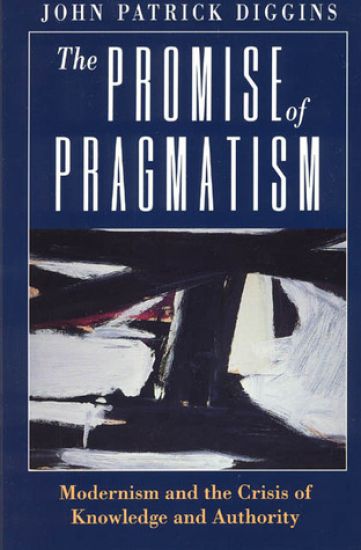
The Promise of Pragmatism

The Promise of Pragmatism

John Patrick Diggins

University of Chicago Press
1994
sidottu
In this critique of pragmatism and neopragmatism, an historian traces the attempts of thinkers from William James to Richard Rorty to find a response to the crisis of modernism. John Patrick Diggins analyzes the limitations of pragmatism from a historical perspective and asks whether America's one original contribution to the world of philosophy has actually fulfilled its promise.
The Promise of Pragmatism

The Promise of Pragmatism

John Patrick Diggins

University of Chicago Press
1995
nidottu
For much of the 20th century, pragmatism has held the dominant point of view in American politics, law, education and social thought in general. After suffering a brief eclipse in the post-World War II period, pragmatism has experienced a revival, especially in literary theory and such areas as poststructuralism and deconstruction. In this critique of pragmatism and neopragmatism, the author traces the attempts of thinkers from William James to Richard Rorty to find a response to the crisis of modernism. He analyzes the limitations of pragmatism from a historical perspective and asks whether America's one original contribution to the world of philosophy has actually fulfilled its promise.
Why Niebuhr Now?

Why Niebuhr Now?

John Patrick Diggins

University of Chicago Press
2011
sidottu
Barack Obama has called him 'one of my favorite philosophers'. John McCain wrote that he is 'a paragon of clarity about the costs of a good war'. Andrew Sullivan has said, 'We need Niebuhr now more than ever'. For a theologian who died in 1971, Reinhold Niebuhr is maintaining a remarkably high profile in the twenty-first century. In "Why Niebuhr Now?" acclaimed historian John Patrick Diggins tackles the complicated question of why, at a time of great uncertainty about America's proper role in the world, leading politicians and thinkers are turning to Niebuhr for answers. Diggins begins by clearly and carefully working through Niebuhr's theology, which focuses less on God's presence than his absence - and the ways that absence abets the all-too-human sin of pride. He then shows how that theology informed Niebuhr's worldview, leading him to be at the same time a strong opponent of fascism and communism and a leading advocate for humility and caution in foreign policy. Turning to the present, Diggins highlights what he argues is a misuse of Niebuhr's legacy on both the right and the left: while neoconservatives distort Niebuhr's arguments to support their call for an endless war on terror in the name of stopping evil, many liberal interventionists conveniently ignore Niebuhr's fundamental doubts about power. Ultimately, Niebuhr's greatest lesson is that, while it is our duty to struggle for good, we must at the same time be wary of hubris, remembering the limits of our understanding. The final work from a distinguished writer who spent his entire career reflecting on America's history and promise, "Why Niebuhr Now?" is a compact and perceptive book that will be the starting point for all future discussions of Niebuhr.
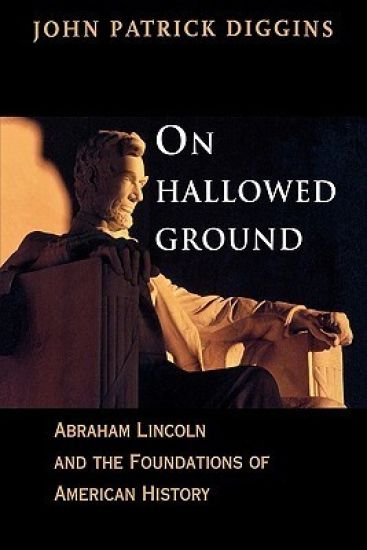
On Hallowed Ground

On Hallowed Ground

John Patrick Diggins

Yale University Press
2011
pokkari
In this provocative book, John Patrick Diggins, hailed by Alan Ryan in the New York Times as “one of the liveliest and most interesting of contemporary intellectual historians,” offers a sweeping reassessment of American history, emphasizing the foundational role of Abraham Lincoln’s moral and political theory. Distressed by the divisive impact of modern identity politics, Diggins argues persuasively that in the central tenets of Lincoln’s political faith--the redeeming value of labor and the rights to property and self-determination--we find the purest expression of the values that have united Americans and guided American history. With his characteristic breadth, Diggins ranges from James Madison to W. E. B. Du Bois to the movie Good Will Hunting in his examination of the often ambivalent ways in which Americans have imagined themselves and their nation. Convinced that contemporary historians have done America a grave disservice by emphasizing political divisions along the lines of class, race, and gender, Diggins points out that throughout American history there has been more that unites the American people than divides them.
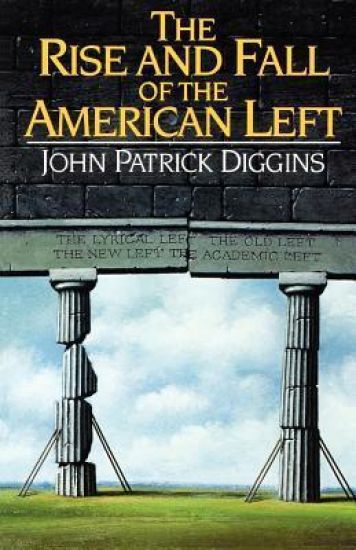
The Rise and Fall of the American Left

The Rise and Fall of the American Left

John Patrick Diggins

WW Norton Co
1993
nidottu
Born in America, the American Left was nurtured by intellectuals and activists who read Jefferson and Whitman before they read Marx or Mao. One lesson this brilliant history teaches us is that the fury of radical innocence and wounded idealism so peculiar to American intellectual history springs from native soil. Nor is the American Left a single phenomenon but four surprising eruptions throughout the past century: The Lyrical Left, of the First World War years; the Old Left, driven by the legacy of World War I, the promise of socialism, and the Great Depression; the New Left of the 1960s, combining a revolt against the banalities of middle-class life with civil rights fervor and protest against the war in Vietnam; and now contemporary Academic Left, seeking both to question the traditional values of the West and to embrace the causes of women and minorities.
Ronald Reagan

Ronald Reagan

John Patrick Diggins

WW Norton Co
2008
nidottu
In this bold, revisionist biography, distinguished historian John Patrick Diggins shows that Ronald Reagan, in his distrust of big government, his pursuit of libertarian ideals, and his negotiations with Gorbachev, was a far more active and sophisticated president than we previously knew. Affirming the fortieth president to be an exemplar of the truest conservative values, Diggins “identifies Reagan as the ‘Emersonian President,’ who believed that power is best when it resides in people, not government” (Library Journal).
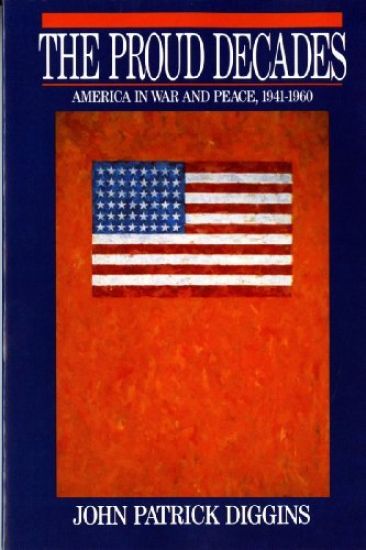
The Proud Decades

The Proud Decades

John Patrick Diggins

WW Norton Co
1989
pokkari
From Pearl Harbor to the election of John F. Kennedy, America witnessed--and caused--great change both at home and abroad. No two decades so reveal the heart of America as the 1940s and 1950s; no period has been as important in creating the conditions that govern our lives today.
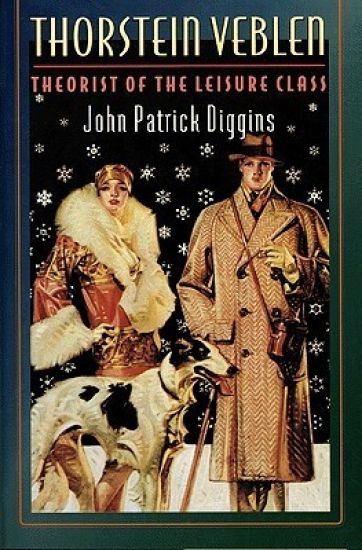
Thorstein Veblen

Thorstein Veblen

John Patrick Diggins

Princeton University Press
1999
pokkari
Fired by Stanford and the University of Chicago but recommended by his peers to the presidency of the American Economic Association, Thorstein Veblen remains a baffling figure in American intellectual history. In part because he was an eccentric who shunned publicity, he has also been one of our most neglected. Veblen is known to the general public only as coiner of the term "conspicuous consumption," and to scholars primarily as one of many social critics of the reform-minded Progressive Era. This important critical biography--originally published as The Bard of Savagery and now appearing in paperback for the first time--attempts both to unravel the riddles that surround his reputation and to assess his varied and important contributions to modern social theory.
Mussolini and Fascism

Mussolini and Fascism

John Patrick Diggins

Princeton University Press
2015
pokkari
Mussolini, in the thousand guises he projected and the press picked up, fascinated Americans in the 1920s and the early '30s. John Diggins' analysis of America's reaction to an ideological phenomenon abroad reveals, he proposes, the darker side of American political values and assumptions. Originally published in 1972. The Princeton Legacy Library uses the latest print-on-demand technology to again make available previously out-of-print books from the distinguished backlist of Princeton University Press. These editions preserve the original texts of these important books while presenting them in durable paperback and hardcover editions. The goal of the Princeton Legacy Library is to vastly increase access to the rich scholarly heritage found in the thousands of books published by Princeton University Press since its founding in 1905.
Mussolini and Fascism

Mussolini and Fascism

John Patrick Diggins

Princeton University Press
2016
sidottu
Mussolini, in the thousand guises he projected and the press picked up, fascinated Americans in the 1920s and the early '30s. John Diggins' analysis of America's reaction to an ideological phenomenon abroad reveals, he proposes, the darker side of American political values and assumptions. Originally published in 1972. The Princeton Legacy Library uses the latest print-on-demand technology to again make available previously out-of-print books from the distinguished backlist of Princeton University Press. These editions preserve the original texts of these important books while presenting them in durable paperback and hardcover editions. The goal of the Princeton Legacy Library is to vastly increase access to the rich scholarly heritage found in the thousands of books published by Princeton University Press since its founding in 1905.