Kirjojen hintavertailu. Mukana 11 699 587 kirjaa ja 12 kauppaa.

Kirjahaku

Etsi kirjoja tekijän nimen, kirjan nimen tai ISBN:n perusteella.

6 kirjaa tekijältä John Pendergast

Love's Labour's Lost

Love's Labour's Lost

John Pendergast

Greenwood Press
2001
sidottu
Love's Labour's Lost has had a puzzling history. Until the 1950s it was generally considered one of Shakespeare's earliest plays, and it was one of his most vilified until the 20th century. Perhaps more than any other Shakespearean play, it explores the power and limitations of language, and this blatant concern for language led many early critics to believe that it was the work of a playwright just learning his art. Because of its linguistic density, it is one of Shakespeare's most demanding plays, and this difficulty helps account for its initial unpopularity. But modern critics have begun to study the play in earnest and it is now one of Shakespeare's most popular works. This reference is a thorough introduction to the play's origins and legacy.The volume provides a full overview of all aspects of the play, from its genesis to modern productions, and scholarship. The book begins with a summary of the play's textual history, including the problems of dating it accurately. It then discusses the cultural, social, and ideological contexts that inform the drama and considers some of Shakespeare's plausible sources. The play's dramatic structure, including its language, is examined at length, along with its various themes. The reference then recounts its critical and scholarly reception, and a final chapter surveys the play's performance history. Chapters cite works for further reading, and the volume concludes with a selected bibliography of major studies.

Shakespeare's World: The Comedies

Shakespeare's World: The Comedies

John Pendergast

Greenwood Publishing Group Inc
2019
sidottu
With summaries, discussions, and excerpts from primary source documents, this book examines Shakespeare's world through careful consideration of the historical background of four of his comedies.Comedy was popular during the Renaissance, and it was also one of Shakespeare's specialties. The four plays discussed in this book, A Midsummer Night's Dream, The Merchant of Venice, Twelfth Night and The Tempest, span Shakespeare's career and remind us that Shakespeare, more than any of his contemporaries, explored the possibilities of comedy, consistently developing new approaches to the genre. Shakespeare was a fairly traditional playwright, well aware of the long tradition of comedy, which dates back to the Greeks and Romans. This book places Shakespeare's comedies in their historical context. It includes dedicated chapters on each of the four comedies, with each chapter providing a plot summary, a discussion of the play's historical background and significance, and excerpts from primary source documents related to the play. An introduction surveys the historical background of the plays, while a timeline chronicles key events that influenced them. Suggestions for further reading direct readers to additional sources of information.
Joan of Arc on the Stage and Her Sisters in Sublime Sanctity

Joan of Arc on the Stage and Her Sisters in Sublime Sanctity

John Pendergast

Springer Nature Switzerland AG
2019
sidottu
This book examines the figure of Joan of Arc as depicted in stage works of the nineteenth and twentieth centuries, especially those based on or related to Schiller’s 1801 romantic tragedy, Die Jungfrau von Orleans (The Maid of Orleans). The author elucidates Schiller’s appropriation of themes from Euripides’s Iphigenia plays, chiefly the quality of “sublime sanctity,” which transforms Joan’s image from a victim of fate to a warrior-prophet who changes history through sheer force of will. Finding the best-known works of his time about her – Voltaire’s La pucelle d’Orléans and Shakespeare’s Henry VI, part I – utterly dissatisfying, Schiller set out to replace them. Die Jungfrau von Orleans was a smashing success and inspired various subsequent treatments, including Verdi’s opera Giovanna d’Arco and a translation by the father of Russian Romanticism, Vasily Zhukovsky, on which Tchaikovsky based his opera Orleanskaya deva (The Maid of Orleans). In turn, the book’s final chapter examines Shaw’s Saint Joan and finds that the Irish playwright’s vociferous complaints about Schiller’s “romantic flapdoodle” belie a surprising affinity for Schiller’s approach.
Joan of Arc on the Stage and Her Sisters in Sublime Sanctity

Joan of Arc on the Stage and Her Sisters in Sublime Sanctity

John Pendergast

Springer Nature Switzerland AG
2020
nidottu
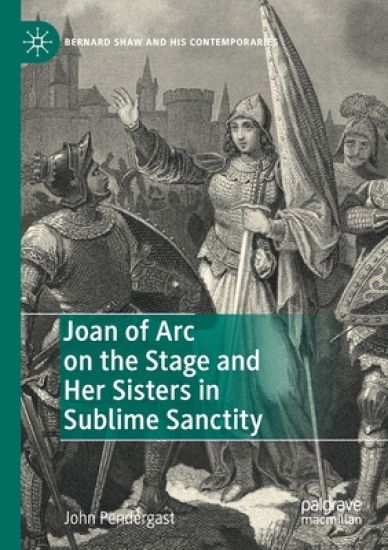
This book examines the figure of Joan of Arc as depicted in stage works of the nineteenth and twentieth centuries, especially those based on or related to Schiller’s 1801 romantic tragedy, Die Jungfrau von Orleans (The Maid of Orleans). The author elucidates Schiller’s appropriation of themes from Euripides’s Iphigenia plays, chiefly the quality of “sublime sanctity,” which transforms Joan’s image from a victim of fate to a warrior-prophet who changes history through sheer force of will. Finding the best-known works of his time about her – Voltaire’s La pucelle d’Orléans and Shakespeare’s Henry VI, part I – utterly dissatisfying, Schiller set out to replace them. Die Jungfrau von Orleans was a smashing success and inspired various subsequent treatments, including Verdi’s opera Giovanna d’Arco and a translation by the father of Russian Romanticism, Vasily Zhukovsky, on which Tchaikovsky based his opera Orleanskaya deva (The Maid of Orleans). In turn, the book’s final chapter examines Shaw’s Saint Joan and finds that the Irish playwright’s vociferous complaints about Schiller’s “romantic flapdoodle” belie a surprising affinity for Schiller’s approach.