Kirjojen hintavertailu. Mukana 11 717 486 kirjaa ja 12 kauppaa.

Kirjahaku

Etsi kirjoja tekijän nimen, kirjan nimen tai ISBN:n perusteella.

14 kirjaa tekijältä John Prados

The US Special Forces

The US Special Forces

John Prados

Oxford University Press Inc
2015
sidottu
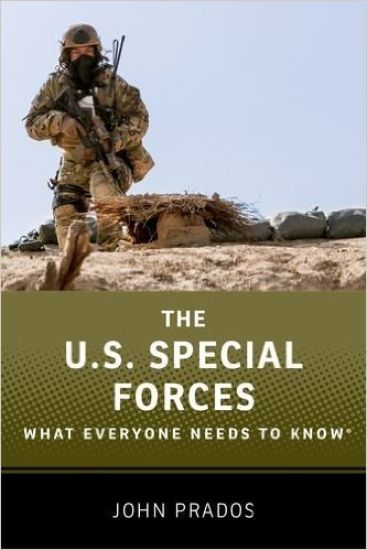
The assassination of Osama bin Laden by SEAL Team 6 in May 2011 will certainly figure among the greatest achievements of US Special Forces. After nearly ten years of searching, they descended into his Pakistan compound in the middle of the night, killed him, and secreted the body back into Afghanistan. Interest in these forces had always been high, but it spiked to new levels following this success. There was a larger lesson here too. For serious jobs, the president invariably turns to the US Special Forces: the SEALs, Delta Force, the Green Berets, and the USAF's Special Tactics squad. Given that secretive grab-and-snatch operations in remote locales characterize contemporary warfare as much as traditional firefights, the Special Forces now fill a central role in American military strategy and tactics. Not surprisingly, the daring and secretive nature of these commando operations has generated a great deal of interest. The American public has an overwhelmingly favorable view of the forces, and nations around the world recognize them as the most capable fighting units: the tip of the American spear, so to speak. But how much do we know about them? What are their origins? What function do they fill in the larger military structure? Who can become a member? What do trainees have to go through? What sort of missions do Special Forces perform, and what are they expected to accomplish? Despite their importance, much of what they do remains a mystery because their operations are clandestine and the sources elusive. In The US Special Forces: What Everyone Needs to Know, eminent scholar John Prados brings his deep expertise to the subject and provides a pithy primer on the various components of America's special forces. The US military has long employed Special Forces in some form or another, but it was in the Cold War when they assumed their present form, and in Vietnam where they achieved critical mass. Interestingly, the Special Forces suffered a rapid decline in numbers after that conflict despite the fact that the United States had already identified terrorism as a growing security threat. The revival of Special Forces began under the Reagan administration. After 9/11 they experienced explosive growth, and are now integral to all US military missions. Prados traces how this happened and examines the various roles the Special Forces now play. They have taken over many functions of the regular military, a trend that Prados does not expect will end any time soon. This will be a definitive primer on the elite units in the most powerful military the world has ever known.
The US Special Forces

The US Special Forces

John Prados

Oxford University Press Inc
2015
nidottu
The assassination of Osama bin Laden by SEAL Team 6 in May 2011 will certainly figure among the greatest achievements of US Special Forces. After nearly ten years of searching, they descended into his Pakistan compound in the middle of the night, killed him, and secreted the body back into Afghanistan. Interest in these forces had always been high, but it spiked to new levels following this success. There was a larger lesson here too. For serious jobs, the president invariably turns to the US Special Forces: the SEALs, Delta Force, the Green Berets, and the USAF's Special Tactics squad. Given that secretive grab-and-snatch operations in remote locales characterize contemporary warfare as much as traditional firefights, the Special Forces now fill a central role in American military strategy and tactics. Not surprisingly, the daring and secretive nature of these commando operations has generated a great deal of interest. The American public has an overwhelmingly favorable view of the forces, and nations around the world recognize them as the most capable fighting units: the tip of the American spear, so to speak. But how much do we know about them? What are their origins? What function do they fill in the larger military structure? Who can become a member? What do trainees have to go through? What sort of missions do Special Forces perform, and what are they expected to accomplish? Despite their importance, much of what they do remains a mystery because their operations are clandestine and the sources elusive. In The US Special Forces: What Everyone Needs to Know, eminent scholar John Prados brings his deep expertise to the subject and provides a pithy primer on the various components of America's special forces. The US military has long employed Special Forces in some form or another, but it was in the Cold War when they assumed their present form, and in Vietnam where they achieved critical mass. Interestingly, the Special Forces suffered a rapid decline in numbers after that conflict despite the fact that the United States had already identified terrorism as a growing security threat. The revival of Special Forces began under the Reagan administration. After 9/11 they experienced explosive growth, and are now integral to all US military missions. Prados traces how this happened and examines the various roles the Special Forces now play. They have taken over many functions of the regular military, a trend that Prados does not expect will end any time soon. This will be a definitive primer on the elite units in the most powerful military the world has ever known.
The Family Jewels

The Family Jewels

John Prados

University of Texas Press
2014
nidottu
In December 1974, a front-page story in the New York Times revealed the explosive details of illegal domestic spying by the Central Intelligence Agency. This included political surveillance, eavesdropping, detention, and interrogation. The revelation of illegal activities over many years shocked the American public and led to investigations of the CIA by a presidential commission and committees in both houses of Congress, which found evidence of more abuse, even CIA plans for assassinations. Investigators and the public soon discovered that the CIA abuses were described in a top-secret document agency insiders dubbed the “Family Jewels.” That document became ground zero for a political firestorm that lasted more than a year. The “Family Jewels” debacle ultimately brought about greater congressional oversight of the CIA, but excesses such as those uncovered in the 1970s continue to come to light.The Family Jewels probes the deepest secrets of the CIA and its attempts to avoid scrutiny. John Prados recounts the secret operations that constituted “Jewels” and investigators’ pursuit of the truth, plus the strenuous efforts-by the agency, the executive branch, and even presidents-to evade accountability. Prados reveals how Vice President Richard Cheney played a leading role in intelligence abuses and demonstrates that every type of “Jewel” has been replicated since, especially during the post-9/11 war on terror. The Family Jewels masterfully illuminates why these abuses are endemic to spying, shows that proper relationships are vital to control of intelligence, and advocates a system for handling “Family Jewels” crises in a democratic society.With a new epilogue that discusses former CIA employee Edward Snowden’s revelation of massive covert surveillance by the NSA, this powerful accounting of intelligence abuses committed by the CIA from the Cold War through the war on terror reveals why such abuses and attempts to conceal them are endemic to spying and proposes how a democratic nation can rein in its spymasters.
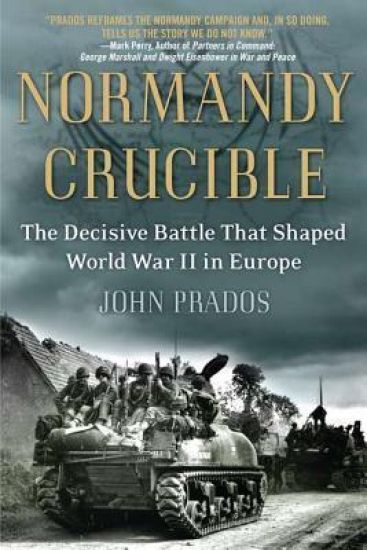
Normandy Crucible: The Decisive Battle That Shaped World War II in Europe
The Battle of Normandy was the greatest offensive campaign the world had ever seen. It was also the crucible of combat tactics and logistic techniques that would decide the outcome of World War II...The Battle of Normandy began on D-Day. June 6, 1944--the day that the Allied forces launched the great crusade to free Europe from the iron grip of Nazi Germany. Tightly constricted hedgerow country and bitter German resistance held the Allied advance to a crawl--until they broke through and trapped the Nazi armies. Yet within weeks of this stunning disaster, the Germans smashed the most dangerous Allied offensive yet.How was this possible? Noted author John Prados answers this vexing question with an account that reframes the Normandy breakout. Shifting between battle action and command decisions on both sides, Normandy Crucible lucidly illustrates how this campaign molded the climactic battle for Europe.
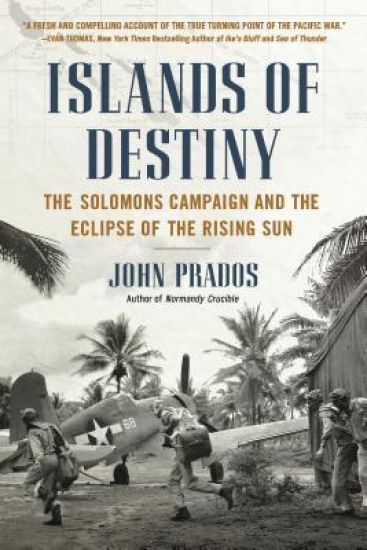
Islands of Destiny

Islands of Destiny

John Prados

E P Dutton Co Inc
2013
pokkari
The Battle of Midway is traditionally held as the point when Allied forces gained advantage over the Japanese. In Islands of Destiny, acclaimed historian and military intelligence expert John Prados points out that the Japanese forces quickly regained strength after Midway and continued their assault undaunted. Taking this surprising fact as the start of his inquiry, he began to investigate how and when the Pacific tide turned in the Allies' favor. Using archives of WWII intelligence reports from both sides, Prados offers up a compelling reassessment of the true turning in the Pacific: not Midway, but the fight for the Solomon Islands. Combat in the Solomons saw a series of surface naval battles, including one of the key battleship-versus-battleship actions of the war; two major carrier actions; daily air duels, including the aerial ambush in which perished the famous Japanese naval commander Admiral Yamamoto Isoroku; and many other hair-raising exploits. Commencing with the Allied invasion of Guadalcanal, Prados shows how and why the Allies beat Japan on the sea, in the air, and in the jungles.
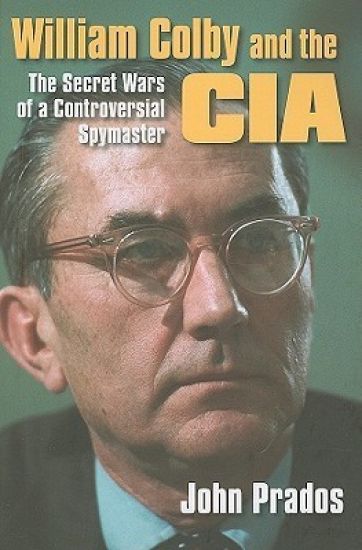
William Colby and the CIA

William Colby and the CIA

John Prados

University Press of Kansas
2009
nidottu
'It is surprising that no one previous to John Prados attempted a biography of quintessential cold warrior William Colby, because his story is in many ways also the story of the CIA. From Italy to Vietnam, to the military coup in Indonesia, to Watergate, the prosecution of Richard Helms, investigations of CIA assassination plots, and the drugging and surveillance of unwitting Americans, Colby was there, on the ground or deeply involved at headquarters' - ""The Guardian"". William E. Colby was one of the most enigmatic figures of the Cold War and a central player in the operations of the Central Intelligence Agency. While publicly appearing as a calm bureaucrat, behind the scenes Colby helped orchestrate some of CIA's most controversial operations. His mysterious death even added to the aura. In the wake of new questions relating to CIA activities since 9/11 - which John Prados discusses in his new preface - Colby's story provides crucial lessons for a nation that still struggles to reconcile intelligence methods with democratic principles. Prados tracks Colby's life and career from early years in the OSS to his tumultuous tenure as Director of Central Intelligence in the 1970s. Reviled by many outside the CIA for his role in Vietnam - and inside it for his cooperation with probes of the agency - Colby was cast as a scapegoat by the Ford White House during the Church and Pike congressional investigations. In addition, Prados offers fresh insights and new perspectives on Colby's involvement in the notorious Phoenix program in Vietnam and in the bloody Indonesian coup of 1965 that overthrew President Sukarno and brought General Suharto to power, as well as on the CIA's role in the 1963 assassination of President Ngo Dinh Diem of South Vietnam and on the actions of high-level CIA officials during the final demise of South Vietnam in 1975. A masterful study of a master spy, ""William Colby and the CIA"" also offers a vital and timely history of the inner workings of 'the Company' for which he worked. Originally published in a cloth edition under the title ""Lost Crusader"" and retitled for this first paperback edition, ""William Colby and the CIA"" explores dilemmas of intelligence that are of renewed importance today.
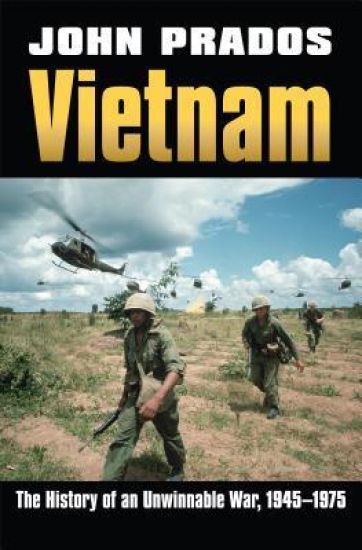
Vietnam

Vietnam

John Prados

University Press of Kansas
2009
nidottu
The Vietnam war continues to be the focus of intense controversy. While most people—liberals, conservatives, Democrats, Republicans, historians, pundits, and citizens alike—agree that the United States did not win the war, a vocal minority argue the opposite or debate why victory never came, attributing the quagmire to everything from domestic politics to the press. The military never lost a battle; how then did it not win the war? Stepping back from this overheated fray, bestselling author John Prados takes a fresh look at both the war and the debates about it to produce a much-needed and long-overdue reassessment of one of our nation’s most tragic episodes. Drawing upon several decades of research—including recently declassified documents, newly available presidential tapes, and a wide range of Vietnamese and other international sources—Prados’s magisterial account weaves together multiple perspectives across an epic-sized canvas where domestic politics, ideologies, nations, and militaries all collide. Prados patiently pieces back together the events and moments, from the end of World War II until our dispiriting departure from Vietnam in 1975, that reveal a war that now appears to have been truly unwinnable—due to opportunities lost, missed, ignored, or refused. He shows how—from the Truman through the Eisenhower, Kennedy, Johnson, and Nixon administrations—American leaders consistently ignored or misunderstood the realities in Southeast Asia and passed up every opportunity to avoid war in the first place or avoid becoming ever more mired in it after it began. Highlighting especially Ike’s seminal and long-lasting influence on our Vietnam policy, Prados demonstrates how and why our range of choices narrowed with each passing year, while our decision-making continued to be distorted by Cold War politics and fundamental misperceptions about the culture, psychology, goals, and abilities of both our enemies and our allies in Vietnam. By turns engaging narrative history, compelling analytic treatise, and moving personal account, Prados’s magnum opus challenges previous authors and should rightfully take its place as the most comprehensive, up-to-date, and accurate one-volume account of a war that—judging by the frequent analogies to the current war in Iraq—has not yet really ended for any of us.
Ghosts of Langley

Ghosts of Langley

John Prados

AMBERLEY PUBLISHING
2021
pokkari
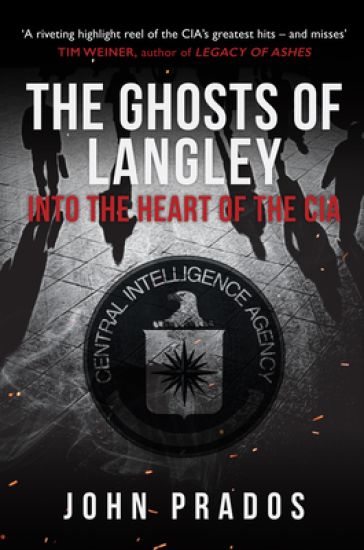
New trade paperback - The Ghosts of Langley is the story of spymasters, their minions, and the ways in which the Central Intelligence Agency changed the world we see. This is a story of determined men and women who believed in their mission, followed White House orders, and sometimes made them up.
Presidents' Secret Wars

Presidents' Secret Wars

John Prados

Ivan R Dee, Inc
1996
pokkari
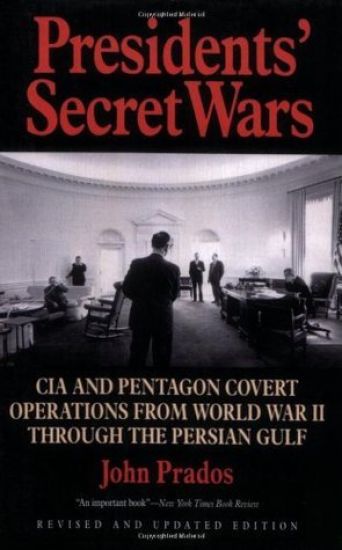
In this newly revised and updated edition of his essential work, John Prados adds his concluding findings on U.S. covert operations in Angola, Afghanistan, Nicaragua, and the Persian Gulf. Acclaimed as a landmark book about U.S. intelligence agencies in the postwar era, Presidents' Secret Wars describes the secret warfare mounted by the president, the CIA, and the Pentagon—operations aimed at altering the destinies of nations and the course of global politics. Mr. Prados uses many newly declassified documents to open a vital window on this most secret aspect of American foreign policy. "A worthy and informative book"—Washington Post. "An important book....Prados's recounting of the often neglected early days of the C.I.A. and its covert activities is especially enlightening."—New York Times Book Review. “For those concerned with the study of intelligence, Presidents' Secret Wars will be highly useful because Dr. Prados has done serious archival research....This volume moves the study of covert operations to a higher and more sophisticated plane"—Intelligence and National Security.
Safe for Democracy

Safe for Democracy

John Prados

Ivan R Dee, Inc
2009
pokkari
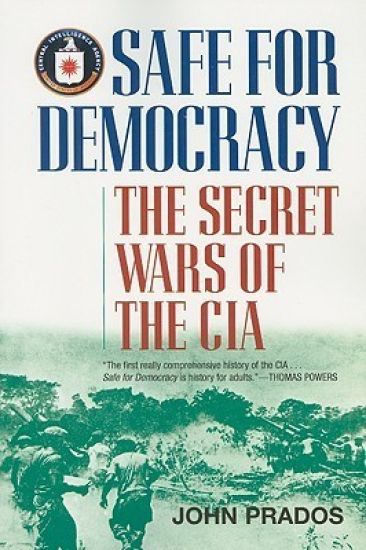
From its founding in the aftermath of World War II, the Central Intelligence Agency has been discovered in the midst of some of the most crucial—and most embarrassing—-episodes in United States relations with the world. Richard Nixon's 1969 presidential order that declared CIA covert operations necessary to the attainment of American foreign policy goals was an acknowledgment that secret warfare tools had a much wider application than just the cold war conflict with the Soviet Union. The question of what, exactly, these operations have contributed to U.S. policy has long been neglected in the rush to accuse the CIA of being a "rogue elephant" or merely listing its nefarious deeds. Safe for Democracy for the first time places the story of the CIA's covert operations squarely in the context of America's global quest for democratic values and institutions. National security historian John Prados offers a comprehensive history of the CIA's secret wars that is as close to a definitive account as is possible today. He draws on three decades of research to illuminate the men and women of the intelligence establishment, their resources and techniques, their triumphs and failures. In a dramatic and revealing narrative, Safe for Democracy not only relates the inside stories of covert operations but examines in meticulous detail the efforts of presidents and Congress to control the CIA and the specific choices made in the agency's secret wars. Along the way Mr. Prados offers eye-opening accounts of the covert actions themselves, from radically revised interpretations of classic operations like Iran, Guatemala, Chile, and the Bay of Pigs; to lesser-known projects like Tibet and Angola; to virtually unknown tales of the CIA in Guyana and Ghana. He supplies full accounts of Reagan-era operations in Nicaragua and Afghanistan, and brings the story up to date with accounts of more recent activities in Somalia, Bosnia, and Iraq, all the while keeping American foreign policy goals in view. Safe for Democracy
How the Cold War Ended

How the Cold War Ended

John Prados

Potomac Books Inc
2010
sidottu
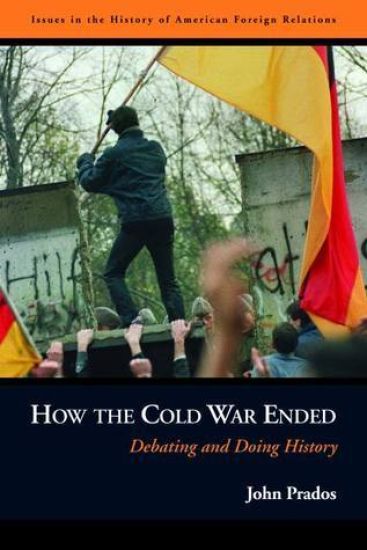
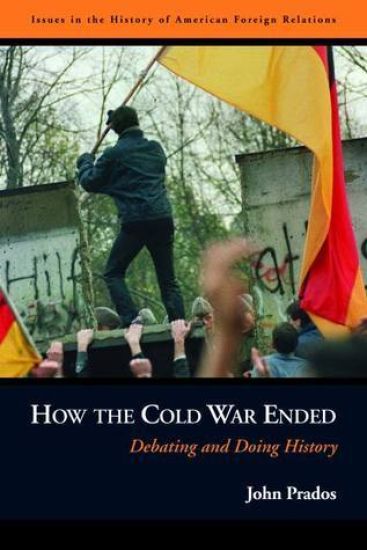
The Cold War continues to shape international relations almost twenty years after being acknowledged as the central event of the last half of the twentieth century. Interpretations of how it ended thus remain crucial to an accurate understanding of global events and foreign policy. The reasons for the Cold War's conclusion, and the timing of its ending, are disputed to this day. In this concise introduction to the Cold War and its enduring legacy, John Prados recognizes the debate between those who argue the United States was the key player in bringing it to a close and those who maintain that American actions were secondary factors. Like a crime scene investigator meticulously dissecting evidence, he applies a succession of different methods of historical analysis to illuminate the key cataclysmic events of the 1980s and early 1990s from a range of perspectives. He also incorporates evidence from European and Soviet intelligence sources into the study. The result is a stunning narrative that redefines the era, embraces debate, and deconstructs history, providing a coherent explanation for the upheavals that ended the conflict. How the Cold War Ended also provides an in-depth guide to conducting historical inquiries: how to choose a subject, how to frame a narrative, and how to conduct research and draw conclusions. Prados does this for a variety of methods of historical analysis, furnishing a how-to guide for "doing history" even as it explores a crucial case study.
How the Cold War Ended

How the Cold War Ended

John Prados

Potomac Books Inc
2010
pokkari
The Cold War continues to shape international relations almost twenty years after being acknowledged as the central event of the last half of the twentieth century. Interpretations of how it ended thus remain crucial to an accurate understanding of global events and foreign policy. The reasons for the Cold War's conclusion, and the timing of its ending, are disputed to this day. In this concise introduction to the Cold War and its enduring legacy, John Prados recognizes the debate between those who argue the United States was the key player in bringing it to a close and those who maintain that American actions were secondary factors. Like a crime scene investigator meticulously dissecting evidence, he applies a succession of different methods of historical analysis to illuminate the key cataclysmic events of the 1980s and early 1990s from a range of perspectives. He also incorporates evidence from European and Soviet intelligence sources into the study. The result is a stunning narrative that redefines the era, embraces debate, and deconstructs history, providing a coherent explanation for the upheavals that ended the conflict. How the Cold War Ended also provides an in-depth guide to conducting historical inquiries: how to choose a subject, how to frame a narrative, and how to conduct research and draw conclusions. Prados does this for a variety of methods of historical analysis, furnishing a how-to guide for "doing history" even as it explores a crucial case study.
The Ghosts of Langley

The Ghosts of Langley

John Prados

The New Press
2017
sidottu
"The Ghosts of Langley offers a detail-rich, often relentless litany of CIA scandals and mini-scandals. . . [and a] prayer that the CIA learn from and publicly admit its mistakes, rather than perpetuate them in an atmosphere of denial and impunity."—The Washington PostFrom the writer Kai Bird calls a "wonderfully accessible historian," the first major history of the CIA in a decade, published to tie in with the seventieth anniversary of the agency's foundingDuring his first visit to Langley, the CIA's Virginia headquarters, President Donald Trump told those gathered, "I am so behind you . . . there's nobody I respect more, " hinting that he was going to put more CIA operations officers into the field so the CIA could smite its enemies ever more forcefully. But while Trump was making these promises, behind the scenes the CIA was still reeling from blowback from the very tactics that Trump touted—including secret overseas prisons and torture—that it had resorted to a decade earlier during President George W. Bush's war on terror. Under the latest regime it seemed that the CIA was doomed to repeat its past failures rather than put its house in order. The Ghosts of Langley is a provocative and panoramic new history of the Central Intelligence Agency that relates the agency's current predicament to its founding and earlier years, telling the story of the agency through the eyes of key figures in CIA history, including some of its most troubling covert actions around the world. It reveals how the agency, over seven decades, has resisted government accountability, going rogue in a series of highly questionable ventures that reach their apotheosis with the secret overseas prisons and torture programs of the war on terror. Drawing on mountains of newly declassified documents, the celebrated historian of national intelligence John Prados throws fresh light on classic agency operations from Poland to Hungary, from Indonesia to Iran-Contra, and from the Bay of Pigs to Guantánamo Bay. The halls of Langley, Prados persuasively argues, echo with the footsteps of past spymasters, to the extent that it resembles a haunted house. Indeed, every day that the militarization of the CIA increases, the agency drifts further away from classic arts of espionage and intelligence analysis—and its original mission, while pushing dangerously beyond accountability. The Ghosts of Langley will be essential reading for anyone who cares about the next phase of American history—and the CIA's evolution—as its past informs its future and a president of impulsive character prods the agency toward new scandals and failures.
The Hidden History of the Vietnam War

The Hidden History of the Vietnam War

John Prados

Ivan R Dee, Inc
1998
pokkari
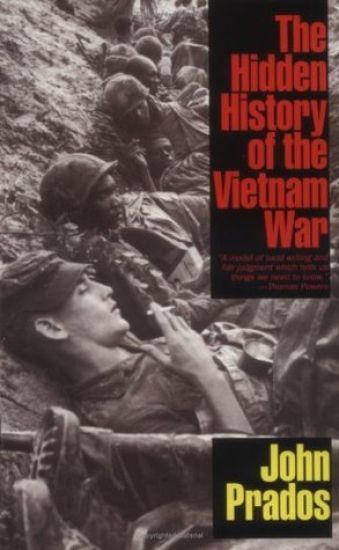
This careful examination of key strategies, events, and personalities in the conflict sheds fresh light on the high points of the Vietnam experience and punctures the enduring mythologies of the war. A model of lucid writing and fair judgement. —Thomas Powers