Kirjojen hintavertailu. Mukana 12 390 323 kirjaa ja 12 kauppaa.

Kirjahaku

Etsi kirjoja tekijän nimen, kirjan nimen tai ISBN:n perusteella.

6 kirjaa tekijältä John R. Fanchi

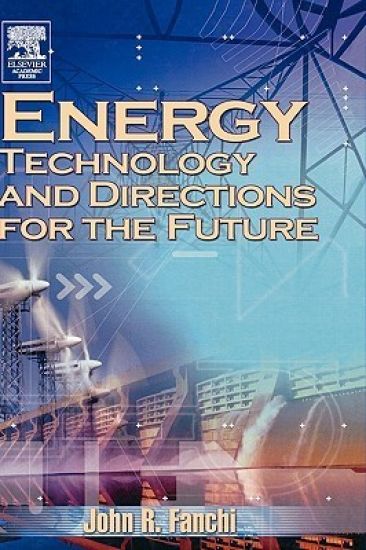
Energy Technology and Directions for the Future

Energy Technology and Directions for the Future

John R. Fanchi

Academic Press Inc
2004
sidottu
Energy Technology and Directions for the Future presents the fundamentals of energy for scientists and engineers. It is a survey of energy sources that will be available for use in the 21st century energy mix. The reader will learn about the history and science of several energy sources as well as the technology and social significance of energy. Themes in the book include thermodynamics, electricity distribution, geothermal energy, fossil fuels, solar energy, nuclear energy, alternate energy (wind, water, biomass), energy and society, energy and the environment, sustainable development, the hydrogen economy, and energy forecasting. The approach is designed to present an intellectually rich and interesting text that is also practical.This is accomplished by introducing basic concepts in the context of energy technologies and, where appropriate, in historical context. Scientific concepts are used to solve concrete engineering problems. The technical level of presentation presumes that readers have completed college level physics with calculus and mathematics through calculus of several variables. The selection of topics is designed to provide the reader with an introduction to the language, concepts and techniques used in all major energy components that are expected to contribute to the 21st century energy mix. Future energy professionals will need to understand the origin and interactions of these energy components to thrive in an energy industry that is evolving from an industry dominated by fossil fuels to an industry working with many energy sources.
Principles of Applied Reservoir Simulation

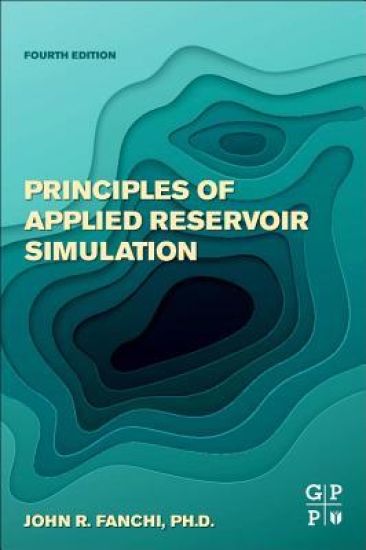
Principles of Applied Reservoir Simulation

John R. Fanchi

Gulf Professional Publishing
2018
nidottu
Reservoir engineers today need to acquire more complex reservoir management and modeling skills. Principles of Applied Reservoir Simulation, Fourth Edition, continues to provide the fundamentals on these topics for both early and seasoned career engineers and researchers. Enhanced with more practicality and with a focus on more modern reservoir simulation workflows, this vital reference includes applications to not only traditional oil and gas reservoir problems but specialized applications in geomechanics, coal gas modelling, and unconventional resources. Strengthened with complementary software from the author to immediately apply to the engineer’s projects, Principles of Applied Reservoir Simulation, Fourth Edition, delivers knowledge critical for today’s basic and advanced reservoir and asset management.
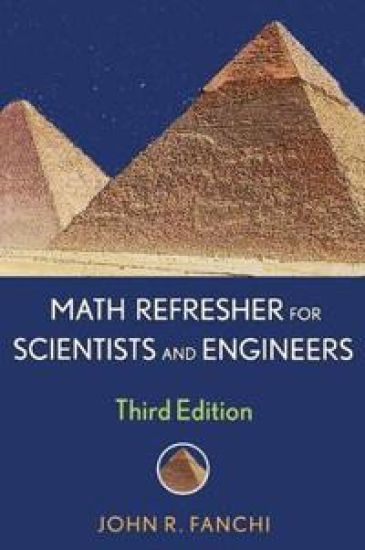
Math Refresher for Scientists and Engineers

Math Refresher for Scientists and Engineers

John R. Fanchi

John Wiley Sons Inc
2006
nidottu
Expanded coverage of essential math, including integral equations, calculus of variations, tensor analysis, and special integrals Math Refresher for Scientists and Engineers, Third Edition is specifically designed as a self-study guide to help busy professionals and students in science and engineering quickly refresh and improve the math skills needed to perform their jobs and advance their careers. The book focuses on practical applications and exercises that readers are likely to face in their professional environments. All the basic math skills needed to manage contemporary technology problems are addressed and presented in a clear, lucid style that readers familiar with previous editions have come to appreciate and value. The book begins with basic concepts in college algebra and trigonometry, and then moves on to explore more advanced concepts in calculus, linear algebra (including matrices), differential equations, probability, and statistics. This Third Edition has been greatly expanded to reflect the needs of today's professionals. New material includes: * A chapter on integral equations * A chapter on calculus of variations * A chapter on tensor analysis * A section on time series * A section on partial fractions * Many new exercises and solutions Collectively, the chapters teach most of the basic math skills needed by scientists and engineers. The wide range of topics covered in one title is unique. All chapters provide a review of important principles and methods. Examples, exercises, and applications are used liberally throughout to engage the readers and assist them in applying their new math skills to actual problems. Solutions to exercises are provided in an appendix. Whether to brush up on professional skills or prepare for exams, readers will find this self-study guide enables them to quickly master the math they need. It can additionally be used as a textbook for advanced-level undergraduates in physics and engineering.
Parametrized Relativistic Quantum Theory
Over the past five de-::ades researchers have sought to develop a new framework that would resolve the anomalies attributable to a patchwork formulation of relativistic quantum mechanics. This book chronicles the development of a new paradigm for describing relativistic quantum phenomena. What makes the new paradigm unique is its inclusion of a physically measurable, invariant evolution parameter. The resulting theory has been sufficiently well developed in the refereed literature that it is now possible to present a synthesis of its ideas and techniques. My synthesis is intended to encourage and enhance future research, and is presented in six parts. The environment within which the conventional paradigm exists is described in the Introduction. Part I eases the mainstream reader into the ideas of the new paradigm by providing the reader with a discussion that should look very familiar, but contains subtle nuances. Indeed, I try to provide the mainstream reader with familiar "landmarks" throughout the text. This is possible because the new paradigm contains the conventional paradigm as a subset. The foundation of the new paradigm is presented in Part II, fol!owed by numerous applications in the remaining three parts. The reader should notice that the new paradigm handles not only the broad class of problems typically dealt with in conventional relativistic quantum theory, but also contains fertile research areas for both experimentalists and theorists. To avoid developing a theoretical framework without physical validity, numerous comparisons between theory and experiment are provided, and several predictions are made.
Parametrized Relativistic Quantum Theory
Over the past five de-::ades researchers have sought to develop a new framework that would resolve the anomalies attributable to a patchwork formulation of relativistic quantum mechanics. This book chronicles the development of a new paradigm for describing relativistic quantum phenomena. What makes the new paradigm unique is its inclusion of a physically measurable, invariant evolution parameter. The resulting theory has been sufficiently well developed in the refereed literature that it is now possible to present a synthesis of its ideas and techniques. My synthesis is intended to encourage and enhance future research, and is presented in six parts. The environment within which the conventional paradigm exists is described in the Introduction. Part I eases the mainstream reader into the ideas of the new paradigm by providing the reader with a discussion that should look very familiar, but contains subtle nuances. Indeed, I try to provide the mainstream reader with familiar "landmarks" throughout the text. This is possible because the new paradigm contains the conventional paradigm as a subset. The foundation of the new paradigm is presented in Part II, fol!owed by numerous applications in the remaining three parts. The reader should notice that the new paradigm handles not only the broad class of problems typically dealt with in conventional relativistic quantum theory, but also contains fertile research areas for both experimentalists and theorists. To avoid developing a theoretical framework without physical validity, numerous comparisons between theory and experiment are provided, and several predictions are made.
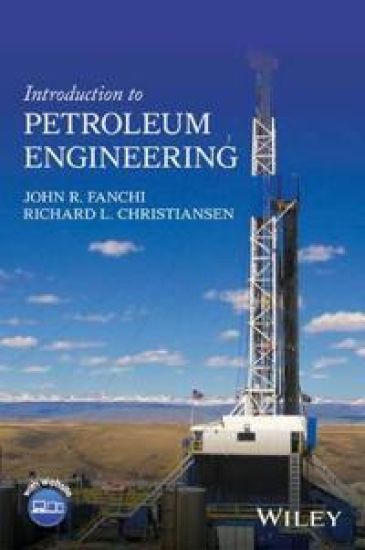
Introduction to Petroleum Engineering

Introduction to Petroleum Engineering

John R. Fanchi; Richard L. Christiansen

Wiley-Blackwell
2016
sidottu
Presents key concepts and terminology for a multidisciplinary range of topics in petroleum engineering Places oil and gas production in the global energy contextIntroduces all of the key concepts that are needed to understand oil and gas production from exploration through abandonmentReviews fundamental terminology and concepts from geology, geophysics, petrophysics, drilling, production and reservoir engineeringIncludes many worked practical examples within each chapter and exercises at the end of each chapter highlight and reinforce material in the chapterIncludes a solutions manual for academic adopters