Kirjojen hintavertailu. Mukana 12 016 292 kirjaa ja 12 kauppaa.

Kirjahaku

Etsi kirjoja tekijän nimen, kirjan nimen tai ISBN:n perusteella.

6 kirjaa tekijältä John R. Harris

Industrial Espionage and Technology Transfer

Industrial Espionage and Technology Transfer

John R. Harris

Ashgate Publishing Limited
2000
nidottu
Britain and France were the leading industrial nations in 18th-century Europe. This book examines the rivalry which existed between the two nations and the methods used by France to obtain the skilled manpower and technology which had given Britain the edge - particularly in the new coal-based technologies. Despite the British Act of 1719 which outlawed industrial espionage and technology transfer, France continued to bring key industrial workers from Britain and to acquire British machinery and production methods. Drawing on a mass of unpublished archival material, this book investigates the nature and application of British laws and the involvement of some major British industrialists in these issues, and discusses the extent to which French espionage had any real success. In the process it presents an in-depth understanding of 18th-century economies, and the cultures and bureaucracies which were so important in shaping economic life. Above all, the late John Harris saw the history of industrial espionage as ’one means of restoring the thoughts and activities of human beings to the centre stage of industrial history’. These are the stories of individuals - Holkers, Trudaines, Wilkinsons, or Milnes - and their impact on the world.
Returning North with the Spring

Returning North with the Spring

John R. Harris

University Press of Florida
2016
sidottu
At winter’s end in 1947, driven by the devastating loss of a son killed in World War II, naturalist Edwin Way Teale followed the dawning spring season northward in an amazing 17,000 mile odyssey from the Everglades to Maine. He wrote about the adventure in North with the Spring. Its sequel Wandering Through Winter won the Pulitzer Prize.Retracing Teale’s route, writer John Harris reveals a vastly changed natural world. In Returning North with the Spring, he stops at the very places where Teale once stood, trekking through the Okefenokee wetland, the Great Smoky Mountains, the Great Dismal Swamp, the New Jersey Pine Barrens, and Cape Cod. He is stunned to see how climate change, invasive species, and other factors have affected the landscapes and wildlife. Yet he also discovers that many of the sites Teale described have been newly “rewilded” or permanently protected by the government. Homage to the past, report on the present, glimpse into the future—this book honors what has been lost in the years since Teale’s famous journey and finds hope in the small tenacities of nature.
Industrial Espionage and Technology Transfer
Britain and France were the leading industrial nations in 18th-century Europe. This book examines the rivalry which existed between the two nations and the methods used by France to obtain the skilled manpower and technology which had given Britain the edge - particularly in the new coal-based technologies. Despite the British Act of 1719 which outlawed industrial espionage and technology transfer, France continued to bring key industrial workers from Britain and to acquire British machinery and production methods. Drawing on a mass of unpublished archival material, this book investigates the nature and application of British laws and the involvement of some major British industrialists in these issues, and discusses the extent to which French espionage had any real success. In the process it presents an in-depth understanding of 18th-century economies, and the cultures and bureaucracies which were so important in shaping economic life. Above all, the late John Harris saw the history of industrial espionage as "one means of restoring the thoughts and activities of human beings to the centre stage of industrial history". These are the stories of individuals - Holkers, Trudaines, Wilkinsons, or Milnes - and their impact on the world.
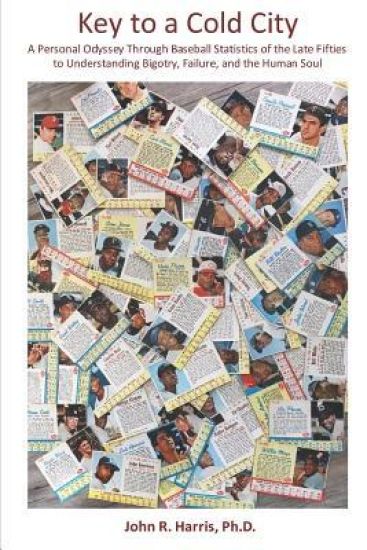
Key to a Cold City: A Personal Odyssey Through Baseball Statistics of the Late Fifties to Understanding Bigotry, Failure, and the Human So
Any devout baseball enthusiast will appreciate the creative metrics that Dr. Harris has applied to the careers of young black ballplayers whose big-league life (in the cases examined here) began a good six or eight years after Jackie Robinson's debut with the Brooklyn Dodgers. The "study group" is mostly drawn from Post Cereal cards that Harris lovingly collected as a boy. Some of his collection's most promising members had dropped off the map when he revisited the cards decades later, and he grew curious. Black players, especially, seemed abundant in this unhappy set of strange disappearances. The project started, therefore, in a thesis: as of about 1960, making it in the Major Leagues remained much harder for African-Americans than for Caucasians.Statistical review included not only a comparison of black and white batting averages, Earned Run Averages, and other standard metrics, but also an exploration of environmental conditions, such as how often players endured the disruption of being traded and how much time they spent in inactivity between starts. There are two sides to every story, of course, and Harris takes pains to underscore the presumptions and blind spots in his own arguments; but the tendency for black players to encounter more obstacles and fewer rewards often emerges rather powerfully.As Dr. Harris attempts to refine these findings with additional research into sportswriters' accounts and other sources, he unveils a theory never succinctly proposed by any source: that the prejudices in question were not simply a conditioned reflex to skin color, but that the "anything goes" baseball of the Negro Leagues made coaches and managers of the Fifties' systematized, highly controlled Major League game very suspicious and uncomfortable. Members of the Caucasian "brain trust" feared being shown up or drawn beyond the bounds of their expertise. This stylistic prejudice-which lay close to the heart of the game's racial prejudice, Harris believes-appears nowhere more clearly than in the emphasis of the home run. Aaron, Mays, Robinson, Banks... they all rose to glory on an impressive wave of homering; but potential superstars like Pinson, Altman, Al Smith, and Floyd Robinson may have been ruinously infected by Home Run Fever.Such a conclusion, because it removes prejudice from the purely ideological corner of racism and chooses to view it as a complex puzzle-because, that is, it doesn't confront us with a simplistic "good guy/bad guy" scenario-will disappoint many of today's social critics who want to cast all racial questions in a "good vs. evil" mold. Dr. Harris stresses, however, that he is uninterested in being the "white scholar trying to advertise... moral enlightenment" in a grand feat of virtue-signaling. Referring to prejudices that beset his own son's baseball experience-not racial, but nevertheless severe-he asserts instead, "I am a father who once felt the anguish of looking on helplessly as his son's confidence was sabotaged-and who has re-aggravated that anguish in pondering the young lives of a few talented men now gone from this world."The book thus ends up being a personal odyssey: an odd, even unique evolution for a work on sports history. But then, baseball is a unique game. It bonds fathers and sons, and it breaks down barriers that ordinarily separate our communities. If John Harris's approach defies the expectations of sportswriting by confusing its subjects with our sons and our brothers, does it not also therein suggest the only possible solution to the problem of racial bigotry?