Kirjojen hintavertailu. Mukana 11 627 067 kirjaa ja 12 kauppaa.

Kirjahaku

Etsi kirjoja tekijän nimen, kirjan nimen tai ISBN:n perusteella.

9 kirjaa tekijältä John R. Stilgoe

What Is Landscape?

What Is Landscape?

John R. Stilgoe

MIT Press
2018
pokkari
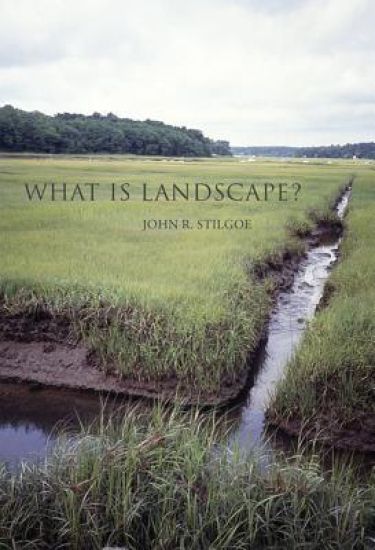
A lexicon and guide for discovering the essence of landscape."Mr. Stilgoe does not ask that we take his book outdoors with us; he believes that reading and experiencing landscapes are activities that should be kept separate. But, as I learned in his book, the hollow storage area in a car driver's door was once a holster, the 'secure nesting place of a pistol.' I recommend you stow your copy there."-The Wall Street JournalLandscape, John Stilgoe tells us, is a noun. From the old Frisian language (once spoken in coastal parts of the Netherlands and Germany), it meant shoveled land: landschop. Sixteenth-century Englishmen misheard or mispronounced this as landskep, which became landskip, then landscape, designating the surface of the earth shaped for human habitation. In What Is Landscape? Stilgoe maps the discovery of landscape by putting words to things, zeroing in on landscape's essence but also leading sideways expeditions through such sources as children's picture books, folklore, deeds, antique terminology, out-of-print dictionaries, and conversations with locals. ("What is that?" "Well, it's not really a slough, not really, it's a bayou...") He offers a highly original, cogent, compact, gracefully written narrative lexicon of landscape as word, concept, and path to discoveries.What Is Landscape? is an invitation to walk, to notice, to ask: to see a sandcastle with a pinwheel at the beach and think of Dutch windmills-icons of triumph, markers of territory won from the sea; to walk in the woods and be amused by the Elizabethans' misuse of the Latin silvaticus (people of the woods) to coin the word savages; to see in a suburban front lawn a representation of the meadow of a medieval freehold.Discovering landscape is good exercise for body and for mind. This book is an essential guide and companion to that exercise-to understanding, literally and figuratively, what landscape is.
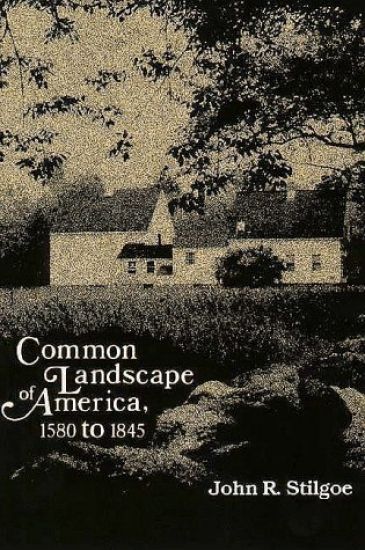
Common Landscape of America, 1580-1845

Common Landscape of America, 1580-1845

John R. Stilgoe

Yale University Press
1983
pokkari
“A first-rate introduction to a still largely extant North America away from the great cities. This 400-page documentary by a dedicated exploring scholar explains how and why the landscape changed between the times of the early Spanish settlers and the impact of industrialization.”—House and Garden“A remarkable book. John Stilgoe has provided us with a panorama of American land development that is unique in the literature of this filed. In the process he has sharpened the reader’s perception of the historic struggle between those who would tend the land and those who would exploit it, thus making a significant statement about issues in the forefront at the present day. Stilgoe’s global vision over time, combined with his remarkable facility for involving a great variety of elements into one coherent system of thought and feeling, makes this a deeply important and timely work.”—Edmund N. Bacon“Recalls how Europeans shaped this country’s landscape out of wilderness and, by the way, helped to create our sense of beauty, comfort, and appropriateness…A book that will change the way its readers look about them.”—The New Yorker“Focusing on vernacular design and its evolution, Stilgoe effectively demonstrates how builders (rather than professional designers) passed on their traditions from one generation to the next—in so doing shaping America’s enduring attitudes towards landscape. An original and fascinating study.”—H. Ward Jandl, Library JournalWinner of the 1982 Francis Parkman Prize for Literary Distinction in the Writing of History.
Borderland

Borderland

John R. Stilgoe

Yale University Press
1990
pokkari
This fascinating “prehistory” of the American Suburb traces its evolution from the mid-1800’s to the onset of World War II. Using a rich array of contemporary written and pictorial sources, prize-winning historian John R. Stilgoe guides us through the early suburbs of Manhattan, Boston, Chicago, and other cities, showing us not only how they looked but what life was like for the men and women who lived there. “In chronicling this great exodus and its impact—on culture, women architecture, and myriad other aspects of American society—Stilgoe displays with, scholarship, and insight, as well as delight in searching out meanings in his sources…The book itself is handsome and well illustrated, blessed with a lively text, saturated with evocative and vivid detail.”—David Slovic, Philadelphia Inquirer“Stilgoe’s research is thorough, his approach original and engaging, and his book a delight to read, filled with illustrations—pictorial and verbal—that help illustrate the phenomenon more clearly and deeply.”—Merle Rubin, Christians Science Monitor“A provocative look at American culture…Borderland makes serious social history accessible and engaging.”—Caryn James, New York Times“Borderland offers a fresh perspective on the zone between rural space and urban residential rings, and it challenges our assumptions about what constitutes a good life.”—Kenneth Jackson, Progressive ArchitectureJohn R. Stilgoe is the Robert & Lois Orchard Professor in the History of Landscape at Harvard University. He is also the author of Common Landscape of American, 1580 to 1845 and Metropolitan Corridor. Railroads and the American Scene.
Lifeboat

Lifeboat

John R. Stilgoe

University of Virginia Press
2003
sidottu
The fire extinguisher; the airline safety card; the lifeboat. Until September 11, 2001, most Americans paid homage to these appurtenances of disaster with a sidelong glance, if at all. But John Stilgoe has been thinking about lifeboats ever since he listened with his father as the kitchen radio announced that the liner ""Lakonia"" had caught fire and sunk in the Atlantic. It was Christmas 1963 and airline travel and Cold War Paranoia had made the images of an ocean liner's distress - the air force dropping supplies in the dark, a freighter collecting survivors from lifeboats - seem like echoes of a bygone era. But Stilgoe, already a passionate reader and an aficionado of small-boat navigation, began to delve into accounts of other disasters at sea. What he found was a trunkful of hair-raising stories - of shipwreck, salvation, seamanship brillian and inept, noble sacrifice, insanity, cannibalims, courage and cravenness, even scandal. In nonfiction accounts and in the works of Conrad, Melville and Tomlinson, fear and survival animate and degrage human nature, in the microcosm of an open boat as in society at large. How lifeboats are made, rigged and captained, Stilgoe discovered and how accounts of their use or misuse are put down, says much about the culture and circumstances from which they are launched. In the hands of a skillful historian such as Stilgoe, the lifeboat becomes a symbol of human optimism, of engineering ingenuity, of bureaucratic regulation, of fear and frailty. Woven through ""Lifeboat"" are old-fashioned yarns, thrilling tales of adventure that quicken the pulse of readers who have enjoyed the novels of Patrick O'Brian, ""Crabwalk"" by Gunther Grass, or works of nonfiction such as ""The Perfect Storm"" and ""In the Heart of the Sea"".
Train Time

Train Time

John R. Stilgoe

University of Virginia Press
2007
sidottu
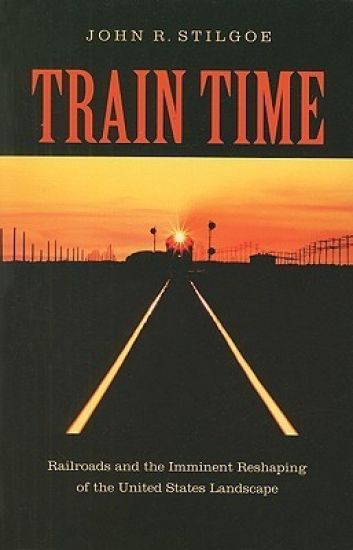
Unlike many United States industries, railroads are intrinsically linked to American soil and particular regions. Yet few Americans pay attention to rail lines, even though millions of them live in an economy and culture ""waiting for the train."" In ""Train Time: Railroads and the Imminent Reshaping of the United States Landscape"", John R. Stilgoe picks up where his acclaimed work ""Metropolitan Corridor"" left off, carrying his ideas about the spatial consequences of railways up to the present moment. Arguing that the train is returning, ""an economic and cultural tsunami about to transform the United States,"" Stilgoe posits a future for railways as powerful shapers of American life. Divided into sections that focus on particular aspects of the impending impact of railroads on the landscape, ""Train Time"" moves seamlessly between historical and contemporary analysis. From his reading of what prompted investors to reorient their thinking about the railroad industry in the late 1970s, to his exploration of creative solutions to transportation problems and land-use planning and development in the present, Stilgoe expands our perspective of an industry normally associated with bad news. Urging us that ""the magic moment is now,"" he observes, ""Now a train is often only a whistle heard far off on a sleepless night. But romantic or foreboding or empowering, the whistle announces return and change to those who listen."" For scholars with an interest in American history in general and railroad and transit history in particular, as well as general readers concerned about the future of transportation in the United States, ""Train Time"" is an engaging look at the future of our railroads.
Lifeboat

Lifeboat

John R. Stilgoe

University of Virginia Press
2007
nidottu
Woven through ""Lifeboat"" are good old-fashioned yarns and thrilling tales of adventure that will quicken the pulse of readers who have enjoyed the novels of Patrick O'Brian, ""Crabwalk"" by Gunter Grass, or works of nonfiction such as ""The Perfect Storm"" and ""In the Heart of the Sea"". But Stilgoe, whose other works have plumbed suburban culture, locomotives, and the shore, is ultimately after bigger fish. Through the humble, much-ignored lifeboat, its design and navigation and the stories of its ultimate purpose, he has found a peculiar lens on roughly the past two centuries of human history, particularly the war-tossed, technology-driven history of man and the sea.
Train Time

Train Time

John R. Stilgoe

University of Virginia Press
2009
nidottu
Trains have a nostalgic connotation for most Americans, but John Stilgoe argues that we should be looking to rail lines as the path to our future, not just our past. ""Train Time"" picks up where his acclaimed work ""Metropolitan Corridor"" left off, carrying Stilgoe's ideas about the spatial consequences of railways up to the present moment. With containers bringing the production of a global economy to our ports, the price of oil skyrocketing, and congestion and sprawl forcing many Americans to live far from work, trains offer an obvious alternative to a culture dependent on cars and long-haul trucking. Arguing that the train is returning, 'an economic and cultural tsunami about to transform the United States', Stilgoe posits a future for railways as powerful shapers of American life. For anyone looking for prescient analysis and compelling history of the American landscape and economy in general and railroad and transit history in particular, ""Train Time"" is an engaging look at the future of our railroads and of transportation and land development. For those familiar with John Stilgoe's talent for seeing things that elude the rest of us, and delivering those observations in pithy asides about real estate, corporate culture, and other aspects of American life, this book will not disappoint.
Old Fields

Old Fields

John R. Stilgoe

University of Virginia Press
2014
sidottu
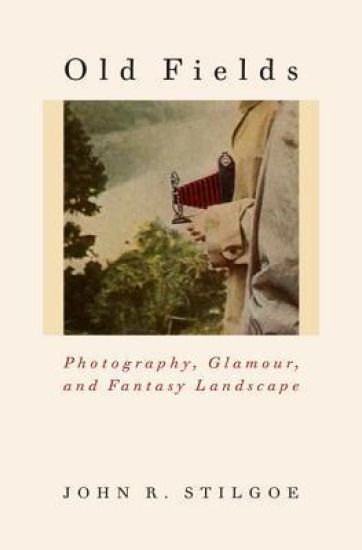
Glamour subverts convention. As viewed through the lens of photography, models, images, and even landscapes can skew ordinary ways of seeing, suggesting new worlds imbued with fantasy, mystery, sexuality, and tension. In Old Fields, John Stilgoe—one of the most original observers of his time—offers a poetic and controversial exploration of the generations-long effort to portray glamour. Fusing three forces in contemporary American culture—amateur photography after 1880; the rise of glamour and fantasy; and the often-mysterious quality of landscape photographs—Stilgoe provides a wide-ranging yet concentrated take on the cultural legacy of our photographic history. Through the medium of ""shop theory""—the techniques, tools, and purpose-made equipment a maker uses to realise intent—Stilgoe looks at the role of Eastman Kodak in shaping the ways photographers purchased cameras and films, while also mapping the divisions that were created by European-made cameras. He then goes on to argue that with the proliferation of digital cameras, smart phones, and Instagram, young people’s lack of knowledge about photographic technique is in direct correlation to their lack of knowledge of the history of glamour photography. In his exploration of the rise of glamour and fantasy in contemporary American culture, Stilgoe offers a provocative and very personal look into his enduring fascination with, and the possibilities inherent in, creating one’s own images.
Landscape and Images

Landscape and Images

John R. Stilgoe

University of Virginia Press
2015
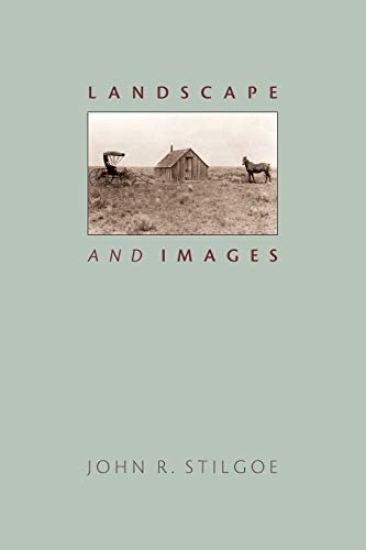
nidottu
John Stilgoe is just looking around. This is more difficult than it sounds, particularly in our mediated age, when advances in both theory and technology too often seek to replace the visual evidence before our own eyes rather than complement it. We are surrounded by landscapes charged with our past, and yet from our earliest schooldays we are instructed not to stare out the window. Someone who stops to look isn’t only a rarity; he or she is suspect.Landscape and Images records a lifetime spent observing America’s constructed landscapes. Stilgoe’s essays follow the eclectic trains of thought that have resulted from his observation, from the postcard preference for sunsets over sunrises to the concept of ""teen geography"" to the unwillingness of Americans to walk up and down stairs. In Stilgoe's hands, the subject of jack o’ lanterns becomes an occasion to explore centuries-old concepts of boundaries and trespassing, and to examine why this originally pagan symbol has persisted into our own age. Even something as mundane as putting the cat out before going to bed is traced back to fears of unwatched animals and an untended frontier fireplace. Stilgoe ponders the forgotten connections between politics and painted landscapes and asks why a country whose vast majority lives less than a hundred miles from a coast nonetheless looks to the rural Midwest for the classic image of itself.At times breathtaking in their erudition, the essays collected here are as meticulously researched as they are elegantly written. Stilgoe’s observations speak to specialists—whether they be artists, historians, or environmental designers—as well as to the common reader. Our landscapes constitute a fascinating history of accident and intent. The proof, says Stilgoe, is all around us.