Kirjojen hintavertailu. Mukana 11 342 296 kirjaa ja 12 kauppaa.

Kirjahaku

Etsi kirjoja tekijän nimen, kirjan nimen tai ISBN:n perusteella.

11 kirjaa tekijältä John R. Vacca

Cyber Security and IT Infrastructure Protection

Cyber Security and IT Infrastructure Protection

John R. Vacca

Syngress Media,U.S.
2013
nidottu
This book serves as a security practitioner’s guide to today’s most crucial issues in cyber security and IT infrastructure. It offers in-depth coverage of theory, technology, and practice as they relate to established technologies as well as recent advancements. It explores practical solutions to a wide range of cyber-physical and IT infrastructure protection issues. Composed of 11 chapters contributed by leading experts in their fields, this highly useful book covers disaster recovery, biometrics, homeland security, cyber warfare, cyber security, national infrastructure security, access controls, vulnerability assessments and audits, cryptography, and operational and organizational security, as well as an extensive glossary of security terms and acronyms. Written with instructors and students in mind, this book includes methods of analysis and problem-solving techniques through hands-on exercises and worked examples as well as questions and answers and the ability to implement practical solutions through real-life case studies. For example, the new format includes the following pedagogical elements: • Checklists throughout each chapter to gauge understanding • Chapter Review Questions/Exercises and Case Studies • Ancillaries: Solutions Manual; slide package; figure files This format will be attractive to universities and career schools as well as federal and state agencies, corporate security training programs, ASIS certification, etc.

Solving Urban Infrastructure Problems Using Smart City Technologies

Solving Urban Infrastructure Problems Using Smart City Technologies

John R. Vacca

Elsevier Science Publishing Co Inc
2020
nidottu
Solving Urban Infrastructure Problems Using Smart City Technologies is the most complete guide for integrating next generation smart city technologies into the very foundation of urban areas worldwide, showing how to make urban areas more efficient, more sustainable, and safer. Smart cities are complex systems of systems that encompass all aspects of modern urban life. A key component of their success is creating an ecosystem of smart infrastructures that can work together to enable dynamic, real-time interactions between urban subsystems such as transportation, energy, healthcare, housing, food, entertainment, work, social interactions, and governance. Solving Urban Infrastructure Problems Using Smart City Technologies is a complete reference for building a holistic, system-level perspective on smart and sustainable cities, leveraging big data analytics and strategies for planning, zoning, and public policy. It offers in-depth coverage and practical solutions for how smart cities can utilize resident’s intellectual and social capital, press environmental sustainability, increase personalization, mobility, and higher quality of life.
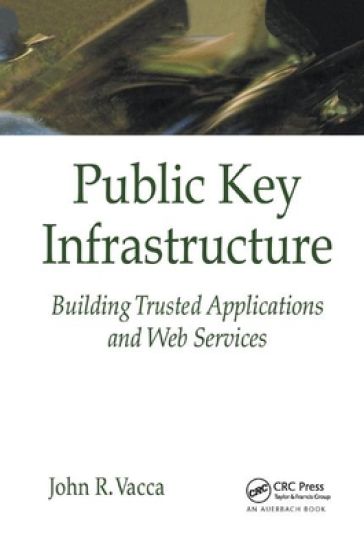
Public Key Infrastructure

Public Key Infrastructure

John R. Vacca

CRC Press
2019
nidottu
With the recent Electronic Signatures in Global and National Commerce Act, public key cryptography, digital signatures, and digital certificates are finally emerging as a ubiquitous part of the Information Technology landscape. Although these technologies have been around for over twenty years, this legislative move will surely boost e-commerce activity. Secure electronic business transactions, such as contracts, legal documents, insurance, and bank loans are now legally recognized. In order to adjust to the realities of the marketplace, other services may be needed, such as a non-repudiation service, digital notary, or digital time-stamping service. The collection of these components, known as Public Key Infrastructure (PKI), is paving the way for secure communications within organizations and on the public Internet.
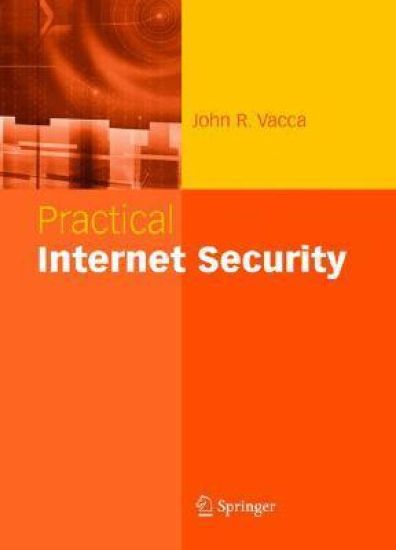
Practical Internet Security

Practical Internet Security

John R. Vacca

Springer-Verlag New York Inc.
2006
sidottu
As organizations today are linking their systems across enterprise-wide networks and VPNs as well as increasing their exposure to customers, competitors, browsers and hackers on the Internet, it becomes increasingly imperative for Web professionals to be trained in techniques for effectively protecting their sites from internal and external threats. Each connection magnifies the vulnerability to attack. With the increased connectivity to the Internet and the wide availability of automated cracking tools, organizations can no longer simply rely on operating system security to protect their valuable corporate data. Furthermore, the exploding use of Web technologies for corporate intranets and Internet sites has escalated security risks to corporate data and information systems. Practical Internet Security reveals how the Internet is paving the way for secure communications within organizations and on the public Internet. This book provides the fundamental knowledge needed to analyze risks to a system and to implement a security policy that protects information assets from potential intrusion, damage, or theft. It provides dozens of real-life scenarios and examples, as well as hands-on instruction in securing Web communications and sites. You will learn the common vulnerabilities of Web sites; as well as, how to carry out secure communications across unsecured networks. All system administrators and IT security managers will find this book an essential practical resource.
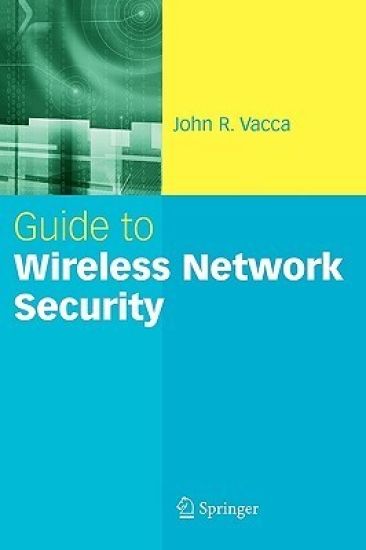
Guide to Wireless Network Security

Guide to Wireless Network Security

John R. Vacca

Springer-Verlag New York Inc.
2006
sidottu
1. INTRODUCTION With the increasing deployment of wireless networks (802. 11 architecture) in enterprise environments, IT enterprises are working to implement security mechanisms that are equivalent to those existing today for wire-based networks. An important aspect of this is the need to provide secure access to the network for valid users. Existing wired network jacks are located inside buildings already secured from unauthorized access through the use of keys, badge access, and so forth. A user must gain physical access to the building in order to plug a client computer into a network jack. In contrast, a wireless access point (AP) may be accessed from off the premises if the signal is detectable (for instance, from a parking lot adjacent to the building). Thus, wireless networks require secure access to the AP and the ability to isolate the AP from the internal private network prior to user authentication into the network domain. Furthermore, as enterprises strive to provide better availability of mission-critical wireless data, they also face the challenge of maintaining that data's security and integrity. While each connection with a client, a supplier or a enterprise partner can improve responsiveness and efficiency, it also increases the vulnerability of enterprise wireless data to attack. In such an environment, wireless network security is becoming more important every day. Also, with the growing reliance on e-commerce, wireless network-based services and the Internet, enterprises are faced with an ever-increasing responsibility to protect their systems from attack.
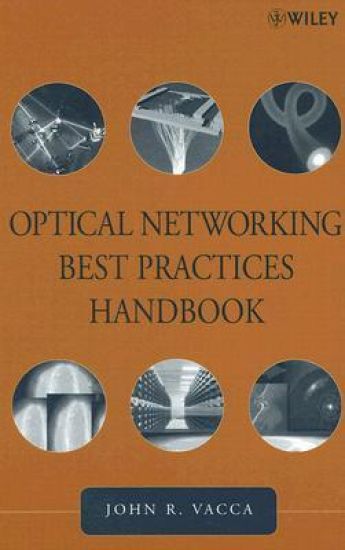
Optical Networking Best Practices Handbook

Optical Networking Best Practices Handbook

John R. Vacca

John Wiley Sons Inc
2006
sidottu
Optical Networking Best Practices Handbook presents optical networking in a very comprehensive way for nonengineers needing to understand the fundamentals of fiber, high-capacity, high-speed equipment and networks, and upcoming carrier services. The book provides a practical understanding of fiber optics as a physical medium, sorting out single-mode versus multi-mode and the crucial concept of Dense Wave-Division Multiplexing.
Biometric Technologies and Verification Systems

Biometric Technologies and Verification Systems

John R. Vacca

Butterworth-Heinemann Ltd
2007
nidottu
Biometric Technologies and Verification Systems is organized into nine parts composed of 30 chapters, including an extensive glossary of biometric terms and acronyms. It discusses the current state-of-the-art in biometric verification/authentication, identification and system design principles. It also provides a step-by-step discussion of how biometrics works; how biometric data in human beings can be collected and analyzed in a number of ways; how biometrics are currently being used as a method of personal identification in which people are recognized by their own unique corporal or behavioral characteristics; and how to create detailed menus for designing a biometric verification system. Only biometrics verification/authentication is based on the identification of an intrinsic part of a human being. Tokens, such as smart cards, magnetic stripe cards, and physical keys can be lost, stolen, or duplicated. Passwords can be forgotten, shared, or unintentionally observed by a third party. Forgotten passwords and lost "smart cards" are a nuisance for users and an expensive time-waster for system administrators. Biometric security solutions offer some unique advantages for identifying and verifying/ authenticating human beings over more traditional security methods. This book will serve to identify the various security applications biometrics can play a highly secure and specific role in.
Public Key Infrastructure

Public Key Infrastructure

John R. Vacca

Auerbach Publishers Inc.
2004
sidottu
With the recent Electronic Signatures in Global and National Commerce Act, public key cryptography, digital signatures, and digital certificates are finally emerging as a ubiquitous part of the Information Technology landscape. Although these technologies have been around for over twenty years, this legislative move will surely boost e-commerce activity. Secure electronic business transactions, such as contracts, legal documents, insurance, and bank loans are now legally recognized. In order to adjust to the realities of the marketplace, other services may be needed, such as a non-repudiation service, digital notary, or digital time-stamping service. The collection of these components, known as Public Key Infrastructure (PKI), is paving the way for secure communications within organizations and on the public Internet.
Practical Internet Security

Practical Internet Security

John R. Vacca

Springer-Verlag New York Inc.
2010
nidottu
As organizations today are linking their systems across enterprise-wide networks and VPNs as well as increasing their exposure to customers, competitors, browsers and hackers on the Internet, it becomes increasingly imperative for Web professionals to be trained in techniques for effectively protecting their sites from internal and external threats. Each connection magnifies the vulnerability to attack. With the increased connectivity to the Internet and the wide availability of automated cracking tools, organizations can no longer simply rely on operating system security to protect their valuable corporate data. Furthermore, the exploding use of Web technologies for corporate intranets and Internet sites has escalated security risks to corporate data and information systems. Practical Internet Security reveals how the Internet is paving the way for secure communications within organizations and on the public Internet. This book provides the fundamental knowledge needed to analyze risks to a system and to implement a security policy that protects information assets from potential intrusion, damage, or theft. It provides dozens of real-life scenarios and examples, as well as hands-on instruction in securing Web communications and sites. You will learn the common vulnerabilities of Web sites; as well as, how to carry out secure communications across unsecured networks. All system administrators and IT security managers will find this book an essential practical resource.
Guide to Wireless Network Security

Guide to Wireless Network Security

John R. Vacca

Springer-Verlag New York Inc.
2016
nidottu
1. INTRODUCTION With the increasing deployment of wireless networks (802. 11 architecture) in enterprise environments, IT enterprises are working to implement security mechanisms that are equivalent to those existing today for wire-based networks. An important aspect of this is the need to provide secure access to the network for valid users. Existing wired network jacks are located inside buildings already secured from unauthorized access through the use of keys, badge access, and so forth. A user must gain physical access to the building in order to plug a client computer into a network jack. In contrast, a wireless access point (AP) may be accessed from off the premises if the signal is detectable (for instance, from a parking lot adjacent to the building). Thus, wireless networks require secure access to the AP and the ability to isolate the AP from the internal private network prior to user authentication into the network domain. Furthermore, as enterprises strive to provide better availability of mission-critical wireless data, they also face the challenge of maintaining that data's security and integrity. While each connection with a client, a supplier or a enterprise partner can improve responsiveness and efficiency, it also increases the vulnerability of enterprise wireless data to attack. In such an environment, wireless network security is becoming more important every day. Also, with the growing reliance on e-commerce, wireless network-based services and the Internet, enterprises are faced with an ever-increasing responsibility to protect their systems from attack.
Computer Forensics: Computer Crime Scene Investigation

Computer Forensics: Computer Crime Scene Investigation

John R. Vacca

Jones and Bartlett Publishers, Inc
2010
nidottu
Despite efforts to safeguard sensitive data and networks, organizations face an ever-growing threat of cyber crime and security violations. These attacks can occur internally as well as from an external source, and include fraud, copyright infringement, and stolen data. This computer forensics and incident response book provides an organization's internal computer security specialists with a legal method for handling computer misuse as well as a means for securing sensitive data and identifying compromised systems, ultimately saving the organization the high cost of hiring an outside team of computer forensic investigators.This updated Third Edition includes a comprehensive introduction to computer forensics investigative techniques and provides the knowledge and skills required to conduct a computer forensics investigation from initial discovery to completion. This book also provides the details for an organization's Computer Incident Response Team (CIRT); to collect, manage, and record digital evidence; and to leverage powerful software tools and techniques to uncover hidden or deleted information.Key topics include: Responding to incidents and investigating computer crime, conducting and managing an investigation, performing disk-based analysis, investigating information-hiding techniques, examining e-mail, tracing internet access, searching memory in real-time, and the forensics challenge competition.