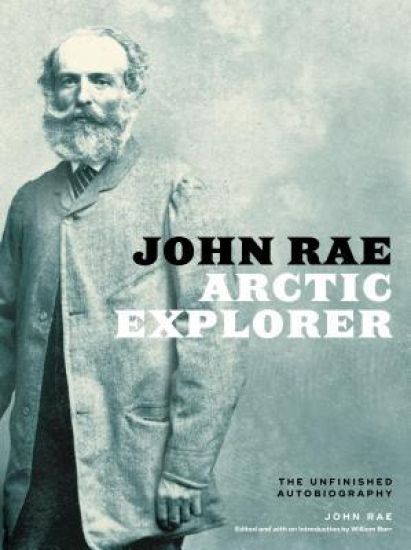
John Rae is best known today as the first European to reveal the fate of the Franklin Expedition, yet the range of Rae’s accomplishments is much greater. Over five expeditions, Rae mapped some 1,550 miles (2,494 kilometres) of Arctic coastline; he is undoubtedly one of the Arctic’s greatest explorers, yet today his significance is all but lost. John Rae, Arctic Explorer is an annotated version of Rae’s unfinished autobiography. William Barr has extended Rae’s previously unpublished manuscript and completed his story based on Rae’s reports and correspondence—including reaction to his revelations about the Franklin Expedition. Barr’s meticulously researched, long overdue presentation of Rae’s life and legacy is an immensely valuable addition to the literature of Arctic exploration.
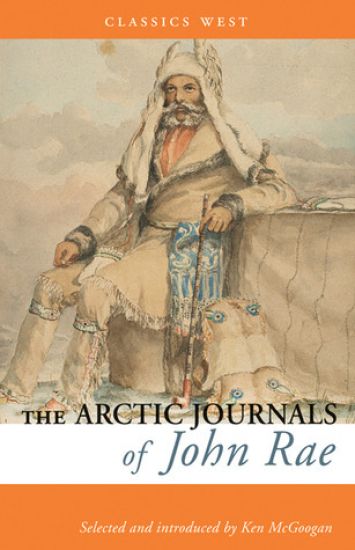
Scottish doctor and explorer John Rae is a controversial figure in the history of the Arctic. He began his career with the Hudson's Bay Company as a surgeon in Moose Factory, Ontario, where he learned to survey, live off the land, and travel great distances on snowshoes. These skills served him well when, in 1846, he was charged with completing the geography of the northern shore of North America and set out on his first expedition. Some years later, while exploring the Boothia Peninsula in 1854, Rae obtained information about the rather shocking fate of the Franklin expedition, which had been missing since 1845. Upon his return to England, however, Rae was discredited by Charles Dickens and shunned by the British establishment, never receiving proper recognition for his roles in finding the Northwest Passage and discovering the fate of Franklin and his crew. 'The Arctic Journals of John Rae' is the definitive collection of John Rae's writings, from his only published work, 'Narrative of an Expedition to the Shores of the Arctic Sea in 1846 and 1847', to obscure notes and journals and reports of his controversial findings in 1854.An accomplished explorer who had great respect for the customs and skills of the peoples native to the Arctic, John Rae is a fascinating figure and an important part of the history of the North.
Rediscover the charm of "Grasshopper Green and the Meadow Mice" by John Rae, a delightful journey into the world of animal stories perfect for young readers. This classic of children's literature presents a gentle narrative centered on the lives of grasshoppers and mice within their meadow home. A heartwarming exploration of nature's small creatures, this tale offers a glimpse into their everyday adventures. Carefully prepared for print, this edition preserves the original story, ensuring an authentic reading experience. Ideal for bedtime reading, "Grasshopper Green and the Meadow Mice" promises a soothing and imaginative escape. Parents and children alike will appreciate this timeless story.This work has been selected by scholars as being culturally important, and is part of the knowledge base of civilization as we know it.This work is in the public domain in the United States of America, and possibly other nations. Within the United States, you may freely copy and distribute this work, as no entity (individual or corporate) has a copyright on the body of the work.Scholars believe, and we concur, that this work is important enough to be preserved, reproduced, and made generally available to the public. We appreciate your support of the preservation process, and thank you for being an important part of keeping this knowledge alive and relevant.
In the mid-nineteenth century, the northern coastline of North America was of particular interest to the Hudson's Bay Company as it was believed to hold the key to the elusive North-West Passage, a trade route from the Atlantic to the Pacific. Recruited to lead a team to survey part of this forbidding region, the Scottish explorer John Rae (1813–93) undertook his first expedition during 1846–7. It was remarkable not only for its success, but also because Rae's was the first crew to overwinter in the Arctic. Unlike other Victorian explorers, Rae embraced the culture of the Inuit and learnt to live off the land like them, which enabled him to complete his survey. First published in 1850, this journal relates the details of his journey as well as how he and his men survived the extreme conditions. It remains a valuable document in the history of Arctic exploration.
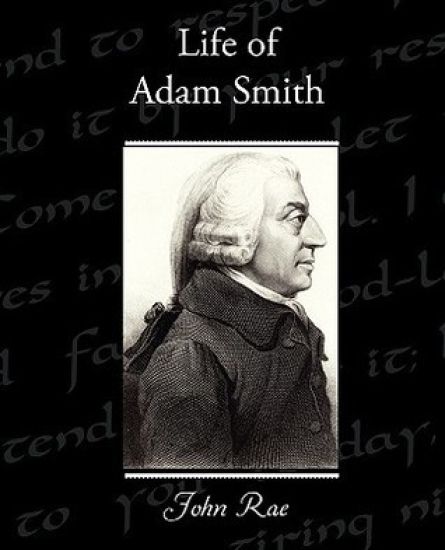
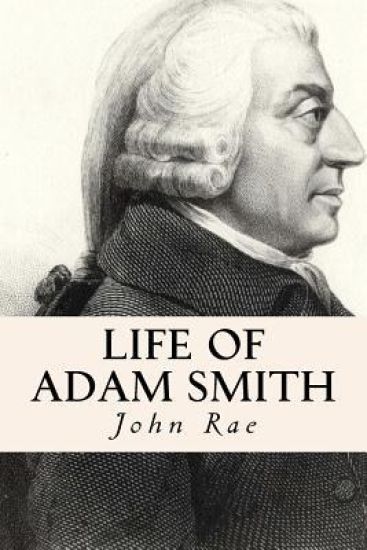
Life of Adam Smith is a classic biography of the great Scottish economist, Adam Smith, by John Rae. Adam Smith FRSA (16 June 1723 NS (5 June 1723 OS) - 17 July 1790) was a Scottish economist, philosopher and author as well as a moral philosopher, a pioneer of political economy and a key figure during the Scottish Enlightenment era. 1] Smith is best known for two classic works: An Inquiry into the Nature and Causes of the Wealth of Nations (1776) and The Theory of Moral Sentiments (1759). The former, usually abbreviated as The Wealth of Nations, is considered his magnum opus and the first modern work of economics. Smith studied social philosophy at the University of Glasgow and at Balliol College, Oxford, where he was one of the first students to benefit from scholarships set up by fellow Scot, John Snell. After graduating, he delivered a successful series of public lectures at Edinburgh, leading him to collaborate with David Hume during the Scottish Enlightenment. Smith obtained a professorship at Glasgow teaching moral philosophy and during this time wrote and published The Theory of Moral Sentiments. In his later life, he took a tutoring position that allowed him to travel throughout Europe, where he met other intellectual leaders of his day. Smith laid the foundations of classical free market economic theory. The Wealth of Nations was a precursor to the modern academic discipline of economics. In this and other works, he developed the concept of division of labour and expounded upon how rational self-interest and competition can lead to economic prosperity. Smith was controversial in his own day and his general approach and writing style were often satirised by Tory writers in the moralising tradition of William Hogarth and Jonathan Swift. In 2005, The Wealth of Nations was named among the 100 Best Scottish Books of all time. 3] The minor planet 12838 Adamsmith was named in his memory. The Wealth of Nations was a precursor to the modern academic discipline of economics. In this and other works, Smith expounded how rational self-interest and competition can lead to economic prosperity. Smith was controversial in his own day and his general approach and writing style were often satirised by Tory writers in the moralising tradition of Hogarth and Swift, as a discussion at the University of Winchester suggests. 92] In 2005, The Wealth of Nations was named among the 100 Best Scottish Books of all time. 3] Former UK Prime Minister Margaret Thatcher, it is said, used to carry a copy of the book in her handbag. 93] In light of the arguments put forward by Smith and other economic theorists in Britain, academic belief in mercantilism began to decline in Britain in the late 18th century. During the Industrial Revolution, Britain embraced free trade and Smith's laissez-faire economics, and via the British Empire, used its power to spread a broadly liberal economic model around the world, characterised by open markets, and relatively barrier free domestic and international trade. 94] George Stigler attributes to Smith "the most important substantive proposition in all of economics." It is that, under competition, owners of resources (for example labour, land, and capital) will use them most profitably, resulting in an equal rate of return in equilibrium for all uses, adjusted for apparent differences arising from such factors as training, trust, hardship, and unemployment. 95] Paul Samuelson finds in Smith's pluralist use of supply and demand as applied to wages, rents, and profit a valid and valuable anticipation of the general equilibrium modelling of Walras a century later. Smith's allowance for wage increases in the short and intermediate term from capital accumulation and invention contrasted with Malthus, Ricardo, and Karl Marx in their propounding a rigid subsistence-wage theory of labour supply.
In the present edition the original work has not only been carefully revised, but very considerably enlarged. The chapters on "The Progress and Present Position of Socialism" and "Russian Nihilism" contain a few sentences retained from the first edition, but otherwise they are entirely new-the former necessarily so on account of the nature of its subject, and the latter on account of the importance of the fresh materials that have been recently given to the world. A new chapter has been added on "Anarchism," and another, of considerable extent, on "State Socialism." No apology is required for the length of the latter, for though State socialism is only a growth of yesterday, it has already spread everywhere, and if it is not superseding socialism proper, it is certainly eclipsing it in practical importance, and to some extent even modifying it in character. Revolutionary socialism, growing more opportunist of late years, seems losing much of its old phrenzy, and getting domesticated into a shifty State socialism, fighting a parliamentary battle for minor, though still probably mischievous, changes within the lines of existing society, instead of the old war l'outrance against existing society in whatever shape or form. Anyhow the socialistic
"Infusing vivid imagery and fine detail......reminiscent of Louis L'Amour or Cormac McCarthy." -IndieReaderA period-piece novel, full of suspense and drama, set in the post-Civil War era, where the lives of two women merge--one fleeing an arranged marriage to a dangerous man; the other a freed slave seeking a new life on her own. After being thrown from a racing stagecoach and chased by buffalo wolves, Maggie and Mary find each other on the Kansas prairie and head to Abilene--the first of the Wild West towns. They keep company with a young cowhand, a con artist, and an outlaw so dangerous that it is against the law to attempt apprehending him. By the time Maggie's fianc e tracks her down, two of her suitors end up dead and the town forever changed.A deeply-woven novel within a novel, The Prairie Dance stitches together the yarns and anecdotes of several African Americans who lived in the Wild West. If you like free-spirited heroines, paths to enlightenment, and period-piece stories of inner strength, then you'll love John Rae's literary western.Buy The Prairie Dance to saddle up for excitement today
John Rae (1845-1915) wrote what is considered to be one of the finest biographies of Adam Smith, originally published in 1895. Reviewers, both contemporary and decades in the future, lavished praise on Rae's Life of Adam Smith, noting Rae's extensive use of archival material that had not been unearthed previously, as well as Rae's way of letting the information he presents speak for itself. The present volume is a high-quality facsimile reproduction of Rae's work.