
Kirjahaku
Etsi kirjoja tekijän nimen, kirjan nimen tai ISBN:n perusteella.
18 kirjaa tekijältä John Randolph
Letters Of John Randolph To A Young Relative; Embracing A Series Of Years From Early Youth To Mature Manhood (1834)
John Randolph
KESSINGER PUBLISHING, LLC
2008
sidottu

Letters of John Randolph, to a Young Relative; Embracing a Series of Years, from Early Youth, to Mature Manhood
John Randolph
Trieste Publishing
2018
nidottu
The Speech Of J. Randolph, Representative For The State Of Virginia, In The General Congress Of America (1806)
John Randolph
KESSINGER PUBLISHING, LLC
2009
pokkari
The Speech Of J. Randolph, Representative For The State Of Virginia, In The General Congress Of America (1806)
John Randolph
KESSINGER PUBLISHING, LLC
2010
sidottu
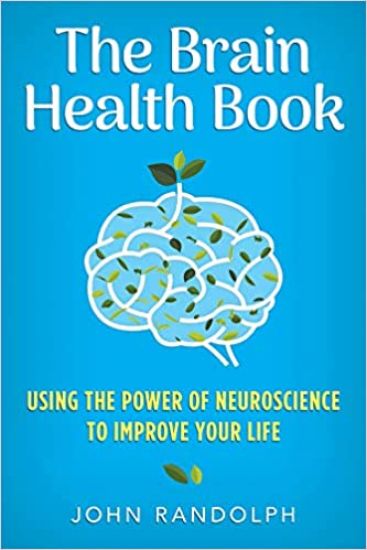
Concerns about memory and other thinking skills are common, particularly in middle age and beyond. Due to worries about declining brain health, some seek out dubious products or supplements purportedly designed to improve memory and other cognitive abilities. Fortunately, scientific research has uncovered a clear-cut set of evidence-based activities and lifestyle choices that are inexpensive or free and known to promote brain and cognitive functioning. John Randolph translates this science in an engaging and accessible way, including the brain-boosting effects of exercise, social activity, mental stimulation, task management strategies, nutrition and positive self-care. Interwoven with lessons from neuroscience, positive psychology, social and clinical psychology, and habit formation research are powerful self-coaching exercises designed to help the reader incorporate lifestyle changes that promote brain health.

The Clergyman's Instructor: Or A Collection Of Tracts On The Ministerial Duties (1855)
John Randolph
KESSINGER PUBLISHING, LLC
2008
sidottu
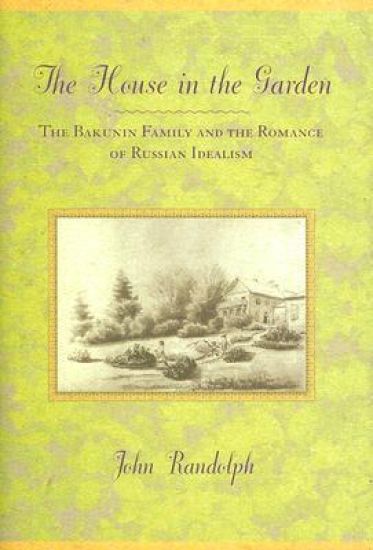
"Aspiring thinkers require a stage for their performance and an audience to help give their actions distinction and meaning. To be made durable and influential, their charismatic stories have to be framed by supporting ideals, practices, and institutions. Although the biographies of the Empire's most famous thinkers have a comfortable platform in modern Russia's printed record, scholars have yet to explore fully the intimate context surrounding their activities in the early nineteenth century. There is, as a result, a certain homeless quality to our understandings of Imperial Russian culture, which this history of one extremely productive home will help us correct."—from The House in the Garden The House in the Garden explores the role played by domesticity in the making of Imperial Russian intellectual traditions. It tells the story of the Bakunins, a distinguished noble family who in 1779 chose to abandon their home in St. Petersburg for a rustic manor house in central Russia's Tver Province. At the time, the Russian government was encouraging its elite subjects to see their private lives as a forum for the representation of imperial virtues and norms. Drawing on the family's vast archive, Randolph describes the Bakunins' attempts to live up to this ideal and to convert their new home, Priamukhino, into an example of modern civilization. In particular, Randolph shows how the Bakunin home fostered the development of a group of charismatic young students from Moscow University, who in the 1830s sought to use their experiences at Priamukhino to reimagine themselves as agents of Russia's enlightenment. Some of the story Randolph tells is familiar to historians. The anarchist Mikhail Bakunin, whose early philosophical evolution Randolph describes, was born at Priamukhino, while the radical critic Vissarion Belinsky claimed to have been transformed by his experiences there. When Tom Stoppard sought to portray the spiritual history of the Russian intelligentia in his trilogy, The Coast of Utopia, he chose Priamukhino as the scene for act 1. Yet Randolph's research allows us to watch this drama from a radically different perspective. It shows how the culture of Russian Idealism—so long presumed to be a product of alienation—actually relied on the support provided by the cult of distinction that the Russian government had built around noble homes. It also allows us to see the other actors and agents of private life—and most notably, the Bakunin women—as participants in the creation of modern Russian social thought. The result is a work that revises our understanding of Russian intellectual history while also contributing to the histories of women, gender, private life, and memory in nineteenth-century Russia.
Course Of Lectures Delivered To Candidates For Holy Orders V2
John Randolph
KESSINGER PUBLISHING CO
2009
pokkari
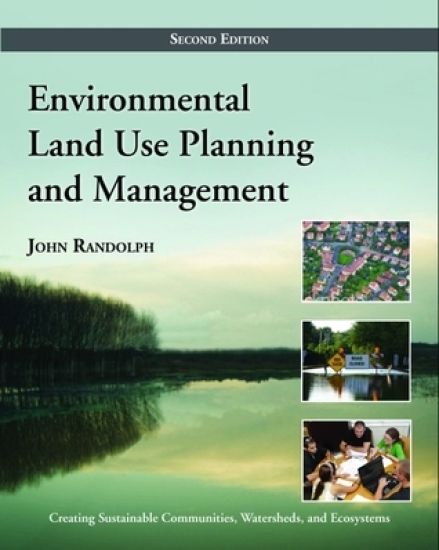
Since the first publication of this landmark textbook in 2004, it has received high praise for its clear, comprehensive, and practical approach. The second edition continues to offer a unique framework for teaching and learning interdisciplinary environmental planning, incorporating the latest thinking, newest research findings, and numerous, updated case studies into the solid foundation of the first edition. The book has been reorganised based on feedback from instructors, and contains a new chapter entitled "Land Use, Energy, Air Quality, and Climate Change." Throughout, boxes have been added on such topics as laws and local environmental programmes, and critical problems and responses. This new edition addresses three broad subject areas. Part I, "Environmental Planning and Management," provides an overview of the field, along with the fundamentals of land use planning, and presents a collaborative approach to environmental planning. Part II, "Sustainable Land Use Principles and Planning Analysis," considers environmental and geospatial information; soils, topography, and land use; stream flow, flooding, and runoff; stormwater management and stream restoration; groundwater hydrology; landscape ecology; wildlife habitats and biodiversity; energy, air quality, and climate change; and methods for land analysis. Part III, "Managing Watersheds, Ecosystems, and Development to Achieve Sustainable Communities," explains the principles of ecosystem management, restoration, and protection; land conservation; and the mitigation of natural hazards. With this thoroughly revised second edition, "Environmental Land Use Planning and Management" maintains its pre-eminence as the leading textbook in its field.
In this book, author John Randolph shares haiku that he wrote consistently for a two-year period. Each page has one haiku and space for the reader to write his or her own A haiku is seventeen syllables in the format of five, seven, five. Open to Gods heart And others God will open God, arent they lovely? Discover how haiku can work through you to expand consciousness and presence.
In this book, author John Randolph shares haiku that he wrote consistently for a two-year period. Each page has one haiku and space for the reader to write his or her own A haiku is seventeen syllables in the format of five, seven, five. Open to Gods heart And others God will open God, arent they lovely? Discover how haiku can work through you to expand consciousness and presence.

Considerations on the Present State of Virginia
John Randolph; Robert Carter Nicholas
Hutson Street Press
2025
sidottu

Considerations on the Present State of Virginia
John Randolph; Robert Carter Nicholas
Hutson Street Press
2025
pokkari

Energy for Sustainability, Second Edition
John Randolph; Gilbert M Masters
Island Press
2018
sidottu
Despite a 2016-18 glut in fossil fuel markets and decade-low fuel prices, the global transformation to sustainable energy is happening. Our ongoing energy challenges and solutions are complex and multidimensional, involving science, technology, design, economics, finance, planning, policy, politics, and social movements. The most comprehensive book on this topic, Energy for Sustainability has been the go-to resource for courses. This new edition has been thoroughly revised and updated to inform and guide students and practitioners who will steer this transformation. Drawing on a combined 80 years of teaching experience, John Randolph and Gilbert Masters take a holistic and interdisciplinary approach. Energy for Sustainability can help techies and policymakers alike understand the mechanisms required to enable conversion to energy that is clean, affordable, and secure. Major revisions to this edition reflect the current changes in technology and energy use and focus on new analyses, data, and methods necessary to understand and actively participate in the transition to sustainable energy. The book begins with energy literacy, including patterns and trends, before covering the fundamentals of energy related to physics, engineering, and economics. The next parts explore energy technologies and opportunities in three important energy sectors: buildings, electricity, and transportation. The final section focuses on policy and planning, presenting the critical role of public policy and consumer and investor choice in transforming energy markets to greater sustainability. Throughout the book, methods for energy and economic analysis and design give readers a quantitative appreciation for and understanding of energy systems. The book uses case studies extensively to demonstrate current experience and illustrate possibilities. Students will gain an understanding of what it takes to achieve clean, affordable, sustainable energy. Supplemental materials will be available at www.islandpress.org.
Environmental Regulations and Housing Costs
Arthur C. Nelson; John Randolph; James M. McElfish; Joseph M. Schilling; Jonathan Logan; LLC Newport Partners
Island Press
2009
nidottu
Does environmental protection impose a cost? Many communities across the United States still lack affordable housing. And many officials continue to claim that 'affordable housing' is an oxymoron. Building inexpensively is impossible, they say, because there are too many regulations. Required environmental impact statements and habitat protection laws, they contend, drive up the costs of construction. But is this actually true? In a comprehensive study of the question, the authors of this eye-opening book separate fact from myth. With admirable clarity, they describe the policy debate from its beginning, review the economic theory, trace the evolution of development regulation, and summarize the major research on the topic. In addition, they offer their own research, accompanied by a case study of two strikingly different Washington, D.C., suburbs. They also include results of focus groups conducted in Dallas, Denver, and Tucson. The authors find that environmental regulatory costs - as a share of total costs and processes - are about the same now as they were thirty years ago, even though there are far more regulations today. They find, too, that environmental regulations may actually create benefits that could improve the value of housing. Although they conclude that regulations do not appear to drive up housing costs more now than in the past, they do offer recommendations of ways in which the processes associated with regulations - including review procedures - could be improved and could result in cost savings. Intended primarily for professionals who are involved in, or impacted by, regulations - from public officials, planners, and engineers to housing developers and community activists - this book will provide useful insights and data to anyone who wants to know if (and how) American housing can actually be made 'affordable'.