

Kirjahaku
Etsi kirjoja tekijän nimen, kirjan nimen tai ISBN:n perusteella.
23 kirjaa tekijältä John Robson
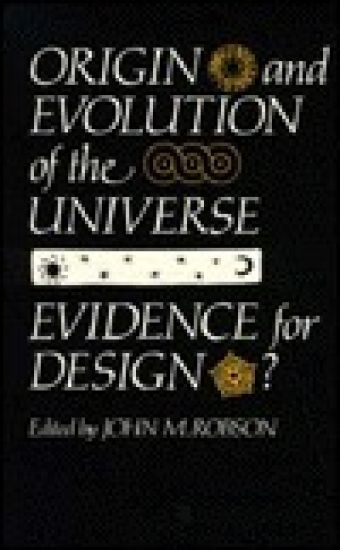
Does the universe have the character it has because of design? In this collection of essays first presented at a symposium sponsored by the Canadian Institute for Advanced Research and the Royal Society of Canada, seventeen scientists and philosophers re-examine the "Argument by Design" in light of current scientific theories. Scientists in such diverse fields as cosmology, physics, geology, biology, and psychology provide syntheses of the state of their respective disciplines with regard to questions such as the origin or evolution of the universe and of life, the interaction of life and terrestrial environment, and verbal communication in prehumans. Contributions by philosophers cover such areas as arguments for a designer and the question of whether nature's laws and initial conditions could be viewed as "fine tuned" for the production of life. Many of the chapters demonstrate the awe-inspiring success of modern science in explaining the universe in terms of fairly straightforward natural laws, countering those versions of the design argument which try to find evidence of God's activities in the supposed failures of scientific laws to cover various phenomena.
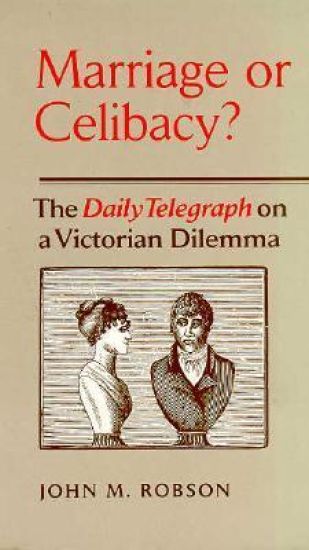
In July 1868 the Daily Telegraph congratulated itself on providing the arena for a controversy marked by `good sense, liveliness, practical wisdom, and hearty humanity.' The controversy was over the choice -: 'Marriage or Celibacy?' - faced by middle-class youth trying to reconcile economic facts with moral values, social customs - and love. The arena was the correspondence page of a newspaper just establishing itself as the most successful London daily through its appeal to the middle-class reader. Public attention was first caught by a court report of a failed attempt to entrap a Belgian girl into prostitution. This induced blistering editorial comment and angry letters to the paper deploring ineffectual controls over the 'Great Social Evil.' The next development was unusual for the Victorian press: readers began to write extensive and richly varied comment on the root of the problem - young people did not have in possession or expectation enough money or the right qualifications for marriage. The Telegraph initiated a new form of popular journalism by filling its correspondence columns for almost a month with readers' letters under the heading 'Marriage or Celibacy?', which they supplemented with lengthy leading articles. John Robson places in contemporary context the central issues facing Victorian youth: What is a proper marriage? How to balance income and expenditure? What are the ideal qualities of young women and men? 'Emigration or starvation?' In examining these debates, he looks closely into methods of argument, connecting rhetorical techniques with public persuasion. The letters being a special kind of discourse, he shows how in the debates rhetorical and logical arguments are specifically designed to persuade the Telegraph's readers. Marriage or Celibacy? contributes to our knowledge of Victorian manners and mores, particularly among the lower middle-class, and is a telling episode to the history of popular journalism.
Hinduism And Its Relations To Christianity (1893)
John Robson
KESSINGER PUBLISHING, LLC
2009
pokkari
Constructive Latin Exercises: For Teaching The Elements Of The Language On A System Of Analysis And Synthesis, With Latin Reading-Lessons And Copious
John Robson
KESSINGER PUBLISHING, LLC
2008
nidottu
As R.J. Schoeck explained in his introduction to the first volume in this series, a group at the University of Toronto began in 1965 to plan annual conferences on editorial problems. Our first conference (October 1965), dealing with the sixteenth century, was followed by a second in November 1966, out of which the present volume has grown. Our experience of these two justifies Professor Schoeck's hopeful assessment of the value of meetings "at which scholars actively at work upon editorial tasks could come together for a free discussion of their work, learning from each other's experience, pooling their common intellectual resources, and seeking out expert opinion and counsel." Some ninety scholars attended the second conference, which featured library displays, a reception, dinner and lunch discussions, as well as the formal sessions, and we are emboldened to say that this is about the optimum number for such conferences. There were amply sufficient interests and attitudes, yet not too many for useful and frank discussion, and there was room for interested graduate students from the area. Few came away from the sessions without having learned something of immediate value and without having been prompted to further hard thought.
Although John Stuart Mill is generally and properly known as a philosopher and political economist, his writings actually cover a wide variety of subjects. In this book Professor Robson brings together the most important strands of Mill’s thought in an attempt to show that it contains a basic unity of approach, at the heart of which is his ethical system. Mill’s ethical position depends on his understanding of the relation between practice and theory, and reflects his own experience, especially his "metal crisis," his appreciation of poetry, and his friendship with Harriet Taylor (who later became his wife). The study brings out the importance of the three phases in Mill’s life: his early period of adherence to the ideas of James Mill and Bentham; his period of assimilation of the influences of Coleridge, Carlyle, Comte, and de Toequeville; and finally his period of mature fame, when he published his System of Logic, Principles of Political Government, Utilitarianism, and other works still central in the British liberal tradition and still used as university texts. Mill’s eminence makes his thought important to anyone interested in recent political, social, economic, and philosophical trends; and his life, as his Autobiography demonstrates, has its own fascination for the general reader as well as for the student of the nineteenth century.
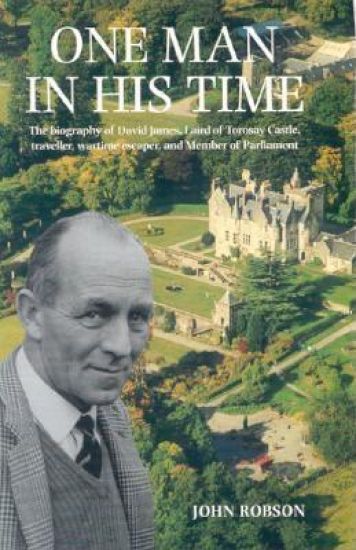
One Man in His Time is the biography of the Laird of Torosay Castle, traveller, wartime hero and escaper and distinguished politician.
Reprint of the original, first published in 1874.
Reprint of the original, first published in 1874.