Kirjojen hintavertailu. Mukana 11 244 527 kirjaa ja 12 kauppaa.

Kirjahaku

Etsi kirjoja tekijän nimen, kirjan nimen tai ISBN:n perusteella.

17 kirjaa tekijältä John Rodden

Of G-Men and Eggheads

Of G-Men and Eggheads

John Rodden

University of Illinois Press
2017
sidottu
Spy romances of Cold War counterespionage evoke scenes of heroic FBI and CIA agents dedicated to smashing communism and its subversive coterie of intellectual fellow travelers bent on painting the world red. John Rodden cuts this tall tale down to its authentic pint size, refusing to indulge the public relations myth promoted by J. Edgar Hoover's FBI. In Of G-Men and Eggheads, Rodden portrays federal agents’ hilarious obsession with monitoring that ever-present threat to national security, the American literary intellectual. Drawing on government dossiers and archives, Rodden focuses on the onetime members of a radical political sect of ex-Trotskyists (barely numbering a thousand at its height), the so-called New York intellectuals. He describes the nonsensical decades-long pursuit of this group of intellectuals, especially Lionel Trilling, Dwight Macdonald, and Irving Howe. The Keystone Cops style of numerous FBI agents is documented carefully in Rodden's meticulous case studies of how Hoover's men recruited informants to snoop on the "Commies," opened their personal mail, tracked their movements, and reported on their wives and friends.In a rich and stimulating epilogue, Rodden shows how his Cold War research possesses thought-provoking implications for us today, in our post-9/11 era of debates about data collection, privacy invasion, personal dignity, and the use and abuse of government and corporate power.
Of G-Men and Eggheads

Of G-Men and Eggheads

John Rodden

University of Illinois Press
2017
nidottu
Spy romances of Cold War counterespionage evoke scenes of heroic FBI and CIA agents dedicated to smashing communism and its subversive coterie of intellectual fellow travelers bent on painting the world red. John Rodden cuts this tall tale down to its authentic pint size, refusing to indulge the public relations myth promoted by J. Edgar Hoover's FBI. In Of G-Men and Eggheads, Rodden portrays federal agents’ hilarious obsession with monitoring that ever-present threat to national security, the American literary intellectual. Drawing on government dossiers and archives, Rodden focuses on the onetime members of a radical political sect of ex-Trotskyists (barely numbering a thousand at its height), the so-called New York intellectuals. He describes the nonsensical decades-long pursuit of this group of intellectuals, especially Lionel Trilling, Dwight Macdonald, and Irving Howe. The Keystone Cops style of numerous FBI agents is documented carefully in Rodden's meticulous case studies of how Hoover's men recruited informants to snoop on the "Commies," opened their personal mail, tracked their movements, and reported on their wives and friends.In a rich and stimulating epilogue, Rodden shows how his Cold War research possesses thought-provoking implications for us today, in our post-9/11 era of debates about data collection, privacy invasion, personal dignity, and the use and abuse of government and corporate power.
Dialectics, Dogmas, and Dissent

Dialectics, Dogmas, and Dissent

John Rodden

Pennsylvania State University Press
2014
pokkari
Germany underwent two periods of dictatorial repression in the twentieth century, first under Hitler and the Nazis in the late 1930s and early 1940s and then under the communist German Democratic Republic from 1945 until the Berlin Wall fell in 1989. The abuses of human rights under the Nazis are well known and now abundantly documented. The abuses that occurred during the period of the GDR, however, are not so well known and are poorly documented. Through his interviews with survivors of GDR repression, John Rodden seeks to add to the history of this dark period. He reveals the many different ways in which ordinary people suffered at the hands of a brutal regime and its secret police enforcers, the Stasi. Some presented here are heroes; some are survivors, including those who played along to get along. As one teacher who conformed to stay safe admitted to Rodden, “It was a nation that, by cutting us off from the truth, made cowards of us all.”
Textbook Reds

Textbook Reds

John Rodden

Pennsylvania State University Press
2013
pokkari
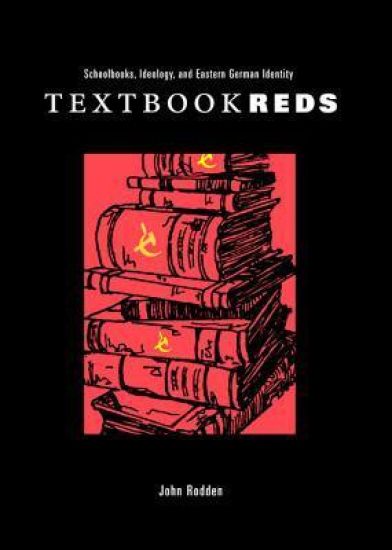
If one wants to know what children in communist East Europe were told to think about their nation and their leaders, their class enemy, and their so-called Soviet friends, no better source exists than textbooks. In textbooks the dogmas of communism were communicated in their most simplified form and manufactured in the millions for mass consumption. In Textbook Reds, John Rodden shows how the now-defunct German Democratic Republic (GDR) shaped generations of East German youth and how the imprint of Marxist-Leninist ideology remains today on the hearts and minds of millions of eastern Germans, more than fifteen years after the fall of the Berlin Wall. Drawing on a rich and varied collection of materials—a total of more than two hundred textbooks, teaching guides, school songbooks, educators’ professional journals, and school examinations—Rodden spotlights the “textbook mentality” that permeated East German society. In the GDR’s campaign to win the minds of men, any critiques of the Party were equated with disloyalty and the bourgeois sins of individualism, negativism, and cosmopolitanism. Citizens who broke free of such indoctrination still bore marks of its influence, even long after leaving school—and long after the GDR’s dissolution in 1990.The second part of the book offers a glimpse of post-communism today. Through interviews with dozens of teachers and students from contemporary eastern Germany, we see that East German faculty and students constitute perhaps the largest, most articulate, most traumatized segment of the population affected by events since 1989. Not just a study in comparative education, Textbook Reds is also a work in the sociology of education, literary sociology, and literary history. Rodden shows that the deepest roots of GDR society were indeed located in the institution that molded the youth of its citizens, and that the most searching questions about East German identity and the repression of its political past are in fact to be found there.
Every Intellectual's Big Brother

Every Intellectual's Big Brother

John Rodden

University of Texas Press
2006
pokkari
George Orwell has been embraced, adopted, and co-opted by everyone from the far left to the neoconservatives. Each succeeding generation of Anglo-American intellectuals has felt compelled to engage the life, work, and cultural afterlife of Orwell, who is considered by many to have been the foremost political writer of the twentieth century. Every Intellectual's Big Brother explores the ways in which numerous disparate groups, Orwell's intellectual "siblings," have adapted their views of Orwell to fit their own agendas and how in doing so they have changed our perceptions of Orwell himself. By examining the politics of literary reception as a dimension of cultural history, John Rodden gives us a better understanding of Orwell's unique and enduring role in Anglo-American intellectual life. In Part One, Rodden opens the book with a section titled "Their Orwell, Left and Right," which focuses on Orwell's reception by several important literary circles of the latter half of the twentieth century. Beginning with Orwell's own contemporaries, Rodden addresses the ways various intellectual groups of the 1950s responded to Orwell. Rodden then moves on in Part Two to what he calls the "Orwell Confraternity Today," those contemporary intellectuals who have, in various ways, identified themselves with or reacted against Orwell. The author concludes by examining how Orwell's status as an object of admiration and detraction has complicated the way in which he has been perceived by readers since his death.
The Unexamined Orwell

The Unexamined Orwell

John Rodden

University of Texas Press
2011
pokkari
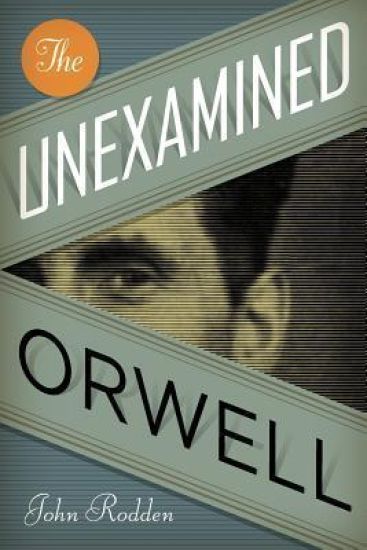
The year 1984 is just a memory, but the catchwords of George Orwell's novel Nineteen Eighty-Four still routinely pepper public discussions of topics ranging from government surveillance and privacy invasion to language corruption and bureaucratese. Orwell's work pervades the cultural imagination, while others of his literary generation are long forgotten. Exploring this astonishing afterlife has become the scholarly vocation of John Rodden, who is now the leading authority on the reception, impact, and reinvention of George Orwell-the man and writer-as well as of "Orwell" the cultural icon and historical talisman. In The Unexamined Orwell, Rodden delves into dimensions of Orwell's life and legacy that have escaped the critical glare. Rodden discusses how several leading American intellectuals have earned the title of Orwell's "successor," including Lionel Trilling, Dwight Macdonald, Irving Howe, Christopher Hitchens, and John Lukacs. He then turns to Germany and focuses on the role and relevance of Nineteen Eighty-Four in the now-defunct communist nation of East Germany. Rodden also addresses myths that have grown up around Orwell's life, including his "more than half-legendary" encounter with Ernest Hemingway in liberated Paris in March 1945, and analyzes literary issues such as his utopian sensibility and his prose style. Finally, Rodden poses the endlessly debated question, "What Would George Orwell Do?," and speculates about how the prophet of Nineteen Eighty-Four would have reacted to world events. In so doing, Rodden shows how our responses to this question reveal much about our culture's ongoing need to reappropriate "Orwell."
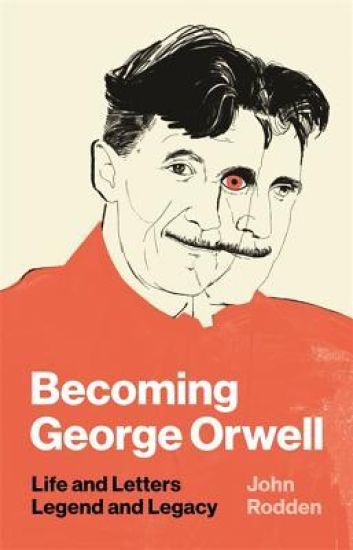
Becoming George Orwell

Becoming George Orwell

John Rodden

Princeton University Press
2020
sidottu
The remarkable transformation of Orwell from journeyman writer to towering iconIs George Orwell the most influential writer who ever lived? Yes, according to John Rodden’s provocative book about the transformation of a man into a myth. Rodden does not argue that Orwell was the most distinguished man of letters of the last century, nor even the leading novelist of his generation, let alone the greatest imaginative writer of English prose fiction. Yet his influence since his death at midcentury is incomparable. No other writer has aroused so much controversy or contributed so many incessantly quoted words and phrases to our cultural lexicon, from “Big Brother” and “doublethink” to “thoughtcrime” and “Newspeak.” Becoming George Orwell is a pathbreaking tour de force that charts the astonishing passage of a litterateur into a legend.Rodden presents the author of Animal Farm and Nineteen Eighty-Four in a new light, exploring how the man and writer Orwell, born Eric Arthur Blair, came to be overshadowed by the spectral figure associated with nightmare visions of our possible futures. Rodden opens with a discussion of the life and letters, chronicling Orwell’s eccentricities and emotional struggles, followed by an assessment of his chief literary achievements. The second half of the book examines the legend and legacy of Orwell, whom Rodden calls “England’s Prose Laureate,” looking at everything from cyberwarfare to “fake news.” The closing chapters address both Orwell’s enduring relevance to burning contemporary issues and the multiple ironies of his popular reputation, showing how he and his work have become confused with the very dreads and diseases that he fought against throughout his life.
Becoming George Orwell

Becoming George Orwell

John Rodden

Princeton University Press
2021
pokkari
The remarkable transformation of Orwell from journeyman writer to towering iconIs George Orwell the most influential writer who ever lived? Yes, according to John Rodden’s provocative book about the transformation of a man into a myth. Rodden does not argue that Orwell was the most distinguished man of letters of the last century, nor even the leading novelist of his generation, let alone the greatest imaginative writer of English prose fiction. Yet his influence since his death at midcentury is incomparable. No other writer has aroused so much controversy or contributed so many incessantly quoted words and phrases to our cultural lexicon, from “Big Brother” and “doublethink” to “thoughtcrime” and “Newspeak.” Becoming George Orwell is a pathbreaking tour de force that charts the astonishing passage of a litterateur into a legend.Rodden presents the author of Animal Farm and Nineteen Eighty-Four in a new light, exploring how the man and writer Orwell, born Eric Arthur Blair, came to be overshadowed by the spectral figure associated with nightmare visions of our possible futures. Rodden opens with a discussion of the life and letters, chronicling Orwell’s eccentricities and emotional struggles, followed by an assessment of his chief literary achievements. The second half of the book examines the legend and legacy of Orwell, whom Rodden calls “England’s Prose Laureate,” looking at everything from cyberwarfare to “fake news.” The closing chapters address both Orwell’s enduring relevance to burning contemporary issues and the multiple ironies of his popular reputation, showing how he and his work have become confused with the very dreads and diseases that he fought against throughout his life.
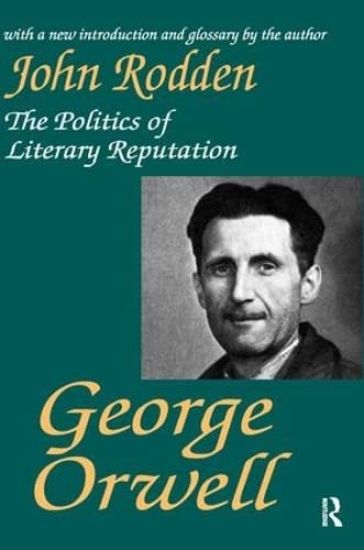
George Orwell

George Orwell

John Rodden

Transaction Publishers
2001
nidottu
The making of literary reputations is as much a reflection of a writer's surrounding culture and politics as it is of the intrinsic quality and importance of his work. The current stature of George Orwell, commonly recognized as the foremost political journalist and essayist of the century, provides a notable instance of a writer whose legacy has been claimed from a host of contending political interests. The exemplary clarity and force of his style, the rectitude of his political judgment along with his personal integrity have made him, as he famously noted of Dickens, a writer well worth stealing. Thus, the intellectual battles over Orwell's posthumous career point up ambiguities in Orwell's own work as they do in the motives of his would-be heirs. John Rodden's George Orwell: The Politics of Literary Reputation, breaks new ground in bringing Orwell's work into proper focus while providing much original insight into the phenomenon of literary fame.Rodden's intent is to clarify who Orwell was as a writer during his lifetime and who he became after his death. He explores the dichotomies between the novelist and the essayist, the socialist and the anti-communist and the contrast between his day-to-day activities as a journalist and his latter-day elevation to political prophet and secular saint. Rodden's approach is both contextual and textual, analyzing available reception materials on Orwell along with audiences and publications decisive for shaping his reputation. He then offers a detailed historical and biographical interpretation of the reception scene analyzing how and why did individuals and audiences cast Orwell in their own images and how these projected images served their own political needs and aspirations. Examined here are the views of Orwell as quixotic moralist, socialist renegade, anarchist, English patriot, neo-conservative, forerunner of cultural studies, and even media and commercial star. Rodden concludes with a consideration of the meaning of Orwell's life and work for the future.
Performing the Literary Interview

Performing the Literary Interview

John Rodden

University of Nebraska Press
2007
pokkari
When authors are interviewed about their books or themselves, much more is going on than a simple conversation. The interview becomes a performance space for authorial orchestration and self-promotion, and interviewers in turn respond to such self-display and theatrics. Featuring absorbing conversations with nine well-known authors, including poets Richard Howard and Gerald Stern, novelist Isabel Allende, and scholar-intellectual Camille Paglia, Performing the Literary Interview is the first in-depth look at this type of performance art. Interviews with poets, fiction writers, and intellectuals enable John Rodden to identify a range of rhetorical strategies and their effects and to formulate a typology for appreciating the various roles that interviewers and interviewees assume. Traditionalists foreground their work rather than themselves, raconteurs are storytellers who skillfully spin anecdotes and creatively showcase their personalities, and advertisers more explicitly use the literary interview to promote and sell themselves. This pioneering, persuasive study stakes a claim to a new area of scholarly inquiry in the humanities. The literary interview can no longer be considered only as a voyeuristic window on an author, or a celebrity vehicle, or even an entertaining diversion, but should also be approached as a serious genre meriting scholarly attention and analysis.
Performing the Literary Interview

Performing the Literary Interview

John Rodden

University of Nebraska Press
2001
sidottu
When authors are interviewed about their books or themselves, much more is going on than a simple conversation. The interview becomes a performance space for authorial orchestration and self-promotion, and interviewers in turn respond to such self-display and theatrics. Featuring absorbing conversations with nine well-known authors, including poets Richard Howard and Gerald Stern, novelist Isabel Allende, and scholar-intellectual Camille Paglia, "Performing the Literary Interview" is the first in-depth look at this type of performance art. Interviews with poets, fiction writers, and intellectuals enable John Rodden to identify a range of rhetorical strategies and their effects and to formulate a typology for appreciating the various roles that interviewers and interviewees assume. Traditionalists foreground their work rather than themselves, raconteurs are storytellers who skillfully spin anecdotes and creatively showcase their personalities, and advertisers more explicitly use the literary interview to promote and sell themselves. This pioneering, persuasive study stakes a claim to a new area of scholarly inquiry in the humanities. The literary interview can no longer be considered only as a voyeuristic window on an author, or a celebrity vehicle, or even an entertaining diversion, but should also be approached as a serious genre meriting scholarly attention and analysis. John Rodden is the author of six books, including "Lionel Trilling and the Critics: Opposing Selves" (Nebraska 1999).
George Orwell

George Orwell

John Rodden

Routledge
2017
sidottu
The making of literary reputations is as much a reflection of a writer's surrounding culture and politics as it is of the intrinsic quality and importance of his work. The current stature of George Orwell, commonly recognized as the foremost political journalist and essayist of the century, provides a notable instance of a writer whose legacy has been claimed from a host of contending political interests. The exemplary clarity and force of his style, the rectitude of his political judgment along with his personal integrity have made him, as he famously noted of Dickens, a writer well worth stealing. Thus, the intellectual battles over Orwell's posthumous career point up ambiguities in Orwell's own work as they do in the motives of his would-be heirs. John Rodden's George Orwell: The Politics of Literary Reputation, breaks new ground in bringing Orwell's work into proper focus while providing much original insight into the phenomenon of literary fame.Rodden's intent is to clarify who Orwell was as a writer during his lifetime and who he became after his death. He explores the dichotomies between the novelist and the essayist, the socialist and the anti-communist and the contrast between his day-to-day activities as a journalist and his latter-day elevation to political prophet and secular saint. Rodden's approach is both contextual and textual, analyzing available reception materials on Orwell along with audiences and publications decisive for shaping his reputation. He then offers a detailed historical and biographical interpretation of the reception scene analyzing how and why did individuals and audiences cast Orwell in their own images and how these projected images served their own political needs and aspirations. Examined here are the views of Orwell as quixotic moralist, socialist renegade, anarchist, English patriot, neo-conservative, forerunner of cultural studies, and even media and commercial star. Rodden concludes with a consideration of the meaning of Orwell's life and work for the future.
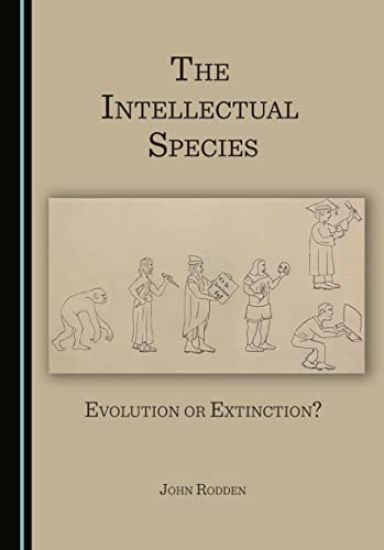
The Intellectual Species

The Intellectual Species

John Rodden

CAMBRIDGE SCHOLARS PUBLISHING
2022
sidottu
This book explores the prospects for survival of what we have come to know as "the intellectual" in the post-Gutenberg age. It addresses the contemporary history of this "species" spawned in the print age, meditating on the precarious future of international intellectual life in the digital era of nanosecond soundbites, fake news, smart phones, and clicks and scrolls in lieu of reading. The book ponders these issues as it addresses the examples of a diverse group of British, American, French, and German intellectuals of the post- World War II era. These "case histories" showcase concretely the "state of the culture" in the context of particular lives, offering diverse intellectual portraiture featuring a wide range of writers across the ideological spectrum. The key family resemblance of these figures is that most of them are contrarians, regardless of whether they were freelance writers or academic intellectuals, American or British or European, and chiefly imaginative writers or non-fiction writers and scholars. Among the intellectuals discussed are George Orwell, Dwight Macdonald, Irving Howe, Camille Paglia, Albert Camus, Robert Havemann, and others. Regardless of which intellectual domains occupied their energies, the histories of all of them yield insight into the transformation of cultural life in recent decades and the contrasting challenges faced by intellectuals of earlier eras versus our own. These issues are of paramount significance for all those who care about the life of the mind and the future of homo sapiens.
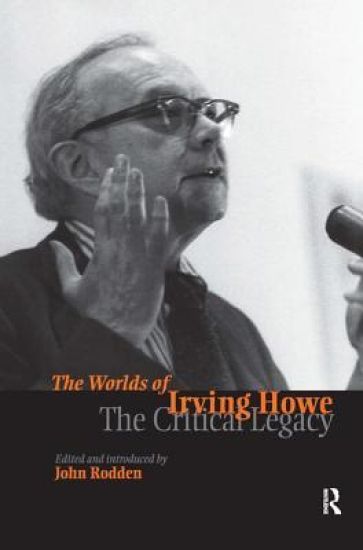
Worlds of Irving Howe

Worlds of Irving Howe

John Rodden

Paradigm
2005
sidottu
The Worlds of Irving Howe: The Critical Legacy is a wide-ranging anthology of criticism devoted to the literary, cultural, and political work of the writer Irving Howe. The book offers a broad cross-section of critical and biographical writings about Howe. Collected here are assessments of Howe's work written by some of the most prominent intellectuals of the twentieth century, among them Lionel Trilling, Alfred Kazin, C. Vann Woodward, Robert Coles, Daniel Bell, Malcolm Cowley, and Arthur Schlesinger. The critical estimates of Howe's major books, collected here and framed by a major biographical introduction by John Rodden, constitute a sharply focused lens through which readers can re-evaluate the legacy of one of American's leading intellectuals and thereby understand the main issues of twentieth-century Anglo-American cultural history. Contributors: Lionel Trilling, Alfred Kazin, C. Vann Woodward, Newton Arvin, Charles Angoff, Edward Dahlberg, Isaac Rosenfeld, Richard Chase, H.D. Lasswell, Dennis Wrong, Michael Harrington, Christopher Lasch, Robert Coles, Daniel Bell, Malcolm Cowley, Arthur Schlesinger, Theodore Solotaroff, Clive James, Norman Podhoretz, Irving Kristol, and William Phillips, among others.
Worlds of Irving Howe

Worlds of Irving Howe

John Rodden

Paradigm
2007
nidottu
The Worlds of Irving Howe: The Critical Legacy is a wide-ranging anthology of criticism devoted to the literary, cultural, and political work of the writer Irving Howe. The book offers a broad cross-section of critical and biographical writings about Howe. Collected here are assessments of Howe's work written by some of the most prominent intellectuals of the twentieth century, among them Lionel Trilling, Alfred Kazin, C. Vann Woodward, Robert Coles, Daniel Bell, Malcolm Cowley, and Arthur Schlesinger. The critical estimates of Howe's major books, collected here and framed by a major biographical introduction by John Rodden, constitute a sharply focused lens through which readers can re-evaluate the legacy of one of American's leading intellectuals and thereby understand the main issues of twentieth-century Anglo-American cultural history. Contributors: Lionel Trilling, Alfred Kazin, C. Vann Woodward, Newton Arvin, Charles Angoff, Edward Dahlberg, Isaac Rosenfeld, Richard Chase, H.D. Lasswell, Dennis Wrong, Michael Harrington, Christopher Lasch, Robert Coles, Daniel Bell, Malcolm Cowley, Arthur Schlesinger, Theodore Solotaroff, Clive James, Norman Podhoretz, Irving Kristol, and William Phillips, among others.
Walls That Remain

Walls That Remain

John Rodden

Paradigm
2007
sidottu
The Walls That Remain explores the trauma of German reunification in 1990 as it affected ordinary Eastern and Western Germans. Told mainly in their own words, this book features the voices of those Germans who have suffered as well as profited from the transformations in German society since the fall of the Berlin Wall in 1989 and Germany's reunification in October 1990.