Kirjojen hintavertailu. Mukana 11 699 587 kirjaa ja 12 kauppaa.

Kirjahaku

Etsi kirjoja tekijän nimen, kirjan nimen tai ISBN:n perusteella.

766 kirjaa tekijältä John Ruskin

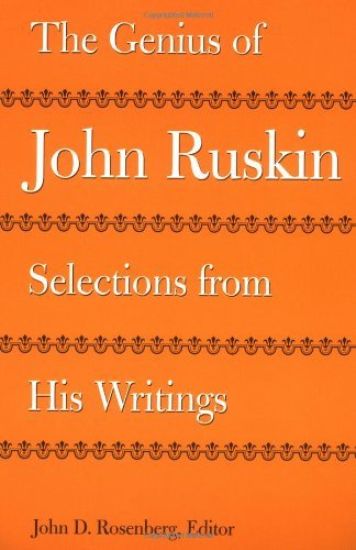
The Genius of John Ruskin

The Genius of John Ruskin

John Ruskin

University of Virginia Press
1998
nidottu
Intended to make his ideas and writings accessible to the modern reader, this text presents Ruskin through five of his most famous works, presented in date order. It provides an authentic portrait of Ruskin by stressing the works that most richly display the temper of his mind: Modern Painters; The Stones of Venice; Unto this Last; Fors Clavigera; and Praeterita. The book was first published in 1963 and this edition is expanded with a new forward and an updated bibliography which takes into account Ruskinian scholarship up until the late 1990s.
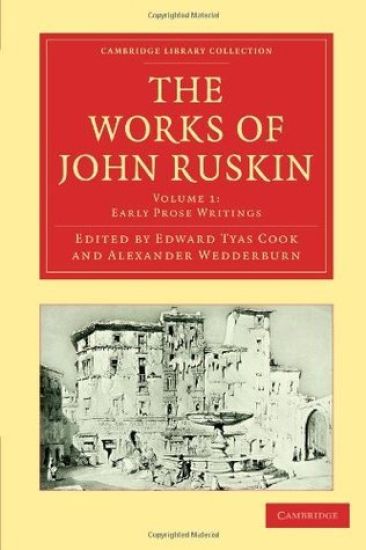
The Works of John Ruskin

The Works of John Ruskin

John Ruskin

Cambridge University Press
2010
pokkari
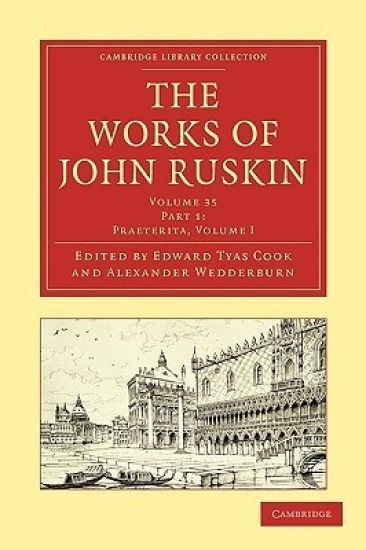
The influence of John Ruskin (1819–1900), both on his own time and on artistic and social developments in the twentieth century, cannot be over-stated. He changed Victorian perceptions of art, and was the main influence behind 'Gothic revival' architecture. As a social critic, he argued for the improvement of the condition of the poor, and against the increasing mechanisation of work in factories, which he believed was dull and soul-destroying. The thirty-nine volumes of the Library Edition of his works, published between 1903 and 1912, are themselves a remarkable achievement, in which his books and essays - almost all highly illustrated - are given a biographical and critical context in extended introductory essays and in the 'Minor Ruskiniana' - extracts from letters, articles and reminiscences both by and about Ruskin. Volume 1 contains early essays, and two pieces of fiction: Leoni and The King of the Golden River.
The Works of John Ruskin

The Works of John Ruskin

John Ruskin

Cambridge University Press
2010
pokkari
The influence of John Ruskin (1819–1900), both on his own time and on artistic and social developments in the twentieth century, cannot be over-stated. He changed Victorian perceptions of art, and was the main influence behind 'Gothic revival' architecture. As a social critic, he argued for the improvement of the condition of the poor, and against the increasing mechanisation of work in factories, which he believed was dull and soul-destroying. The thirty-nine volumes of the Library Edition of his works, published between 1903 and 1912, are themselves a remarkable achievement, in which his books and essays - almost all highly illustrated - are given a biographical and critical context in extended introductory essays and in the 'Minor Ruskiniana' - extracts from letters, articles and reminiscences both by and about Ruskin. This second volume contains Ruskin's poems.
The Works of John Ruskin

The Works of John Ruskin

John Ruskin

Cambridge University Press
2010
pokkari
The influence of John Ruskin (1819–1900), both on his own time and on artistic and social developments in the twentieth century, cannot be over-stated. He changed Victorian perceptions of art, and was the main influence behind 'Gothic revival' architecture. As a social critic, he argued for the improvement of the condition of the poor, and against the increasing mechanisation of work in factories, which he believed was dull and soul-destroying. The thirty-nine volumes of the Library Edition of his works, published between 1903 and 1912, are themselves a remarkable achievement, in which his books and essays - almost all highly illustrated - are given a biographical and critical context in extended introductory essays and in the 'Minor Ruskiniana' - extracts from letters, articles and reminiscences both by and about Ruskin. This third volume contains Volume 1 of Modern Painters.
The Works of John Ruskin

The Works of John Ruskin

John Ruskin

Cambridge University Press
2010
pokkari
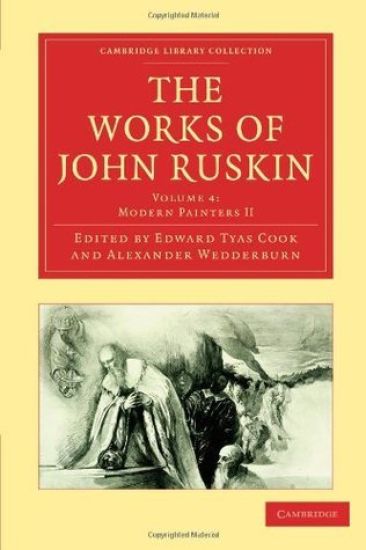
The influence of John Ruskin (1819–1900), both on his own time and on artistic and social developments in the twentieth century, cannot be over-stated. He changed Victorian perceptions of art, and was the main influence behind 'Gothic revival' architecture. As a social critic, he argued for the improvement of the condition of the poor, and against the increasing mechanisation of work in factories, which he believed was dull and soul-destroying. The thirty-nine volumes of the Library Edition of his works, published between 1903 and 1912, are themselves a remarkable achievement, in which his books and essays - almost all highly illustrated - are given a biographical and critical context in extended introductory essays and in the 'Minor Ruskiniana' - extracts from letters, articles and reminiscences both by and about Ruskin. This fourth volume contains volume 2 of Modern Painters.
The Works of John Ruskin

The Works of John Ruskin

John Ruskin

Cambridge University Press
2010
pokkari
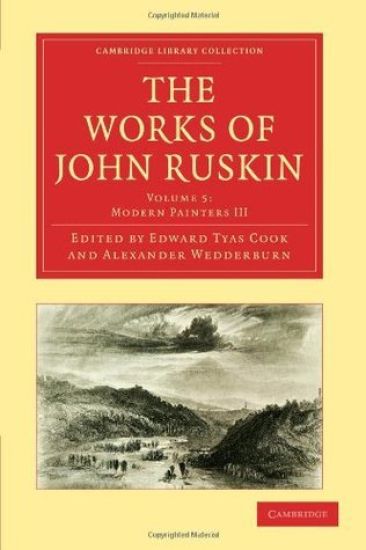
The influence of John Ruskin (1819–1900), both on his own time and on artistic and social developments in the twentieth century, cannot be over-stated. He changed Victorian perceptions of art, and was the main influence behind 'Gothic revival' architecture. As a social critic, he argued for the improvement of the condition of the poor, and against the increasing mechanisation of work in factories, which he believed was dull and soul-destroying. The thirty-nine volumes of the Library Edition of his works, published between 1903 and 1912, are themselves a remarkable achievement, in which his books and essays - almost all highly illustrated - are given a biographical and critical context in extended introductory essays and in the 'Minor Ruskiniana' - extracts from letters, articles and reminiscences both by and about Ruskin. This fifth volume contains Volume 3 of Modern Painters.
The Works of John Ruskin

The Works of John Ruskin

John Ruskin

Cambridge University Press
2010
pokkari
The influence of John Ruskin (1819–1900), both on his own time and on artistic and social developments in the twentieth century, cannot be over-stated. He changed Victorian perceptions of art, and was the main influence behind 'Gothic revival' architecture. As a social critic, he argued for the improvement of the condition of the poor, and against the increasing mechanisation of work in factories, which he believed was dull and soul-destroying. The thirty-nine volumes of the Library Edition of his works, published between 1903 and 1912, are themselves a remarkable achievement, in which his books and essays - almost all highly illustrated - are given a biographical and critical context in extended introductory essays and in the 'Minor Ruskiniana' - extracts from letters, articles and reminiscences both by and about Ruskin. This sixth volume contains Volume 4 of Modern Painters.
The Works of John Ruskin

The Works of John Ruskin

John Ruskin

Cambridge University Press
2010
pokkari
The influence of John Ruskin (1819–1900), both on his own time and on artistic and social developments in the twentieth century, cannot be over-stated. He changed Victorian perceptions of art, and was the main influence behind 'Gothic revival' architecture. As a social critic, he argued for the improvement of the condition of the poor, and against the increasing mechanisation of work in factories, which he believed was dull and soul-destroying. The thirty-nine volumes of the Library Edition of his works, published between 1903 and 1912, are themselves a remarkable achievement, in which his books and essays - almost all highly illustrated - are given a biographical and critical context in extended introductory essays and in the 'Minor Ruskiniana' - extracts from letters, articles and reminiscences both by and about Ruskin. This seventh volume contains Volume 5 of Modern Painters.
The Works of John Ruskin

The Works of John Ruskin

John Ruskin

Cambridge University Press
2010
pokkari
The influence of John Ruskin (1819–1900), both on his own time and on artistic and social developments in the twentieth century, cannot be over-stated. He changed Victorian perceptions of art, and was the main influence behind 'Gothic revival' architecture. As a social critic, he argued for the improvement of the condition of the poor, and against the increasing mechanisation of work in factories, which he believed was dull and soul-destroying. The thirty-nine volumes of the Library Edition of his works, published between 1903 and 1912, are themselves a remarkable achievement, in which his books and essays - almost all highly illustrated - are given a biographical and critical context in extended introductory essays and in the 'Minor Ruskiniana' - extracts from letters, articles and reminiscences both by and about Ruskin. This eighth volume contains The Seven Lamps of Architecture.