
Kirjahaku
Etsi kirjoja tekijän nimen, kirjan nimen tai ISBN:n perusteella.
13 kirjaa tekijältä John Russell Taylor
The Rise and Fall of the Well-Made Play (Routledge Revivals)
John Russell Taylor
Routledge
2013
sidottu
First published in 1967, this title considers the idea of the ‘well-made play’ in the context of how and why it has been devalued and how far, in allowing it to be devalued, we have lost sight of certain important elements of the theatre. The focus of the book is largely on the development of British theatre and those who have been instrumental to it. This is an indispensable introduction for any student with an interest in the history and development of the British theatre.
Since the cinema first began to be taken seriously as an art form, there has been a constant debate on the question: who is the real creator of the film, the writer or the director? This study of a group of key film-makers in the sixties suggests that during this decade there was an emergence of a generation of film-makers who conceived a whole film in their minds just as an architect conceives a whole cathedral or a composer a whole symphony.The book presents detailed critical studies of the work of six commanding figures in the international cinema: four who have made their major reputations since 1950, the Italians Frederico Fellini and Michelangelo Antonioni, the Frenchman Robert Bresson and the Swede Ingmar Bergman; and two film-makers of an older generation, the Spaniard Luis Buñuel and the Anglo-American Alfred Hitchcock, who have reached the height of their powers and exerted their most important influence on the cinema during the same period. There is also a section on the new talents to emerge more recently in the French ‘New Wave’, in particular François Truffaut, Jen-Luc Godard and Alain Resnais. In addition, the book contains detailed filmographies of the directors discussed.
This is a study of nine key film-makers who came into prominence in the early ‘70s: Claude Chabrol, Pier Paolo Pasolini, Lindsay Anderson, Stanley Kubrick, Andy Warhol and Paul Morrissey, Satyajit Ray, Miklos Jancsó, and Dušan Makavejev – representing seven film-producing countries. In this book John Russell Taylor does for the 1970s what his earlier book Cinema Eye, Cinema Ear did for the 1960s: he disentangles some of the major talents from the minor, and subjects them to close critical scrutiny, documenting their careers, detailing their development as individual creators, and placing them in their social and artistic context. Thus the book provides an invaluable synopsis and guide for all who are interested in the development of modern cinema. It includes a comprehensive bibliography and fully detailed filmographies.
The Rise and Fall of the Well-Made Play (Routledge Revivals)
John Russell Taylor
Routledge
2015
nidottu
First published in 1967, this title considers the idea of the ‘well-made play’ in the context of how and why it has been devalued and how far, in allowing it to be devalued, we have lost sight of certain important elements of the theatre. The focus of the book is largely on the development of British theatre and those who have been instrumental to it. This is an indispensable introduction for any student with an interest in the history and development of the British theatre.
In the 1970s the revolution that had swept the British theatre in the 1950s had already become accepted as the new establishment. Areas that had been previously regarded as remote ideals - including permanent repertory companies, a lively provincial theatre and an extensive spread of avant-garde and fringe theatrical activities - were now considered commonplace. In this title, first published in 1971, John Russell Taylor assesses the prospects of the British theatre at the start of the 1970s and indicates its points of weakness and its strengths. In this context are placed the key figures among the Second Wave of dramatists, and detailed critical commentaries on the work of writers such as David Mercer, Tom Stoppard and Peter Terson. This is an indispensable introduction for any student with an interest in the history and development of the British theatre and the people who have played instrumental roles in this.
In the 1970s the revolution that had swept the British theatre in the 1950s had already become accepted as the new establishment. Areas that had been previously regarded as remote ideals - including permanent repertory companies, a lively provincial theatre and an extensive spread of avant-garde and fringe theatrical activities - were now considered commonplace. In this title, first published in 1971, John Russell Taylor assesses the prospects of the British theatre at the start of the 1970s and indicates its points of weakness and its strengths. In this context are placed the key figures among the second wave of dramatists, and detailed critical commentaries on the work of writers such as David Mercer, Tom Stoppard and Peter Terson. This is an indispensable introduction for any student with an interest in the history and development of the British theatre and the people who have played instrumental roles in this.

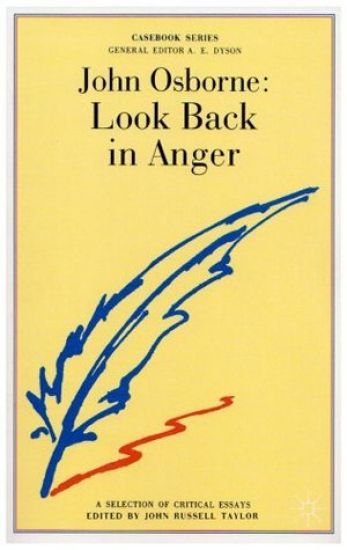
When it was first published in 1962, Anger and After was the first comprehensive study of the dramatic movement which began in 1956 with the staging of John Osborne’s Look Back in Anger and has since brought forward such dramatists as Brendan Behan, Harold Pinter, N. F. Simpson, John Arden and Arnold Wesker. Thoroughly revised in 1969, this book remains important reading for theatre students in need of a comprehensive and authoritative guide to post-Osborne drama in Britain.
When it was first published in 1962, Anger and After was the first comprehensive study of the dramatic movement which began in 1956 with the staging of John Osborne’s Look Back in Anger and has since brought forward such dramatists as Brendan Behan, Harold Pinter, N. F. Simpson, John Arden and Arnold Wesker. Thoroughly revised in 1969, this book remains important reading for theatre students in need of a comprehensive and authoritative guide to post-Osborne drama in Britain.
This is a study of nine key film-makers who came into prominence in the early ‘70s: Claude Chabrol, Pier Paolo Pasolini, Lindsay Anderson, Stanley Kubrick, Andy Warhol and Paul Morrissey, Satyajit Ray, Miklos Jancsó, and Dušan Makavejev – representing seven film-producing countries. In this book John Russell Taylor does for the 1970s what his earlier book Cinema Eye, Cinema Ear did for the 1960s: he disentangles some of the major talents from the minor, and subjects them to close critical scrutiny, documenting their careers, detailing their development as individual creators, and placing them in their social and artistic context. Thus the book provides an invaluable synopsis and guide for all who are interested in the development of modern cinema. It includes a comprehensive bibliography and fully detailed filmographies.
Since the cinema first began to be taken seriously as an art form, there has been a constant debate on the question: who is the real creator of the film, the writer or the director? This study of a group of key film-makers in the sixties suggests that during this decade there was an emergence of a generation of film-makers who conceived a whole film in their minds just as an architect conceives a whole cathedral or a composer a whole symphony.The book presents detailed critical studies of the work of six commanding figures in the international cinema: four who have made their major reputations since 1950, the Italians Frederico Fellini and Michelangelo Antonioni, the Frenchman Robert Bresson and the Swede Ingmar Bergman; and two film-makers of an older generation, the Spaniard Luis Buñuel and the Anglo-American Alfred Hitchcock, who have reached the height of their powers and exerted their most important influence on the cinema during the same period. There is also a section on the new talents to emerge more recently in the French ‘New Wave’, in particular François Truffaut, Jen-Luc Godard and Alain Resnais. In addition, the book contains detailed filmographies of the directors discussed.
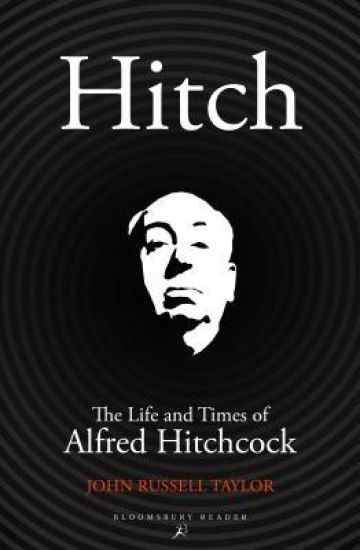
This biography of Alfred Hitchcock is as intriguing, revealing, perverse, and entertaining as any of his classic films.'The best book yet about the movies’ most famous director' Publisher's Weekly'No one will ever top Hitch' Jimmy StewartOne of cinema's greatest directors, a virtuoso visual artist, and a genius of the suspense genre, Alfred Hitchcock (1899–1980) is universally known for such masterpieces as Strangers on a Train, Rear Window, Vertigo, North by Northwest, Psycho, and The Birds.But he was also a famously difficult and complex man, prone to arguing with studios and stars alike. In writing this biography, John Russell Taylor, a distinguished film critic and friend of Hitchcock's, enjoyed his full cooperation. Based on numerous interviews, with photos from the private family albums, and an in-depth study of the making of his last film, this biography of the director is as intriguing, revealing, perverse, and entertaining as any Hitchcock classic.