Kirjojen hintavertailu. Mukana 12 390 323 kirjaa ja 12 kauppaa.

Kirjahaku

Etsi kirjoja tekijän nimen, kirjan nimen tai ISBN:n perusteella.

13 kirjaa tekijältä John S. Haller

The Buddha's Midwife: Paul Carus and the Spread of Buddhism in America
Between the Parliament of Religions which met in Chicago in 1893 at the time of the Columbian Exposition, and World War I, Asian religions and philosophies made a significant impact on the United States, causing a profound change in thinking about them, including their relevance to the present. More so than any other religion, Buddhism became a crutch for those who, in the final decades of the nineteenth century, became disillusioned with Christianity’s claim to superiority over all other faiths. Like so many intellectuals at the time, Carus was seeking a path from the older theologies into a new secular world and its uncertain future. Through The Buddha's Midwife, Paul Carus not only brought elements of Buddhism to the United States, but much of the Western world. This book was written to recount the journey of one of the principal contributors to the spread of Buddhist thinking in American thought and culture. Now, reissued for the first time since its original publishing, The Buddha's Midwife returns to excite and inspire new audiences.
Swedenborg's Principles of Usefulness

Swedenborg's Principles of Usefulness

JOHN S. HALLER; JAMES LAWRENCE

Swedenborg Foundation
2020
sidottu
Swedenborg's Principles of Usefulness highlights Emanuel Swedenborg's (1688-1772) widespread influence on an impressive host of historical figures--from poets and artists to philosophers and statesmen--and reform movements whose contributions to the evolution of self and society have resonated throughout time and into the present. As evidenced in the self-reliance of the great Ralph Waldo Emerson, who went so far as to refer to the early part of the nineteenth century as the age of Swedenborg, the socialist tendencies of Henry James, Sr., and the pragmatic philosophy of his highly esteemed son William James, Swedenborg has had a powerful impact on a number of prominent individual thinkers and their lasting traditions. With love for one's neighbor sharing pride of place among his ideas, it comes as no surprise that Swedenborg's outlook on human interaction worked its way into the various social reform movements that vitalized the American landscape during the nineteenth and early twentieth centuries. From the more politically oriented single-tax movement of Henry George to the utopian aspirations of Charles Fourier and the more spiritually inclined social gospel and pastoral clinical movements, those who took Swedenborg's principles of usefulness to heart sought ways to reflect the divine design in human society. John Haller's treatment of the era draws a magnifying glass to those intellectual titans whose fortitude in the face of psychological and social adversities stands as a testament to the robustness of Swedenborg's concept of usefulness. As James F. Lawrence, Dean of the Center for Swedenborgian Studies at the Graduate Theological Union in Berkeley, California, so aptly states in his foreword, "this book tells stories and builds perspectives that will prove without a doubt to be very useful."
Shadow Medicine

Shadow Medicine

John S. Haller

Columbia University Press
2014
sidottu
Can Evidence Based Medicine (EBM) and Complementary and Alternative Medicine (CAM) find common ground? A distinguished historian of medicine, John S. Haller Jr., explores the epistemological foundations of EBM and the challenges these conceptual tools present for both conventional and alternative therapies. As he explores a possible reconciliation between their conflicting approaches, Haller maintains a healthy, scientific skepticism yet finds promise in select complementary and alternative (CAM) therapies. Haller elucidates recent research on the placebo effect and shows how a new engagement between EBM and CAM might lead to a more productive medical practice that includes both the objectivity of evidence-based medicine and the subjective truth of the physician-patient relationship. Haller's book tours key topics in the standoff between EBM and CAM: how and why the double blinded, randomized clinical trial (RCT) came to be considered the gold standard in modern medicine; the challenge of postmodern medicine as it counters the positivism of evidence-based medicine; and the politics of modern CAM and the rise of the National Center for Complementary and Alternative Medicine. He conducts an in-depth case study of homeopathy, explaining why it has emerged as a poster-child for CAM, and assesses CAM's popularity despite its poor performance in clinical trials. Haller concludes with hope, showing how new experimental protocols might tease out the evidentiary basis for the placebo effect and establish a foundation for some reconciliation between EBM and CAM.
Outcasts from Evolution

Outcasts from Evolution

John S. Haller

Southern Illinois University Press
1996
nidottu
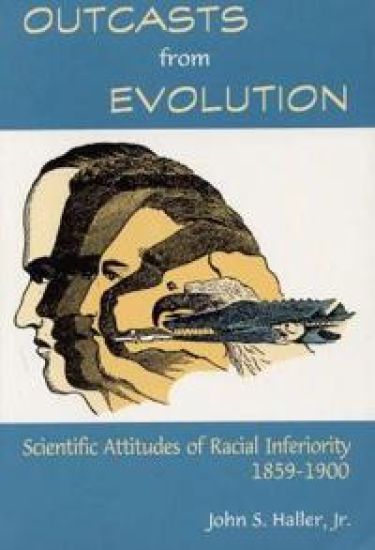
In the only book to date to explore the period between the 1859 publication of Darwin’s Origin of Species and the discovery in 1900 of Gregor Mendel’s experiments in genetics, John S. Haller, Jr., shows the relationship between scientific ""conviction"" and public policy. He focuses on the numerous liberally educated American scientists who were caught up in the triumph of evolutionary ideas and who sought to apply those ideas to comparative morality, health, and the physiognomy of nonwhite races. During this period, the natural and social scientists of the day not only accepted without question the genetic and cultural superiority of the Caucasian; they also asserted that the Caucasian race held a monopoly on evolutionary progress, arguing that ""inferior races"" were no more than evolutionary survivors doomed by their genetic legacy to remain outcasts from evolution. Hereditarians and evolutionists believed that ""less fit"" human races were perishing from the rigors of civilization’s struggle and competition. Indeed, racial inferiority lay at the very foundation of the evolutionary framework and, remaining there, rose to the pinnacle of ""truth"" with the myth of scientific certainty.
Battlefield Medicine

Battlefield Medicine

John S. Haller

Southern Illinois University Press
2011
nidottu
In this first history of the military ambulance, historian John S. Haller Jr. documents the development of medical technologies for treating and transporting wounded soldiers on the battlefield. Noting that the word ambulance has been used to refer to both a mobile medical support system and a mode of transport, Haller takes readers back to the origins of the modern ambulance, covering their evolution in depth from the late eighteenth century through World War I. The rising nationalism, economic and imperial competition, and military alliances and arms races of the nineteenth and early twentieth centuries figure prominently in this history of the military ambulance, which focuses mainly on British and American technological advancements. Beginning with changes introduced by Dominique-Jean Larrey during the Napoleonic Wars, the book traces the organizational and technological challenges faced by opposing armies in the Crimean War, the American Civil War, the Franco-Prussian War, and the Philippines Insurrection, then climaxes with the trench warfare that defined World War I. The operative word is ""challenges"" of medical care and evacuation because while some things learned in a conflict are carried into the next, too often, the spasms of war force its participants to repeat the errors of the past before acquiring much needed insight. More than a history of medical evacuation systems and vehicles, this exhaustively researched and richly illustrated volume tells a fascinating story, giving readers a unique perspective of the changing nature of warfare in the nineteenth and early twentieth centuries.
Medical Protestants

Medical Protestants

John S. Haller

Southern Illinois University Press
2013
nidottu
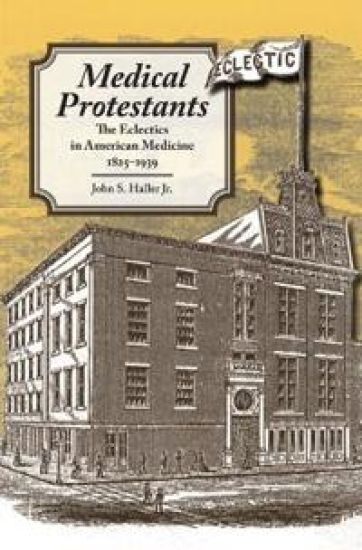
John S. Haller, Jr., provides the first modern history of the Eclectic school of American sectarian medicine.The Eclectic school (sometimes called the American School) flourished in the mid-nineteenth century when the art and science of medicine was undergoing a profound crisis of faith. At the heart of the crisis was a disillusionment with the traditional therapeutics of the day and an intense questioning of the principles and philosophy upon which medicine had been built. Many American physicians and their patients felt that medicine had lost the ability to cure. The Eclectics surmounted the crisis by forging a therapeutics based on herbal remedies and an empirical approach to disease, a system independent of the influence of European practices.Although rejected by the Regulars (adherents of mainstream medicine), the Eclectics imitated their magisterial manner, establishing two dozen colleges and more than sixty-five journals to proclaim the wisdom of their theory. Central to the story of Eclecticism is that of the Eclectic Medical Institute of Cincinnati, the mother institute of reform medical colleges. Organized in 1845, the school was to exist for ninety-four years before closing in 1939.Throughout much of their history, the Eclectic medical schools provided an avenue into the medical profession for men and women who lacked the financial and educational opportunities the Regular schools required, siding with Professor Martyn Paine of the Medical Department of New York University, who, in 1846, had accused the newly formed American Medical Association of playing aristocratic politics behind a masquerade of curriculum reform. Eventually, though, they grudgingly followed the lead of the Regulars by changing their curriculum and tightening admission standards.By the late nineteenth century, the Eclectics found themselves in the backwaters of modern medicine. Unable to break away from their botanic bias and ill-equipped to support the implications of germ theory, the financial costs of salaried faculty and staff, and the research implications of laboratory science, the Eclectics were pushed aside by the rush of modern academic medicine.
Fictions of Certitude

Fictions of Certitude

John S. Haller

The University of Alabama Press
2020
sidottu
The search for belief and meaning among nineteenth-century intellectuals.The nineteenth century's explosion of scientific theories and new technologies undermined many deep-seated beliefs that had long formed the basis of Western society, making it impossible for many to retain the unconditional faith of their forebears. A myriad of discoveries - including Faraday's electromagnetic induction, Joule's law of conservation of energy, Pasteur's germ theory, Darwin's and Wallace's theories of evolution by natural selection, and Planck's work on quantum theory - shattered conventional understandings of the world that had been dictated by traditional religious teachings and philosophical systems for centuries.Fictions of Certitude: Science, Faith, and the Search for Meaning, 1840-1920 investigates the fin de siÈcle search for truth and meaning in a world that had been radically transformed. John S. Haller Jr. examines the moral and philosophical journeys of nine European and American intellectuals who sought deeper understanding amid such paradigmatic upheaval. Auguste Comte, John Henry Newman, Herbert Spencer, Alfred Russel Wallace, Thomas Henry Huxley, John Fiske, William James, Lester Frank Ward, and Paul Carus all belonged to an age in which one world was passing, while another world that was both astounding and threatening was rising to take its place.For Haller, what makes the work of these nine thinkers worthy of examination is how they strove in different ways to find certitude and belief in the face of an epochal sea change. Some found ways to reconceptualize a world in which God and nature coexist. For others, the challenge was to discern meaning in a world in which no higher power or purpose can be found. As explained by D. H. Myer, 'The later Victorians were perhaps the last generation among English-speaking intellectuals able to believe that man was capable of understanding his universe, just as they were the first generation collectively to suspect that he never would.
SWEDENBORG, MESMER, AND THE MIND/BODY CONNECTION

SWEDENBORG, MESMER, AND THE MIND/BODY CONNECTION

John S. Haller

Swedenborg Foundation
2010
sidottu
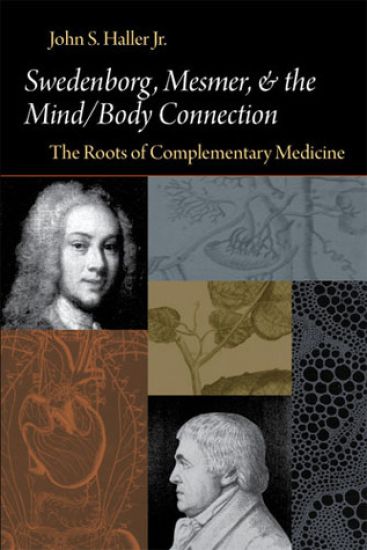
Complementary and alternative healing encompass a wide range of practices that share a common ground: the belief that our physical well-being is inextricably linked to an unseen world beyond our physical senses. Our view of that world can be traced to two key thinkers: Emanuel Swedenborg and Franz Anton Mesmer. Who were these men, and what shaped their thought? How did their ideas capture the public imagination? How did they speak to movements as diverse as utopianism, Spiritualism, psychic healing, and homeopathy? Historian John S. Haller traces the threads of Swedenborg's and Mesmer's influence through the history of nineteenth-century medicine, illuminating the lasting impact these men have had on concepts of alternative healing.
Michael A. Musmanno

Michael A. Musmanno

John S. Haller

Lehigh University Press
2023
sidottu
Throughout his life, Musmanno provided a voice for the people amid the interplay of politics and the arrogance of power. A crowd pleaser, he had no trepidation in saying what he thought. The author of sixteen books, two of which became movies, numerous unpublished scripts, and gifted with a strong sense of patriotism as well as pride in his Italian heritage, he left a legacy of rhetorical flourishes that still echo through the chambers of the Pennsylvania Legislature, the transcripts of the Einsatzgruppen trial over which he presided in Nuremberg, his testimony at the Eichmann trial and subsequent feud with German-born political theorist Hannah Arendt, and his impassioned dissents (over 500) as a justice on the Pennsylvania Supreme Court.
The Physician and Sexuality in Victorian America

The Physician and Sexuality in Victorian America

John S. Haller; Robin M. Haller

WW Norton Co
1977
nidottu
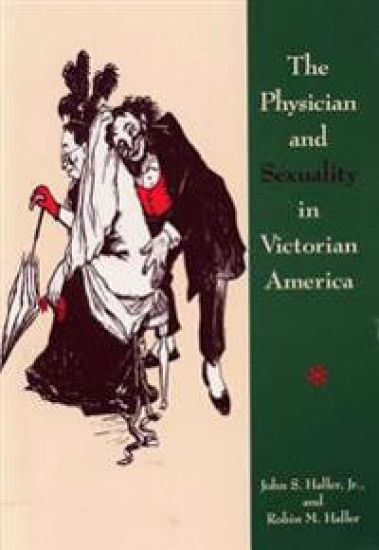
“Men and women in late nineteenth-century America,” write John S. Haller and Robin M. Haller, “faced a bewildering and conflicting array of roles forced on them by a newly industrialized society.” Nowhere were these roles more sharply drawn than in the area of sexuality. Growing numbers of Victorians found themselves unable to confide in husbands, wives, or relatives on personal matters. Increasingly, they turned to advice columns in newspapers, etiquette books, philanthropic organizations, marriage manuals, private counselors—and to the physician. The peculiar relationship that existed between the physician and his patient enabled the medical profession to exert a powerful influence: the doctor found himself with the responsibility of acting as the arbiter of fashion, the watchman of morals, and the judge of personal needs. And because the medical profession held itself responsible for the moral and spiritual health of the nation, doctors felt it necessary to bring their professional authority to bear against those elements—such as the women’s rights movement—which threatened the stability of society.
The History of New Thought

The History of New Thought

John S. Haller; Robert C. Fuller

Swedenborg Foundation
2012
sidottu
Anything is yours, if you only want it hard enough. Just think of it. ANYTHING. Try it. Try it in earnest and you will succeed. It is the operation of a mighty Law. Does that sound like something from the latest spin-off of The Secret? In fact, those words were written in 1900 by William Walter Atkinson, the man who authored the first book on the "Law of Attraction." Atkinson was only one of the many and varied personalities that make up the movement known as New Thought. Composed of healers, priests, psychologists, and ordinary people from all levels of society, the proponents of New Thought have one thing in common: a belief in the power of the mind. In The History of New Thought, Haller examines the very beginnings of the movement, its early influences (including Swedish seer Emanuel Swedenborg), and how its initial emphasis on healing disease morphed into a vision of the mind's ability to bring us whatever we desire. While most histories of New Thought tend to focus on churches and other formal organizations, Haller reveals that New Thought has had a much broader impact on American culture. Bestselling authors from the late nineteenth century and onward sold books in the millions of copies that were eagerly read and quoted by powerful politicians and wealthy industrialists. The idea that thoughts could become reality is so embedded in American culture that we tell each other to "be positive" without ever questioning why. New Thought has become our thought. Anyone interested in psychology, popular culture, or history will be fascinated by this exploration of a little-known facet of modern culture.