Kirjojen hintavertailu. Mukana 11 342 296 kirjaa ja 12 kauppaa.

Kirjahaku

Etsi kirjoja tekijän nimen, kirjan nimen tai ISBN:n perusteella.

17 kirjaa tekijältä John Schofield

Wicked Problems for Archaeologists

Wicked Problems for Archaeologists

John Schofield

Oxford University Press
2024
sidottu
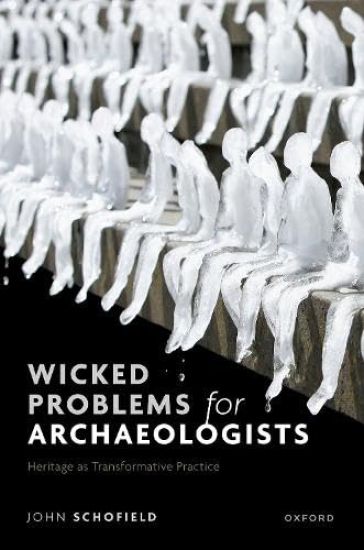
'Wicked Problems' are those problems facing the planet and its inhabitants, present and future, which are hard (if not impossible) to resolve and for which bold, creative, and messy solutions are typically required. The adjective 'wicked' describes the mischievous and even evil quality of these problems, where proposed solutions often turn out to be worse than the symptoms. This wide-ranging and innovative book encourages readers to think about archaeology in an entirely new way, as fresh, relevant, and future-oriented. It examines some of the novel ways that archaeology (alongside cultural heritage practice) can contribute to resolving some of the world's most wicked problems, or global challenges as they are sometimes known. With chapters covering climate change, environmental pollution, health and wellbeing, social injustice, and conflict, the book uses many and diverse examples to explain how, through studying the past and present through an archaeological lens, in ways that are creative, ambitious, and both inter- and transdisciplinary, significant 'small wins' can be achieved. Through these small wins, archaeologists can help to mitigate some of those most pressing of wicked problems, contributing therefore to a safer, healthier, and more stable world.
Medieval London Houses

Medieval London Houses

John Schofield

Yale University Press
2003
pokkari
This authoritative book is the first comprehensive study of domestic buildings in London from about 1200 to the Great Fire in 1666. John Schofield describes houses and such related buildings as almshouses, taverns, inns, shops, and livery company halls, drawing on evidence from surviving buildings, archaeological excavations, documents, panoramas, drawn surveys and plans, contemporary descriptions, and later engravings and photographs.Schofield presents a comprehensive overview of the topography of the medieval city, reconstructing its streets, defenses, many religious houses, and fine civic buildings. He then provides details about the medieval and Tudor London house: its plan, individual rooms and spaces and their functions, the roofs, floors, and windows, the materials of construction and decoration, and the internal fittings and furniture. Throughout the book he discusses what this evidence tells us about the special restrictions or pleasures of living in the capital; how certain innovations of plan and construction first occurred in London before spreading to other towns; and how notions of privacy developed. The generously illustrated text is accompanied by a selective gazetteer of 201 sites in the City of London and its immediate environs.Published for the Paul Mellon Center for Studies in British Art
Laytime and Demurrage

Laytime and Demurrage

John Schofield

CRC Press
2021
sidottu
Laytime and Demurrage is the leading authority for all queries pertaining to this vital aspect of maritime law. It has continued to offer reliable, authoritative, and in-depth analysis since the first edition published in 1986. Praised for its unrivalled coverage and lucid writing style, this book provides a comprehensive overview of all aspects of laytime and demurrage, tracing the development of the law from its origins in the nineteenth century right up to the present day. The author delivers an in-depth analysis of both fixed and customary laytime clauses, the rules relating to commencement of laytime in berth, dock and port charters, and discusses under which circumstances laytime can be suspended. Furthermore, it analyses demurrage rules and vital issues such as despatch, detention and frustration. This eighth edition includes all key judicial and arbitral decisions reported since the seventh edition published in 2016. It also covers suffixes in connection with laytime measured in terms of Working days and Weather Working Days, and disputes arising from tender of NORs at the end of the sea passage. Laytime and Demurrage is an invaluable guide for both legal practitioners and maritime professionals worldwide, including commodity traders and brokers, shipping companies, P&I Clubs, shipowners, charterers, and arbitrators.
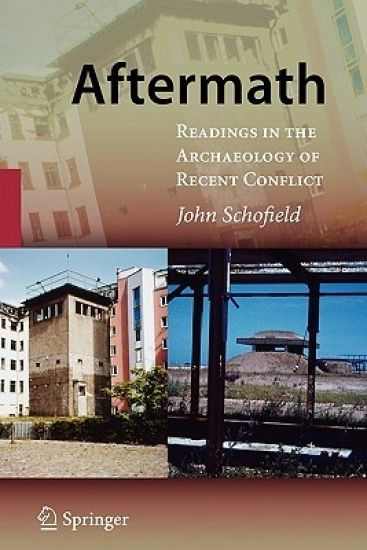
Aftermath

Aftermath

John Schofield

Springer-Verlag New York Inc.
2009
sidottu
Conflict and Battlefield Archaeology is a growing and important field in archaeology, with implications on the state of the world today: how humanity has prepared for, reacted to, and dealt with the consequences of conflict at a national and international level. As the field grows, there is an increasing need for research and development in this area. Written by one of the most prominent scholars in this field of growing interest, "Aftermath", offers a clear and important overview to research in the field. It will become an essential source of information for scholars already involved in conflict archaeology as well as those just starting to explore the field. It offers access to previously hard-to-find but important research.
Aftermath

Aftermath

John Schofield

Springer-Verlag New York Inc.
2010
nidottu
Conflict and Battlefield Archaeology is a growing and important field in archaeology, with implications on the state of the world today: how humanity has prepared for, reacted to, and dealt with the consequences of conflict at a national and international level. As the field grows, there is an increasing need for research and development in this area. Written by one of the most prominent scholars in this field of growing interest, "Aftermath", offers a clear and important overview to research in the field. It will become an essential source of information for scholars already involved in conflict archaeology as well as those just starting to explore the field. It offers access to previously hard-to-find but important research.
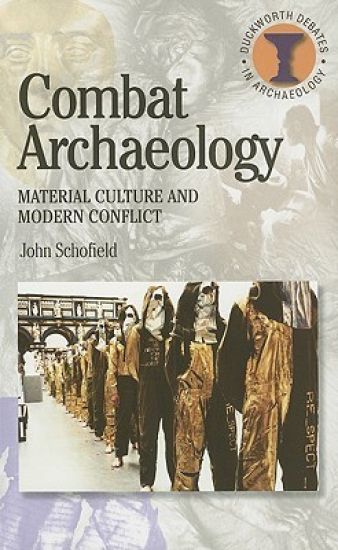
Combat Archaeology

Combat Archaeology

John Schofield

Bristol Classical Press
2005
nidottu
This series of short volumes, each devoted to a theme which is the subject of contemporary debate in archaeology, ranges from issues in theory and method to aspects of world archaeology. The archaeology of recent conflict is a fast-moving field of research. It is challenging and provocative. It deals with established historical events for which the material remains are unquestionably 'heritage', but also the more recent, tragic and heavily politicised events, actions and places whose meaning and significance is more ambiguous. But although recent and familiar, it is also a subject that draws closely on established principles of archaeological theory and practice, while also connecting with the related fields of history, anthropology, sociology, philosophy, art and representation. Here the author draws together projects and ideas from a diverse literature and from his own research, presenting them as a worked example of contemporary archaeology, of heritage management practice and of archaeological principles and theory. This study encapsulates a lively area of current debate: fascinating, challenging, controversial, contemporary and cross-disciplinary.
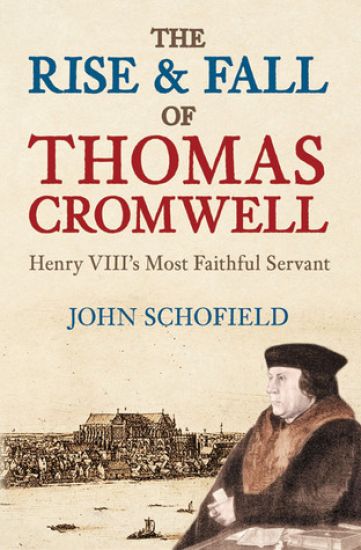
The Rise and Fall of Thomas Cromwell

The Rise and Fall of Thomas Cromwell

John Schofield

The History Press Ltd
2008
sidottu
Thomas Cromwell was the Henry's VIII's chief minister and principal reformer of the church in one of the most eventful eras in English history. As The Rise & Fall of Thomas Cromwell reveals, contemporary sources reveal a brilliant mind and expansive heart, a lover and patron of the arts and humanities, while short case studies shed new light on his relations with, and his reputation among, the Tudor populace. The final part narrates the drama of his downfall, and the king's posthumous exoneration of the 'most faithful servant he ever had'. Based on a massive amount of primary research, The Rise & Fall of Thomas Cromwell overturns the previously accepted view of one of Tudor England's most important personalities.
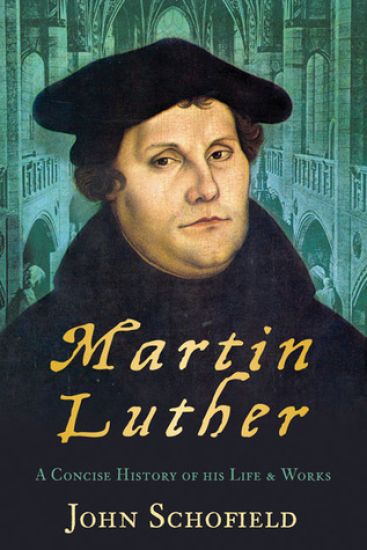
Martin Luther

Martin Luther

John Schofield

The History Press Ltd
2010
nidottu
Martin Luther was so angered by the sale of indulgences (pardons for sins granted by the Pope) that, in 1517, he nailed ninety-five arguments for reform of the Roman Catholic Church to the doors of the church and the castle at Wittenberg. This act began one of the most momentous periods of change in history: the Reformation. So much has been written on Luther that anyone with no prior knowledge wishing to find out about him is bound to be confronted with the question ‘where do I start?’. This book is an introduction, succinct and readable, but historially sound. It covers or summarises Luther’s major works and the main events of his life. It invites the reader to meet him at his study desk, in the lecture hall, in the pulpit and at the dinner table. Because it is based on Luther’s own writings, the reader can be sure that this is the real Luther, the genuine article, not an account influenced by the author’s own views or bias.
The Rise and Fall of Thomas Cromwell

The Rise and Fall of Thomas Cromwell

John Schofield

The History Press Ltd
2011
nidottu
Thomas Cromwell was a man of humble origins and outstanding intellect who rose up to become Henry VIII’s chief minister and right-hand man during the English Reformation. He wielded enormous power while he retained the king’s favour, but the failure of Henry’s marriage to Anne of Cleves, which Cromwell had arranged, led to his swift downfall and execution. In this biography, John Schofield reveals that the popular image of Cromwell as a blood-stained henchman is largely fictional. Detailed research into contemporary sources illuminates his brilliant mind and his love for and patronage of the arts and humanities, while short case studies shed new light on his relations with, and his reputation among, Henry VIII’s subjects. In his conclusion, Schofield narrates the drama of Cromwell’s downfall and highlights the king’s posthumous exoneration of the ‘most faithful servant he ever had’.
Cromwell to Cromwell

Cromwell to Cromwell

John Schofield

The History Press Ltd
2011
nidottu
The English reformers of the 1530s, with Thomas Cromwell at their head, continued to have a strong belief in kingly rule and authority, in contrast to their radical approach to the power of the Pope and the Roman Catholic Church. Resisting the king was tantamount to resisting God in their eyes, and even on a matter of conscience the will of the king should prevail. Yet just over 100 years later, Charles I was called the 'man of blood', and Oliver Cromwell famously declared that 'we will cut off his head with the crown on it'. But how did we get from the one to the other? How did the deferential Reformation become a regicidal revolution? Following on from his biography of Thomas Cromwell, John Schofield examines how the English character and the way it perceived royal rule changed between the time of Thomas Cromwell and that of his great-great-grandnephew Oliver.
Philip Melanchthon and the English Reformation

Philip Melanchthon and the English Reformation

John Schofield

Ashgate Publishing Limited
2006
sidottu
This book explores the hitherto neglected relationship between the English Reformation and the Lutheran scholar Philip Melanchthon (1497-1560). It looks at how Henry, following his break with Rome, flirted with Lutheranism as a doctrine to replace Catholicism, before the eventual collapse of the policy and its replacement with a more moderate reform programme under Cranmer. It then goes on to investigate how Melanchthon, as the leading proponent of Lutheranism influenced successive royal governments, both positively and negatively, as they struggled to impose their own brand of doctrinal conformity on the English church. By refracting the well known narrative of the English Reformation through the lens of Melanchthon, new light is shed on many events that have puzzled historians. The study provides fascinating new perspectives on such questions as why Henry suddenly abandoned his Lutheran policy, why Cromwell fell from power in 1540 and even insights into Elizabeth's personal beliefs. By tying events in England into the context of the wider European Reformation, through the work of Philip Melanchthon, this book offers fresh insights into the nature and development of early evangelical Protestantism.
Cost-Benefit Analysis in Urban & Regional Planning
Originally published in 1987, Cost-Benefit Analysis in Urban and Regional Planning, outlines the theory and practice of cost-benefit analysis (CBA) in the context of urban and regional planning. The theory of CBA is developed with examples to illustrate the principles, it also deals with details of the applications and covers issues such as local health and social services provision, local economic development and regional policy evaluation, and planning in less developed countries – as well as the conventional land-use issues of physical planning.
Cost-Benefit Analysis in Urban & Regional Planning
Originally published in 1987, Cost-Benefit Analysis in Urban and Regional Planning, outlines the theory and practice of cost-benefit analysis (CBA) in the context of urban and regional planning. The theory of CBA is developed with examples to illustrate the principles, it also deals with details of the applications and covers issues such as local health and social services provision, local economic development and regional policy evaluation, and planning in less developed countries – as well as the conventional land-use issues of physical planning.
St Paul's Cathedral

St Paul's Cathedral

John Schofield

OXBOW BOOKS
2022
nidottu
This is the first volume concerned solely with the archaeology of a major late 17th-century building in London, and the major changes it has undergone. St Paul's Cathedral in the City of London was built in 1675–1711 to the designs of Sir Christopher Wren and has been described as an iconic building many times. In this major new account, John Schofield examines the cathedral from an archaeological perspective, reviewing its history from the early 18th to the early 21st century, as illustrated by recent archaeological recording, documentary research and engineering assessment. A detailed account of the construction of the cathedral is provided based on a comparison of the fabric with voluminous building accounts which have survived and evidence from recent archaeological investigation. The construction of the Wren building and its embellishments are followed by the main works of later surveyors such as Robert Mylne and Francis Penrose. The 20th century brought further changes and conservation projects, including restoration after the building was hit by two bombs in World War II, and all its windows blown out. The 1990s and first years of the present century have witnessed considerable refurbishment and cleaning involving archaeological and engineering works. Archaeological specialist reports and an engineering review of the stability and character of the building are provided.
London, 1100-1600

London, 1100-1600

John Schofield

Equinox Publishing Ltd
2011
sidottu
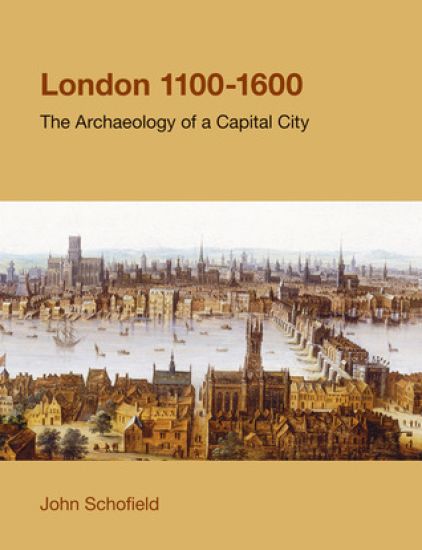
Since the early 1970s the increasingly effective conduct of archaeological work in the City of London and surrounding parts of the conurbation have revolutionised our view of the development and European importance of London between 1100 and 1600. There have been hundreds of archaeological excavations of every type of site, from the cathedral to chapels, palaces to outhouses, bridges, wharves, streams, fields, kilns, roads and lanes. The study of the material culture of Londoners over these five centuries has begun in earnest, based on thousands of accurately dated artefacts, especially found along the waterfront. Work by documentary historians has complemented and filled out the new picture. This book, written by an archaeologist who has been at the centre of this study since 1974, will summarise the main findings and new suggestions about the development of the City, its ups and downs through the Black Death and the Dissolution of the Monasteries; its place in Europe as a capital city with great architecture and relations with many other parts of Europe, from the Baltic to the Mediterranean. London has been the most intensively studied medieval city in Europe by archaeologists, due to the pace of development especially since the 1970s. Thus although this will be a study of a single medieval city, it will be a major contribution to the Archaeology of Europe, 1100-1600.
St Paul's Cathedral Before Wren

St Paul's Cathedral Before Wren

John Schofield

Historic England
2011
sidottu
St Paul’s Cathedral is the City of London’s most important monument and historic building. But Wren’s great work is only the most recent of a succession of Anglo-Saxon and medieval cathedrals on the site, where Christianity was first established in AD 604. This report is the first ever comprehensive account of the archaeology and history of the cathedral and its churchyard from Roman times up to the construction of the Wren building which began in 1675. Archaeological excavations and observations go back to the time of Wren. The Anglo-Saxon cathedral is an enigma, and even its precise site somewhere in the churchyard is not known for certain. The medieval cathedral was probably the largest building in medieval Britain and one of the largest in Europe, with its 400ft-spire and a rose window to rival those we now see at Notre Dame in Paris. Recent excavations in and around the Wren building are described, and some of the many architectural fragments of the medieval cathedral, dug up over the last 150 years, are studied. Documents, surveys and early maps show the development of the religious complex and illuminate the lives of its occupants. In the 1630s a classical portico was added to the west end by Inigo Jones, Britain’s first truly Renaissance architect. Fragments of the portico, still covered with the soot of the Great Fire of 1666 which destroyed the cathedral, were found in 1996 when a tunnel was dug through one of the crypt walls of the present building. From these varied sources, the cathedrals which preceded that of Wren come to the surface again, and we can appreciate the cultural and religious importance of St Paul’s within the City of London, over a period of more than 1000 years.
London, 1100-1600

London, 1100-1600

John Schofield

Equinox Publishing Ltd
2011
nidottu
Since the early 1970s the increasingly effective conduct of archaeological work in the City of London and surrounding parts of the conurbation have revolutionised our view of the development and European importance of London between 1100 and 1600. There have been hundreds of archaeological excavations of every type of site, from the cathedral to chapels, palaces to outhouses, bridges, wharves, streams, fields, kilns, roads and lanes. The study of the material culture of Londoners over these five centuries has begun in earnest, based on thousands of accurately dated artefacts, especially found along the waterfront. Work by documentary historians has complemented and filled out the new picture. This book, written by an archaeologist who has been at the centre of this study since 1974, will summarise the main findings and new suggestions about the development of the City, its ups and downs through the Black Death and the Dissolution of the Monasteries; its place in Europe as a capital city with great architecture and relations with many other parts of Europe, from the Baltic to the Mediterranean. London has been the most intensively studied medieval city in Europe by archaeologists, due to the pace of development especially since the 1970s. Thus although this will be a study of a single medieval city, it will be a major contribution to the Archaeology of Europe, 1100-1600. The book is endorsed by the Museum of London, the City of London Archaeological Trust and the City of London Corporation whose logos will appear on the back cover.