Kirjojen hintavertailu. Mukana 11 342 296 kirjaa ja 12 kauppaa.

Kirjahaku

Etsi kirjoja tekijän nimen, kirjan nimen tai ISBN:n perusteella.

10 kirjaa tekijältä John Strausbaugh

The Village

The Village

John Strausbaugh

ECCO Press
2014
nidottu
Cultural commentator John Strausbaugh's The Village is the first complete history of Greenwich Village, the prodigiously influential and infamous New York City neighborhood. From the Dutch settlers and Washington Square patricians, to the Triangle Shirtwaist fire and Prohibition-era speakeasies; from Abstract Expressionism and beatniks, to Stonewall and AIDS, the connecting narratives of The Village tell the story of America itself. Illustrated with historic black-and-white photographs, The Village features lively, well-researched profiles of many of the people who made Greenwich Village famous, including Thomas Paine, Walt Whitman, Edna St. Vincent Millay, Mark Twain, Margaret Sanger, Eugene O'Neill, Marcel Duchamp, Upton Sinclair, Willa Cather, Jack Kerouac, Allen Ginsberg, Jackson Pollock, Anais Nin, Edward Albee, Charlie Parker, W. H. Auden, Woody Guthrie, James Baldwin, Maurice Sendak, E. E. Cummings, and Bob Dylan.
Alone with the President

Alone with the President

John Strausbaugh

Blast Books,U.S.
1994
sidottu
The author discusses what he sees as "the mutual attraction between presidents and celebrities from Kennedy to Reagan. . . . Kennedy, he argues, took celebrity politics 'to a whole new level'; Nixon learned how to manufacture celebrity; . . . and Reagan combined both men's lessons and became, in the later years of his presidency, 'not so much America's leader as . . . its logo.'
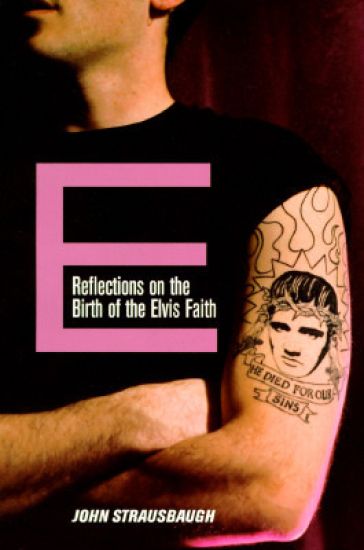
E

E

John Strausbaugh

Blast Books,U.S.
1995
pokkari
Three quarters of a million people visit Graceland each year--40,000 of them during "Elvis Week", the anniversary of his death in August. Strausbaugh describes the religious fervor of Elvis followers, and places Elvism in the context of many grassroots movements away from traditional churches, and explores parallels to Elvis worship in other cultures past and present.
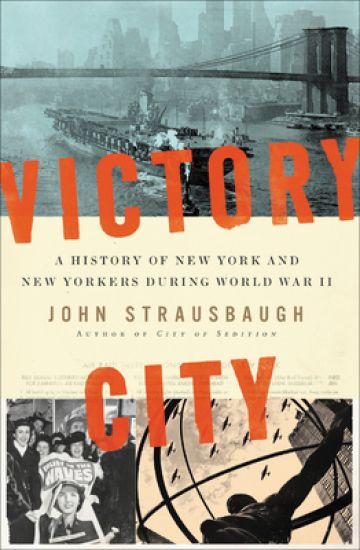
Victory City

Victory City

John Strausbaugh

Twelve
2019
pokkari
From John Strausbaugh, author of City of Sedition and The Village, comes the definitive history of Gotham during the World War II era.New York City during World War II wasn't just a place of servicemen, politicians, heroes, G.I. Joes and Rosie the Riveters, but also of quislings and saboteurs; of Nazi, Fascist, and Communist sympathizers; of war protesters and conscientious objectors; of gangsters and hookers and profiteers; of latchkey kids and bobby-soxers, poets and painters, atomic scientists and atomic spies.While the war launched and leveled nations, spurred economic growth, and saw the rise and fall of global Fascism, New York City would eventually emerge as the new capital of the world. From the Gilded Age to VJ-Day, an array of fascinating New Yorkers rose to fame, from Mayor Fiorello La Guardia to Franklin and Eleanor Roosevelt, Langston Hughes to Joe Louis, to Robert Moses and Joe DiMaggio. In VICTORY CITY, John Strausbaugh returns to tell the story of New York City's war years with the same richness, depth, and nuance he brought to his previous books, City of Sedition and The Village, providing readers with a groundbreaking new look into the greatest city on earth during the most transformative -- and costliest -- war in human history.
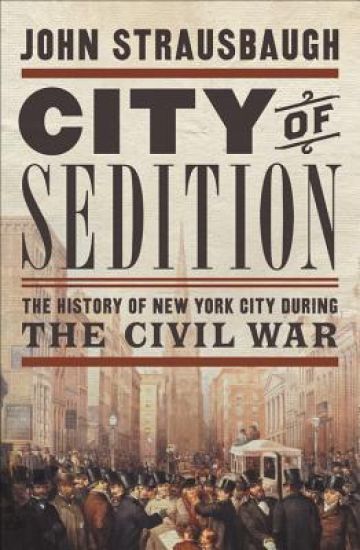
City of Sedition

City of Sedition

John Strausbaugh

Twelve
2017
pokkari
Without his New York supporters, it's highly unlikely Abraham Lincoln would have made it to the White House. Yet the majority of New Yorkers never voted for him and were openly hostile to him and his politics. New Yorkers reacted to Lincoln's wartime policies with the deadliest rioting in American history. Here, a gallery of fascinating New Yorkers comes to life, the likes of Horace Greeley, Walt Whitman, Julia Ward Howe, Boss Tweed, Thomas Nast, Matthew Brady and Herman Melville. CITY OF SEDITION follows the fortunes of these figures and chronicles how many New Yorkers seized the opportunities the conflict presented to amass capital, create new industries and expand their markets, laying the foundation for the city's - and the nation's - growth.
The Wrong Stuff: How the Soviet Space Program Crashed and Burned
A witty, deeply researched history of the surprisingly ramshackle Soviet space program, and how its success was more spin than science. In the wake of World War II, with America ascendant and the Soviet Union devastated by the conflict, the Space Race should have been over before it started. But the underdog Soviets scored a series of victories--starting with the 1957 launch of Sputnik and continuing in the years following--that seemed to achieve the impossible. It was proof, it seemed, that the USSR had manpower and collective will that went beyond America's material advantages. They had asserted themselves as a world power. But in The Wrong Stuff, John Strausbaugh tells a different story. These achievements were amazing, yes, but they were also PR victories as much as scientific ones. The world saw a Potemkin spaceport; the internal facts were much sloppier, less impressive, more dysfunctional. The Soviet supply chain was a disaster, and many of its machines barely worked. The cosmonauts aboard its iconic launch of the Vostok 1 rocket had to go on a special diet, and take off their space suits, just to fit inside without causing a failure. Soviet scientists, under intense government pressure, had essentially made their rocket out of spit and band aids, and hurried to hide their work as soon as their worldwide demonstration was complete. With a witty eye for detail and a gift for storytelling, John Strausbaugh takes us behind the Iron Curtain, and shows just how little there was to find there.
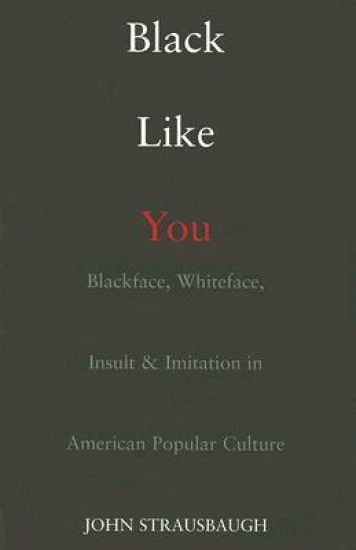
Black Like You

Black Like You

John Strausbaugh

Jeremy P Tarcher
2007
nidottu
A refreshingly clearheaded and taboo-breaking look at race relations reveals that American culture is neither Black nor White nor Other, but a mix-a mongrel. "Black Like You" is an erudite and entertaining exploration of race relations in American popular culture. Particularly compelling is Strausbaugh's eagerness to tackle blackface-a strange, often scandalous, and now taboo entertainment. Although blackface performance came to be denounced as purely racist mockery, and shamefacedly erased from most modern accounts of American cultural history, "Black Like You" shows that the impact of blackface on American culture was deep and long-lasting. Its influence can be seen in rock and hiphop; in vaudeville, Broadway, and gay drag performances; in Mark Twain and "gangsta lit"; in the earliest filmstrips and the 2004 movie White Chicks; on radio and television; in advertising and product marketing; and even in the way Americans speak. Strausbaugh enlivens themes that are rarely discussed in public, let alone with such candor and vision: - American culture neither conforms to knee-jerk racism nor to knee-jerk political correctness. It is neither Black nor White nor Other, but a mix-a mongrel. - No history is best forgotten, however uncomfortable it may be to remember. The power of blackface to engender mortification and rage in Americans to this day is reason enough to examine what it tells us about our culture and ourselves. - Blackface is still alive. Its impact and descendants-including Black performers in "whiteface"-can be seen all around us today.
Rock 'Til You Drop

Rock 'Til You Drop

John Strausbaugh

Verso Books
2003
nidottu
As the Rolling Stones and The Who drag themselves through yet more world tours and middle-aged punk rockers plot nostalgic reunions, this lively and controversial book charts the decline of a generation that started out as self-anointed world-changers and ended up as a 'colostomy rock' parody.
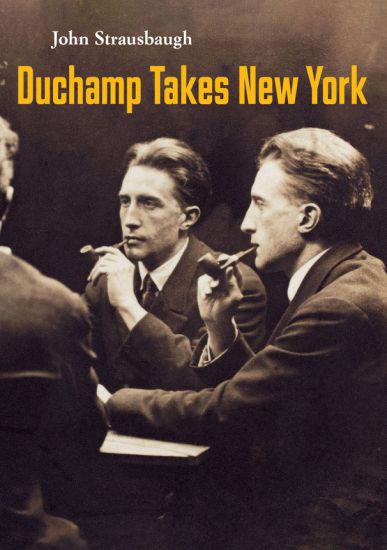
Marcel Duchamp in New York

Marcel Duchamp in New York

John Strausbaugh

OR Books
2026
pokkari
Artist, anti-artist, joker, trickster, shape-shifter—the Loki of 20th-century art—Marcel Duchamp broke every rule, questioned every tradition, and launched the New York art world into the future. And then, just as suddenly, he appeared to lose interest and devote himself to chess. When his work exploded like an art bomb in New York in the 1910s, American art was still stuck in the 19th century, if not the Renaissance. Bored with tradition, Duchamp set about reinventing art itself: what it is, what it’s for, how it’s made. He hung a snow shovel from the ceiling, turned a urinal upside down, and “painted” with dust and string between two panes of glass. He built op-art mobiles, explored gender fluidity, and reduced his oeuvre to a suitcase-sized portable museum. Then, apparently done with making art, he walked away. Only after his death did the world discover he’d secretly spent two decades on one final, mystifying work: a peep-show-like installation suggesting that the act of looking at art is itself voyeuristic. Not being around to explain it was his ultimate, thought-provoking prank. His contemporaries were shocked—he was even kicked out of his own exhibition once—but Duchamp, with a wink, prodded them to think differently. Virtually every American art movement of the mid-to-late 20th century can trace its lineage back to his offhand-seeming gestures. Today, he's discussed and imitated more than ever. Marcel Duchamp in New York explores how the city shaped his radical vision. Escaping the bourgeois conventions of France (“The things life forces men into—wives, three children, a country house, three cars!”), Duchamp found New York liberating and alive with visionaries. “New York itself is a complete work of art,” he declared. After years of intermittent visits, he made it home—and it was there, in its electric atmosphere, that he created much of his most groundbreaking work.