
Kirjahaku
Etsi kirjoja tekijän nimen, kirjan nimen tai ISBN:n perusteella.
21 kirjaa tekijältä John Sutton


Memoirs of the Life and Writings of the Late Reverend Mr. John Jackson, Master of Wigston's Hospital in Leicester, &c. With a Particular Account of his Works, and Some Original Letters Which Passed Between him, and Dr. Clarke
John Sutton
Gale Ecco, Print Editions
2018
sidottu
The 18th century was a wealth of knowledge, exploration and rapidly growing technology and expanding record-keeping made possible by advances in the printing press. In its determination to preserve the century of revolution, Gale initiated a revolution of its own: digitization of epic proportions to preserve these invaluable works in the largest archive of its kind. Now for the first time these high-quality digital copies of original 18th century manuscripts are available in print, making them highly accessible to libraries, undergraduate students, and independent scholars.The Age of Enlightenment profoundly enriched religious and philosophical understanding and continues to influence present-day thinking. Works collected here include masterpieces by David Hume, Immanuel Kant, and Jean-Jacques Rousseau, as well as religious sermons and moral debates on the issues of the day, such as the slave trade. The Age of Reason saw conflict between Protestantism and Catholicism transformed into one between faith and logic -- a debate that continues in the twenty-first century.++++The below data was compiled from various identification fields in the bibliographic record of this title. This data is provided as an additional tool in helping to insure edition identification: ++++British LibraryT071594Anonymous. By John Sutton, M.D., of Leicester. With a final errata leaf.London: printed for T. Field, 1764. 2], iv,273, 3]p.; 8
This book offers a new perspective on the economics of globalization, based on the concepts of firms' capabilities as the immediate cause of countries' wealth. It presents new ways of looking at the way China, India, and Africa have been drawn into the global economy over the past two decades. It offers new perspectives on some of the most central questions in the current debate: What effects does the rise of China have for the advanced industrial economies? Why have some industries adapted quickly and effectively to the changing global scene, while others have not? How were the 'Transition Economies' of Eastern Europe affected by trade liberalization? How have the economic prospects of sub-Saharan African countries changed over the past decade? This analysis contributes to the recent literature on quality and trade, which is providing a new and different approach to the analysis of globalization, and which focusses on those economic mechanisms that are central to the current wave of this centuries-old phenomenon. This book forms the basis for the author's course on Globalisation and Strategy, given to Masters students in Economics and Management at the London School of Economics.
John Sutton sets out a unified theory that encompasses two major approaches to studying market, while generating a series of novel predictions as to how markets evolve.Traditionally, the field of industrial organization has relied on two unrelated theories-the cross-section theory and the growth-of-firms theory-to explain cross-industry differences in concentration and within-industry skewness. The two approaches are based on very different mathematical structures and few researchers have attempted to relate them to each other.In this book, John Sutton unifies the two approaches through a theory that rests on three simple principles. The first two, a "survivor principle" that says that firms will not pursue loss-making strategies, and an "arbitrage principle" that says that if a profitable opportunity is available, some firm will take it, suffice to define a set of possible outcomes. The third, the "symmetry principle," says that the strategy used by a new entrant into any submarket depends neither on the entrants identity nor on its history in other submarkets. This allows researchers to bring together the roles of strategic interactions and of independence effects. The result is that the considerations motivating the cross-section tradition and those motivating the growth-of-firms tradition both drop out within a single game-theoretic model.This book follows Sutton's Sunk Costs and Market Structure, published by MIT Press in 1991.
Sunk Costs and Market Structure bridges the gap between the new generation of game theoretic models that has dominated the industrial organization literature over the past ten years and the traditional empirical agenda of the subject as embodied in the structure-conduct-performance paradigm developed by Joe S. Bain and his successors. The new theoretical literature has engendered pessimism in recent years because many results turn out to depend on detailed features of the market that are difficult to measure. This has led many observers to argue that the new literature offers little basis for the kind of cross-industry studies that have formed the empirical base of the subject since the 1950s. Using current game-theoretic methods, John Sutton reexamines the traditional agenda. He argues that despite the "delicate" nature of many results, there are theoretical predictions that turn out to be extremely robust to reasonable changes in model specification, and these results should be taken into account when looking for statistical regularities across a broad spectrum of different industries. Sutton draws on a wide range of historical sources and on an intensive program of company interviews to assemble a matrix of industry studies relating to twenty markets within the food and drink sector, in six countries - France, the Federal Republic of Germany, Italy, Japan, the United Kingdom and the United States. He combines theory, econometric evidence, and a detailed account of the various patterns of evolution of structure found in these industries in a rigorous evaluation of the strengths and limitations of a game-theoretic approach in explaining the evolution of industrial structure.
Philosophy and Memory Traces defends two theories of autobiographical memory. One is a bewildering historical view of memories as dynamic patterns in fleeting animal spirits, nervous fluids which rummaged through the pores of brain and body. The other is new connectionism, in which memories are 'stored' only superpositionally, and reconstructed rather than reproduced. Both models, argues John Sutton, depart from static archival metaphors by employing distributed representation, which brings interference and confusion between memory traces. Both raise urgent issues about control of the personal past, and about relations between self and body. Sutton demonstrates the role of bizarre body fluids in moral physiology, as philosophers from Descartes and Locke to Coleridge struggled to control their own innards and impose cognitive discipline on 'the phantasmal chaos of association'. Going on to defend connectionism against Fodor and critics of passive mental representations, he shows how problems of the self are implicated in cognitive science.
Philosophy and Memory Traces defends two theories of autobiographical memory. One is a bewildering historical view of memories as dynamic patterns in fleeting animal spirits, nervous fluids which rummaged through the pores of brain and body. The other is new connectionism, in which memories are 'stored' only superpositionally, and reconstructed rather than reproduced. Both models, argues John Sutton, depart from static archival metaphors by employing distributed representation, which brings interference and confusion between memory traces. Both raise urgent issues about control of the personal past, and about relations between self and body. Sutton demonstrates the role of bizarre body fluids in moral physiology, as philosophers from Descartes and Locke to Coleridge struggled to control their own innards and impose cognitive discipline on 'the phantasmal chaos of association'. Going on to defend connectionism against Fodor and critics of passive mental representations, he shows how problems of the self are implicated in cognitive science.
Cities across the world are facing unprecedented challenges in traffic management and transit congestion while coping with growing populations and mobility aspirations; existing policies that aim to tackle congestion and create more sustainable transport futures offer only weak remedies. In Gridlock: Congested Cities, Contested Policies, Unsustainable Mobility, transport consultant John C. Sutton explores how two competing discourses in transport policy and planning practice – convivial and competitive ideologies – lead to contradictory solutions and a gridlock in policy as well as on transport systems.Gridlock examines current transport and mobility in a geographical, social, political-economy and technological context. The challenges of rising congestion are highlighted through case studies from the UK, the USA, and OECD countries. Sutton offers readers a vision of a sustainable mobility future through the concept of mobility management, combining mobile communication and information technology with logistics to match travel demand to the capacity of transport systems.Essential reading for transport professionals and students of transportation planning and policy, Gridlock offers a unique manifesto for sustainable mobility settlement, addressing the pressing problems of growing populations and congestion while looking ahead to a more sustainable future.
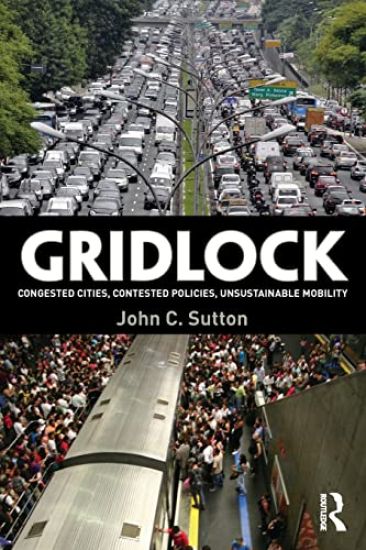
Cities across the world are facing unprecedented challenges in traffic management and transit congestion while coping with growing populations and mobility aspirations; existing policies that aim to tackle congestion and create more sustainable transport futures offer only weak remedies. In Gridlock: Congested Cities, Contested Policies, Unsustainable Mobility, transport consultant John C. Sutton explores how two competing discourses in transport policy and planning practice – convivial and competitive ideologies – lead to contradictory solutions and a gridlock in policy as well as on transport systems.Gridlock examines current transport and mobility in a geographical, social, political-economy and technological context. The challenges of rising congestion are highlighted through case studies from the UK, the USA, and OECD countries. Sutton offers readers a vision of a sustainable mobility future through the concept of mobility management, combining mobile communication and information technology with logistics to match travel demand to the capacity of transport systems.Essential reading for transport professionals and students of transportation planning and policy, Gridlock offers a unique manifesto for sustainable mobility settlement, addressing the pressing problems of growing populations and congestion while looking ahead to a more sustainable future.


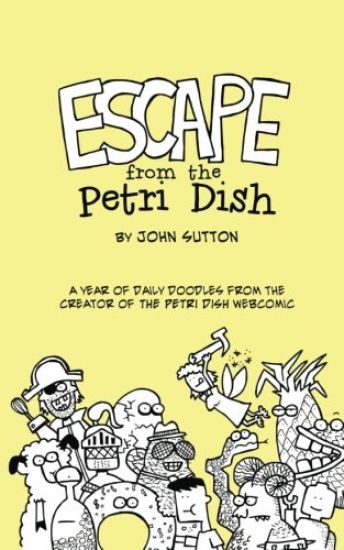

The collected whimsical work of John G. Sutton. Poetry that is amusing, interesting, emotive and most of all entertaining.
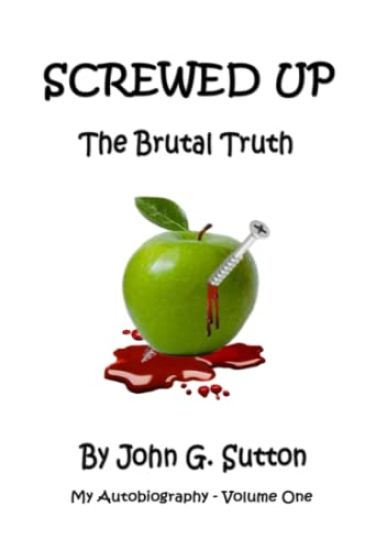
SCREWED UP The Brutal Truth tells the true story of a boy from nowhere who refused to be subjugated by the system and fought back time after time after time. This real-life account of how one young man survived the beatings and batterings handed out by his teachers, parents and rough-house contemporaries will shock and entertain you. If you enjoy your violence at a safe distance and wonder what it actually feels like to face adversity then this is the book for you. At times amusing, always readable this is a book you will not want to put down.
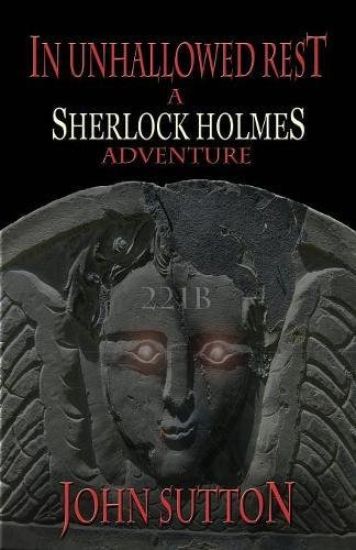

1906. HMS Dreadnaught, Britain's latest Battleship lies in her moorings in a Portsmouth dockyard awaiting her Sea Trials. Her design and armament renders the current warships of other Nations obsolete. Secret items of novel yet vital radio detection equipment are stolen from her hold by agents of a foreign power. Holmes is requested by Military Intelligence to determine the perpetrators and trace the existence of the stolen items before they may successfully be removed out of the country. His investigations reveal the existence of an old and implacable enemy. Secrecy is paramount. Public knowledge of the crime would possibly result in a European war of disastrous consequences.

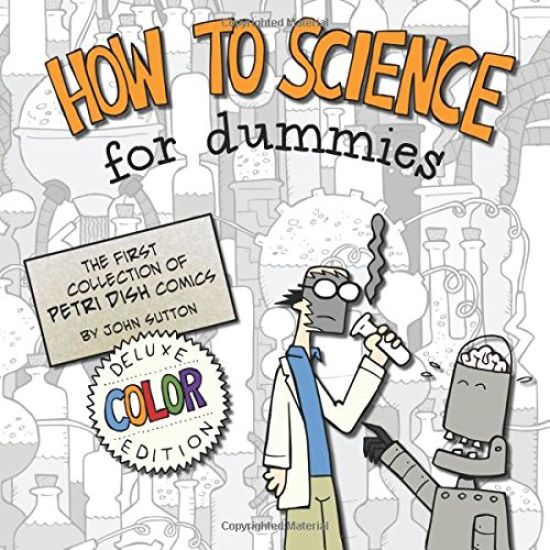
How to Science for Dummies: Deluxe Color Edition: The first collection of Petri Dish comics
John Sutton
Createspace Independent Publishing Platform
2017
nidottu
Doctor Thaddeus Euphemism means well, but as far as his scientific skills go he leaves something to be desired. His laboratory partner, Bob - a short, sarcastic robot with a human brain - does his best to help out, but more often than not just takes incriminating photos to post on his Facebook page. Join Thaddeus and Bob in a world where squirrels have enhanced intelligence, viruses can make computers physically sick, and genetically modified vegetables terrorize the lab ... and that's all before lunch. This is the first collection of Petri Dish comics packed with over 230 FULL COLOR comics originally created by John Sutton and posted on the internet and social media sites between January 2012 and January 2015.
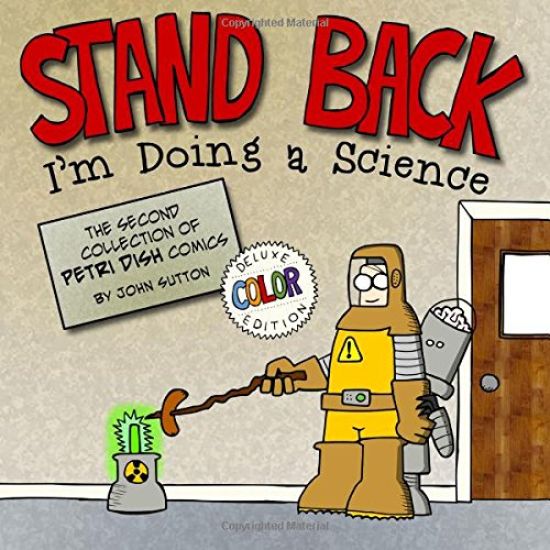
Stand back, I'm Doing a Science: Deluxe Color Edition: The second collection of Petri Dish comics
John Sutton
Createspace Independent Publishing Platform
2017
nidottu
Doctor Thaddeus Euphemism - the bungling but well-intentioned scientist - and his laboratory sidekick Bob - a robot with a human brain - return in this second collection of comics from The Petri Dish. Join Thaddeus and Bob on their wacky adventures as they get shrunk down to microscopic size, accidentally develop super powers, swap brains with a cat, and generally create mayhem in the lab ... and that's all before lunch. This is the second collection of Petri Dish comics, and contains over 220 FULL COLOR comics originally created by John Sutton and posted on the internet and social media sites between January 2015 and December 2017.