Kirjojen hintavertailu. Mukana 12 595 353 kirjaa ja 12 kauppaa.

Kirjahaku

Etsi kirjoja tekijän nimen, kirjan nimen tai ISBN:n perusteella.

7 kirjaa tekijältä John T. Lysaker

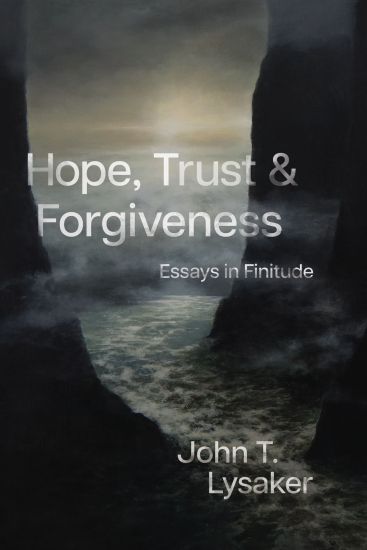
Hope, Trust, and Forgiveness

Hope, Trust, and Forgiveness

John T. Lysaker

THE UNIVERSITY OF CHICAGO PRESS
2023
sidottu
A new ethics of human finitude developed through three experimental essays. As ethical beings, we strive for lives that are meaningful and praiseworthy. But we are finite. We do not know, so we hope. We need, so we trust. We err, so we forgive. In this book, philosopher John T. Lysaker draws our attention to the ways in which these three capacities—hope, trust, and forgiveness—contend with human limits. Each experience is vital to human flourishing, yet each also poses significant personal and institutional challenges as well as opportunities for growth. Hope, Trust, and Forgiveness explores these challenges and opportunities and proposes ways to best meet them. In so doing, Lysaker experiments with the essay as a form and advances an improvisational perfectionism to deepen and expand our ethical horizons.
Hope, Trust, and Forgiveness

Hope, Trust, and Forgiveness

John T. Lysaker

THE UNIVERSITY OF CHICAGO PRESS
2023
nidottu
A new ethics of human finitude developed through three experimental essays. As ethical beings, we strive for lives that are meaningful and praiseworthy. But we are finite. We do not know, so we hope. We need, so we trust. We err, so we forgive. In this book, philosopher John T. Lysaker draws our attention to the ways in which these three capacities—hope, trust, and forgiveness—contend with human limits. Each experience is vital to human flourishing, yet each also poses significant personal and institutional challenges as well as opportunities for growth. Hope, Trust, and Forgiveness explores these challenges and opportunities and proposes ways to best meet them. In so doing, Lysaker experiments with the essay as a form and advances an improvisational perfectionism to deepen and expand our ethical horizons.
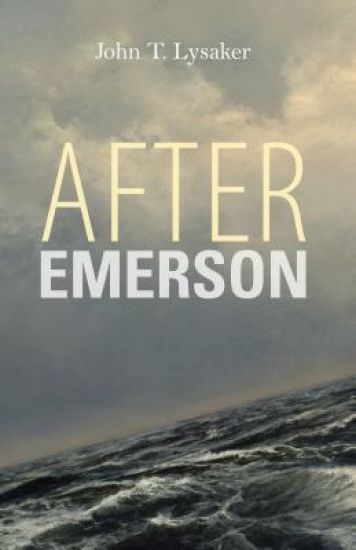
After Emerson

After Emerson

John T. Lysaker

Indiana University Press
2017
sidottu
John T. Lysaker works between and weaves together questions and replies in philosophical psychology, Emerson studies, and ethics in this book of deep existential questioning. Each essay in this atypical, philosophical book employs recurring terms, phrases, and questions that characterize our contemporary age. Setting out from the idea of where we are in an almost literal sense, Lysaker takes readers on an intellectual journey into thematic concerns and commitments of broad interest, such as the nature of self and self-experience, ethical life, poetry and philosophy, and history and race. In the manner of Emerson, Cavell, and Rorty, Lysaker's vibrant writing is certain to have a transformative effect on American philosophy today.
After Emerson

After Emerson

John T. Lysaker

Indiana University Press
2017
pokkari
John T. Lysaker works between and weaves together questions and replies in philosophical psychology, Emerson studies, and ethics in this book of deep existential questioning. Each essay in this atypical, philosophical book employs recurring terms, phrases, and questions that characterize our contemporary age. Setting out from the idea of where we are in an almost literal sense, Lysaker takes readers on an intellectual journey into thematic concerns and commitments of broad interest, such as the nature of self and self-experience, ethical life, poetry and philosophy, and history and race. In the manner of Emerson, Cavell, and Rorty, Lysaker's vibrant writing is certain to have a transformative effect on American philosophy today.
Emerson and Self-Culture

Emerson and Self-Culture

John T. Lysaker

Indiana University Press
2008
pokkari
How do I live a good life, one that is deeply personal and sensitive to others? John T. Lysaker suggests that those who take this question seriously need to reexamine the work of Ralph Waldo Emerson. In philosophical reflections on topics such as genius, divinity, friendship, and reform, Lysaker explores "self-culture" or the attempt to remain true to one's deepest commitments. He argues that being true to ourselves requires recognition of our thoroughly dependent and relational nature. Lysaker guides readers from simple self-absorption toward a more fulfilling and responsive engagement with the world.
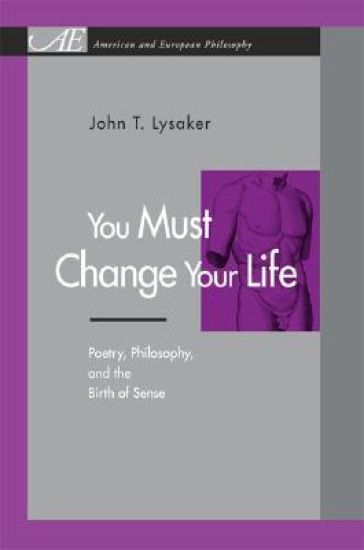
You Must Change Your Life

You Must Change Your Life

John T. Lysaker

Pennsylvania State University Press
2002
sidottu
Some poems can change our lives; they lead us to look at the world through new eyes. In this book, inspired by Martin Heidegger—who found in poetry the most fundamental insights into the human condition—John Lysaker develops a concept of ur-poetry to explore philosophically how poetic language creates fresh meaning in our world and transforms the way in which we choose to live in it. Not limited to a single poem or collection of poems, ur-poetry arises when, in the interaction of an author's principal tropes, the origin of poetry is exposed as a process whereby words with inherited meaning take on a new poetic life that draws our attention to the "birth of sense"—the manner in which the manifold realities that surround us are revealed. And it is precisely through an experience of the birth of sense that we are able to understand and dwell differently among these realities. To demonstrate ur-poetry in action, the book frequently refers to such poets as Akhmatova, Ammons, Celan, Mandelstam, and Stevens, but it focuses on the work of Pulitzer Prize winner Charles Simic. By addressing the nature of human existence, the origins of sense, and the significance of history in and for human action, Lysaker argues that Simic's writing exemplifies the import that poetry can have for how we understand and live our lives.
You Must Change Your Life

You Must Change Your Life

John T. Lysaker

Pennsylvania State University Press
2002
pokkari
Some poems can change our lives; they lead us to look at the world through new eyes. In this book, inspired by Martin Heidegger—who found in poetry the most fundamental insights into the human condition—John Lysaker develops a concept of ur-poetry to explore philosophically how poetic language creates fresh meaning in our world and transforms the way in which we choose to live in it. Not limited to a single poem or collection of poems, ur-poetry arises when, in the interaction of an author's principal tropes, the origin of poetry is exposed as a process whereby words with inherited meaning take on a new poetic life that draws our attention to the "birth of sense"—the manner in which the manifold realities that surround us are revealed. And it is precisely through an experience of the birth of sense that we are able to understand and dwell differently among these realities. To demonstrate ur-poetry in action, the book frequently refers to such poets as Akhmatova, Ammons, Celan, Mandelstam, and Stevens, but it focuses on the work of Pulitzer Prize winner Charles Simic. By addressing the nature of human existence, the origins of sense, and the significance of history in and for human action, Lysaker argues that Simic's writing exemplifies the import that poetry can have for how we understand and live our lives.