Kirjojen hintavertailu. Mukana 11 627 373 kirjaa ja 12 kauppaa.

Kirjahaku

Etsi kirjoja tekijän nimen, kirjan nimen tai ISBN:n perusteella.

2 kirjaa tekijältä John T. Slotemaker; Jeffrey C. Witt

Robert Holcot

Robert Holcot

John T. Slotemaker; Jeffrey C. Witt

Oxford University Press Inc
2016
sidottu
This is an introduction the thought of Robert Holcot, a great and influential but often underappreciated medieval thinker. Holcot was a Dominican friar who flourished in the 1330's and produced a diverse body of work including scholastic treatises, biblical commentaries, and sermons. By viewing the whole of Holcot's corpus, this book provides a comprehensive account of his thought. Challenging established characterizations of him as a skeptic or radical, this book shows Holcot to be primarily concerned with affirming and supporting the faith of the pious believer. At times, this manifests itself as a cautious attitude toward absolutists' claims about the power of natural reason. At other times, Holcot reaffirms, in Anselmian fashion, the importance of rational effort in the attempt to understand and live out one's faith. Over the course of this introduction the authors unpack Holcot's views on faith and heresy, the divine nature and divine foreknowledge, the sacraments, Christ, and political philosophy. Likewise, they examine Holcot's approach to several important medieval literary genres, including the development of his unique "picture method," biblical commentaries, and sermons. In so doing, John Slotemaker and Jeffrey Witt restore Holcot to his rightful place as one of the most important thinkers of his time.
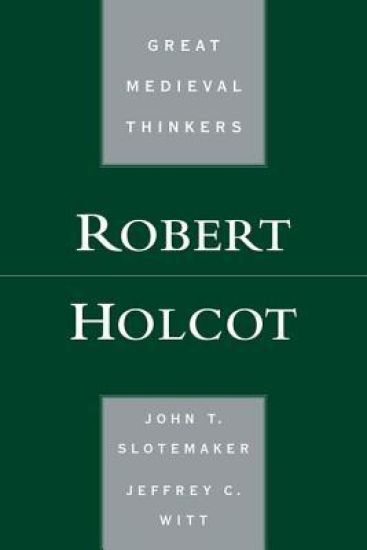
Robert Holcot

Robert Holcot

John T. Slotemaker; Jeffrey C. Witt

Oxford University Press Inc
2016
nidottu
This is an introduction the thought of Robert Holcot, a great and influential but often underappreciated medieval thinker. Holcot was a Dominican friar who flourished in the 1330s and produced a diverse body of work including scholastic treatises, biblical commentaries, and sermons. By viewing the whole of Holcot's corpus, this book provides a comprehensive account of his thought. Challenging established characterizations of him as a skeptic or radical, this book shows Holcot to be primarily concerned with affirming and supporting the faith of the pious believer. At times, this manifests itself as a cautious attitude toward absolutists' claims about the power of natural reason. At other times, Holcot reaffirms, in Anselmian fashion, the importance of rational effort in the attempt to understand and live out one's faith. Over the course of this introduction the authors unpack Holcot's views on faith and heresy, the divine nature and divine foreknowledge, the sacraments, Christ, and political philosophy. Likewise, they examine Holcot's approach to several important medieval literary genres, including the development of his unique "picture method," biblical commentaries, and sermons. In so doing, John Slotemaker and Jeffrey Witt restore Holcot to his rightful place as one of the most important thinkers of his time.