Elpis Israel - An Exposition of the Kingdom of God (commonly called Elpis Israel (English transliteration of Greek for "the hope of Israel", taken from Acts 28:20)) is a theological book written by John Thomas, founder of the Christadelphians, in 1848-1849 and published in 1849. The book was based on a series of lectures given by Thomas in 1848 and is written in three parts, The Rudiments Of The World, The Things Of The Kingdom Of God And Of Jesus Christ and The Kingdoms Of The World In Their Relation To The Kingdom Of God.Thomas did not see, nor do the Christadelphians see, the book as inspired by God, but rather a deep and accurate study of The Bible. 3] 4] It is nevertheless widely read amongst Christadelphian believers and contains some of their core beliefs. There have been fifteen editions, albeit most Revised, of the book, four within the lifetime of Thomas. The most current one was published in 2000 by The Christadelphian Magazine & Publishing Association Ltd. Even later though is a reprinting by Logos Publications in Jan 2000 and then a further reprint in April 2009, of the Fourth Edition, it being the last Edited by the author John Thomas, just prior to his death.
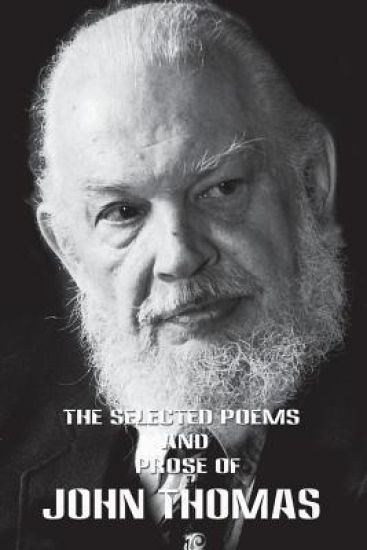
John Thomas, perhaps Los Angeles' greatest underground poet, in the years I came to know him, was a big man with a wise and lined countenance, piercing wit, deep, resonant voice, and always slightly stunned, gentle eyes. Inseparable from his wife, poet and filmmaker Philomene Long, his Muse, Thomas radiated a passion for books and poetry, watching from a respectful distance all that transpired around him. This fueled the poetry; it was as if he, with Philomene, filled with life that lost and real realm behind the cliche we call the bohemian life. They inhabited the depths. One early image is stuck in my mind: Thomas squeezing out of their tiny, classic Volkswagen beetle in front of Venice's poetry center, Beyond Baroque, for the debut of Stuart Perkoffs posthumous Voices of the Lady: Collected Poems. The couple had been close to Perkoff, Philomene as Perkoffs partner at the end, Thomas as his friend. Now, decades on, John and Philomene were like intertwined trunks in a single, majestic, flexible, and bending tree. They had withdrawn from ordinary society, following their vow of poverty, forming a compact with each other outside material considerations and virtually all practicality. When you entered their book and quote-lined refuge three stories up at The Ellison on Paloma Avenue, off the Venice boardwalk, you felt like you were enveloped in an incredible force; they made it safe again to talk about meaning. "The poem" bound them and permitted no rivals. Generally, Thomas spoke very little; he seemed more often like a bystander perplexed by extraordinary and sometimes horrible times. Two things were never in question: deference to the Muse, to Philomene, on all matters; second, tending to a precious cargo, carried, I suspect, from an early visit to Ezra Pound at St. Elizabeths. Thomas, had against the tumults of the years, a deep commitment to reading and to clear and poetic knowledge. Thomas in his very existence embodied a kind of deep, cultural transmission. I believe this was one of the grounding premises of his life's work. It required constant attention, learning, and a storyteller's sensibility-that the mundane and not so mundane, the reassuring and entirely embarrassing, the profound and very light, and all his companions, real and unreal, in this rich journey, be brought forward and told. With works ranging from Epopoeia and the Decay of Satire and John Thomas to the late chapbook Feeding the Animal, Thomas became the raconteur, generator of epigrams, tall tales, and haiku, a restless experimenter with language, subject matter, tone, and purpose, always acting, or as he said "pretending," as if "he doesn't care." Thomas in his way symbolized a clear and generally unexamined divergence of Los Angeles's historic underground from its better known Northern Californian and Eastern counterparts. Charles Bukowski, a close friend, and one never given to pretension, admired Thomas for his poetry and for digging. A diffidence, born of a hard-scrabble life contesting the machinery of money, success, and unreality meant that, for Thomas, in our vast and cruel desert, the poem is a "true and rooted cactus. / Most real and tough." Fred Dewey, writer. He was director of Beyond Baroque Literary / Arts Center in Venice from 1996 to 2010 and was curator of the Venice Poetry Walls.
The Egg Solid Theory is a metaphor that separates those that are committed to working really hard to achieve their success and those that are interested in looking successful while mining for shortcuts in life. When you enter a space and see that there are two eggs lying on the counter across the room. Are you able to tell which egg was boiled and which egg was taken directly out of the carton without holding or getting really close to them? The boiled egg represents someone that has worked really hard to achieve their goals. The boiled egg has been placed on a stove and has been under fire for 12-15 minutes in order to become solid. The fire represents going through life's ups and downs. Not everything will go your way in life. When you're trying to get to the next level, you will hear the word no way more times than you hear the word yes. You will have a few cracks, some bruises, but if you're really focused on achieving your goals, especially the ones that are aligned with your passion, then you have no choice but to keep going. The other egg that was pulled directly out of the carton symbolizes someone that looks for shortcuts in order to achieve his or her goals. They haven't been through anything. They may have been born with a silver spoon and not required to do much growing up or they are the type to expect handouts in life. If they try something and it doesn't work, give up and quit. They complain that nobody supports or helps them to achieve their goals.I believe all kids have a desire to become successful in life. But how? First, we must define what success means to us. What is success? Is it money? Is it cars & homes? Is it love? Is it peace? What is it? Once you define what success means to you, then you must design a blueprint for you to follow in order to achieve your success. I will lay out eight (8) steps in this book that will help you create a strong foundation for success in your life. I will also share personal examples and never before heard stories of when I had to use each of these steps along my 30-year journey as the CEO & Founder of The 411 Brand Inc.
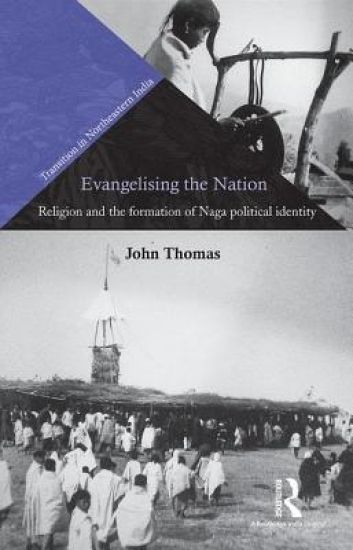
Northeast India has witnessed several nationality movements during the 20th century. The oldest and one of the most formidable has been that of the Nagas — inhabiting the hill tracts between the Brahmaputra river in India and the Chindwin river in Burma (now Myanmar). Rallying behind the slogan, ‘Nagaland for Christ’, this movement has been the site of an ambiguous relation between a particular understanding of Christianity and nation-making. This book, based on meticulous archival research, traces the making of this relation and offers fresh perspectives on the workings of religion in the formation of political and cultural identities among the Nagas. It tracks the transmutations of Protestantism from the United States to the hill tracts of Northeast India, and its impact on the form and content of the nation that was imagined and longed for by the Nagas. The volume also examines the role of missionaries, local church leaders, and colonial and post-colonial states in facilitating this process.Lucidly written and rigorous in its analyses, this book will be of interest to scholars and researchers of South Asian history, religion, political science, sociology and social anthropology, and particularly those concerned with Northeast India.
In the 75th Hamlyn Lectures, former Lord Chief Justice of England and Wales Lord Thomas examines Welsh law and the law used for transnational commerce to assess what laws are best national in their application and which are best transnational. He first argues that Wales as a nation should be able to make its own laws on the basis of clear principles and sets out possible solutions to the issues raised by the devolution of law-making powers in 1999. He then explains the success of English commercial law in attaining transnational use and examines the emergence of transnational law from the late nineteenth century. At a time of unprecedented change and competition, his analysis of the present position of the use of English law for transnational commerce and the challenges it faces provides the essential context for a series of practical options for its continued use in the future.
Evangelising the Nation examines the extent to which a particular articulation of Christianity mediated the formation of national identity among the Nagas who inhabit the hill tracts between the Brahmaputra River in India and the Chindwin River in Burma (now Myanmar). This revised second edition revisits the defining attributes of this process and brings to forefront the agential role of religion in shaping modern political identities.This book, based on meticulous archival research, tracks the transmutations of Protestantism from the United States to the hill tracts of Northeast India, and its impact on the form and content of the nation that was imagined and longed for by the Nagas. It also examines how missionaries, local church leaders, and the colonial and post-colonial state mediated nationalist aspirations among the Nagas during the twentieth century. Part of Transitions in Northeastern India series, this lucidly written book will be of interest to scholars and researchers of South Asian history, religion, political science, sociology and social anthropology, and particularly those concerned with Northeast India.
Northeast India has witnessed several nationality movements during the 20th century. The oldest and one of the most formidable has been that of the Nagas — inhabiting the hill tracts between the Brahmaputra river in India and the Chindwin river in Burma (now Myanmar). Rallying behind the slogan, ‘Nagaland for Christ’, this movement has been the site of an ambiguous relation between a particular understanding of Christianity and nation-making. This book, based on meticulous archival research, traces the making of this relation and offers fresh perspectives on the workings of religion in the formation of political and cultural identities among the Nagas. It tracks the transmutations of Protestantism from the United States to the hill tracts of Northeast India, and its impact on the form and content of the nation that was imagined and longed for by the Nagas. The volume also examines the role of missionaries, local church leaders, and colonial and post-colonial states in facilitating this process.Lucidly written and rigorous in its analyses, this book will be of interest to scholars and researchers of South Asian history, religion, political science, sociology and social anthropology, and particularly those concerned with Northeast India.