Kirjojen hintavertailu. Mukana 11 417 157 kirjaa ja 12 kauppaa.

Kirjahaku

Etsi kirjoja tekijän nimen, kirjan nimen tai ISBN:n perusteella.

11 kirjaa tekijältä John Tully

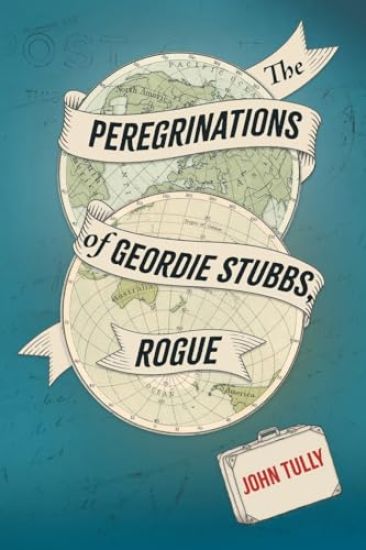
The Peregrinations of Geordie Stubbs, Rogue

The Peregrinations of Geordie Stubbs, Rogue

John Tully

Ashwood Publishing
2024
pokkari
Geordie Stubbs has roamed the world getting into scrapes. He's seen the trenches of World War I, the union wars of America's industrial heartland and the rise of Nazism in Germany, and journeyed through revolutionary French Indochina and Singapore to wash up among the migrant labourers who built Australia's post-war boom.Now in Hobart Gaol accused of a shocking murder, he takes Dr Hetherington, the psychiatrist tasked with assessing his sanity, on a detailed tour of his varied career and the historical figures he met along the way.Also in the room is stenographer Marjorie Sproule, who launches her own investigation to prove Geordie's innocence. But with a media frenzy playing on fear and prejudice against Geordie's colour, it's a race against time. Geordie has lived through the great events of the first half of the 20th century - will his remarkable life end on the gallows?
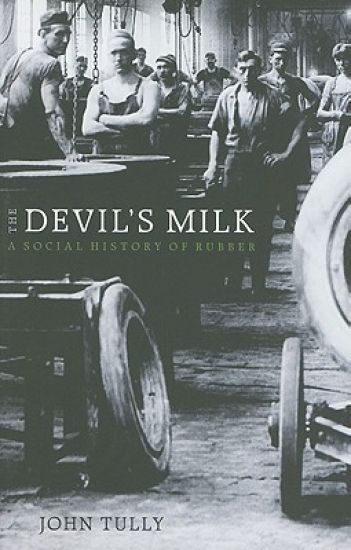
The Devil's Milk

The Devil's Milk

John Tully

Monthly Review Press,U.S.
2011
nidottu
Capital, as Marx once wrote, comes into the world "dripping from head to foot, from every pore, with blood and dirt." He might well have been describing the long, grim history of rubber. From the early stages of primitive accumulation to the heights of the industrial revolution and beyond, rubber is one of a handful of commodities that has played a crucial role in shaping the modern world, and yet, as John Tully shows in this remarkable book, laboring people around the globe have every reason to regard it as "the devil's milk." All the advancements made possible by rubber--industrial machinery, telegraph technology, medical equipment, countless consumer goods--have occurred against a backdrop of seemingly endless exploitation, conquest, slavery, and war. But Tully is quick to remind us that the vast terrain of rubber production has always been a site of struggle, and that the oppressed who toil closest to "the devil's milk" in all its forms have never accepted their immiseration without a fight.This book, the product of exhaustive scholarship carried out in many countries and several continents, is destined to become a classic.Tully tells the story of humanity's long encounter with rubber in a kaleidoscopic narrative that regards little as outside its rangewithout losing sight of the commodity in question. With the skill of a master historian and the elegance of a novelist, he presents what amounts to a history of the modern world told through the multiple lives of rubber.
The Devilas Milk

The Devilas Milk

John Tully

Monthly Review Press,U.S.
2011
sidottu
Capital, as Marx once wrote, comes into the world "dripping from head to foot, from every pore, with blood and dirt." He might well have been describing the long, grim history of rubber. From the early stages of primitive accumulation to the heights of the industrial revolution and beyond, rubber is one of a handful of commodities that has played a crucial role in shaping the modern world, and yet, as John Tully shows in this remarkable book, laboring people around the globe have every reason to regard it as "the devil's milk." All the advancements made possible by rubber--industrial machinery, telegraph technology, medical equipment, countless consumer goods--have occurred against a backdrop of seemingly endless exploitation, conquest, slavery, and war. But Tully is quick to remind us that the vast terrain of rubber production has always been a site of struggle, and that the oppressed who toil closest to "the devil's milk" in all its forms have never accepted their immiseration without a fight.This book, the product of exhaustive scholarship carried out in many countries and several continents, is destined to become a classic.Tully tells the story of humanity's long encounter with rubber in a kaleidoscopic narrative that regards little as outside its rangewithout losing sight of the commodity in question. With the skill of a master historian and the elegance of a novelist, he presents what amounts to a history of the modern world told through the multiple lives of rubber.
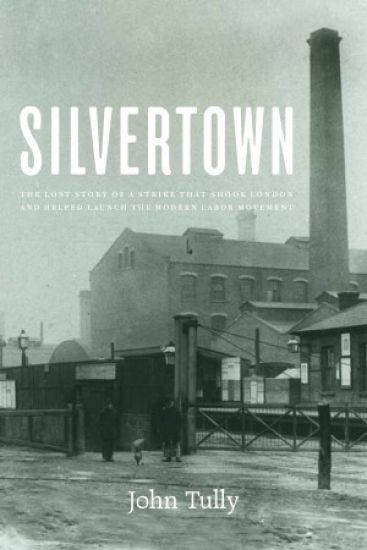
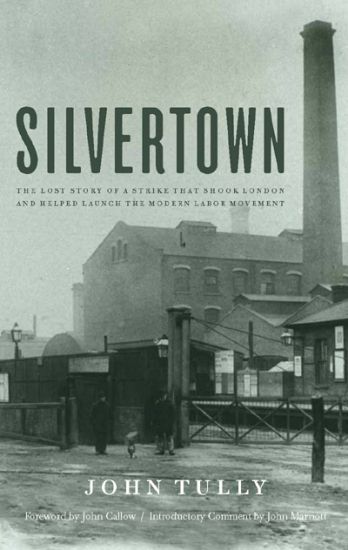
Silvertown: The Lost Story of a Strike That Shook London and Helped Launch the Modern Labor Movement
In 1889, Samuel Winkworth Silver's rubber and electrical factory was the site of a massive worker revolt that upended the London industrial district which bore his name: Silvertown. Once referred to as the "Abyss" by Jack London, Silvertown was notorious for oppressive working conditions and the relentless grind of production suffered by its largely unorganized, unskilled workers. These workers, fed-up with their lot and long ignored by traditional craft unions, aligned themselves with the socialist-led "New Unionism" movement. Their ensuing strike paralyzed Silvertown for three months. The strike leaders-- including Tom Mann, Ben Tillett, Eleanor Marx, and Will Thorne--and many workers viewed the trade union struggle as part of a bigger fight for a "co-operative commonwealth." With this goal in mind, they shut down Silvertown and, in the process, helped to launch a more radical, modern labor movement. Historian and novelist John Tully, author of the monumental social history of the rubber industry The Devil's Milk, tells the story of the Silvertown strike in vivid prose. He rescues the uprising-- overshadowed by other strikes during this period--from relative obscurity and argues for its significance to both the labor and socialist movements. And, perhaps most importantly, Tully presents the Silvertown Strike as a source of inspiration for today's workers, in London and around the world, who continue to struggle for better workplaces and the vision of a "co-operative commonwealth."
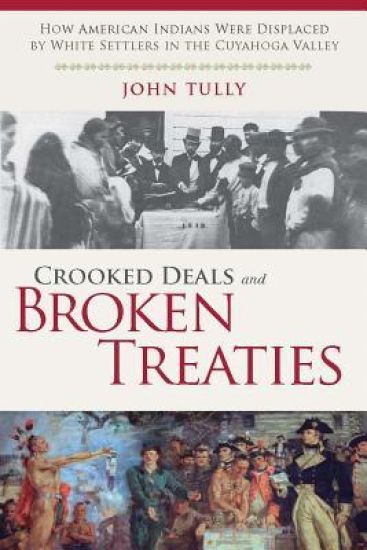
Crooked Deals and Broken Treaties

Crooked Deals and Broken Treaties

John Tully

Monthly Review Press,U.S.
2016
nidottu
Long before the smokestacks and factories of industrial Akron rose from Ohio's Cuyahoga Valley, the region was a place of tense confrontation. Beginning in the early 19th-century, white settlers began pushing in from the east, lured by the promise of cheap (or free) land. They inevitably came into conflict with the current inhabitants, American Indians who had thrived in the valley for generations or had already been displaced by settlement along the eastern seaboard. Here, on what was once the western fringe of the United States, the story of the country's founding and development played out in all its ignominy and drama, as American Indians lost their land, and often their lives, while white settlers expanded a nation.Historian and novelist John Tully draws on contemporary accounts and a wealth of studies to produce this elegiac history of the Cuyahoga Valley. He pays special attention to how settlers' notions of private property--and the impulse to own and develop the land--clashed with more collective social organizations of American Indians. He also documents the ecological cost of settlement, long before heavy industry laid waste to the region. Crooked Deals and Broken Treatiesis an impassioned accounting of the cost of "progress," and an insistent reminder of the barbarism and deceit that fueled the rise of the United States.
Crooked Deals and Broken Treaties

Crooked Deals and Broken Treaties

John Tully

Monthly Review Press,U.S.
2015
sidottu
Long before the smokestacks and factories of industrial Akron rose from Ohio's Cuyahoga Valley, the region was a place of tense confrontation. Beginning in the early 19th-century, white settlers began pushing in from the east, lured by the promise of cheap (or free) land. They inevitably came into conflict with the current inhabitants, American Indians who had thrived in the valley for generations or had already been displaced by settlement along the eastern seaboard. Here, on what was once the western fringe of the United States, the story of the country's founding and development played out in all its ignominy and drama, as American Indians lost their land, and often their lives, while white settlers expanded a nation.Historian and novelist John Tully draws on contemporary accounts and a wealth of studies to produce this elegiac history of the Cuyahoga Valley. He pays special attention to how settlers' notions of private property--and the impulse to own and develop the land--clashed with more collective social organizations of American Indians. He also documents the ecological cost of settlement, long before heavy industry laid waste to the region. Crooked Deals and Broken Treatiesis an impassioned accounting of the cost of "progress," and an insistent reminder of the barbarism and deceit that fueled the rise of the United States.
Laws Are Like Cobwebs

Laws Are Like Cobwebs

John Tully

Ashwood Publishing
2025
pokkari
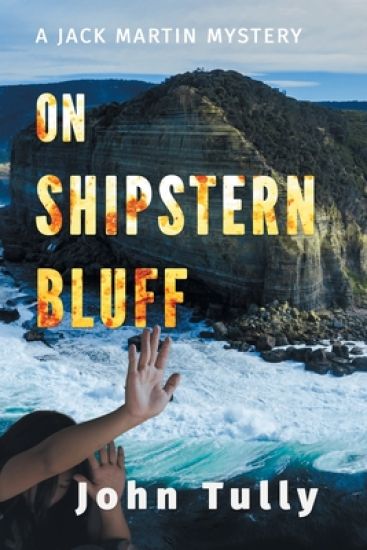
DCI Jack Martin has always tried to do the right thing. Can the police force say the same?Melbourne, 1998: A spate of gangland murders. New drug supplies hitting the streets. Illegal brothels are springing up all over the city, and a massive explosion at a waste disposal plant reveals disturbing links between the city's underbelly and respectable corporations. As Jack and his team investigate, they uncover a toxic web of illegal waste disposal, forced labour, fraud and police corruption that goes to the very top and forces Jack to reevaluate his career and take a stand.
Silvertown

Silvertown

John Tully

Lawrence And Wishart Ltd
2014
sidottu
Historian and novelist John Tully tells the story of the previously relatively unknown Silvertown strike, arguing for its significance to both the labour and socialist movements. Tully presents the Silvertown Strike as a source of inspiration for today's workers, in London and around the world, who continue to struggle for better workplaces.
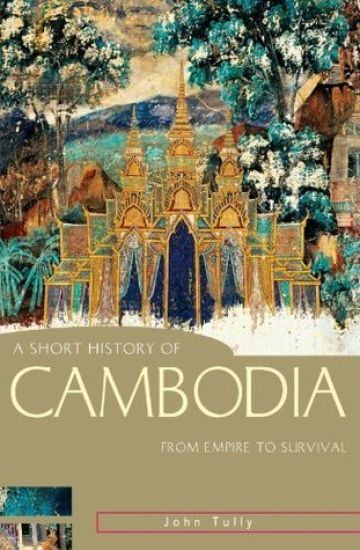
A Short History of Cambodia

A Short History of Cambodia

John Tully

Allen Unwin
2006
nidottu
Temples and killing fields, mighty rivers and impenetrable forests, a past filled with glory and decline Cambodia is a land of contrasts. A millennia ago it was an empire at the height of its power, building the vast temple complexes of Angkor. Now, a thousand years later, ravaged by conflict and a genocidal civil war, Cambodia finds itself struggling with democracy, beset by corruption and on the lowest end of the global spectrum of economic wealth.In this concise and compelling history, John Tully charts Cambodia's past from the richness of the Angkorean empire, through the dark ages of the 18th and early 19th centuries, the era of French colonialism, independence, the Vietnamese conflict, and the Pol Pot regime to its present day incarnation as a flawed democracy.Cambodia remains an intriguing enigma to the outside world. With a depressing record of war, famine and invasion that have all threatened to destroy it, Cambodia's survival is a testament to the resilience of the human spirit.