Kirjojen hintavertailu. Mukana 11 699 587 kirjaa ja 12 kauppaa.

Kirjahaku

Etsi kirjoja tekijän nimen, kirjan nimen tai ISBN:n perusteella.

5 kirjaa tekijältä John V. Tolan

Saint Francis and the Sultan

Saint Francis and the Sultan

John V. Tolan

Oxford University Press
2009
sidottu
In September, 1219, as the armies of the Fifth Crusade besieged the Egyptian city of Damietta, Francis of Assisi went to Egypt to preach to Sultan al-Malik al-Kâmil. Although we in fact know very little about this event, this has not prevented artists and writers from the thirteenth century to the twentieth, unencumbered by mere facts, from portraying Francis alternatively as a new apostle preaching to the infidels, a scholastic theologian proving the truth of Christianity, a champion of the crusading ideal, a naive and quixotic wanderer, a crazed religious fanatic, or a medieval Gandhi preaching peace, love, and understanding. Al-Kâmil, on the other hand, is variously presented as an enlightened pagan monarch hungry for evangelical teaching, a cruel oriental despot, or a worldly libertine. Saint Francis and the Sultan takes a detailed look at these richly varied artistic responses to this brief but highly symbolic meeting. Throwing into relief the changing fears and hopes that Muslim-Christian encounters have inspired in European artists and writers in the centuries since, it gives a uniquely broad but precise vision of the evolution of Western attitudes towards Islam and the Arab world over the last eight hundred years.
Saracens

Saracens

John V. Tolan

Columbia University Press
2002
sidottu
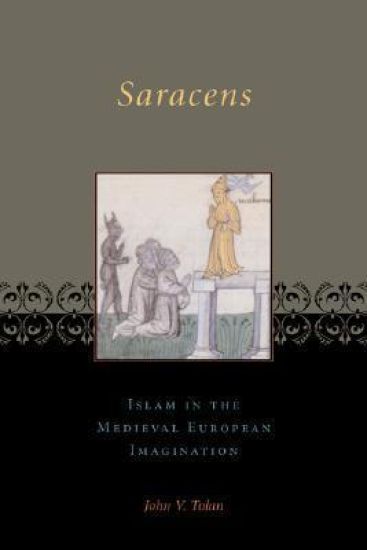
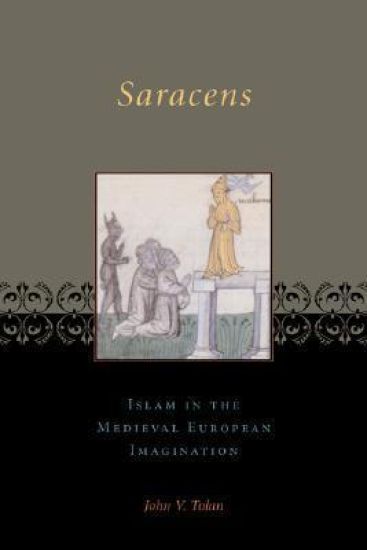
In the first century of Islam, most of the former Christian Roman Empire, from Syria to Spain, was brought under Muslim control in a conquest of unprecedented proportions. Confronted by the world of Islam, countless medieval Christians experienced a profound ambivalence, awed by its opulence, they were also troubled by its rival claims to the spiritual inheritance of Abraham and Jesus and humiliated by its social subjugation of non-Muslim minorities. Some converted. Others took up arms. Still others, the subjects of John Tolan's study of anti-Muslim polemics in medieval Europe, undertook to attack Islam and its most vivid avatar, the saracen, with words. In an effort to make sense of God's apparent abandonment of Christendom in favor of a dynamic and expanding Muslim civilization, European writers distorted the teachings of Islam and caricatured its believers in a variety of ways. What ideological purposes did these portrayals serve? And how, in turn, did Muslims view Christianity? Feelings of rivalry, contempt, and superiority existed on both sides, tinged or tempered at times with feelings of doubt, inferiority, curiosity, or admiration. Tolan shows how Christian responses to Islam changed from the seventh to thirteenth centuries, through fast-charging crusades and spirit-crushing defeats, crystallizing into polemical images later drawn upon by Western authors in the fourteenth to twentieth centuries. Saracens explores the social and ideological uses of contempt, explaining how the denigration of the other can be used to defend one's own intellectual construction of the world.
Saracens

Saracens

John V. Tolan

Columbia University Press
2002
pokkari
In the first century of Islam, most of the former Christian Roman Empire, from Syria to Spain, was brought under Muslim control in a conquest of unprecedented proportions. Confronted by the world of Islam, countless medieval Christians experienced a profound ambivalence, awed by its opulence, they were also troubled by its rival claims to the spiritual inheritance of Abraham and Jesus and humiliated by its social subjugation of non-Muslim minorities. Some converted. Others took up arms. Still others, the subjects of John Tolan's study of anti-Muslim polemics in medieval Europe, undertook to attack Islam and its most vivid avatar, the saracen, with words. In an effort to make sense of God's apparent abandonment of Christendom in favor of a dynamic and expanding Muslim civilization, European writers distorted the teachings of Islam and caricatured its believers in a variety of ways. What ideological purposes did these portrayals serve? And how, in turn, did Muslims view Christianity? Feelings of rivalry, contempt, and superiority existed on both sides, tinged or tempered at times with feelings of doubt, inferiority, curiosity, or admiration. Tolan shows how Christian responses to Islam changed from the seventh to thirteenth centuries, through fast-charging crusades and spirit-crushing defeats, crystallizing into polemical images later drawn upon by Western authors in the fourteenth to twentieth centuries. Saracens explores the social and ideological uses of contempt, explaining how the denigration of the other can be used to defend one's own intellectual construction of the world.
Sons of Ishmael

Sons of Ishmael

John V. Tolan

University Press of Florida
2008
sidottu
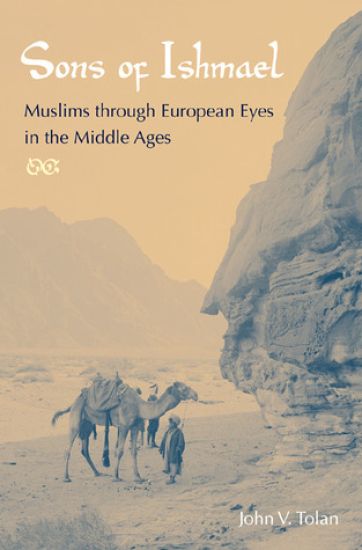
Sons of Ishmael is the epithet that many Christian writers of the Middle Ages gave to Muslims. ""Sons of Ishmael"" focuses on the history of conflict and convergence between Latin Christendom and the Arab Muslim world during this period.John Tolan is one of the world's foremost scholars in the field of early Christian/Muslim interactions. These eleven essays explore, in greater depth than his previous books, a wide variety of topics.The Bible and Qur'an agree that the Arabs were the descendants of Ishmael, son of Abraham and Hagar. Ishmael is described in Genesis as ""a wild man; his hand will be against every man and every man's hand against him."" To many medieval Christians, this was a prophecy of the violence and enmity between Ishmael's progeny and the Christians - spiritual descendants of his half-brother Isaac.Yet Tolan also discusses areas of convergence between Christendom and Islam such as the devotion to the Virgin Mary in twelfth-century Syria and Egypt and the chivalrous myths surrounding Muslim princes, especially Saladin.By providing a closer look at the ways Europeans perceived Islam and Muslims in the Middle Ages, Tolan opens a window into understanding the roots of current stereotypes of Muslims and Arabs in Western culture.
Sons of Ishmael

Sons of Ishmael

John V. Tolan

University Press of Florida
2013
nidottu
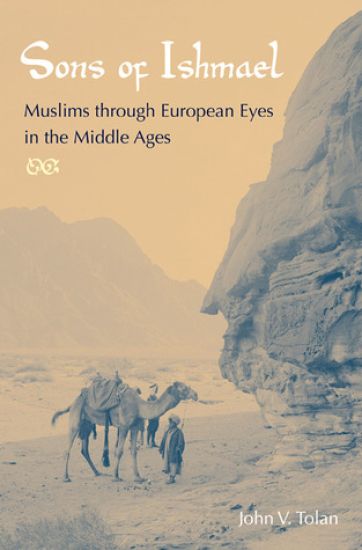
John Tolan is one of the world's foremost scholars in the field of early Christian/Muslim interactions. These eleven essays explore, in greater depth than his previous books, a wide variety of topics.The Bible and Qur'an agree that Arabs were the descendants of Ishmael, son of Abraham and Hagar. Ishmael is described in Genesis as ""a wild man; his hand will be against every man and every man's hand against him."" To many medieval Christians, this was a prophecy of the violence and enmity between Ishmael's progeny and the Christians--spiritual descendants of his half-brother Isaac.Yet Tolan also discusses areas of convergence between Christendom and Islam such as the devotion to the Virgin Mary in twelfth-century Syria and Egypt and the chivalrous myths surrounding Muslim princes, especially Saladin.By providing a closer look at the ways Europeans perceived Islam and Muslims in the Middle Ages, Tolan opens a window into understanding the roots of current stereotypes of Muslims and Arabs in Western culture.