
Kirjahaku
Etsi kirjoja tekijän nimen, kirjan nimen tai ISBN:n perusteella.
186 kirjaa tekijältä John White
The Protestant Englishman Guarded Against the Arts and Arguments of Romish Priests and Emissaries. ... by John White, ...
John White
Gale Ecco, Print Editions
2010
pokkari

Journal of a voyage to New South Wales with sixty-five plates of non descript animals, birds, ... and other natural productions by John White ...
John White
Gale Ecco, Print Editions
2010
pokkari
Journal of a Voyage to New South Wales with Sixty-Five Plates of Non Descript Animals, Birds, ... and Other Natural Productions by John White
John White
Gale Ecco, Print Editions
2018
sidottu
The 18th century was a wealth of knowledge, exploration and rapidly growing technology and expanding record-keeping made possible by advances in the printing press. In its determination to preserve the century of revolution, Gale initiated a revolution of its own: digitization of epic proportions to preserve these invaluable works in the largest archive of its kind. Now for the first time these high-quality digital copies of original 18th century manuscripts are available in print, making them highly accessible to libraries, undergraduate students, and independent scholars.Delve into what it was like to live during the eighteenth century by reading the first-hand accounts of everyday people, including city dwellers and farmers, businessmen and bankers, artisans and merchants, artists and their patrons, politicians and their constituents. Original texts make the American, French, and Industrial revolutions vividly contemporary.++++The below data was compiled from various identification fields in the bibliographic record of this title. This data is provided as an additional tool in helping to insure edition identification: ++++British LibraryT113529The titlepage is engraved. With a list of subscribers. The final 20 leaves contain 'A diary of the winds, weather, temperature of the air, &c. .. in a voyage to Port Jackson, New South Wales' with a divisional titlepage and separate register and two finLondon: printed for J. Debrett, 1790. 18],299, 1]; 40]p., plates; 4
The Protestant Englishman Guarded Against the Arts and Arguments of Romish Priests and Emissaries. ... By John White,
John White
Gale Ecco, Print Editions
2018
sidottu
The 18th century was a wealth of knowledge, exploration and rapidly growing technology and expanding record-keeping made possible by advances in the printing press. In its determination to preserve the century of revolution, Gale initiated a revolution of its own: digitization of epic proportions to preserve these invaluable works in the largest archive of its kind. Now for the first time these high-quality digital copies of original 18th century manuscripts are available in print, making them highly accessible to libraries, undergraduate students, and independent scholars.Western literary study flows out of eighteenth-century works by Alexander Pope, Daniel Defoe, Henry Fielding, Frances Burney, Denis Diderot, Johann Gottfried Herder, Johann Wolfgang von Goethe, and others. Experience the birth of the modern novel, or compare the development of language using dictionaries and grammar discourses. ++++The below data was compiled from various identification fields in the bibliographic record of this title. This data is provided as an additional tool in helping to insure edition identification: ++++British LibraryT068935With a final errata and advertisement leaf.London: printed for C. Davis; and L. Davis, 1753. 2],332, 2]p.; 8
A Rich Cabinet of Modern Curiosities. Containing, 1. Many Natural and Artificial Conclusions. ... With a Multitude of Other Curiosities, the Whole Adorned With Above Forty Curious Cuts. By John White,
John White
Gale Ecco, Print Editions
2018
sidottu
The 18th century was a wealth of knowledge, exploration and rapidly growing technology and expanding record-keeping made possible by advances in the printing press. In its determination to preserve the century of revolution, Gale initiated a revolution of its own: digitization of epic proportions to preserve these invaluable works in the largest archive of its kind. Now for the first time these high-quality digital copies of original 18th century manuscripts are available in print, making them highly accessible to libraries, undergraduate students, and independent scholars.Delve into what it was like to live during the eighteenth century by reading the first-hand accounts of everyday people, including city dwellers and farmers, businessmen and bankers, artisans and merchants, artists and their patrons, politicians and their constituents. Original texts make the American, French, and Industrial revolutions vividly contemporary.++++The below data was compiled from various identification fields in the bibliographic record of this title. This data is provided as an additional tool in helping to insure edition identification: ++++Harvard University Houghton LibraryN012954First published in 1651 as: A rich cabinet, with variety of inventions. London]: Printed for G. Conyers, at the Gold Ring, in Little Brittain, 1704?] 5],8-72p.: ill.; 12
John 3:16 - Perhaps the best-known and most quoted verse of Scripture in the world. It is also universally misunderstood. On the surface, this verse, like so many others in the Word of God, appears simple. However, after much study and contemplation, we can reveal its many deep and complex meanings. Within this 34-chapter volume, we attempt to thoroughly cover each and every facet of this most important of verses.
Illustrations Prepared for White's Ancient History of the Maori.
John White
British Library, Historical Print Editions
2011
pokkari
Title: Illustrations prepared for White's Ancient History of the Maori.Publisher: British Library, Historical Print EditionsThe British Library is the national library of the United Kingdom. It is one of the world's largest research libraries holding over 150 million items in all known languages and formats: books, journals, newspapers, sound recordings, patents, maps, stamps, prints and much more. Its collections include around 14 million books, along with substantial additional collections of manuscripts and historical items dating back as far as 300 BC.The HISTORY OF THE ANCIENT WORLD collection includes books from the British Library digitised by Microsoft. Titles in this series include lectures, compiled sketches, and chronological discourses on Greece, Rome, and other early European and African civilisations. The collection also has a selection of physical and classical geography texts. ++++The below data was compiled from various identification fields in the bibliographic record of this title. This data is provided as an additional tool in helping to insure edition identification: ++++ British Library White, John; 1891. 8 . 9781.de.19.
Is the work ethic still viable as society evolves? This book engages with widespread current anxieties about the future of work and its place in a fulfilled human life. It is a philosophical treatment of the nature of work and reconsiders the aims and procedures of education. The author calls for a reshaping of school as the work culture has come to know it.
How does a child's mind work? And what should parents know about it to help them in their daily interaction with children?This book is a fascinating, non-technical introduction to the mental life of the child. Written in a simple, accessible way for those without an academic background in philosophy, the book explores and explains key elements of the child's mind without overwhelming the reader with complicated theories. Some of the areas discussed are:how children learn conceptsthe acquisition of beliefs, skills, knowledge and understandingthe place of memorycan we teach thinking skills?what is intelligence?imagination and creativitythe development of emotionconnections between home life, education and the school curriculum.
There have always been more or less scientific travellers, but a new epoch began with the voyages of Captain James Cook. His first, on board the converted Whitby Collier HMS Endeavour, was the result of cooperation between the Admiralty and the Royal Society. This series only skims the surface of the rich collections of scientific travel books in the library of the Natural History Museum. From this volume we learn much about the voyage of the first fleet, the first desperate years of the colony in Sydney, and the exploration of its neighbourhood.
John White has spent the last thirty-five years researching, teaching, thinking and writing about some of the key and enduring issues in philosophy of education. He has contributed over thirty books and 140 articles to the field.In this book he brings together sixteen of his key writings in one place for the first time. Starting with a specially written introduction, John White gives an overview of his career and contextualises his selection within the development of the field. The chapters cover:mind state and curriculumwell-being politics curriculum subjects. This important text not only shows how John White’s thinking developed during his long and distinguished career, it also gives an insight into the development of the fields to which he contributed.
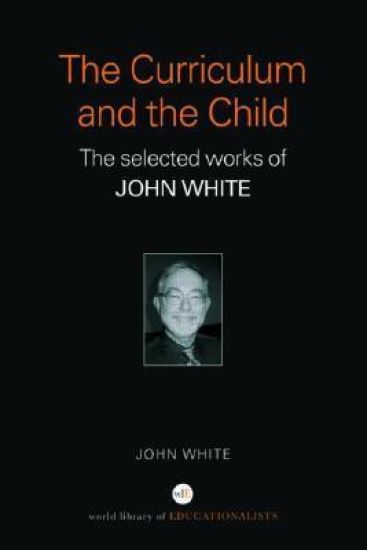
John White has spent the last thirty-five years researching, teaching, thinking and writing about some of the key and enduring issues in philosophy of education. He has contributed over thirty books and 140 articles to the field.In this book he brings together sixteen of his key writings in one place for the first time. Starting with a specially written introduction, John White gives an overview of his career and contextualises his selection within the development of the field. The chapters cover:mind state and curriculumwell-being politics curriculum subjects. This important text not only shows how John White’s thinking developed during his long and distinguished career, it also gives an insight into the development of the fields to which he contributed.
The nature of intelligence and how it can be measured has occupied psychologists, educationalists, biologists and philosophers for hundreds of years. However, there has been little investigation into the rise of the traditional dominant educational ideology that intelligence and IQ have innate limits and are unchanging and unchangeable. This book traces the roots of this mind set back to early puritan communities on both sides of the Atlantic, drawing parallels between puritan dogma and the development of the traditional curricula and selection processes that are still firmly embedded in school practice today.Drawing on the work of Galton, Pearson, Burt, Goddard, Terman and others in his search for the truth about intelligence testing, John White looks at the personal histories and socialised religious backgrounds of these key psychologists and casts an entirely new light on schooling in Britain and the USA in modern times. This work also shows how we can transcend this heritage and base our educational system on values and practices more in tune with the twenty-first century.
The nature of intelligence and how it can be measured has occupied psychologists, educationalists, biologists and philosophers for hundreds of years. However, there has been little investigation into the rise of the traditional dominant educational ideology that intelligence and IQ have innate limits and are unchanging and unchangeable. This book traces the roots of this mind set back to early puritan communities on both sides of the Atlantic, drawing parallels between puritan dogma and the development of the traditional curricula and selection processes that are still firmly embedded in school practice today.Drawing on the work of Galton, Pearson, Burt, Goddard, Terman and others in his search for the truth about intelligence testing, John White looks at the personal histories and socialised religious backgrounds of these key psychologists and casts an entirely new light on schooling in Britain and the USA in modern times. This work also shows how we can transcend this heritage and base our educational system on values and practices more in tune with the twenty-first century.
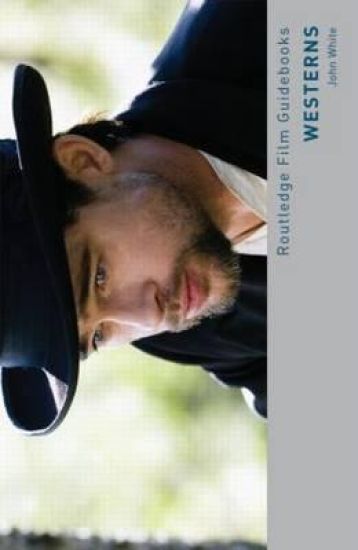
It is a common assertion that the history of America is written in its Westerns, but how true is this?In this guidebook John White discusses the evolution of the Western through history and looks at theoretical and critical approaches to Westerns such as genre analysis, semiotics, representation, ideology, discourse analysis, narrative, realism, auteur and star theory, psychoanalytical theory, postmodernism and audience response. The book includes case studies of 8 key westerns:StagecoachMy Darling ClementineShaneThe Good, The Bad and the UglyMcCabe and Mrs MillerUnforgivenBrokeback MountainThe Assassination of Jesse James by the Coward Robert FordIncluding a chronology of significant events for the Western genre, a glossary and further reading, this introduction to an important genre in film studies is a great guide for students.
It is a common assertion that the history of America is written in its Westerns, but how true is this?In this guidebook John White discusses the evolution of the Western through history and looks at theoretical and critical approaches to Westerns such as genre analysis, semiotics, representation, ideology, discourse analysis, narrative, realism, auteur and star theory, psychoanalytical theory, postmodernism and audience response. The book includes case studies of 8 key westerns:StagecoachMy Darling ClementineShaneThe Good, The Bad and the UglyMcCabe and Mrs MillerUnforgivenBrokeback MountainThe Assassination of Jesse James by the Coward Robert FordIncluding a chronology of significant events for the Western genre, a glossary and further reading, this introduction to an important genre in film studies is a great guide for students.
The Aims of Education Restated (International Library of the Philosophy of Education Volume 22)
John White
Psychology Press Ltd
2009
sidottu
John White's study is the most substantial work on what the aims of education should be since Whitehead's Aims of Education of 1929. It draws on material not only from schools and colleges, but also from the broader educative or miseducative nature of the 'ethos' of society and some of its major institutions. Sifting the different views about aims which are now prevalent and circulating in the world of education, he integrates the more defensible of them into an articulated set of positive recommendations. The study takes a broadly philosophical and non-technical stand; it is written to help practitioners orient themselves in what is often bewildering territory, at a time when the question of what the aims of education ought to be has acquired a new urgency for politicians and educational administrators, as well as for those directly involved in educational institutions, head teachers and their staff.
The Aims of Education Restated (International Library of the Philosophy of Education Volume 22)
John White
Psychology Press Ltd
2012
nidottu
John White's study is the most substantial work on what the aims of education should be since Whitehead's Aims of Education of 1929. It draws on material not only from schools and colleges, but also from the broader educative or miseducative nature of the 'ethos' of society and some of its major institutions. Sifting the different views about aims which are now prevalent and circulating in the world of education, he integrates the more defensible of them into an articulated set of positive recommendations. The study takes a broadly philosophical and non-technical stand; it is written to help practitioners orient themselves in what is often bewildering territory, at a time when the question of what the aims of education ought to be has acquired a new urgency for politicians and educational administrators, as well as for those directly involved in educational institutions, head teachers and their staff.