

Kirjahaku
Etsi kirjoja tekijän nimen, kirjan nimen tai ISBN:n perusteella.
40 kirjaa tekijältä John Wilkinson


The designs of synagogues and churches are acknowledged to be very alike. But the designers' procedure was confidential, and so far standard explanations have been unsatisfactory. A synagogue should express heavenly values with earthly materials. This combination was in fact expressed in numbers, for, as Plato said, they linked heaven and earth. Scripture described both the Jewish Tabernacle and Temple with a wealth of numbers. Proportions based on these numbers were used to design synagogues. Only a few Jewish documents survive, but they reveal a symbolism, which Christians sometimes repeat. The synagogue sanctuary was designed to contain the 'Holy Ark', and the mosaic floors reveal the point 'Before the Ark' for the prayers and readings. These places faced each other, with the idea that God was facing his people. The synagogue was seen as facing heaven and in church buildings Christians repeated the same proportions. This was a joint tradition among Jews and Christians. It was easy to design, was carried out secretly and accurately, and - without a computer - was extremely hard to unravel. This book, for the first time, does just that.

The designs of synagogues and churches are acknowledged to be very alike. But the designers' procedure was confidential, and so far standard explanations have been unsatisfactory. A synagogue should express heavenly values with earthly materials. This combination was in fact expressed in numbers, for, as Plato said, they linked heaven and earth. Scripture described both the Jewish Tabernacle and Temple with a wealth of numbers. Proportions based on these numbers were used to design synagogues. Only a few Jewish documents survive, but they reveal a symbolism, which Christians sometimes repeat. The synagogue sanctuary was designed to contain the 'Holy Ark', and the mosaic floors reveal the point 'Before the Ark' for the prayers and readings. These places faced each other, with the idea that God was facing his people. The synagogue was seen as facing heaven and in church buildings Christians repeated the same proportions. This was a joint tradition among Jews and Christians. It was easy to design, was carried out secretly and accurately, and - without a computer - was extremely hard to unravel. This book, for the first time, does just that.

This eye-witness account of the holy places and liturgy of the Holy Land describes the experience of a Spanish pilgrim who visited Jerusalem fifty years after the reign of Constantine. She was Egeria, probably a nun from Galicia.
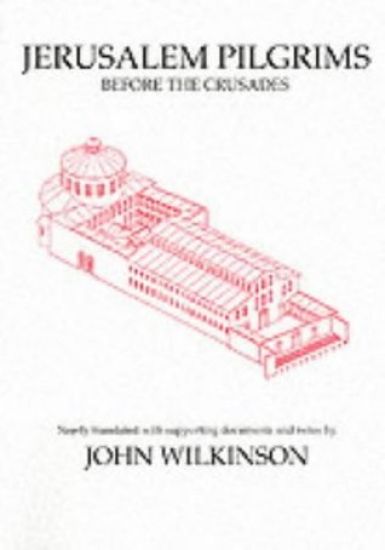
Hundreds of pilgrims set out from Europe to the Holy Land between 385 and 1099 AD, but of these only eighteen wrote descriptions which have survived. They provide essential background material for the history of Christianity in the Holy Land, as well as for all archaeologists and geographers of the Byzantine and Early Arab period. In this companion volume to Wilkinson's Egeria's Travels , these texts are translated and wherever possible related to archaeological work. With maps and indexes, the reader is provided with a vivid picture of the physical conditions of travel and the development of Christian prayer in the Holy Places. This second edition is updated and expanded.

An iconic work of Western art, Fragonard's "L'escarpolette", or "The Swing", is often reproduced, and its famous foreground image of a young woman losing her slipper midswing is widely familiar. In "Reckitt's Blue", John Wilkinson explores that well-known scene in a long poem that engages with the image of the flying slipper, and he also presents two other sequences of poems based on paintings. Though born out of visual encounters with art, these poems also examine weaponry and domestic and ritual objects - artifacts that evoke a violent encounter. Here, Wilkinson's concentrated lines evidence what the critic Simon Jarvis has called his "unfree verse," that reaches into new and unexpected territory in both style and theme. This combination of sensual beauty, intellectual ambition, and political acuity is like nothing else in contemporary English-language poetry.


History of the Parish of Broughton Gifford, Wilts.
John Wilkinson
British Library, Historical Print Editions
2011
pokkari
In this important new intervention, leading poet and critic John Wilkinson explores the material life of the lyric poem. How does the lyric – considered as an object, as an event – grapple with permanence and impermanence, the rhythms of change and the passing of time? Drawing on new insights from contemporary philosophy and object-oriented ontology, psychoanalysis and the visual arts, The Lyric in Its Times includes innovative and insightful new readings of work by a wide range of lyric poets, from Shakespeare, Blake and Shelley to Charles Baudelaire, Frank O’Hara and J.H. Prynne.
In this important new intervention, leading poet and critic John Wilkinson explores the material life of the lyric poem. How does the lyric – considered as an object, as an event – grapple with permanence and impermanence, the rhythms of change and the passing of time? Drawing on new insights from contemporary philosophy and object-oriented ontology, psychoanalysis and the visual arts, The Lyric in Its Times includes innovative and insightful new readings of work by a wide range of lyric poets, from Shakespeare, Blake and Shelley to Charles Baudelaire, Frank O’Hara and J.H. Prynne.
The 18th century was a wealth of knowledge, exploration and rapidly growing technology and expanding record-keeping made possible by advances in the printing press. In its determination to preserve the century of revolution, Gale initiated a revolution of its own: digitization of epic proportions to preserve these invaluable works in the largest archive of its kind. Now for the first time these high-quality digital copies of original 18th century manuscripts are available in print, making them highly accessible to libraries, undergraduate students, and independent scholars.Medical theory and practice of the 1700s developed rapidly, as is evidenced by the extensive collection, which includes descriptions of diseases, their conditions, and treatments. Books on science and technology, agriculture, military technology, natural philosophy, even cookbooks, are all contained here.++++The below data was compiled from various identification fields in the bibliographic record of this title. This data is provided as an additional tool in helping to insure edition identification: ++++British LibraryT103104In two books. Book II has its own titlepage: 'The seaman's preservation Containing propositions and precepts for the preservation of health at Sea' and its own dedication. Catchword on p.72: Im-. First published in 1759 as 'The seaman's preservation'.London: printed for Messrs Dodsley; Lownds, Bristow, Stewart; Willock; Mount and Page, 1763. 6], x, viii,72, 4],73-131, 1]p, plates; 8







To mitigate climate, biodiversity, and public health crises, the global agrifood system needs radical change. The Global North remains central to agrifood innovation but new players in the South, especially Brazil and China, will increasingly determine its pace and direction. Investigating climate-controlled agriculture and alternatives to animal proteins, John Wilkinson shows that trade, investment, and innovation in agrifood is reorienting to the South. As the global population becomes increasingly urban, he skilfully illustrates the connections between social movements and technological innovation – and the need for consumer acceptance of new food habits.
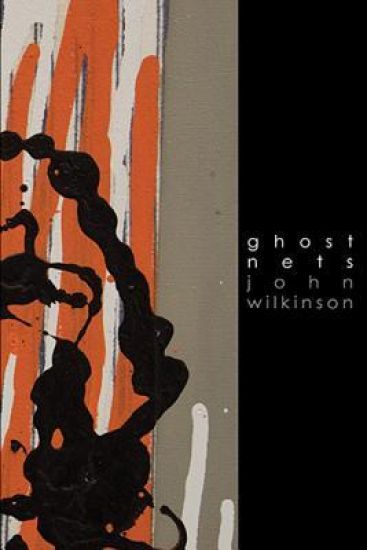
Ghost Nets is the first US collection by John Wilkinson. Ranging from brief lyrics to elaborately-structured long poems, the collection displays the intense musicality, syntactical intricacy and affective power characteristic of his poetry. But the political, social and economic crises of the period in the US shape Wilkinson’s writing in new ways, more vulnerable and more evidently responsive to others’ vulnerability.