Kirjahaku
Etsi kirjoja tekijän nimen, kirjan nimen tai ISBN:n perusteella.
110 kirjaa tekijältä John Wright
An Essay on Wines, Especially on Port Wine; Intended to Instruct Every Person to Distinguish That Which is Pure, and to Guard Against the Frauds of Adulteration. ... By John Wright,
John Wright
Gale Ecco, Print Editions
2018
sidottu
The 18th century was a wealth of knowledge, exploration and rapidly growing technology and expanding record-keeping made possible by advances in the printing press. In its determination to preserve the century of revolution, Gale initiated a revolution of its own: digitization of epic proportions to preserve these invaluable works in the largest archive of its kind. Now for the first time these high-quality digital copies of original 18th century manuscripts are available in print, making them highly accessible to libraries, undergraduate students, and independent scholars.This collection reveals the history of English common law and Empire law in a vastly changing world of British expansion. Dominating the legal field is the Commentaries of the Law of England by Sir William Blackstone, which first appeared in 1765. Reference works such as almanacs and catalogues continue to educate us by revealing the day-to-day workings of society.++++The below data was compiled from various identification fields in the bibliographic record of this title. This data is provided as an additional tool in helping to insure edition identification: ++++British LibraryT064978London: printed for J. Barker, 1795. 68p.; 8

John Wright's collection of interviews and stories about Ralph Stanley puts readers around a campfire at a bluegrass festival while old-timers weave yarns far into the night. Told by those who create, produce, stage, love, and virtually live for old-time mountain music, these tales come from the longtime coworkers, sidemen, promoters, friends, and others in the orbit of the music legend. The storytellers include a scholar who knew Stanley from the early days, the housewife who ran the Stanley Brothers Fan Club, and a souvenir seller for whom the discovery of Stanley's music was almost a religious experience.Wright also uses these invaluable oral histories as a foundation to describe and evaluate Stanley's long career with the Clinch Mountain Boys and the development of his music after the death of his brother Carter. An appendix covers Ralph's prolific recording activity through the mid-1990s, including a breathtaking forty-five albums compromising more than 550 songs and tunes.

Libya, Chad and the Central Sahara
John Wright
Barnes Noble Books-Imports, Div of Rowman Littlefield Pubs., Inc
1989
sidottu
Libya and Chad have gone to war with each other several times since Independence, ostensibly over their rival claims to the disputed Aozou strip. ^IJohn Wright, senior political analyst in the BBC Arabic Service, traces the ethnic, cultural and economic links between them over the centuries and shows how these connections contribute to present rivalries.
Many controversial issues revolve around complex scientific arguments which can be better understood with at least a minimal knowledge and understanding of the chemical reactions and processes going on in the world around us. This textbook offers an accessible introduction to chemical principles and concepts, and applies them to relevant environmental situations and issues. Written for students who have not taken A' level chemistry, this book bridges the gap between GSCE chemistry and first year undergraduate level.
Many controversial issues revolve around complex scientific arguments which can be better understood with at least a minimal knowledge and understanding of the chemical reactions and processes going on in the world around us. This textbook offers an accessible introduction to chemical principles and concepts, and applies them to relevant environmental situations and issues. Written for students who have not taken A' level chemistry, this book bridges the gap between GSCE chemistry and first year undergraduate level.
This compelling text sheds light on the important but under studied trans-Saharan slave trade. The author uncovers and surveys this, the least-noticed of the slave trades out of Africa, which from the seventh to the twentieth centuries quielty delievered almost as many black Africans into foreign servitude as did the far busier, but much briefer Atlantic and East African trades. Illuminating for the first time a significant, but ignored subject, the book supports and widens current scholarly examination of Africans' essential role in the enslavement of fellow-Africans and their delivery to internal, Atlantic or trans-Saharan markets.
This compelling text sheds light on the important but under studied trans-Saharan slave trade. The author uncovers and surveys this, the least-noticed of the slave trades out of Africa, which from the seventh to the twentieth centuries quielty delievered almost as many black Africans into foreign servitude as did the far busier, but much briefer Atlantic and East African trades. Illuminating for the first time a significant, but ignored subject, the book supports and widens current scholarly examination of Africans' essential role in the enslavement of fellow-Africans and their delivery to internal, Atlantic or trans-Saharan markets.
Profitable Fruit-Growing For Cottagers And Small Holders Of Land
John Wright
KESSINGER PUBLISHING, LLC
2007
nidottu
Profitable Fruit-Growing For Cottagers And Small Holders Of Land
John Wright
Kessinger Pub
2007
sidottu
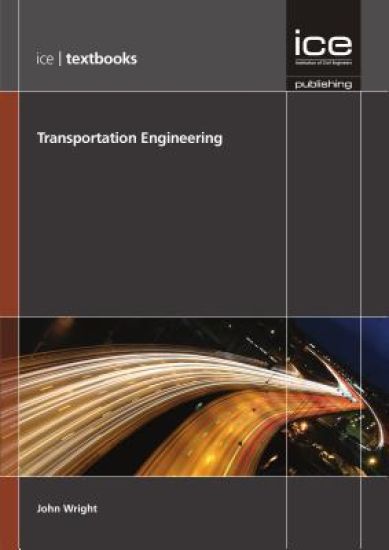
Covering rail, air, road and water,Transportation Engineeringexplores the transport of people, goods and information throughout history, up to the present day and considering how best to transport can meet the needs of the future. It examines the idea that transport needs are based on the concept of supply and demand and that modes of transport must, therefore, have a “life-cycle”. Transportation Engineering also explores the economics of transport and the importance of considering price, convenience and safety of new and existing modes of transport, as well as the impact that the recession has had on preferred modes of transport, e.g. an increase in people cycling instead of driving, using the internet to communicate instead of travelling overseas. It also looks at sustainability, including the pros and cons of electric vehicles and what the future holds for these modes of transport.Produced by the Institution of Civil Engineers, ICE Textbooks offer clear, concise and practical information on the major principles of civil and structural engineering. They are an indispensable companion to undergraduate audiences, providing students with: A comprehensive introduction to core engineering subjectsReal-life case studies and worked examplesKey learning aims, revision points and chapter summariesFurther reading suggestions
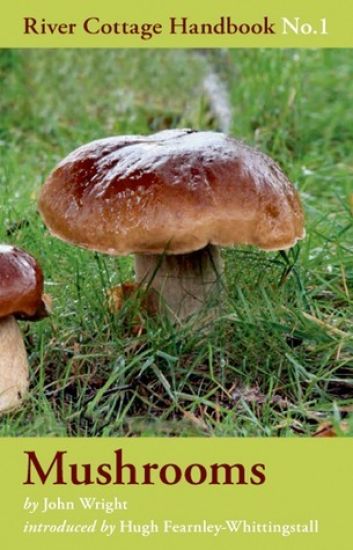
In the first of an exciting new River Cottage Handbook series, mycologist John Wright explains the ins and outs of collecting, including relevant UK laws, conservation notes, practical tips and identification techniques. He takes us through the 72 species we are most likely to come across during forays in Britain's forests and clearings: old friends the Chanterelle and Cep, as well as a whole colourful host of more unfamiliar names - edible species including the Velvet Shank, the Horn of Plenty, the Amethyst Deceiver, the Giant Puffball and the Chicken in the Woods, and poisonous types such as the Sickener, the Death Cap and the Destroying Angel. The handbook is completed by more than 30 simple and delicious mushroom recipes from the River Cottage team. With colour photographs throughout, line drawings, a user-friendly Key and an introduction by Hugh Fearnley-Whittingstall, The River Cottage Mushroom Handbook is a comprehensive and collectable guide, destined to be an indispensable household reference.
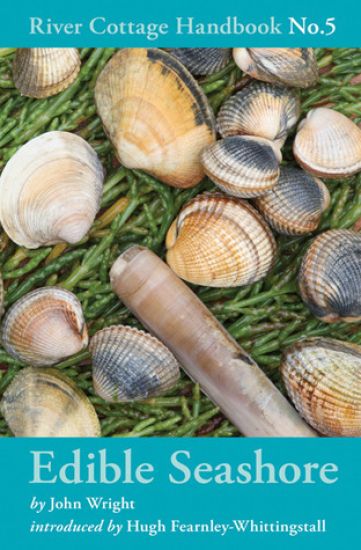
For the forager, the seashore holds surprising culinary potential. In this authoritative, witty book John Wright takes us on a trip to the seaside. But before introducing us to the various species to be harvested, he touches on such practicalities as conservation and the ethics of foraging; safety from tides, rocks and food poisoning; the law and access to the shore, our right to fish, landing sizes and seasons; and equipment such as nets, pots and hooks. Next comes the nitty-gritty: all the main British seashore species that one might be tempted to eat. The conservation status, taste and texture, availability, seasonality, habitat, collecting technique and biology of each species is covered; there are also quite a few gratuitous but fascinating diversions. The species covered include crustacea (brown shrimp, common crab, lobster, prawn, shore crab, spider crab, squat lobster, velvet swimming crab); molluscs (clams, cockle, dog whelk, limpet, mussel, oyster, razor clam, winkle); mushrooms; plants (alexanders, babbington's orache, fennel, frosted orache, marsh samphire, perennial wall rocket, rock samphire, sea beet, sea buckthorn, sea holly, sea kale, sea purslane, sea rocket, spear-leaved orache, wild cabbage, wild thyme); and seaweed (carragheen, dulse, gut weed, laver, pepper dulse, sea lettuce, sugar kelp, kelp). Finally, there are thirty brilliant recipes. Introduced by Hugh Fearnley-Whittingstall, Edible Seashore is destined to join the other handbooks in the series as an indispensable household reference.
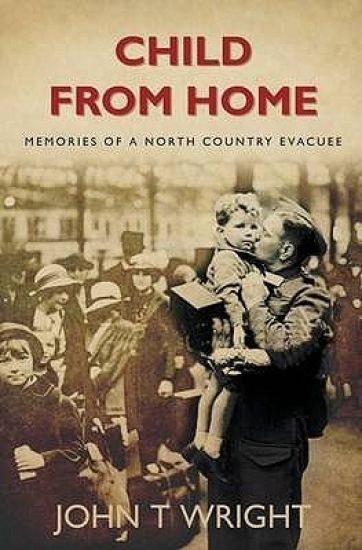
In 1939, John Wright, a four-year-old boy from a deprived but loving Middlesbrough home, was uprooted from his family and evacuated to a large house in North Yorkshire, requisitioned as a nursery school. His story is not unlike any other during the upheaval of wartime, but in this remarkably lucid and detailed set of recollections, a seventy-three-year-old man tells his story of love, loss and life with the delight and fear of a wartime child. His poignant memories of cruelty and hurt are set against a beautiful voyage of discovery as a young boy explores the Yorkshire countryside and comes of age in a unique environment, only to be struck by an unbearable tragedy. A bittersweet tale of innocence and stark realities, Child from Home explores why wartime means so much to our collective memory - and reveals the devastating effect we have on children as we try to protect them from conflict.
Plautus' Curculio, the shortest of the twenty surviving comedies by ancient Rome's master dramatist, certainly is among his best. It has all the characteristics that make Plautus a perennial favorite among readers of Latin: archetypal characters such as the braggart warrior and the greedy parasite, a seminal plot based on greed and deception, and the powerful, inventive verbal style that for two thousand years has been the playwright's chief claim to critical attention. For all those reasons, the Curculio is an excellent introduction to an important and appealing ancient writer. In the revision of the American Philological Association edition, the introduction and notes have been expanded and a vocabulary has been added. Because it retains the standard scholarly Latin text, it will be useful even to advanced readers of Plautus.
In this timely and exceptionally accessible work, philosopher John Wright tackles economic rationalism from a moral perspective. First, in non-technical language, he reviews the economic arguments for economic rationalism. Wright then sets out to examine the ethical defences for economic rationalism, considers the many criticisms of economic rationalism - and then weighs up whether the moral defences of economic rationalism are truly valid.
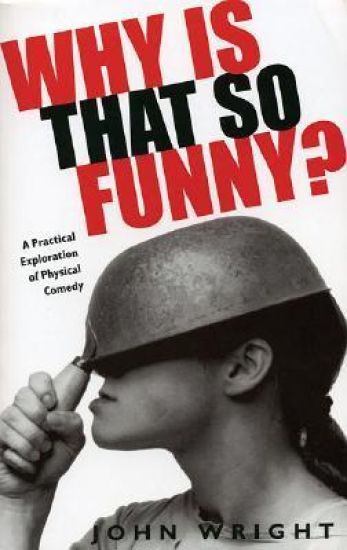
This unique volume is an insightful and entertaining exploration of the principles and practices of physical comedy in its various guises. "Why is That So Funny?" starts with a discussion begins with a discussion of the different types of laughter that can be provoked by performance - from a sly chuckle to a great big belly-laugh. It then goes on to present over 100 games and exercises that have been developed to demonstrate and investigate the entire range of comic possibilities open to a performer. The result is an intensely practical and thoroughly stimulating examination of how physical comedy really works.
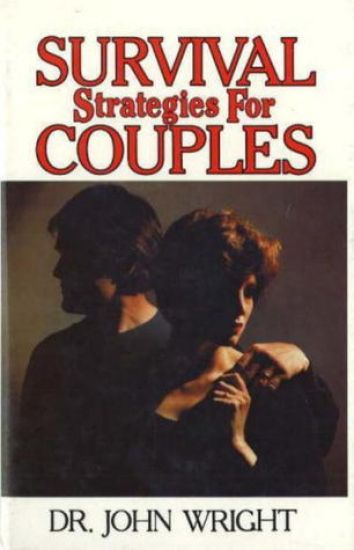
This book gives you an insight into the complexities of intimate relationships. Through vivid portrayals of real-life problem situations that couples face, it also gives clear, concise, effective strategies for you and your partner to use in resolving troubled areas in your relationship, so you can survive and grow as a couple. Dr John Wright also examines myths and beliefs that seriously reduce the chances of couple survival. He offers constructive alternatives to the destructive reaction patterns that are based on erroneous concepts of interpersonal relationships. A series of self-tests helps you to create your personal couple survival profile. The couple survival strategies he presents involve effective communication, expression of love and sexual intimacy, becoming effective problem-solvers, developing the fine art of negotiating a compromise, learning techniques of constructive arguing, handling the division of work, and coping with separation. There is a frank discussion of the pros and cons of open marriage. With the help of this book, you and your partner can change negative behaviour patterns and replace them with constructive couple survival strategies.