Kirjojen hintavertailu. Mukana 12 390 323 kirjaa ja 12 kauppaa.

Kirjahaku

Etsi kirjoja tekijän nimen, kirjan nimen tai ISBN:n perusteella.

5 kirjaa tekijältä John Wyver

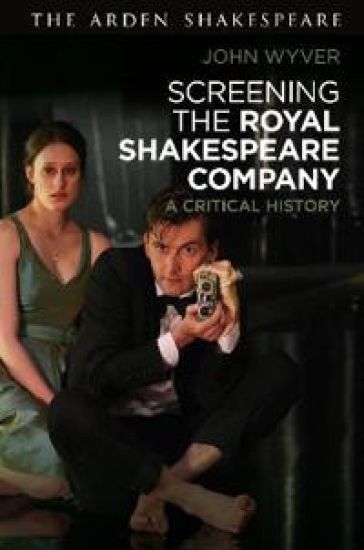
Screening the Royal Shakespeare Company

Screening the Royal Shakespeare Company

John Wyver

The Arden Shakespeare
2019
sidottu
No theatre company has been involved in such a broad range of adaptations for television and cinema as the Royal Shakespeare Company. Starting with Richard III filmed in the Shakespeare Memorial Theatre before World War One, the RSC’s accomplishments continue today with highly successful live cinema broadcasts. The Wars of the Roses (BBC, 1965), Peter Brook’s film of King Lear (1971), Channel 4’s epic version of Nicholas Nickleby (1982) and Hamlet with David Tennant (BBC, 2009) are among their most iconic adaptations. Many other RSC productions live on as extracts in documentaries, as archival recordings, in trailers and in other fragmentary forms.Screening the Royal Shakespeare Company explores this remarkable history of collaborations between stage and screen and considers key questions about adaptation that concern all those involved in theatre, film and television. John Wyver is a broadcasting historian and the producer of RSC Live from Stratford-upon-Avon, and is uniquely well-placed to provide a vivid account of the company’s television and film productions. He contributes an award-winning practitioner’s insight into screen adaptation’s numerous challenges and rich potential.
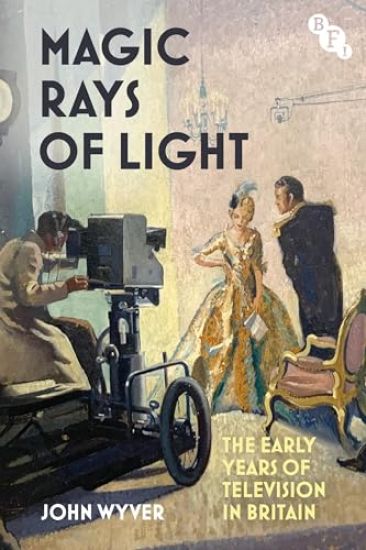
Magic Rays of Light

Magic Rays of Light

John Wyver

BLOOMSBURY PUBLISHING PLC
2026
sidottu
Magic Rays of Light is an original and ambitious history of the largely unknown early years of television in Britain. A detailed cultural study of the first demonstrations, of the extensive experimental broadcasts between 1928 and 1935, and of the BBC’s richly varied daily service starting in November 1936 from Alexandra Palace, the book overturns the popular mis-conception that television in Britain effectively began with Elizabeth II’s Coronation in 1953.In tracing this history, John Wyver chronicles the process by which a technology became a medium. He argues that much of what that television as we knew it in the late twentieth century was created within the fluid and at times unstable forms of the interwar medium. Most fundamentally the basics of television’s screen language and grammar were developed. As this emerged, television drama flourished in the staging of more than 400 plays, from Shakespeare and Agatha Christie to Pirandello and P.G. Wodehouse, starring luminaries including Laurence Olivier, Sybil Thorndike and Peggy Ashcroft. Outside broadcasts of state occasions, and of Wimbledon and Test matches, were pioneered, along with transmissions of the Derby (from 1931 onwards) and the FA Cup Final. Light entertainment formats, quiz shows and the direct ancestor of countless magazine programmes were devised, alongside ambitious presentations of classical ballet and grand opera. As a striking counterpoint to this story, Magic Rays of Light also celebrates the inchoate, indeterminate nature of interwar television. In certain key ways, from the first imaginaries and sci-fi visions of television, and in aspects of how it was made, of what was produced and how this was seen, early television was entirely distinct from what the medium later became. The book reveals television’s forgotten pasts and unrealised futures, including the low resolution, vertical format transmissions of John Logie Baird’s first systems, and the live, large-screen electronic projection systems known as ‘cinema television’. Relaying sports events and pageantry to cinemas, this pre-war sensation was seen by the BBC as a serious threat to its monopoly. By attending closely to the transmissions of the first fifteen years, to the emerging medium’s industrial context, and to its intermedial links with radio, theatre, cinema, music hall, sport and more, Magic Rays of Light illuminates television’s place in the cultural and social histories of Britain between the wars.
Magic Rays of Light

Magic Rays of Light

John Wyver

BLOOMSBURY PUBLISHING PLC
2026
nidottu
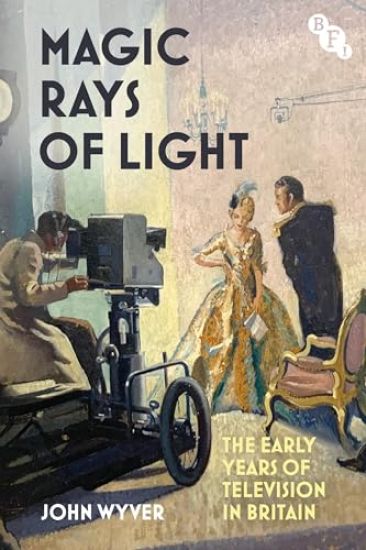
Magic Rays of Light is an original and ambitious history of the largely unknown early years of television in Britain. A detailed cultural study of the first demonstrations, of the extensive experimental broadcasts between 1928 and 1935, and of the BBC’s richly varied daily service starting in November 1936 from Alexandra Palace, the book overturns the popular mis-conception that television in Britain effectively began with Elizabeth II’s Coronation in 1953.In tracing this history, John Wyver chronicles the process by which a technology became a medium. He argues that much of what that television as we knew it in the late twentieth century was created within the fluid and at times unstable forms of the interwar medium. Most fundamentally the basics of television’s screen language and grammar were developed. As this emerged, television drama flourished in the staging of more than 400 plays, from Shakespeare and Agatha Christie to Pirandello and P.G. Wodehouse, starring luminaries including Laurence Olivier, Sybil Thorndike and Peggy Ashcroft. Outside broadcasts of state occasions, and of Wimbledon and Test matches, were pioneered, along with transmissions of the Derby (from 1931 onwards) and the FA Cup Final. Light entertainment formats, quiz shows and the direct ancestor of countless magazine programmes were devised, alongside ambitious presentations of classical ballet and grand opera. As a striking counterpoint to this story, Magic Rays of Light also celebrates the inchoate, indeterminate nature of interwar television. In certain key ways, from the first imaginaries and sci-fi visions of television, and in aspects of how it was made, of what was produced and how this was seen, early television was entirely distinct from what the medium later became. The book reveals television’s forgotten pasts and unrealised futures, including the low resolution, vertical format transmissions of John Logie Baird’s first systems, and the live, large-screen electronic projection systems known as ‘cinema television’. Relaying sports events and pageantry to cinemas, this pre-war sensation was seen by the BBC as a serious threat to its monopoly. By attending closely to the transmissions of the first fifteen years, to the emerging medium’s industrial context, and to its intermedial links with radio, theatre, cinema, music hall, sport and more, Magic Rays of Light illuminates television’s place in the cultural and social histories of Britain between the wars.